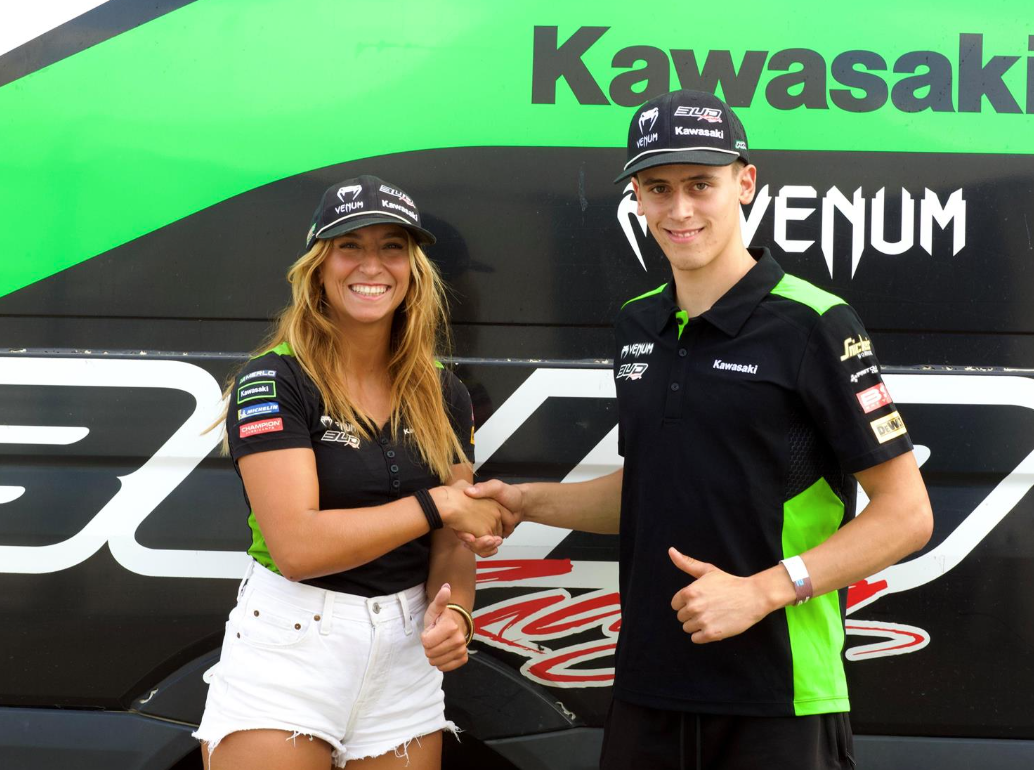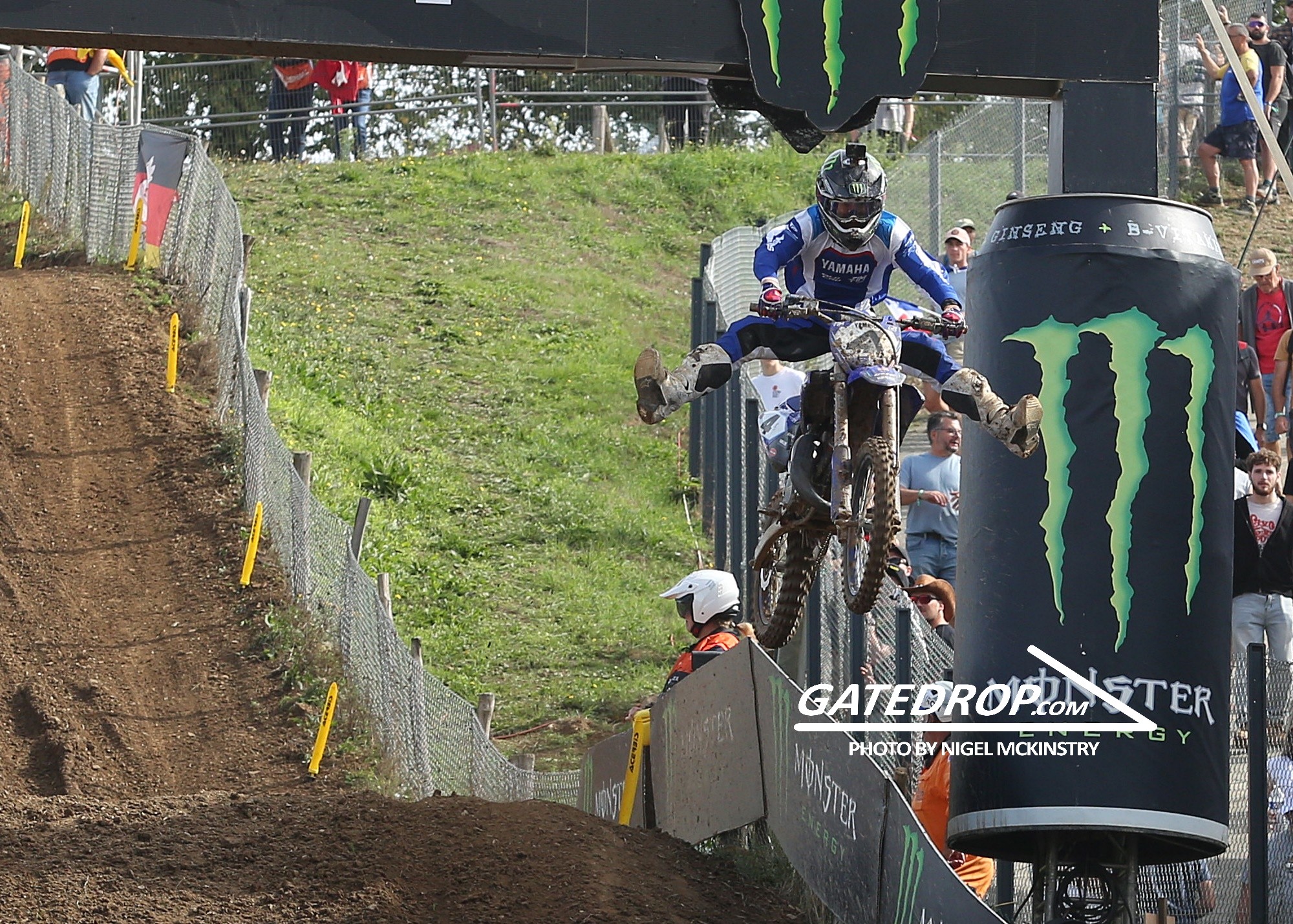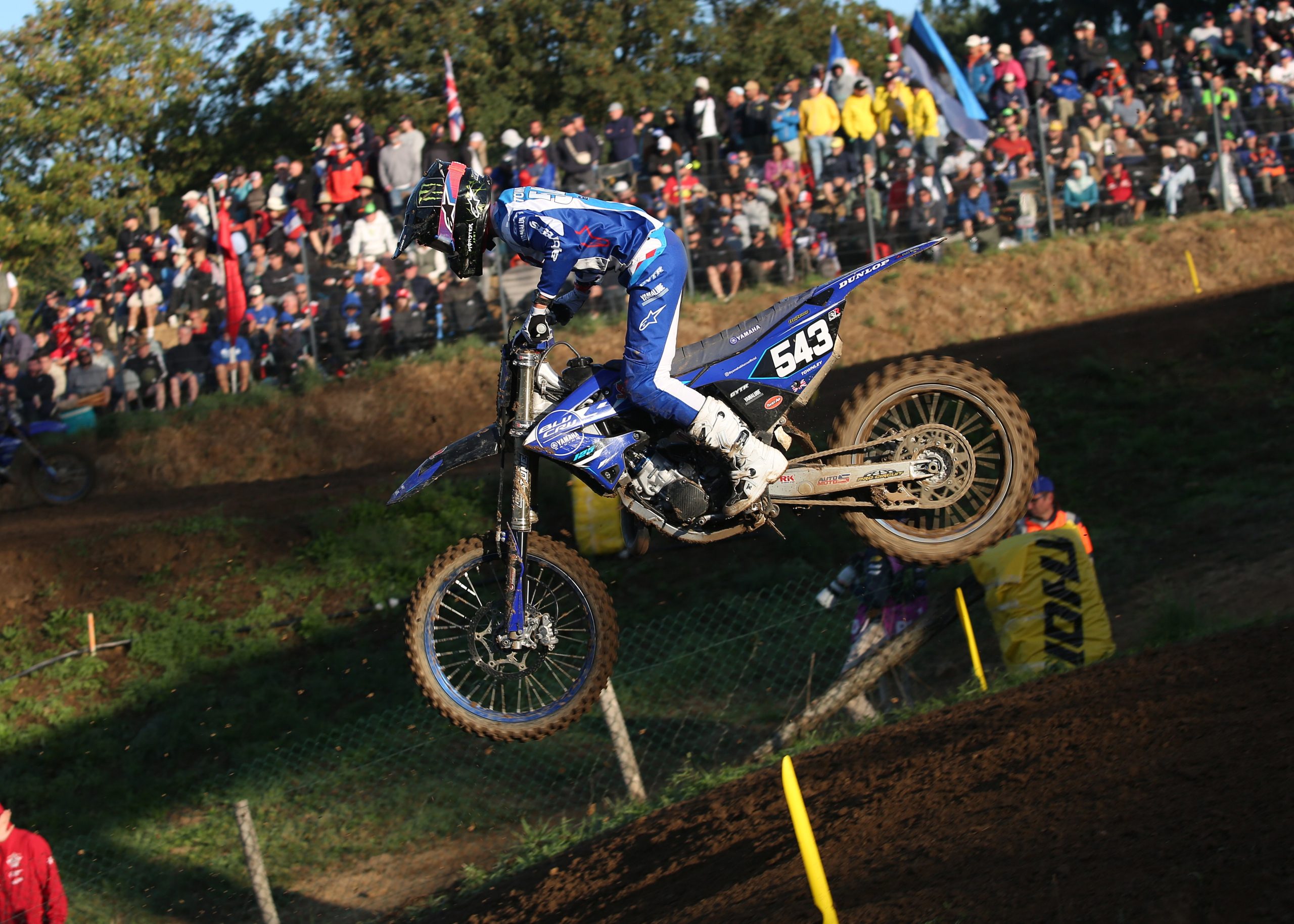


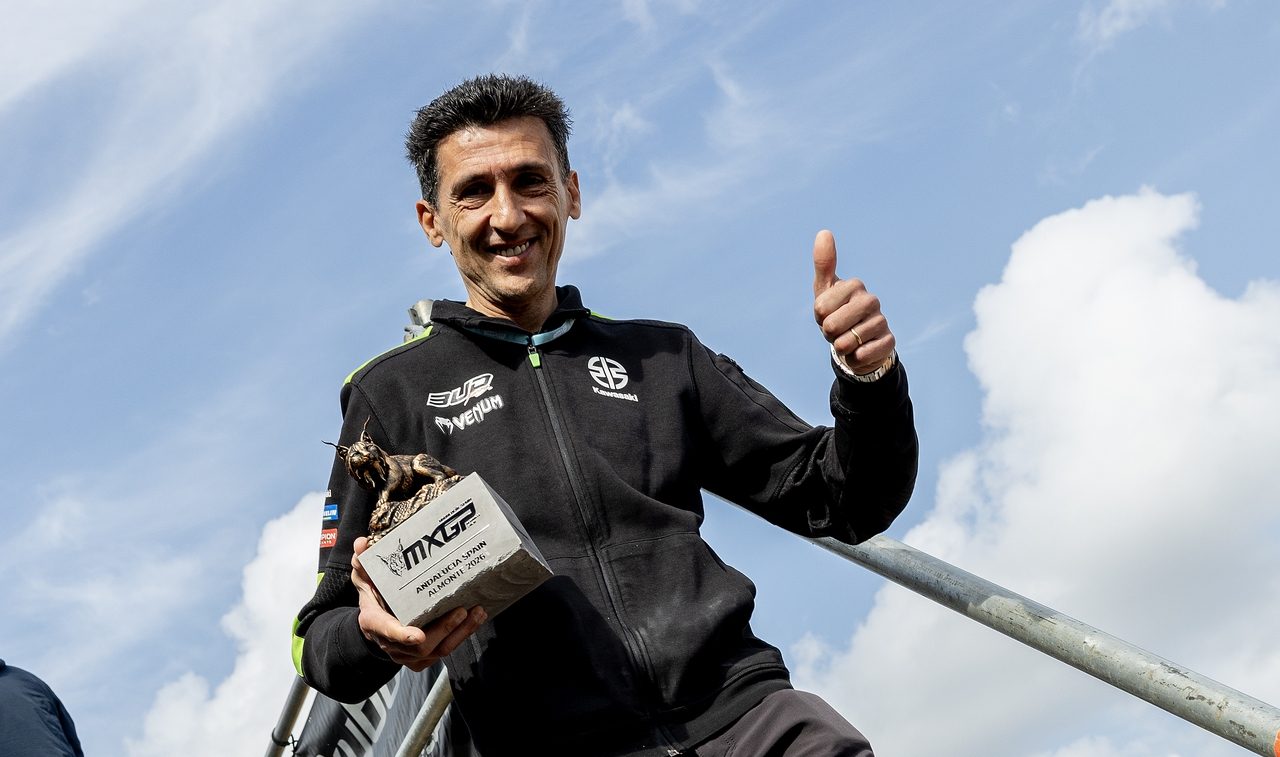
With Francisco Garcia and Jake Cannon leading the EMX250 Championship and the French Elite MX2 series respectively, Bud Racing Kawasaki has enjoyed an almost perfect start to the 2026 season. Between sporting success, team management, and long-term vision, Stéphane Dassé reflects on a campaign that has got off to the best possible start. But beyond the results, the head of the French structure also shares his unfiltered thoughts on a wide range of topics during the French Grand Prix weekend. Interview by Kevin Frelaud.
Stephane, things seem to be shaping up very nicely this season with Francisco and Jake. First and second in EMX250, and you’re also leading in the French Elite Championship. Could you have hoped for a better scenario this year?
Dassé: Honestly, no. For us, it’s the dream scenario. We knew we were going into a second season with both riders, so naturally we expected them to be a bit stronger, especially Francisco, who already finished last season very well.
Jake was still a bit of an unknown. But both of them worked extremely hard over the winter, everything has gone smoothly, and it’s true that our start to the season has been almost perfect.
I’ve recently been looking into the development of the MXGP World Championship, its commercial potential, and its attractiveness for teams. Bud Racing competes in the European Championship, where there isn’t the same television exposure. Does that lack of visibility make it harder to secure budgets and partners?
Dassé: It’s difficult to say because we’ve never really had the opportunity to be on television full-time with this programme to compare. Whenever I attend a MotoGP event, I see the impact and exposure the sport generates for the product and its partners. When I go to a motocross championship, and even more so a supercross championship because of the atmosphere and spectacle, I genuinely feel our sport has enormous potential for growth.
For us, as an EMX team, we’ve always been used to this situation. So it’s hard for me to measure what we’re missing out on because of the lack of television coverage. I find it difficult to imagine motocross ever being broadcast live on national television, particularly in France and Central Europe, where we’re often confronted by people who believe that being seen as environmentally conscious is the priority above all else. Because of that, some sports are sacrificed because of their image, and that’s a shame.
You’ve been in the paddock for a long time and know this sport inside out. Economically speaking, how healthy is the motocross industry?
Dassé: I think business remains strong in motocross. The current economic climate is difficult, especially with travel expenses and fuel prices affecting transportation costs. More broadly, everything we eat and buy is becoming more expensive because everything has to be transported. That’s a major issue.
However, the business itself remains healthy. Growth may not be exponential for us, but things are still going well. We work hard and, overall, we’re doing okay.
What do you think explains Bud Racing’s stability and longevity, not only as a team but also as a company?
Dassé: First of all, we’re cautious people and we’re passionate. We’ve been around for a long time. Most importantly, we know how to manage our finances. It’s like life: some people spend everything at once. We run a company. Some years are very good, others are less so, but over time it balances out.
Overall, things are going well. Loyalty is also important. We’re loyal, and our partners are loyal to us. We don’t change direction because someone offers €10,000 more elsewhere. I think that loyalty pays off over the long term.
What do you think about the French Federation’s investment in EMX125 structures this year?
Dassé: I think it’s a very positive initiative. We’re fortunate to have Sébastien Poirier, who has significantly improved communication and the mindset within the Federation. He has a strong team around him, and I think what they’re doing for young riders is excellent.
Without that support—apart from Sleny Goyer—I don’t think any French rider would have their current EMX125 seat.
Even for riders coming out of the 85cc class at the right age, the first year is always difficult, and very few people would have trusted them with a ride in 2026. What the Federation is doing is important because it allows riders to take an intermediate step before moving into EMX250. It gives them a genuine opportunity to bridge the gap between 85cc, where they’re still working with their parents, and 250cc, where they’re riding for professional teams.
My feeling is that by the end of the season you’ll be looking for at least one, maybe two riders. What do you think of the upcoming generation, especially the French riders? Can you see yourself signing a French rider next season?
Dassé: It’s very likely we’ll have two new riders next year because Francisco and Jake are both leading their championships and their contracts with us are coming to an end.
Of course, having a French rider would be great. I think it will happen with future generations. Right now, there’s still a small gap. At the moment, there aren’t many French riders truly ready for EMX250. As a team, we need riders capable of fighting at the front, so it’s not straightforward. That said, we’re paying close attention to the French riders. There’s an interesting new generation coming through and we’re following them closely.
A word on Francisco. Considering what he’s achieving this year, he’ll probably be one of the most sought-after riders coming out of EMX250. As Kawasaki’s official EMX team, is the goal to eventually move him into KRT?
Dassé: Absolutely. Our goal is to help him find the best possible opportunity for his future. Francisco loves our bike, feels very comfortable on the Kawasaki, and likes the chassis.
I think his main focus right now is continuing to improve and making a successful step into MX2. After that, he’ll undoubtedly have several opportunities and it will be up to him to decide. But at the moment he’s happy, and I think things are heading in that direction.

You also help Tim Lopes. He races sand, supercross and motocross, and is currently in the United States trying to qualify for Loretta’s. That’s quite unusual for a French rider of his age. What’s your view on him?
Dassé: Tim isn’t actually the best rider of his generation. Throughout his career, there has usually been one or two riders ahead of him in each category. He’s often been near the front but mostly fighting for second and third places. He hasn’t won championships, but he’s incredibly versatile.
That’s something we really appreciate about him. He does a bit of everything. He’s also local to us, which makes working together easier.
At the moment he’s a support rider. Next year he’ll move into the 125cc class. We’ll see how things develop. Nothing is set in stone yet. EMX125 is a huge step and far from an easy category.
At Bud Racing, Kawasaki doesn’t have a 125cc model in its range. That means we’d have to develop a factory-spec 125, like we did previously for the Coenen brothers and Moreau. It’s part of our plans, but it’s a major investment. Everything has to come together. Our objective remains to support young riders and give them opportunities as long as they continue showing commitment.
You’re Kawasaki’s official EMX team. I often hear that Kawasaki’s support is more financial than technical. With KRT already running an MX2 programme, would you like more technical support, or are you happy doing things in-house?
Dassé: No. In reality, we have direct contact with Japan. We prepare the bikes ourselves because that’s our core business and something we enjoy doing.
But make no mistake—we exchange information regularly with Japan, share all our data, and receive special parts for testing. The major advantage compared to KRT is that we use motorcycles that will eventually be sold to customers. Because of that, the Japanese engineers pay close attention to our feedback and development work.
It’s similar to Pro Circuit in the United States. They develop their own motorcycles. Every structure has its own way of working. We share some parts with KRT and have a genuine factory connection, but we also maintain our independence. That allows us to continue growing both as a team and as a company.
One advantage we have over a factory team is that Bud Racing works with every brand. Every bike comes through our dyno. That allows us to compare what others are doing and identify strengths and weaknesses. Factory teams are focused solely on their own projects and don’t have that broader perspective.
We may not have the same financial resources, but we have other strengths. It’s a very interesting model and we’ll continue operating this way.
The 2026 World Supercross calendar has been announced and your team is committed to the series. Are you still happy with the promoter’s work despite the changes and new investors?
Dassé: Yes. The promoter changed several years ago and this will be our third season with them. Since they arrived, there has been genuine stability.
Sometimes the calendar comes out later than we’d like, and it’s not easy for them to release it very early. But apart from that, everything has gone very well. We’ve already signed some of our riders, everything is organised, and now we’re eagerly awaiting the start of the championship. We’ve signed three of our four riders so far: Luke Clout and Mitchell Harrison in the 450 class, and Henry Miller in the 250 class.
You’re still very focused on American riders.
Dassé: If you want to be competitive in Supercross, you don’t really have a choice. There aren’t many alternatives.
We’re here to enjoy ourselves, but we’re also here to achieve results and improve. I have nothing against French riders and I hope we’ll have them again in the future.
We’ve already given opportunities to French riders like Dylan, Marvin, Mathis and others. But many GP riders limit themselves by refusing to race Supercross. The mentality is different.
An American rider who spends 150 hours a year riding Supercross will always be better than a French rider who spends 20 hours doing it. Once you accept that reality, the decision becomes very simple.
Looking at the calendar, the trend seems to be towards smaller stadiums. Do you think World Supercross in Europe could ever fill a 50,000-seat stadium?
Dassé: I think it’s the right direction. We’ve seen that 60,000-seat stadiums are simply too large. The World Supercross trend is more in the 25,000 to 40,000 range depending on the country.
In Australia, 40,000 seats can be filled. Elsewhere, it’s more likely to be 20,000 or 25,000. That’s already impressive. In Paris, we’re talking about similar numbers.
You need a venue that suits the size of the sport, with a good atmosphere and fans close to the action. It’s better to have a smaller packed stadium than a 70,000-seat venue that’s half empty.
People also forget that Anaheim seats around 40,000. So it’s not unrealistic, and I think things are moving in the right direction. We’re not in the United States where Supercross is part of mainstream culture. It takes time, but we’re heading the right way.
Since the arrival of new investors, cuts have been made to make WSX profitable in the long term. Is the future of WSX dependent on attracting wildcard riders? They spent huge money bringing in Tomac, Webb, Deegan, Cooper and others. Is that the philosophy?
Dassé: I don’t know. But this year there will be some very good riders contesting the full World Supercross Championship, including American champions. However, if you want someone like Deegan, you need to bring him in as a wildcard because you’ll never get him for a full season.
For Deegan, the schedule is Supercross, Motocross and SMX. He can’t do six WSX rounds. Being able to bring him to selected events is fantastic. It allows the championship to showcase a star rider, which is good for the sport and good for us. It creates excitement and competition.
A lot of top riders have already raced WSX. Roczen is probably the only one who committed to a full season, but we’ve had excellent wildcard riders. In reality, the only major names missing were the Lawrence brothers. That’s already pretty impressive.
If you look at the World Supercross field, aside from the US Supercross Championship, there’s nowhere else in the world with such a concentrated field of American riders. Paris may have three or four stars, but WSX features around 15 riders in both the 250 and 450 classes who regularly make US finals.
Even if you’re missing two or three major stars, the overall level is extremely high and the field is very balanced. For us as a team, that’s excellent for the value of the championship.
Do you expect another response from the Americans in the future? More riders are considering Supercross-only programmes, skipping outdoors, racing WSX, then returning for SMX playoffs. Could we eventually see a rule requiring riders to race outdoors to qualify for SMX?
Dassé: That’s exactly what happened four years ago when they created the SuperMotocross Championship in response to the launch of World Supercross.
But riders like Tomac and Roczen are still around because they’ve stopped doing full outdoor campaigns or reduced them significantly. After 10, 12 or 15 seasons, if you want to stay competitive, you need to enjoy what you’re doing. Mental freshness is hugely important.
Riders with that much experience can still have fun racing Supercross and World Supercross. They travel, see the world, enjoy themselves and earn good money.
If I were a rider, I’d choose a Supercross-only programme. I think riders like Anderson, Webb, Tomac and Roczen fit that model perfectly. Someone like Deegan wants to win everything everywhere. There’s room for everyone.
For me, motocross means MXGP. Supercross means the United States and now World Supercross. Everything can complement each other. There is so much money involved and so many interests beyond our control that it’s difficult to fully understand the stakes. But from a sporting perspective, it’s not a bad thing that things are evolving this way.
Finally, do you have any involvement whatsoever with the Kove project?
Dassé: We were simply contacted by the factory to do some work on the motorcycle chassis. We were consulted, built prototypes for them and worked on KYB suspension development.
It was very interesting. It allows us to explore new ideas and get involved in different projects through Bud Racing. But it’s completely separate from the race team. It’s work carried out through our company, just like the projects we do with other riders and brands such as KTM and Sherco, as well as enduro development.
It’s important to stay open-minded and work with different manufacturers to keep learning and evolving. We’ve built prototypes and developed components for them. They use our equipment and consult us regularly, but it is completely separate from the Bud Racing Kawasaki race team and falls under the Bud Racing company itself.