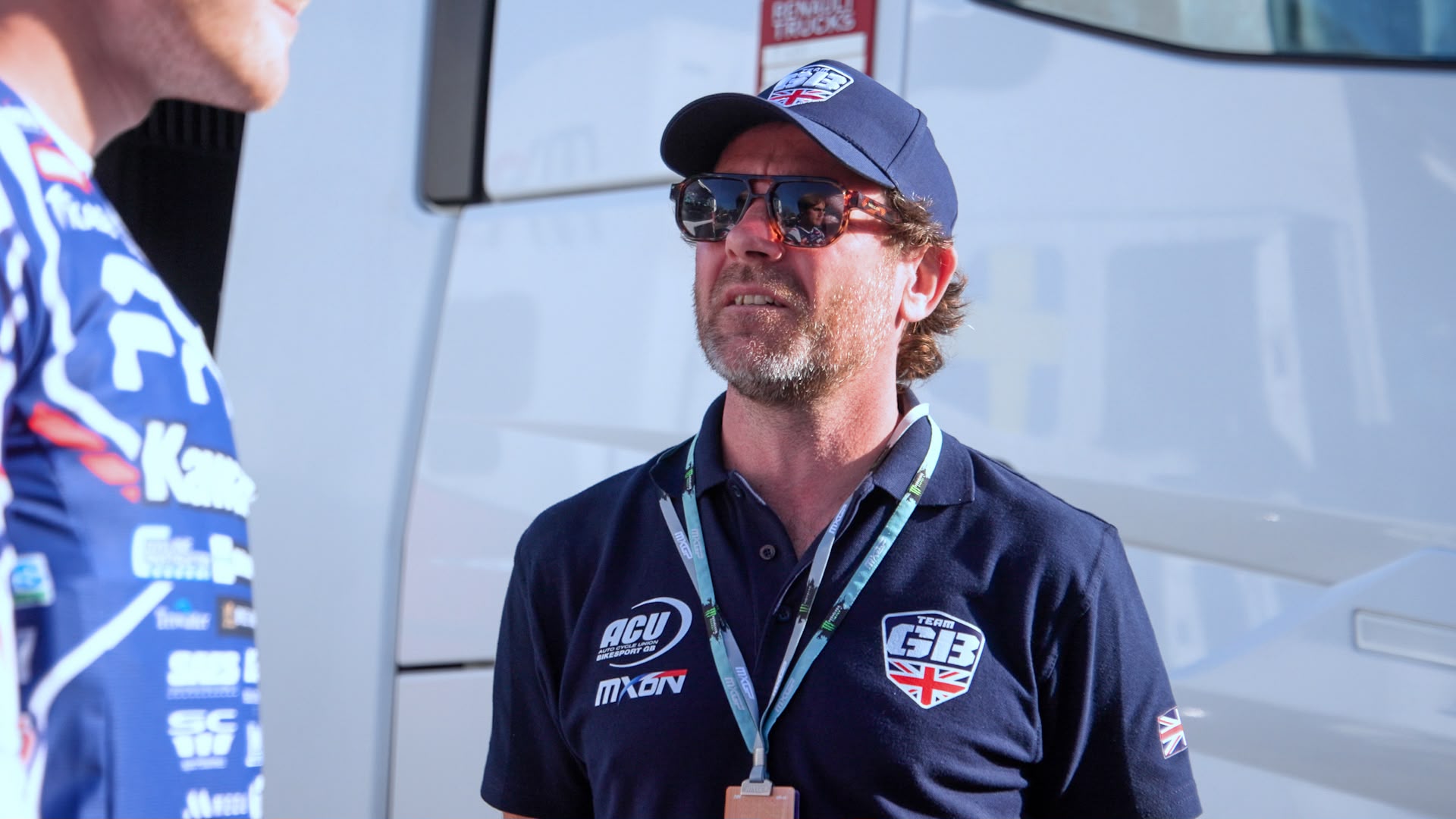




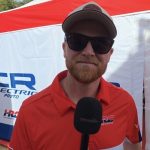


It has only taken Triumph three seasons to establish itself as one of the benchmark teams in the MX2 World Championship. With Guillem Farres and Camden McLellan, the British manufacturer has arguably exceeded expectations this year, to the point where it is now in a position to challenge for both the riders’ and manufacturers’ world titles. It has been a rapid rise that confirms the strength of Triumph’s project on the world stage, just as it prepares to open a new chapter in MXGP. Marco Kamper caught up with Triumph Factory Racing team manager Vincent Bereni.
Vincent, everything seems to be going really well for you with Guillem and Camden this year. I imagine you’d agree with that assessment!
Bereni: Yes. Guillem and Camden are working very hard to achieve these results. I think we’re making good progress with the bike, but I still see areas where we need to improve. We have to keep working week after week and maintain the same momentum. Overall, though, I’d say it’s great to be where we are right now, that’s for sure.
I think it’s fair to say Guillem has surprised a lot of people this year. Has he surprised you too?
Bereni: I’d say no, because the reason we signed him was precisely because we saw something in him. It’s the same story with Camden. At the time, neither Guillem nor Camden were really on the radar of many teams. A lot of people overlooked us, and they overlooked Guillem and Camden as well. I simply think those people didn’t know what they were talking about.
We can see Guillem getting good starts, but Camden has struggled more in that area. Where does the difference come from?
Bereni: They’re on the same bike, so you could easily say the problem isn’t with the bike. But it’s true that we could improve certain things on Camden’s bike to better suit his riding style when it comes to starts. That’s what we’re trying to understand. Week after week, we’re trying to help Camden get off the gate better.
At the same time, though, we can’t become too focused on it. Mentally, you can end up thinking everything revolves around the fact that you’re not getting good starts, and in the end that can do more harm than good.
We know we still have to keep working to improve things and figure out exactly where the issue lies at the start. He’s happy with the bike overall, but he’s not getting out front off the gate. That’s something we’re working on.
With electronic fuel injection, do you use one engine map for the start and another for the rest of the race?
Bereni: To be honest, we don’t really have a specific start map. We simply try to help the riders be at the correct engine RMP, and that’s about it. Maybe we should spend more time working on that—I don’t know! (laughs)
But with Guillem, it’s working very well. You also have to consider the physical differences between riders. Sometimes you’ll see a rider like Sacha have a poor gate launch, but thanks to his smaller build he’s still able to recover well.
And we also shouldn’t forget that there are, if I remember correctly, 12 or 14 factory bikes on the gate. All of those bikes are competitive. Yamaha has a good bike, KTM has a good bike, Husqvarna too… Those are the manufacturers we’re battling against every weekend.
Sometimes we’re at the front, sometimes we’re tenth. Guillem mentioned it in the press conference. Things were difficult for him at Loket, but this weekend he got great starts. We didn’t change anything during the week, yet everything worked much better for him in Belgium.
The start is crucial, and everyone focuses on it. We definitely need to improve that area for Camden. We’re working on it, but we haven’t yet found the right balance.

Do you still feel like the underdogs as a team compared to KTM, Yamaha and the others?
Bereni: This bike has only existed for three years, so every time it goes on track we’re learning something new. Our first year was pretty good. I do feel we didn’t progress as much as we’d hoped during the second year. But over the winter we really put in an extra effort, and it’s clear that it’s paid off.
I think we’re now right at the front, on the same level as the other major factory teams. We’re even leading the manufacturers’ championship. That’s a huge achievement for a company in such a short space of time, considering all the work that’s gone into it. We’ve only been here for three years. Compare that to Yamaha or Honda—they have around 50 years of experience in the sport.
The learning curve has been incredible. We have to make the most of this situation because this is motorsport. Just because you’re at the front today doesn’t mean you’ll still be there in the years ahead. It’s an incredibly tough sport where everyone works extremely hard. This year we have the bike and the riders, so we’re making the most of it.
Guillem and Camden both mentioned the huge amount of work that went into the bike over the winter. What was the main area of focus?
Bereni: It was really a combination of things. If you’re developing both the chassis and the engine in the right direction, then naturally the overall package improves. We worked extremely hard on the chassis last winter, and we made some really significant progress in that area.
The MXGP project has been pushed back and will now begin in 2027. Are you still expecting Mikkel Haarup to be part of the team?
Bereni: Yes. Mikkel will be back with us next year. We’re very happy about that because he was there right at the beginning of the project. It’s nice to have him return. For us, next year will be a learning year.
And when I say that, it’s important to understand we’ve already done a huge amount of work on the project. But MXGP will be another major step forward. Once again, we’ll be up against manufacturers with decades of experience in the premier class. We’ll have to learn the category and try to achieve the same success we’ve had with the MX2 programme.
Will there definitely be two MXGP riders, or has that not been decided yet?
Bereni: At the moment, it looks like we’ll have two riders in MXGP next year.
Mikkel is racing the 450 in the United States this year. That must be giving the team some valuable experience, right?
Bereni: Yes. The fact that Mikkel is racing the bike in the United States is obviously very positive. The regulations over there are different, so the bike is slightly different from the one we’ll race here.
But when it comes to the engine, we’re collecting a huge amount of data. That helps Triumph, the engineers and everyone involved to get a head start, as we were saying.
Then again… Lommel doesn’t exist in the United States! So when we come here next year, we’ll definitely have a few surprises waiting for us. That’s why I said next year will be a learning year—we’ll have to understand the problems as they arise and then find the solutions.