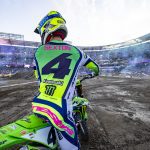
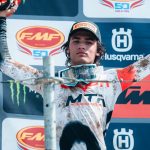
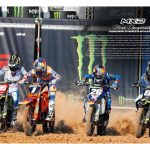
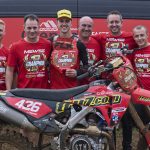


Few riders embody both the highs and the harsh realities of Motocross quite like Thomas Kjer Olsen. From a childhood immersed in racing through generations of family influence, to rising through the European ranks and becoming an EMX250 champion, the Dane carved out an impressive career that saw him battle some of the sport’s very best on the world stage. A factory rider, a proven MX2 contender, and later a key figure in MXGP, Olsen’s journey was built on persistence, hard work, and a relentless drive to succeed.
But alongside the podiums and progress came significant challenges—injuries, pressure, and ultimately a life-altering crash that forced him to confront far more than just racing setbacks. We caught up with Olsen as he was kind enough to share his story with us about his entire journey: from discovering his talent later than most, to racing against elite names like Jorge Prado, Tom Vialle, and Jago Geerts, to navigating the physical and emotional toll of serious injury and stepping away from professional competition.
Now transitioning into a new chapter within the sport, working with the next generation of Danish talent, Olsen reflects with honesty and perspective on a career that didn’t follow a straight line—but one that ultimately shaped who he is today.
GateDrop: So, Thomas, let’s start at the beginning. How did you first get into the sport? You had an older brother, he could have been a big reason how you got into motocross, possibly?
TKO: Yeah, he was, but my Brother also started because my Dad was racing and my Grandad was racing. It’s like most of the guys in the racing world, let’s say, they start because they have somebody related in the family who’s been racing. It’s in the blood in my family, even my Mum’s side has been racing. So, my Dad getting two boys, they needed to ride as well. My brother (Stefan Kjer) also raced the GP’s for one year. He was second in the EMX250 back in 2012 – he was battling Mel Pocock at that point who went on to win the title. Motocross has been running in the family.
GateDrop: Growing up, I guess you mainly raced in Denmark, like most riders do, they race in their home country. But do you remember if there was a specific time when you thought you were quite good and better than the average rider and you maybe even had a shot at making a career?
TKO: Yes, and to be honest, it came pretty late for me. Because, like you said, I’ve been racing mostly in Denmark early in my career, I was mainly staying in Denmark. I did start going to some ADAC’s when I was racing the 85cc, but that was it – there was no Europeans for me back then. I realized very late that I had the skills and that was probably at the end of 2015, so right before I won my EMX250 title. That was really late, actually.
GateDrop: You raced the European Championship. I think you went straight into the EMX250 class. Nowadays, you know, most riders start in the EMX125. But just how did you find going straight into that championship? Obviously, the level is a lot higher than Denmark and the ADAC. I imagine at the start it was probably quite tough, but you clearly figured it out.
TKO: Exactly, I actually did race the 125cc one year but I didn’t do any EMX125 races. I was supposed to do two races, but I ended up breaking my leg right before that. So, that got cancelled. Straight after that, my brother got onto Team J-Tech. He got onto that team, and I kind of followed him which meant I just went straight into the EMX250 class.
I must have been like 15 years old at that time riding a 250cc Yamaha. It was difficult in the beginning, being so young. But actually, when I look back, I did kind of good early. I did a few top 10s as a 15-year-old in EMX250. I think that’s not too bad but again, I got injured. After that, my career kind of plateaued a little bit and I needed to find myself. Honestly, I needed to learn a lot of stuff. I just had a period where the results were a lot the same – inside the top 10 round 7th and 8th . In 2015, when I went to Bodo Schmidt, things got a little bit better, but still not quite as good as it could be, obviously. Rasmus (Jorgensen) came into the picture in 2016 and everything changed.
GateDrop: Obviously, you won the EMX 250 Championship in 2016, an amazing achievement. I mean, just take me back to that season. How did it feel to win a title? Even when you look back today, you must be pretty proud. Were you the first Danish guy to win an EMX title?
TKO: I am pretty sure Mikkel Caprani won an EMX title (EMX125 champion in 1993). For that season, I would have liked to be racing the GP’s that season. I think I was already 19 for that season so I was thinking, I’m supposed to be in the GP’s already. But Rasmus was good at keeping me grounded. He heard that I wanted to race the GPs, and he agreed but let’s first win this EMX250 title and then we can move on.
It sounds kind of cocky to say, but we pretty quickly realized that I did have the speed to do it. But doing it is a different thing altogether. We realized really early in RedSand for the preparation that my speed was pretty good. When we were there all Suzuki guys were there. Every time they would go on the track, Rasmus would send me out with them. I would look for them, and they would look for me. We would look for each other and compare, as riders do, you know. So pretty early we knew we’d be at the front.

GateDrop: For 2017, it was your first big proper factory ride, Factory Husqvarna. That was your rookie MX2 GP season. I mean, first of all, how did you find signing for a factory team? Sometimes that can add a lot of pressure, but it didn’t really seem to faze you. You know, third in the world, that’s very, very good as a rookie…
TKO: Thinking back to that, no, it didn’t faze me a whole lot. I think I was so locked in and so overprepared that I was like, this can’t go wrong in any way. I trusted my program so much that it was enough for me to have some confidence in myself and just calmness inside me.
GateDrop: I would say 2019 was probably the first year you were a genuine title contender… You might disagree with that. You might maybe think a year earlier, but that year you had Jorge Prado to contend with. Just how was that? Obviously a very tough competitor and young competitor at the time, but when you see what he’s done to achieve, probably puts things into perspective a little bit…
TKO: It sure does. I agree with you that 2019 was probably the first year that I saw myself as a title contender as well. In 2018, I was putting myself in a position where I think I had like 10 podiums that year, so that was kind of a stepping stone to being a contender in 2019.
Racing Prado, as most people will tell you, to race Prado is tough because I’m not a really strong starter. So, even on the weekends, I was as fast as him. He started five positions in front of me, and that was just enough for him to have that. If I would have caught up to him, I would have been finished. I would have spent all my energy at that point where he’d been like let’s race, you know. He’s just such a smart rider. You see it when he was able to add two MXGP championships, obviously it says that you’re a smart rider, but he’s just so good with his line choices and defending his lines and stuff like this. Racing him was definitely a tough ask, for sure.

GateDrop: In 2020, you didn’t have a Jorge Prado to contend with, so again, you were probably going into that season as one of the title contenders anyway. But then along came Tom Vialle and Jago Geerts. Obviously, at the time, we probably didn’t know how good they were, but we quickly found out how good they were. They had a bit of an era there in MX2. You seemed a little bit off that year, though. I can’t remember if it was injuries or not, but how would you reflect on 2020 and battling against those guys?
TKO: For 2020, like you said, I was definitely going for the title. I was putting that in my mind, that I needed to win this title. I acknowledged Tom and Jago a lot, so I was not taking it easy. I was doing everything I could to prepare as much as possible. Unfortunately, right before the first, while doing my preparation, I crashed in Spain and broke my scaphoid. That slowed my preparation down. Before the first GP in England, I think I had two times on the bike in eight weeks or something like that so that was really tough. I was still riding with a lot of pain in my hand the first two rounds.
We were in Spain, because there was a little gap before. It was two GPs, then a little gap, and then another GP, and we were going to Spain to get a little bit more seat time. I remember I just couldn’t ride, because I had so much pain in my hand. At this point, we had done two GP’s, and I couldn’t practice. But then Covid happened and immediately when that happened, I told Rasmus, I needed to get this hand looked at, because I had so much pain.
I went back, got the screw taken out of my scaphoid, which kind of fixed the problem. I then started practicing during the Covid times again – it was kind of like an off-season. The last day of practicing, before we were supposed to go to Latvia for the GP, I crashed and broke my shoulder blade. I was going to Latvia, and I was not sure if I could race or not – I had so much pain. I was right back where I started that year. Reflecting back on your question, do I think the pressure of going for the title had a factor? I’m not sure, but it might have. Going for a championship can be a huge thing, and even though you don’t see it yourself at the moment, it can put some little bit unnoticed pressure.
GateDrop: In 2021, it was time for a new chapter, MXGP. The good thing is, even though you didn’t have a great year with injuries and stuff, you still did enough to get a full factory ride in MXGP. Now, being a full factory MX2 rider, it’s even different than being a full factory MXGP rider. Just how was it being a full factory MXGP rider as a rookie, you know, as part of that big setup, and it was your first year in the class? I mean, I always thought you would good on a 450, but it’s obviously not easy…
TKO: Firstly, going to IceOne was a huge dream for me ever since I was a young boy. You know, that was just a huge achievement for me and I was so happy. The tough part from the beginning was that I was put a little bit into a position where I was the main guy, because Arminas Jasikonis just had his crash, but stayed with the team. It was just us which made it difficult for me because I was the rookie and now it depended on me.
I kind of needed a year to just settle into the class. Like you said, I also thought I would suit a 450cc really good. I still think I would have, but it takes time to get on a 450cc, especially because I was so big and heavy for the 250cc, that I could really manhandle that bike. When a big guy like me goes on a 450cc, you can’t ride the bike the same way as a 250cc, it’s going to rip off your arms if you do that. I had to learn how to ride that bike. That was tough in 2021, and just having to be that main guy for Husqvarna was not easy as well. Looking back, I would say I’m still kind of proud of that season, because I did a lot of top 10 finishes, even some 6th place, 7th place finishes. I was not happy that season with the results, but looking back on it, I don’t think it was that bad at all.

GateDrop: I actually forgot you were the main guy that year. A lot of people reading this will probably forgot as well. But then you lost your full factory status for 2022. You signed with the Diga-Procross KTM team. Now, you did still get a bit of factory support, but how did you feel, losing your full factory ride? Was it tough, or were you happy enough?
TKO: At the beginning it was tough, because it was that feeling of losing a factory ride. Like you said, I still had factory support, so in the end it was still good equipment, and that’s what I could kind of relax thinking about. The team was good, I had a good bike and I can still do good results with this. That’s what I thought. But again, just that thought of losing a factory ride was tough in the beginning. I think it was a good step for me, actually, that year, because I needed a little bit less pressure. After being the main guy for Husqvarna, I needed a little bit less pressure, so in that case I quickly came to an understanding, and this is the best thing for me.
GateDrop: On that year, in terms of your Motocross racing career, that was the year it all kind of went wrong for you. Take me back to that day in Kegums, what do you remember if anything about that day from the crash?
TKO: We’re going straight into a trauma. I’ve tried not to think too much about that day, because it brings up a lot of tough memories for me, but I can touch on it for sure. I don’t remember a lot from that day. I remember, to be honest, a few faces here and there. It’s not a whole lot. Only a few glimpses of me in the hospital. Other than that, it comes back to me a month later, which is crazy to think about as well. About a month later, I start to remember things again. I wouldn’t say myself, but the healing for sure started.
GateDrop: What have you been told about the condition you were in and the time you spent in a coma? I’m sure it was very tough for everybody involved in your corner.
TKO: For sure it was tough for my family, and it’s tough for me to hear them talk about it. That just brings up a lot of emotional emotions in me to think about how my family felt in that moment. Obviously, I was in a coma. I didn’t feel or think anything.
GateDrop: When you first became aware of what was happening, what was the hardest thing you had to deal with and try to process?
TKO: I think the whole healing part was tough to stay calm in that moment. Again, with my emotions and having that injury and stuff, obviously, I was relieved when they told me I would have a full recovery. But still, the road was so long. They said it’s going to take a lot of time. It’s not about a week, It’s not about a month, It’s about years. Because the brain is not like a bone. It’s not like they can take an x-ray and say, oh, now you’re fully healed. I would say I’m doing good today, but again, we never know if I’ll be fully healed tomorrow or in 20 years.

GateDrop: Whenever you’re recovering, you’ve got a lot to deal with, obviously, physically and mentally. What was harder or was it both equally as hard to deal with?
TKO: I would say, just recovering and getting my senses back. I would say that was the toughest part. Then, again, I would kind of say combined because when you have a concussion, you’re not fully right in the head. I kind of knew I was not coming back to racing. When you put that on top of the injury, it just makes it so much worse because you’re not very good at handling your emotions and handling your thoughts. That’s what made it really difficult.
GateDrop: This is a sport you love, you’ve been doing it from a young kid. You probably doubted you’d be in the sport again. Did you ever start to resent the sport for what happened to you or not?
TKO: Yeah, I actually did. I just said a little bit about straight when I got a little bit well again. I would say immediately I was pretty clear that I’m not sure I’m coming back to racing. Again, I shouldn’t even have been thinking about that at that point. But obviously, you just kind of automatically do it when you’ve been racing since you are three years old. So I was pretty fast, I’m not coming back. It would be too tough, I knew how tough the MXGP class is. Immediately I was like, if I’m a little bit off, I’m not going to make it in MXGP because I need to be 100%, if not 110% every time I’m on the track there. If I’m not ready to do that, I don’t want to go out there and be finishing P20 every weekend, I’m just going to get frustrated with that. Maybe a little bit too early to think about that, but that was fast going in my head when I was already in the hospital and recovering.
GateDrop: Family, friends, teammates, the motocross community, people in this paddock, just how much of a role did that play in your recovery? I’m sure that helped you in some way. Is it better having people in your corner than just lying there and having nobody?
TKO: Yeah, Rasmus, who was with me all of my career as a trainer, he was obviously in my corner and kind of helping me to get the support wherever he could. Obviously, there’s not a whole lot he can do but just being there was good. Obviously my family was a huge, huge help.
My Dad moved down to me in Belgium for around a month and stayed with me and just took care of me. Thinking back to that, I’m grateful for my family being there for me, for sure.
GateDrop: You obviously never made a comeback and raced MXGP or anything like that, but if I remember correctly, you did at least one Danish Championship, maybe a few. Did you enjoy coming back and racing at that level? It’s obviously not the highest level, but, you know, you’re still going out riding against some decent riders. Did you enjoy that and what was that like? And was it nice just to be back on a bike again after everything you’ve been through?
TKO: I did one round of the Danish Championship and no, I didn’t ‘enjoy it (laughs)
GateDrop: Why? Because you weren’t as fast as you were or was it frustrating?
TKO: Well, the speed a little bit, but the main thing was just I was so nervous, so scared. I was really scared. I remember I only realized I was scared when I crossed the finish line after the second moto. I was like, thank f**king god that is over. I was like, dude, I’m so happy that I didn’t have a big crash or anything today. I was just so glad it’s over with and then I realized, I should not do this. I finished in around seventh and eighth in those moto’s so the result weren’t great. I realized after I was so scared during that whole day and realized it’s just not worth it for me. Most people, they stay racing because they have the most fun doing that but for me, I think I have such a big trauma from what happened that I’m not willing to push back to it. That’s just not worth it for me. There is a different life out there for me now and I’m content with all that.
GateDrop: Do you ride at all now then?
TKO: Well, I actually still do have a bike from Husqvarna, which I’m very happy about that I can still ride if I want. I think last year I did maybe 10 hours of riding so it’s not a whole lot.
GateDrop: I assume this is just at practice days?
TKO: Yeah, just practice days when I can just do my own thing.
GateDrop: Do you enjoy that when you are on your own just riding around the track?
TKO: Yes and no. I have to be careful because, of course, I like to go just cruise around the track. But the thing with me is I’m a racer. You know, growing up I compared myself with other riders and I still do that. So, if there’s a fast guy on the track, there was actually a fast guy on my home track the other day, and as soon as they’re out there, I can’t help myself but just try a little bit. I don’t have the speed, I haven’t been riding a whole lot the last four years. I don’t have the speed or the fitness to do anything but I can’t help myself than to go into this racer mode and then I go all out. I don’t know why I go into that mode because I’m not comfortable with it. Every so often that happens and I step away a little bit and I slowly come back. That’s kind of the circle I’m doing. But if I can just cruise around, think about myself and not race anybody, then it’s fun and I enjoy that.
GateDrop: Well, you now have a role with the Danish Federation. How did this all come around? And can you tell me a little bit about what you do within this role?
TKO: It came around from Emil Larsen was the Danish national coach before me and I’ve been working with him as well. He was kind of ready to give the role to somebody new. At that point, I had a normal job for about two years, which I found out sucked.

GateDrop: Away from motocross? What was your job?
TKO: The job was away from motocross. I was a carpenter and I sucked at it (laughs). I was ready for this role. You asked me before if I resented the sport, and I did a little bit right after I stopped for about those two years. I did kind of take a step away from it and didn’t really watch MXGP or anything. But then I kind of started to come back into it and that’s around that time where it’s been two years at this point since my injury. I’m starting to watch, follow it again and I actually started training one or two guys and started to think, I actually do have a lot of knowledge here, so why not try to pass it on?
This opportunity happened, and I thought, it would be a great opportunity for me to pass on the knowledge to the good guys because that’s even more in my area where I really have the knowledge to hopefully help them get to elite level. I decided to go for it and I’ve been happy with it so far. Helping the young guys and figuring it all out. I have to think about what does the individual person, what do they need? They already know how to ride a bike because they’re already racing in the European Championships. They’re already really good riders, and we have some great results already this year.
This is my second year, so I’m still learning, and there’s still things where I’m learning. It’s just like when I was riding, maybe I can do this or that a little bit different. I’m still learning a lot and I get some joy out of it, trying to be the best trainer now as I can.
GateDrop: There certainly seem to be a lot more Danish talent around now than when you raced, you must be really pleased to see that? I’m sure you were an example to some of them!
TKO: I definitely hope so. I hope I was an example. For me, I don’t see myself as a huge talent. I see myself as a guy that worked hard to get where to where I was. It’s great to see that some of these young guys having that same mentality of hard work and dedication. That’s already paid off for them, so that’s great to see. Denmark is such a small country, so to see even the guys we have now up in the front is great.
GateDrop: Am I right in saying you also select the Danish team for the MXoN, how do you find that?
TKO: Everyone wants a place on the team but you can only pick three riders. Of course, you make some of them happy, the ones that can go, but then you also make others disappointed who can’t go, so it’s a tough part. The whole event is tough, because it has to come together for all three riders, which we had a tough time doing last year. We had a lot of injuries, and we had some great riders there, and we’re looking for a great weekend, but things went wrong already in the qualifying, so we still managed to qualify, which is great. It’s a tough event, because it all has to come together, obviously, for any country but I enjoyed it, and I’m looking forward to it this year as well.
GateDrop: After yourself, probably the next fastest Danish guy on the scene was Mikkel Haarup. What have you thought of his career so far? He’s certainly done well for himself, whether it’s racing EMX, MX2 GPs or in America…
TKO: He really has done great. I think when I went out of the GP’s, that was the year he got multiple podiums in MX2 GP’s and established himself there. I’m proud of him, how he has developed as a rider, and how he was able to get a lot out of his MX2 GP career, for sure. It’s going to be interesting to see now, with him moving up to the 450cc and going to the USA. I know that it’s a difficult step, so I’m really looking forward to seeing how he can do it. And I know he’s a hard worker, so I know he’ll do the work necessary to get to the top.
GateDrop: Do you think enough is being done in terms of rider safety at the highest level?
TKO: I think there can always be improvements. I see them doing things with the helmets and chest protectors so I am happy to see that. It’s difficult to say because it’s such a dangerous sport. Two wheels, jumping with bumps everywhere. The track changes every lap so it’s difficult to say if enough is being done. Some people will say more can be done and some people will say it’s fine. With the 250cc, it is getting faster, faster and faster which can increase the risk a little more.
GateDrop: What still motivates you today?
TKO: What motivates me today is trying to help the youth. I will try to pass on the knowledge that I have and just try to help. This is the education that I took – I didn’t have a normal education like everybody else so I want to use that to help others.