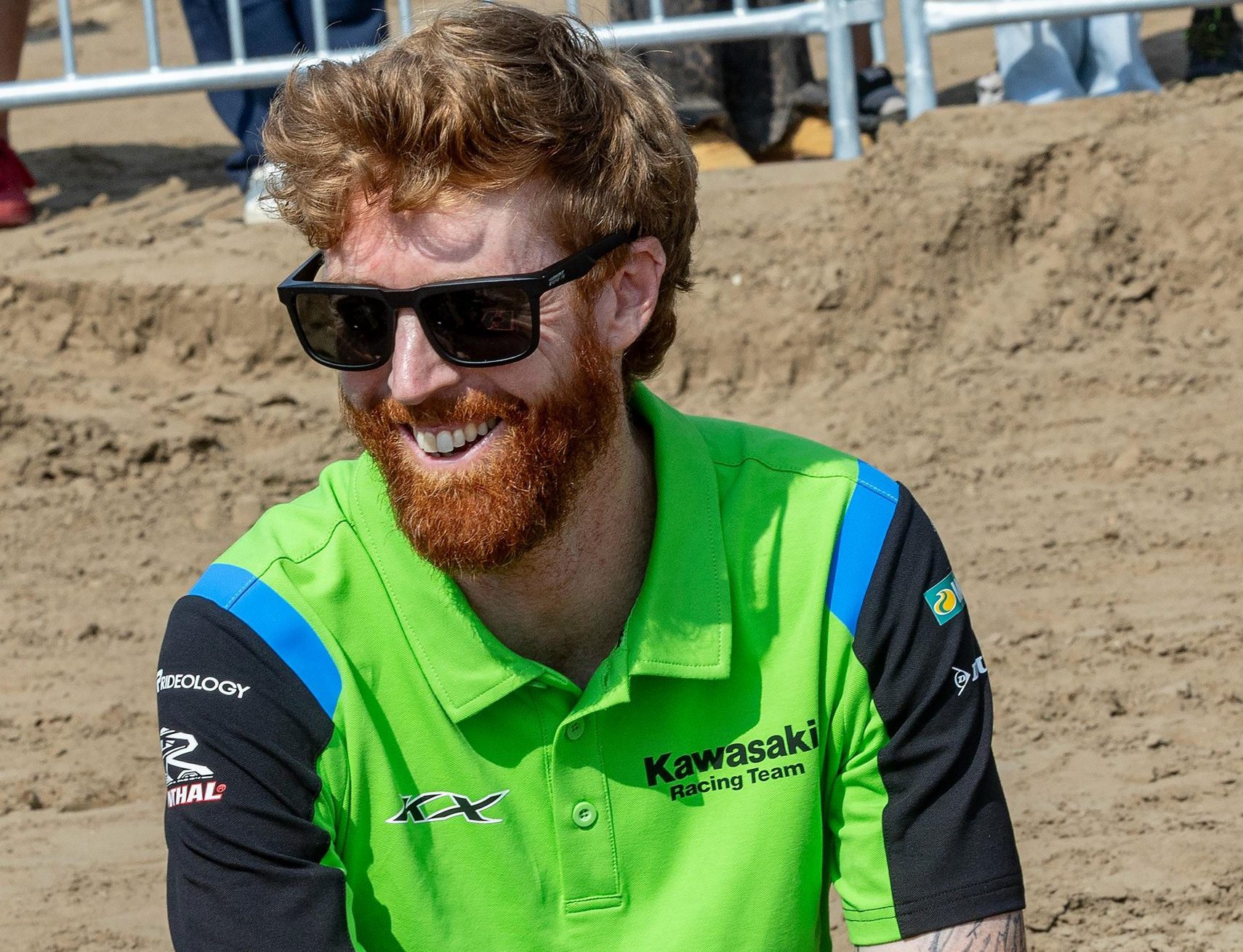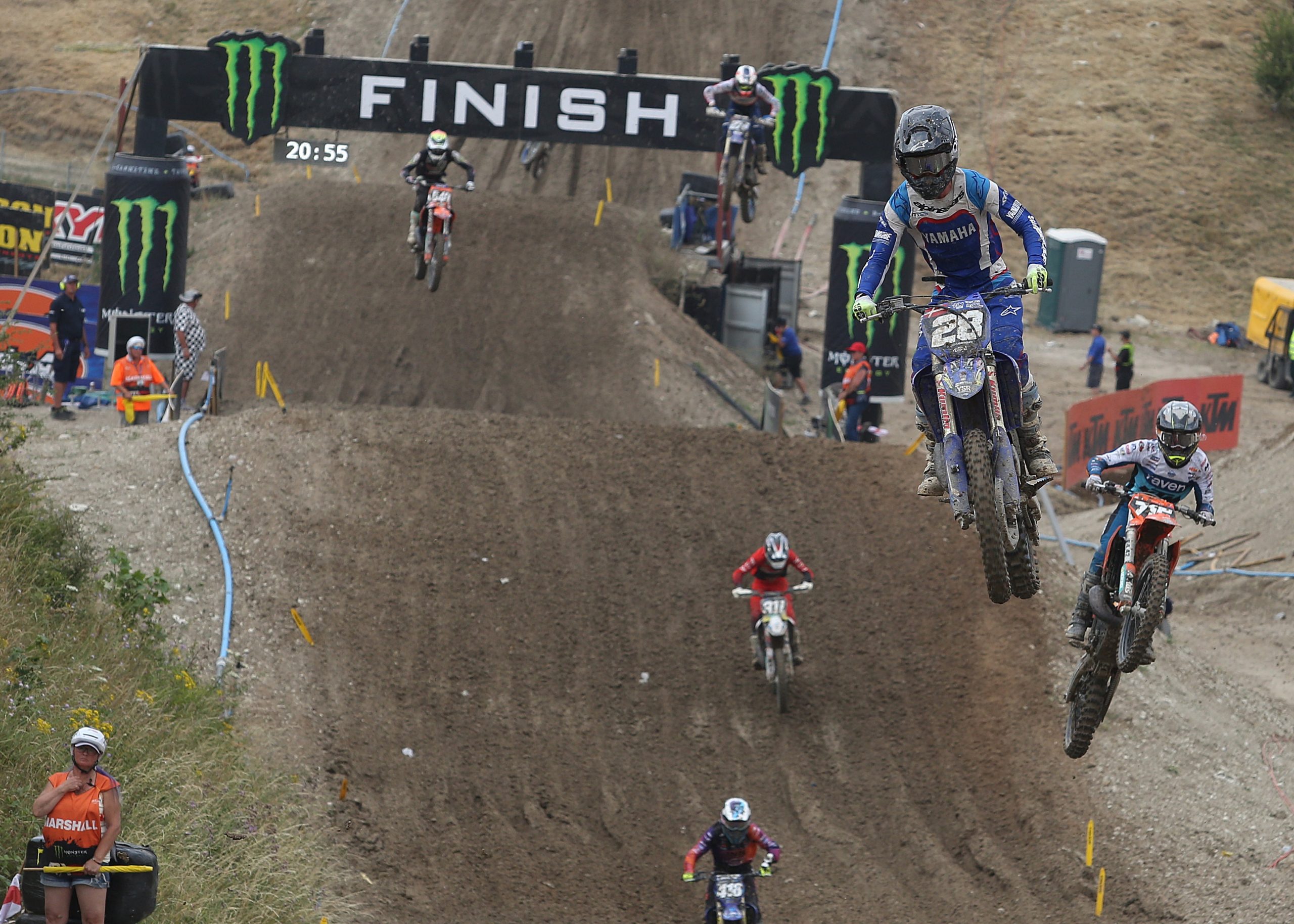


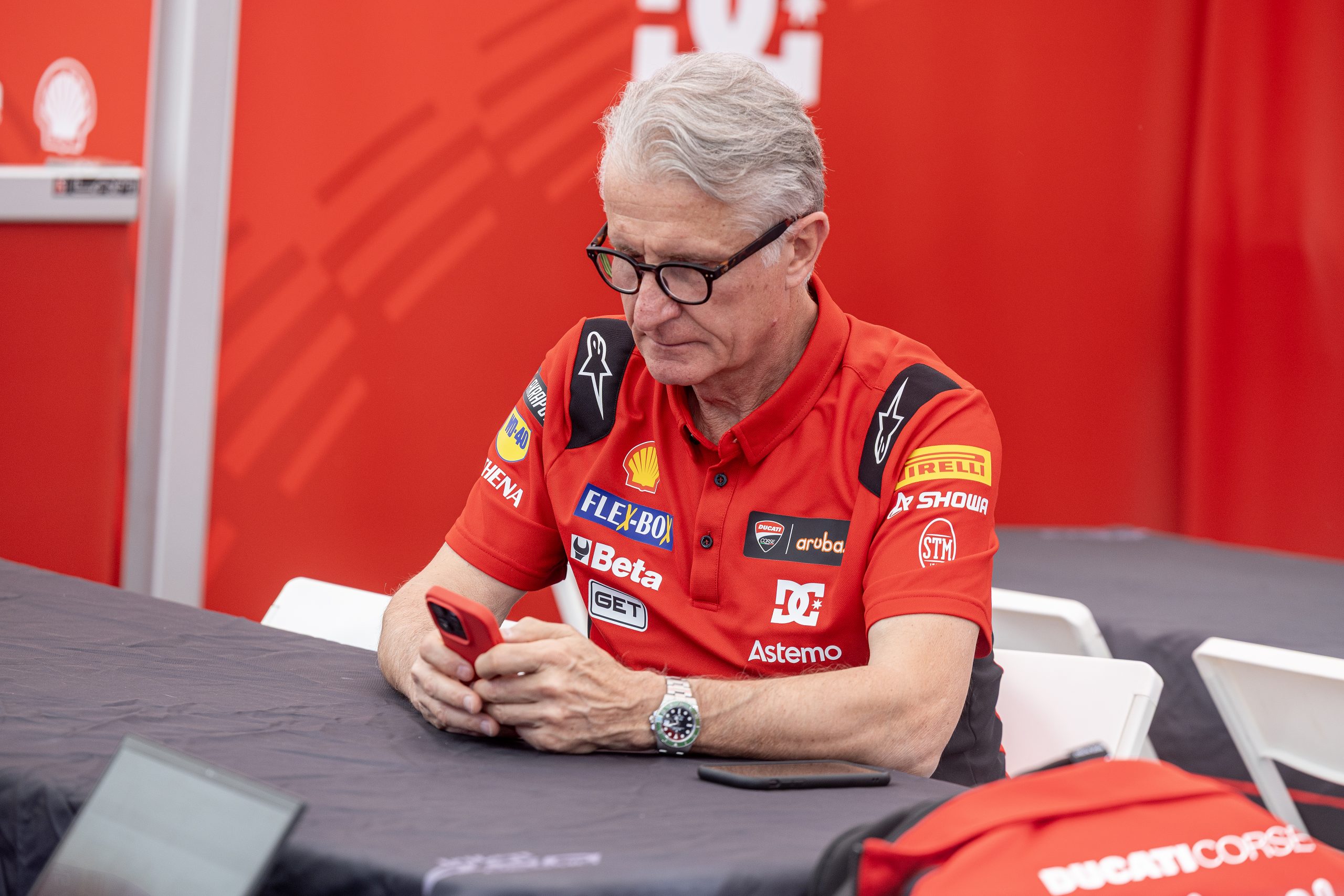
After years spent at the very heart of MotoGP, Paolo Ciabatti has embraced a fresh challenge in the Motocross paddock as Ducati continues its ambitious expansion into off-road racing. With the Italian manufacturer now active across MXGP, MX2, EMX250 and the American Supercross scene, the project has quickly grown into one of the sport’s most talked-about developments. While there have already been flashes of promise — including podium finishes in MXGP and encouraging performances in AMA Supercross — Ciabatti remains realistic about the scale of the challenge facing a brand still in the early stages of its Motocross journey.
In this interview with Kevin Frelaud, Ciabatti discusses Ducati’s transition from Maddii Racing to the Louis Vosters-led structure, the importance of the American program in accelerating development, the balance between rider feedback and technical progress, and the long-term vision behind Ducati’s growing off-road pyramid. He also opens up on the comparisons between MotoGP and MXGP, Antonio Cairoli’s expected AMA Pro Motocross return, and why Ducati is determined to keep Motocross accessible for the fans.
Paolo, this season, Louis Vosters has taken over Ducati MXGP force. They have a very experienced structure, having worked with several manufacturers in the past, but for them, it’s still something of a fresh start after taking over from Maddii Racing. I imagine this was a necessary step for you, mid to long-term development, but at the moment, it must feel like a step backwards in some way, essentially having to build things up again from scratch. How are we feeling about this season?
Ciabatti: Honestly, I think our first season in MXGP with Maddii Racing was a good one. Obviously, we got our first two podiums in Switzerland and in France. Then during the season, things got a little bit more difficult, but we knew that being new to the World Motocross Championship, we needed to learn. The switch to VMR promotion, the team of Louis Vosters has given us the chance also to extend the number of riders to three, because this was what actually the team was doing before with Fantic and with Yamaha. This also gave us the possibility to gain more information. It’s true that the season started in a more difficult way than we hoped for, especially with the accident of Andrea in Argentina, which kept him away from racing for some time. I think we are quite optimistic. Here today, obviously, we got good results, because obviously, starting from a difficult position on the gate, Andrea was 10th and Calvin 11th. I think it’s a good step.
Obviously, we’ve been using the five weeks between Arco di Trento and here to have an intense development program, trying many different things on the chassis and on the engine. I think today’s result shows the effect of the development work we did.
Is there a strong link between the American program and the European program in terms of data sharing and technical development? The US riders have mainly been focused on Supercross until now, so I’m curious on how much the feedback is actually tolerable at this stage with AMA Pro Motocross approaching and more riders entering that outdoor phase. Do you see it as a key opportunity to significantly increase the amount of usable data and accelerate development across both programs?
Ciabatti: For sure, the US program is very important for us, not only because obviously Supercross is such a popular sport, but because we’ve been able to cooperate with a group of technicians put together by Factory Connection. We have regular meetings every week to share information and share data. For sure, it’s a great help to be able to have this kind of engineering in the USA.
Obviously, the needs for Supercross are quite specific, as you know, because it’s a kind of different sport, different needs from the outdoor, but obviously now the team is getting ready for the outdoors and the information we receive from the United States are really very useful.
Having three riders in MXGP with very different profiles, level of experience and riding style, how does that impact the feedback process? How do you identify what is relevant or less relevant and ensure you’re all heading in the right direction?
Ciabatti: Obviously, having three riders with different riding styles and also different needs is challenging for our technicians and for the team, because obviously we need to find the best setup for three quite different riders. On the other side is a challenge that is helping also to come up with solutions. As I said, we are quite satisfied so far.
As I said, maybe the results we had until today are not reflecting our expectation at the beginning of the season, but I see more from now on, after what I told you before, the development we did during these five weeks, I think we can possibly see different results.
Speaking of the riders, it seems to be a really good engine package, but we’re hearing about a chassis flexibility that’s been addressed, what is to be expected on that matter?
Ciabatti: Well, first of all, I’m not an engineer, I’m not a technician, so it’s not really up to me to answer technically, but I know that there is not really a problem about flexibility or whatever of the chassis.
For sure, we have a different chassis from all the other manufacturers, but the results you could see in Supercross were quite promising. As you could see, we were almost always top ten. When Justin (Barcia) came back, he was leading a heat, and I’ve never seen this as a problem. For sure, to find a good setup between suspension settings, linkage and so on. It has been one of the challenges we had, but I think we came up with some good solution and again, thanks to the cooperation with the US team, this has helped us in a great extent.
Obviously, Justin Barcia has been injured at the first round, but you had Dylan Ferrandis, which most of the time was in the top ten. Are you satisfied with the results of Ducati in the US this season?
Ciabatti: Very satisfied. As you can imagine, the decision to race Supercross came around this time last year because the development has been done really in a very short time. You know other manufacturers took them quite long before they could be competitive in the Supercross. We came and we were already third and fourth in the first heat at Anaheim 1, which was obviously, I think, a very good surprise.
Unfortunately, then Justin had that horrible crash and he just came back for the last three rounds, but I think all in all, in one side, having only Dylan has not helped in that direction because with two riders, obviously, you can collect more information and maybe even speed up the development, but being almost always top ten in the main event. We also had a top five, but then he got penalized but in the end, it was top five as a race result in our eyes. It was something very good and, as I said, to be the first season for a new brand in Supercross, I think it’s a great result.
Correct me if I’m wrong, but I do believe Barcia and Ferrandis only signed a one-year contract with Ducati for 2026. Why wasn’t there an ambition to lock them on the long term or what’s the logic behind that?
Ciabatti: I think it was on both sides because of a new project and obviously, it was like not taking a chance of being linked to a new project, but without knowing exactly at which level we would be. I think from both sides, it was like let’s see how it goes without committing for a longer term because maybe we are very successful and we will continue, maybe there are some obstacles we don’t expect.
We don’t like to have riders who continue with us because they have to. We would like to show the level of our bike and also the level of the development work and then eventually sit together and see if there are the conditions to move on.
We have the Beddini Racing team next to us just here. They have taken over the 250 program with Ferruccio Zanchi and Simone Mancini in the EMX250 series alongside the involvement of Joakin Furbetta. Ducati is now active on three fronts, MXGP, MX2 and EMX250. Is this building more of a complete pyramid style structure similar to what have the other manufacturers? Is it part of the long-term vision for you and what kind of advantage that would give you?
Ciabatti: No, but basically when we decided to get into the off-road segment, we already had the plan that we would start with 450cc Motocross and one year later we would have a 450cc Enduro and the 250cc Motocross. Later this year a 450cc Supermoto and next year the 250cc enduro. So this is part of an industrial and commercial project. Obviously racing the bike is helping us to finalize the product of the bike. The 250cc we race in the EMX250 series is a standard model, basically the same bike that will be in production in a couple of weeks.
The bike that Ferruccio is using is a factory version with some upgrades on the engine but as I said it’s part of our production plan which we obviously try to promote through racing which is obviously the best way to put a new model on the market.
Is the priority to develop the bike in order to give top riders the tools to fight for wins and title or is it more about first securing a rider capable of fighting for wins and title in order to develop the bike? It’s a bit of a chicken and egg situation…
Ciabatti: Exactly, I think we keep developing our 450cc and 250cc bikes and that eventually we will be at a certain point in time when we think we are ready to fight for the ambitious positions. We will try to see if there is any rider available who is capable of achieving that result. Having said so, we are satisfied with the current riders and then as I said we keep developing the bike. Considering that it’s our second season in MXGP, our first season in MX2 so as I said Rome wasn’t built in a day. We don’t want to wait too long but we know that it takes time and we need to gain more experience. It’s not that we have a plan like in three years time we want to be world champions. If it happens we’re more than happy but we know that it takes a little bit of time to build up a complete package which is capable of fighting for the world title even though honestly I think by the end of this season especially in the 450cc we’re going to have a bike which is already maybe on that level.
It’s pretty much a new program for you guys and you’re fighting with manufacturers that’s been around for decades.
Ciabatti: You see, today we had a few factory bikes behind us and I think possibly the front guys who won world championships. As I said, we are ambitious but we are not over-ambitious trying to do things kind of too quickly.
It’s a process. We don’t like to be processes to be too slow but sometimes you need to have a little bit more patience.
Do we know if Antonio Cairoli is going to race any AMA outdoors this summer?
Ciabatti: This is the plan. It’s not finalized 100% but most likely yes.
Do we eventually know which round he is aiming?
Ciabatti: Ideally the July rounds.
Have we got any update on the 250 program in the US?
Ciabatti: At the moment we do not have any finalized plan with the 250cc. As you know, the 250cc in the AMA you need to homologate the bike. To homologate the bike you need to import 400 units and it’s more importing but obviously you don’t import the bikes if you don’t have a perspective of selling them. I think it’s no problem for us to sell minimum those 400 units of the MX250 but on the other side also it’s a pretty heavy investment to have a competitive team in the MX250 in America, east coast, west coast. We have a few contacts but at the moment there is no decision made.
Would Ducati consider entering World Supercross in the future and what’s your thoughts on that theory? I’m sure they would be glad to see a manufacturer like Ducati join their series.
Ciabatti: I was actually at one round of the World Supercross series and we know the promoters. At the moment as I said we need to be focusing and it’s not in our plans in the near future but obviously we’re looking with interest to this championship.
Obviously, it had a little bit of roller coaster development. I think now it looks like they have a stable championship. We’re adding rounds in interesting countries but we do not want to do too many things all together. We like more to stabilize MXGP, MX2 and America in 450cc Supercross and Pro Motocross. Once we are stable there we can think about other things. As you know when you have an enduro bike you should also think racing enduro or championships so there are a lot of things that we have to consider but we have to go by priorities. Instead I would like to have programs which are sound and stable before going to something new.
Last question for you Paolo, now that you’re involved in MXGP after many many years in the MotoGP paddock how do you compare the two paddocks in terms of level structure and overall competitiveness?
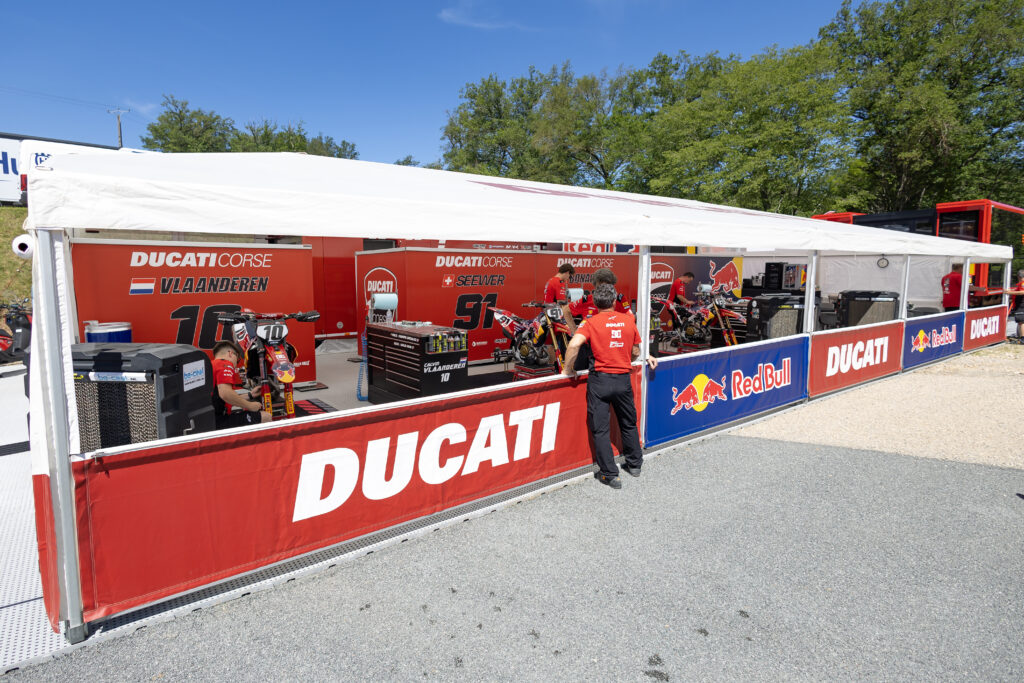
Ciabatti: For sure it’s a very competitive championship as you know basically all manufacturers except Suzuki are competing in MXGP so I think it’s a good championship. Obviously it’s difficult to compare the level of the paddock because MotoGP is more aiming to Formula One style kind of setups in terms of hospitality trucks and so on. Here it’s more for the fans and for the passionate users but on the other side this is closer to people who eventually do this sport for fun or you know or at the semi-professional level and they are the guys who are eventually considering to buy our motorcycles so I think it’s good. I think it has improved, I think this kind of structure like we have here are more friendly for the fans.
You see those beautiful closed structures with air conditioning, I’m pretty sure the mechanics are super happy there but I think it’s a little bit taking away this possibility for the fans. If you go to Supercross it’s all like this because obviously they want spectators to be able to see the mechanics to see the riders and to be still closer. Which is not really the case in MotoGP.
MotoGP is a little bit like hospitality or big buildings and then the riders but I understand also the pressure for the riders there is a different level so they need somehow a little bit more to be protected. Here as you know the riders are going with their bikes to the paddock to join the track so it’s a completely different atmosphere but I think it’s correct for this world. I mean I don’t think that Motocross should become exclusive.
I think it has to be inclusive with possibility for people to join the paddock and be close to the team to the bikes and to the riders.
That’s a good outlook on things because I feel like we’re not really going in that direction at the moment with more fishbowls, more everything to be professional and people feel like they’re not a part of the sport anymore.
Ciabatti: Yeah, as I said I think I would like to keep this sport approachable. Obviously, there is always room to improve and to do things maybe in a better way for the future and last year we had a few tracks where we were a little bit skeptical about why we were racing in those conditions. I think this was a clearly addressed to the promoters and I see this year so far, we were in honestly better conditions and when you see a lot of crowds and people happy going around the paddock and see the riders and so on I think it is good for this sport.