



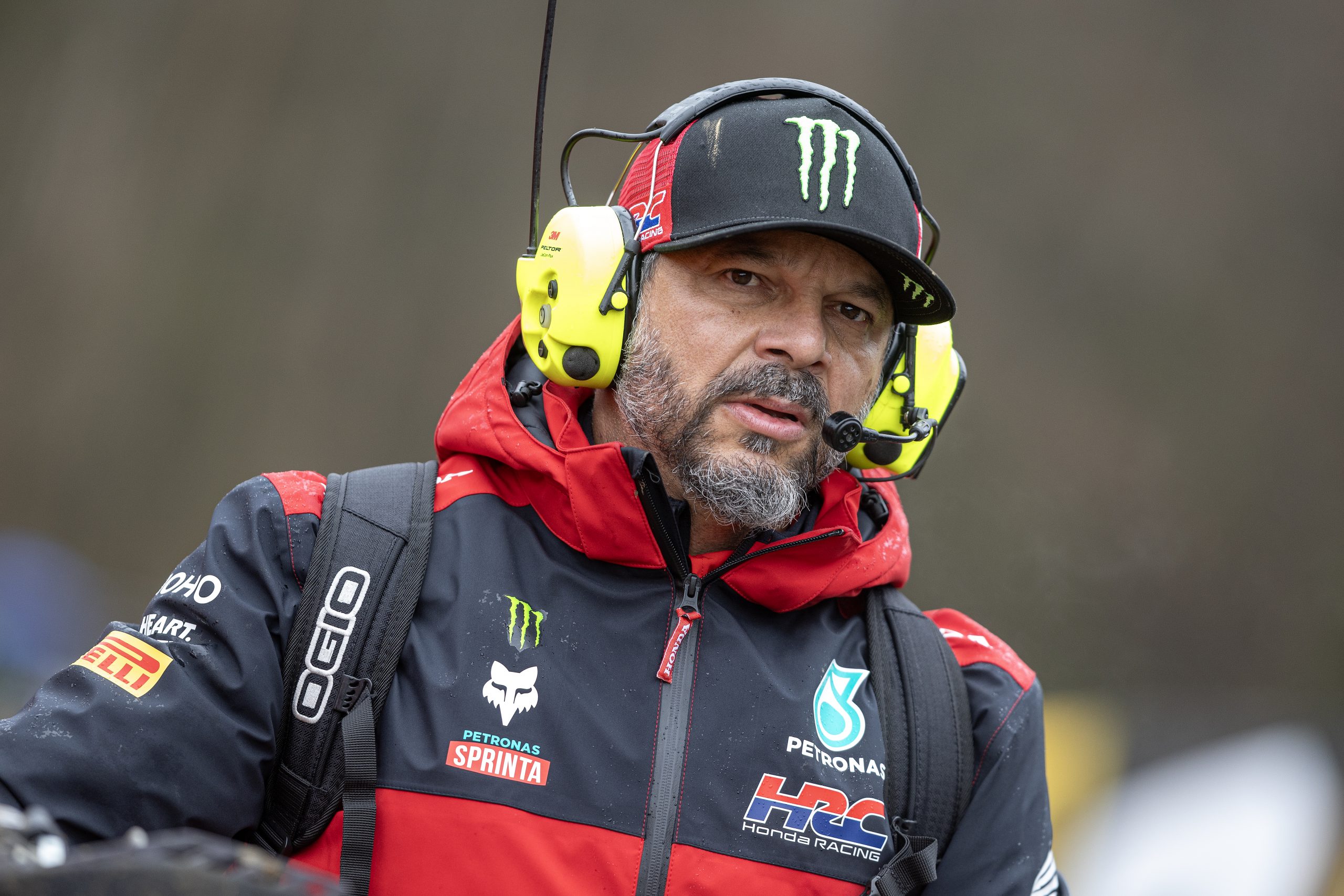
For more than two decades, Marcus Pereira de Freitas has been a constant presence in the MXGP paddock. Born in Brazil, he took a leap of faith to Europe in the early 2000s, chasing a dream that would eventually see him become one of the most respected figures in the paddock. From starting out as a race mechanic at Martin Honda in 2003 to playing a key role in Honda’s Motocross World Championship setup, his story is one of loyalty, dedication and passion.
Having worked exclusively with Honda throughout his career, De Freitas has witnessed the sport evolve through multiple eras. He has celebrated world titles with Tim Gajser, helped oversee the development of HRC’s factory programme and, in recent times, welcomed former rivals Jeffrey Herlings and Tom Vialle under the Honda awning. Along the way, he has remained the crucial link between HRC in Japan and the race team in Europe.
We caught up with the HRC Team General Manager as he reflects on his journey from Brazil to the top of World Motocross, shares fascinating insight into the inner workings of a factory team, discusses the increasing challenges facing MXGP, and reveals the moments that have defined a career built on unwavering commitment to the Honda family.
GateDrop: Marcus, you were born in Brazil. How did you get the opportunity to come and work in the World Motocross scene?
De Freitas: In 2002, I had the opportunity to move to Italy for a year and gain experience in the World Championship paddock. It came about after discussions with my Brazilian friend Lima, who was already working in Europe with KTM at the time.
GateDrop: I believe your first year in the paddock was 2003 – 23 years ago! What was that like for you, working at such a high level for the first time?
De Freitas: It was a great feeling and a dream come true. Working as a race mechanic in my first year was something very special. I got to meet and work with riders that I had previously only seen in magazines and videos.
GateDrop: In 2003, you worked with Antonio Cairoli, Brian Jorgensen and Roman Jelen at Martin’s Honda. What was it like working with those guys in your first role in the paddock?
De Freitas: It was a very good experience. Tony was at the beginning of his career but his talent was already obvious. Brian and Roman had much more experience, so I was able to learn a lot from them. It was a great way to start my career in the paddock.

GateDrop: In your current role as team manager, what does a normal race week look like for you personally?
De Freitas: Well, I’m actually the HRC Team General Manager, a sort of link between HRC and the team. Giacomo Gariboldi is the Team Manager.
A race week is always intense. The most important thing is making sure that everyone is on the same page — the team, the riders and the technicians. Our goal is to ensure the riders feel comfortable on the bike and have everything they need to perform at their best throughout the weekend.

GateDrop: You are based in Italy. Does it feel like home now and do you miss Brazil? Do you visit Brazil often?
De Freitas: Yes, I currently live in Vigonza, a small town in the province of Padua. Honestly, it feels like home, especially with my wife Kelly and my daughter Kyara.
I’d like to visit Brazil more often, but with our busy schedules it’s not easy. My last visit was in 2024 and it was only for one week. My mother, brothers and many good friends are still there, so I always try to visit whenever I can.
GateDrop: In 2015, Tim Gajser became MX2 World Champion. An amazing achievement. I know your focus was on the MXGP team, but how special was that year for the MX2 team?
De Freitas: Yes, you’re right. In 2015, we were working with Evgeny Bobryshev and Gautier Paulin, and we finished the MXGP championship with Gautier in second and Evgeny in third overall, which was also a great achievement for the MXGP team.
Tim Gajser’s MX2 World Championship was a fantastic moment for Honda and HRC. We all knew it was just the beginning of the project and that there was still a lot of work ahead. The entire team did an incredible job, and the success was fully deserved.
GateDrop: The rest was history: four MXGP world titles followed after his move to MXGP in 2016. Just how amazing was it to work with Tim?
De Freitas: It was fantastic to see Tim win the MXGP World Championship in his rookie season in the 450cc class. After that there were ups and downs, injuries and other challenges, but he still managed to win three more world titles.
Tim was a true professional and a great person to work with. Coming from a very humble background, he grew tremendously both professionally and personally during his time with us.

GateDrop: HRC and Japan are much more involved now than in the past. Do you remember when HRC became more involved and how important has that been?
De Freitas: Since HRC returned in 2014 after a long absence, the level of involvement has steadily increased. Management and the engineers saw the potential and began working closely with the teams in Europe, first with Martin Racing and later with Team Gariboldi.
Having a strong team is already a big part of the equation, alongside a good bike and a winning rider. The engineers in Japan are extremely passionate and work tirelessly to improve the bike year after year. Today, they attend races more frequently to gather first-hand information and analyse both our performance and that of our competitors.
GateDrop: How involved is Japan in the day-to-day MXGP project?
De Freitas: The collaboration is very close. Our technical team in Europe is in daily contact with HRC and the R&D department in Japan. Good communication is essential if you want to achieve the best possible results.
GateDrop: How has the sport changed from 2003 until now?
De Freitas: There have been many changes since 2003. Teams now have much greater access to high-level components, ECUs and suspension systems that can improve performance. In the past, many of these developments had to be done in-house.
The championship has also evolved with new circuits joining the calendar while many classic venues remain, although they have been modified to suit modern racing. Team infrastructure has grown significantly and there are more manufacturers involved than ever before.
GateDrop: How challenging is it to keep improving the bike?
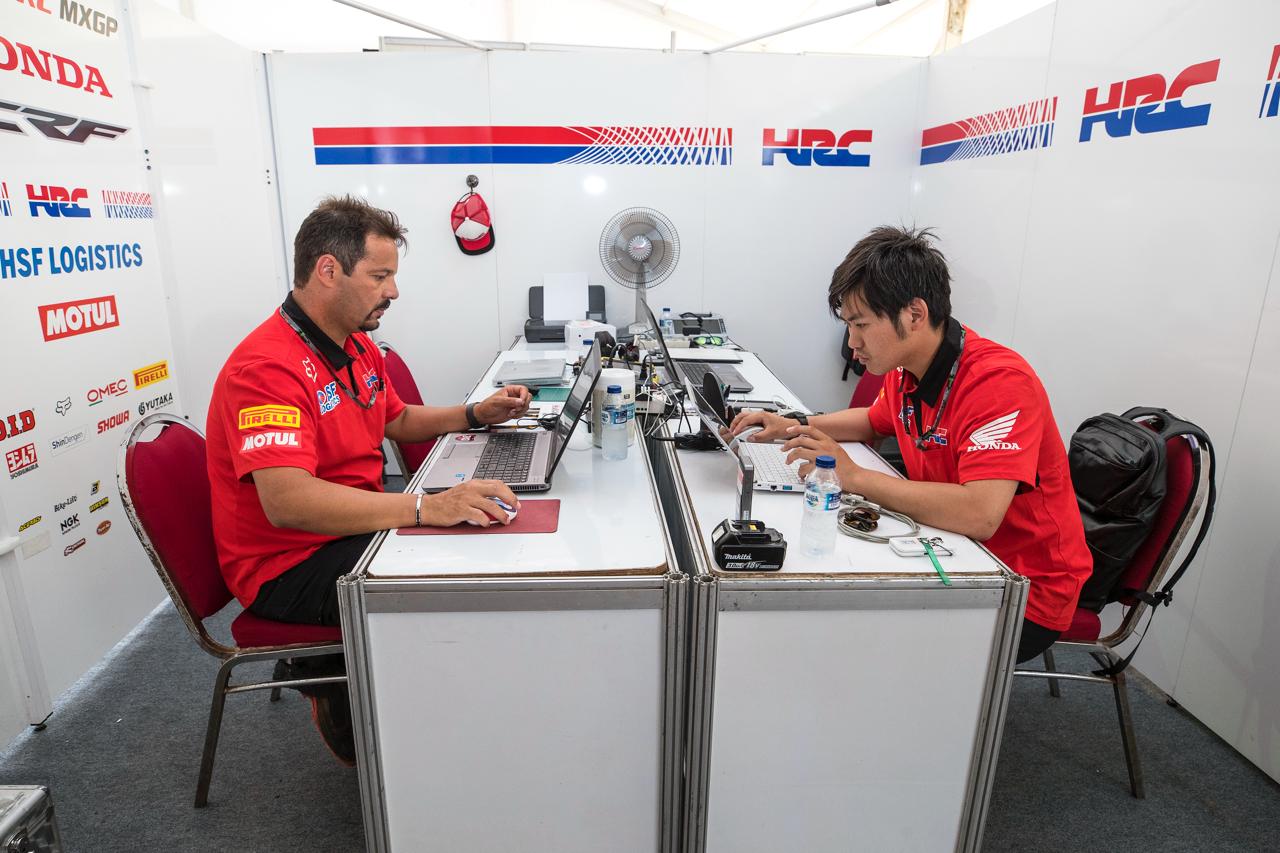
De Freitas: Together with our engineers in Japan, we work tirelessly throughout the season to adapt the bike to different riding styles and continue improving performance.
We always try to maintain stability and avoid making changes just for the sake of it, but whenever we identify a genuine improvement, we’re committed to implementing it.
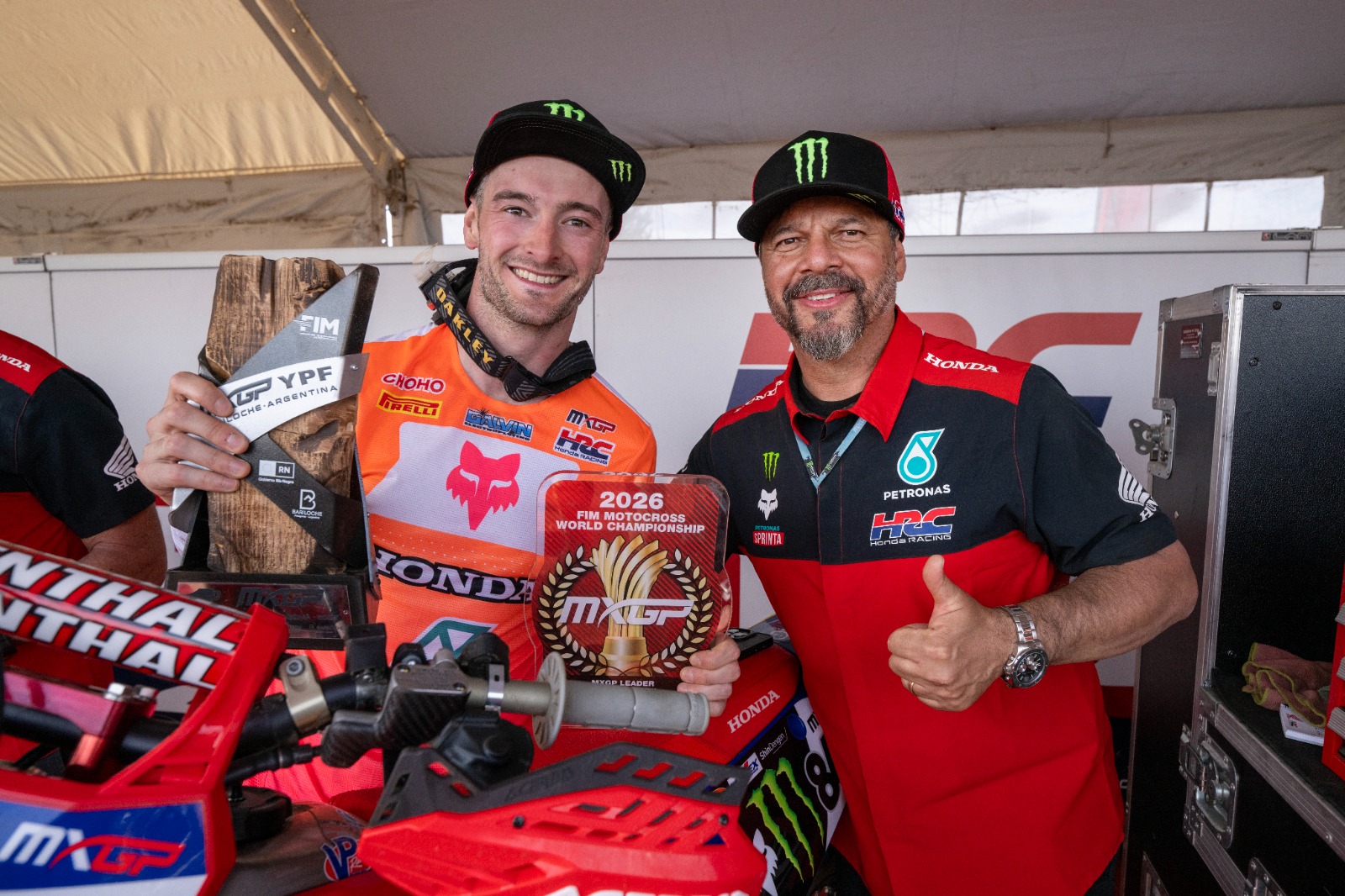
GateDrop: For 2026, things changed drastically with Jeffrey Herlings and Tom Vialle joining the team. How excited were you?
De Freitas: It was great to bring both riders on board alongside Ruben Fernandez. From the beginning of the negotiations, we felt it was the right move.
The goal was to work as hard as always and make sure we were ready for the opening round. Everyone in the team was excited about the challenge. Jeffrey and Tom have a huge amount of experience and know exactly what they need from the bike, so our job was to make sure everything was ready for them from day one.
GateDrop: You’ve spent years trying to beat Jeffrey — now he’s under your awning. Did it take a while to get used to?
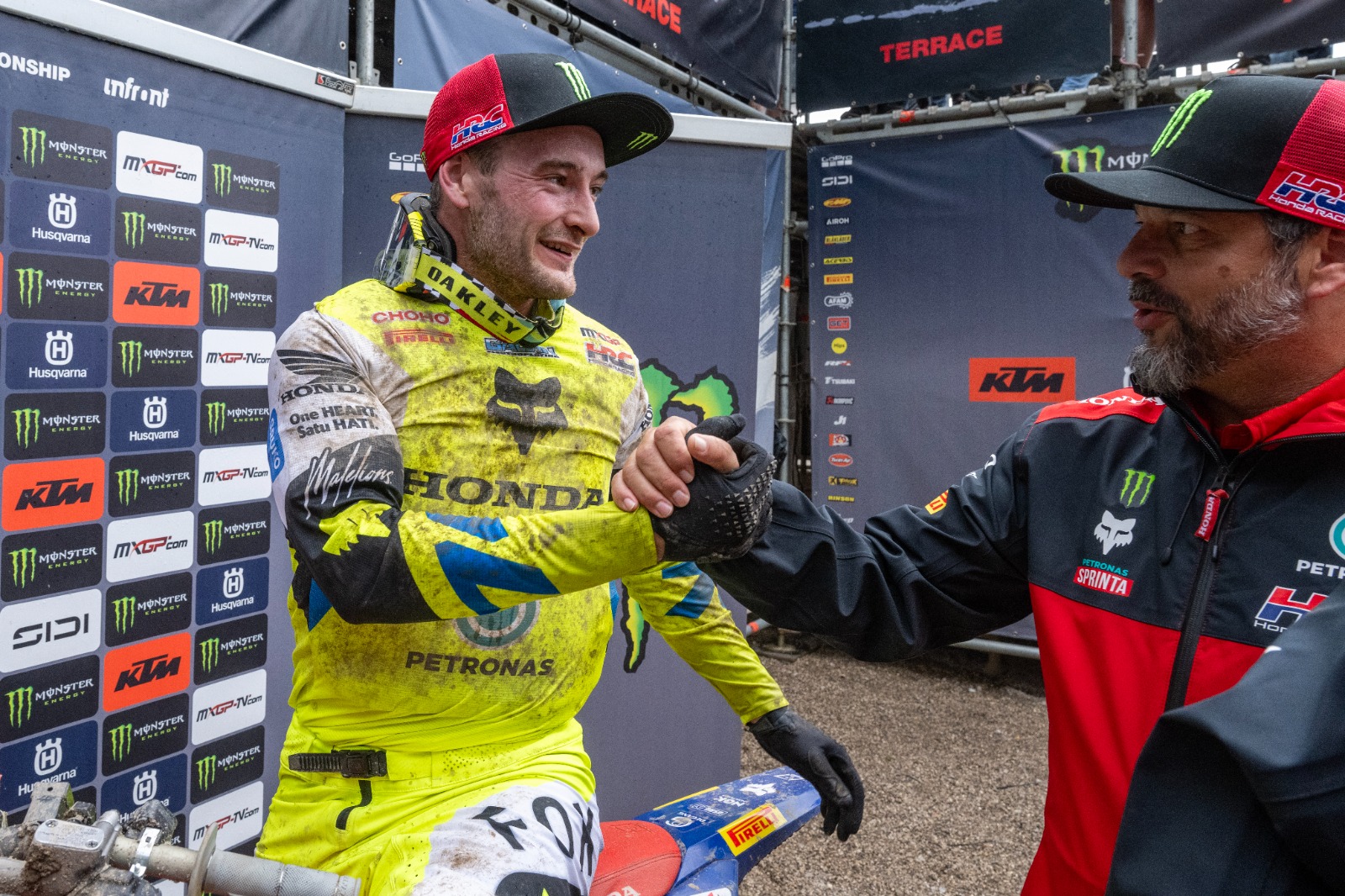
De Freitas: Jeffrey Herlings was one of our biggest rivals, so yes, it felt a little strange at first. But he’s a great professional and we’re very lucky to have him on the team.
His experience and talent have already brought a lot to the project. It’s been great to see him working alongside Tom Vialle and helping push the entire team to an even higher level.
GateDrop: He first rode the bike on January 1st. What was the winter like?
De Freitas: Yes, it was a busy winter. I wasn’t personally there for the first few days, as Giacomo Gariboldi oversaw the initial testing before the rest of the team and I arrived with the factory bikes.
Jeffrey’s first ride was actually on a standard bike before we began working more closely with him on the factory setup.
GateDrop: What’s Jeffrey like to work with and has anything surprised you?
De Freitas: Jeffrey is extremely professional. To be honest, we expected him to be very demanding, and while he certainly knows what he wants, he has surprised all of us.
He’s very respectful and appreciative of the work the team does. He’s a true gentleman. Of course, a rider of his level expects the highest standards, but that’s completely normal.
GateDrop: What are your thoughts on the current calendar and travel demands?
De Freitas: The overseas rounds are always a major talking point because the costs continue to increase. For private teams especially, it’s becoming more difficult.
There is support provided to the teams, but when you consider the cost of flights, cargo and accommodation, it only covers a small part of the overall expenses.
Triple-headers are also very demanding from a logistical point of view. Personally, I think back-to-back events would be preferable, as they would also allow team members to spend more time with their families.
GateDrop: What do you think MXGP could do better and is it becoming too expensive for independent teams?
De Freitas: I would like to see a three-day event format. So travel in on day one, racing day two and then travel out on day three. At the moment, with Friday activities included, teams often need to arrive on Wednesday, with mechanics starting work on Thursday.
That means several days of hotel costs, rental cars, meals and other expenses. For smaller teams especially, the financial burden is becoming very significant.
GateDrop: What would you change tomorrow if you had complete control of the championship?
De Freitas: I would reduce the event format to a single day and have only one support category each weekend.
I would also limit the calendar to around 16-18 high-quality rounds to allow teams and staff some time for a summer break.
In MX2, I would increase the age limit from 23 to 25, and I would require manufacturers to field at least two riders in each category at factory level.
GateDrop: How much work happens behind the scenes that fans never see?
De Freitas: There is an enormous amount of work that fans never get to see. Mechanics, truck drivers, technicians and all the team members work tirelessly to ensure the riders are ready for the starting gate each weekend.
Testing, meetings, logistics and preparation happen continuously behind the scenes, and every member of the team plays an important role.
GateDrop: Looking back, what moment are you proudest of in your career?
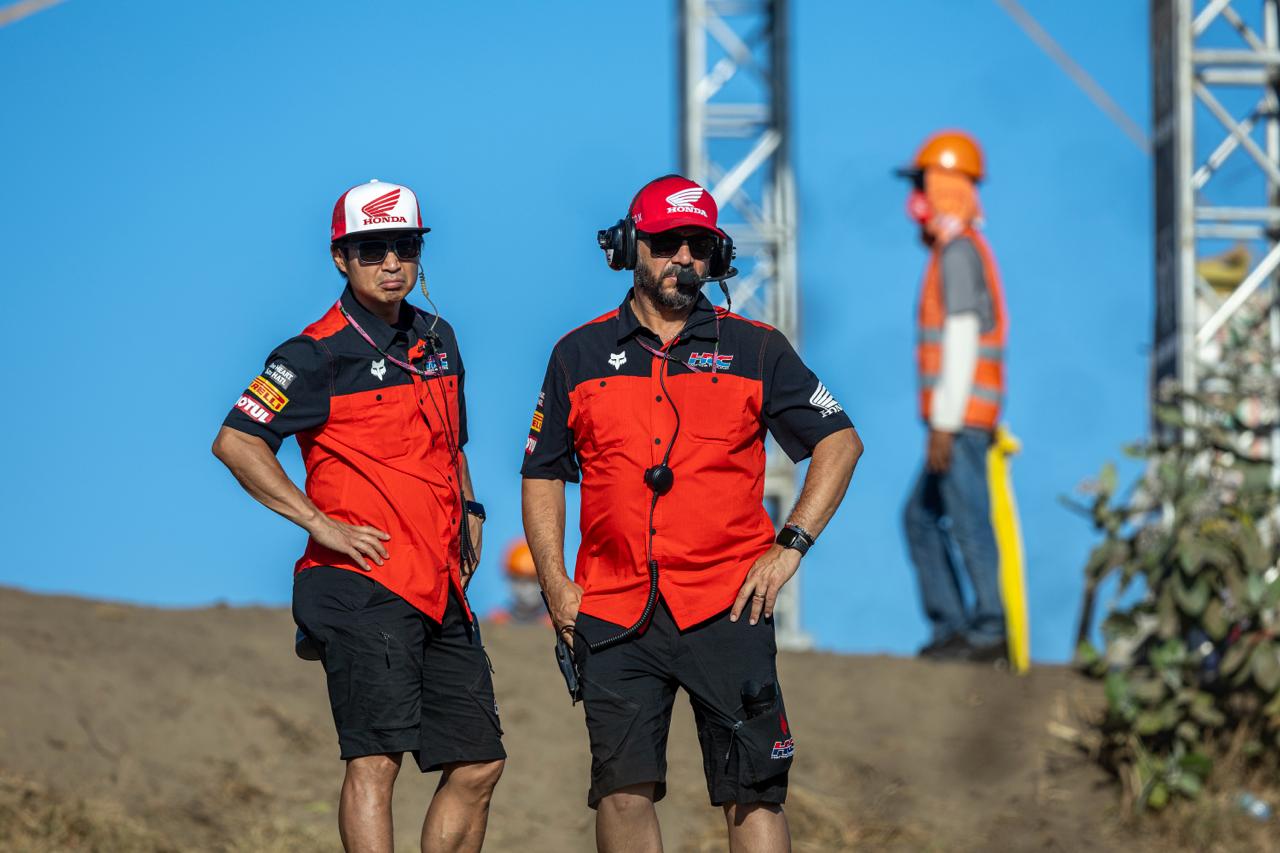
De Freitas: One thing I’m especially proud of is my loyalty to Honda and HRC throughout my career. The mutual respect we’ve built over the years means a lot to me.
GateDrop: You’ve been doing this a long time. What motivates you to stay in motocross?
De Freitas: Motocross has been my life since I was a child. Reaching such a high level in the sport continues to motivate me and gives me the desire to keep going for many years to come.
Of course, having a strong family behind you is essential, because this job requires a lot of travel and leaves limited time to spend with your loved ones.
GateDrop: It’s quite unique that you’ve only ever worked for Honda. Would you ever consider a move elsewhere?
De Freitas: I’ve been with Honda since day one, and honestly, I’ve never seriously thought about leaving. I’m very proud of what we’ve achieved together and I’m happy to continue being part of the Honda family.