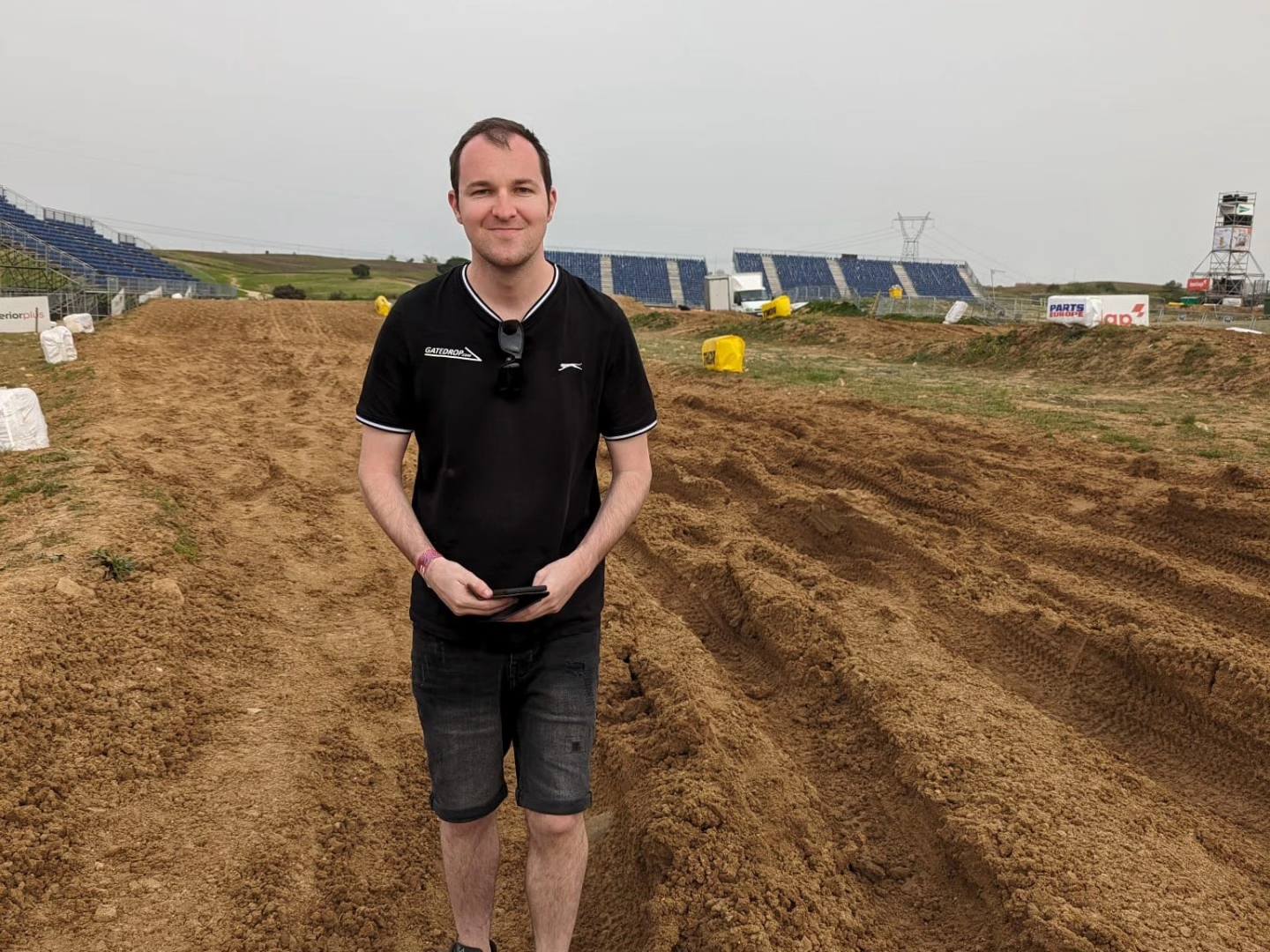





With the 2026 MXGP season now entering its final stretch, Honda SR Motoblouz team owner Josse Sallefranque has plenty to discuss. While the season has brought its share of challenges, including Thibault Benistant’s serious injury, the French outfit remains the leading privateer team in the MXGP paddock and is already looking ahead to an exciting 2027 campaign.
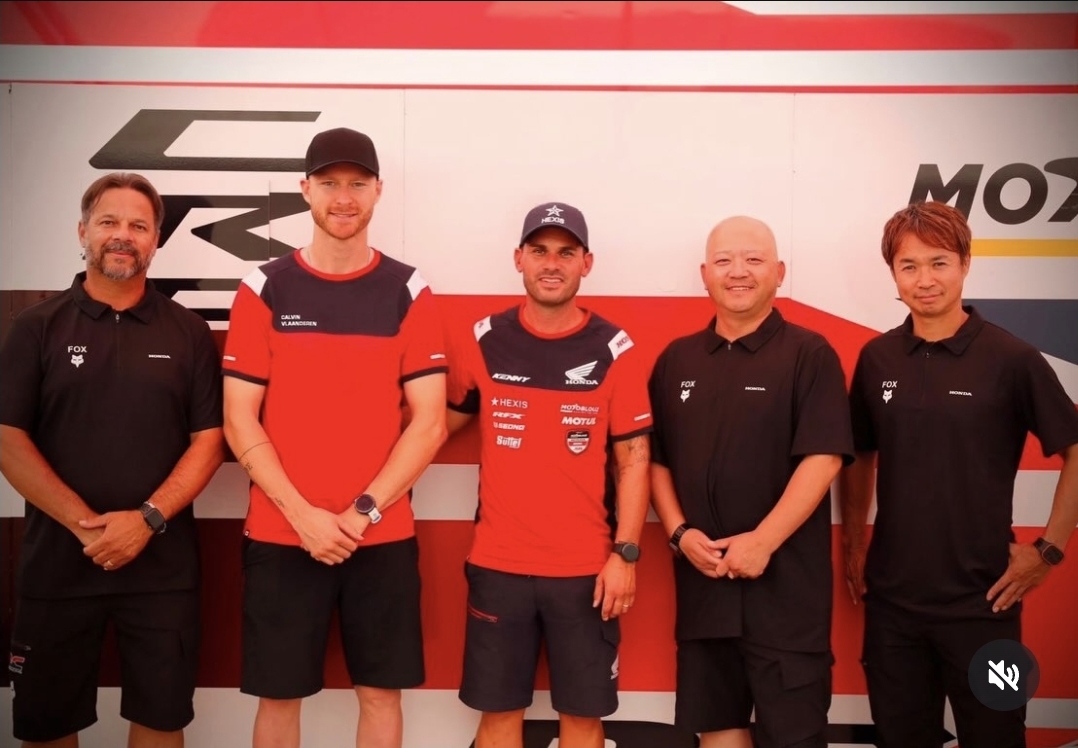
Calvin Vlaanderen has been confirmed as the team’s headline signing for next season, while discussions over a second rider continue. At the same time, SR Motoblouz is set to strengthen its relationship with HRC Honda and benefit from increased factory support.
Kevin Frelaud caught up with Sallefranque to discuss the team’s 2026 season, Kevin Horgmo’s campaign, Vlaanderen’s arrival, the growing relationship with Honda, the potential arrival of Chinese manufacturers in MXGP, the rising costs of competing at the highest level, and the ongoing situation surrounding Benistant.
Josse, we’re in the final stretch of the season, with only a few Grand Prixs remaining. What’s your assessment of the 2026 season for Honda SR Motoblouz?
Sallefranque: We have to start by sending a big thought to Thibault. Of course, it’s difficult to accept the situation and the injury he suffered. It really knocked us six feet under. Unfortunately, we know that these things can happen. But when it does happen, you’re never prepared for it. The passion and the work keep us going.
Kévin, meanwhile, has managed to bounce back in the second half of the season with a lot of top-10 finishes since the French Grand Prix. He is 12th in the championship, the first privateer rider – we are the leading privateer team – and the goal is the top 10. We’re not far away, there are still a few GPs left, and he’s only a few points behind Jonass and Vlaanderen, so from that point of view, we’d say it’s okay.
Of course, something is missing. We’re not disappointed, but we’re a little below our expectations because there hasn’t been a standout performance from him. We would have liked to see him fight for a top five or six in a race, like some riders have managed to do this year. Overall, we’re within our objectives, but we’ve been missing a few standout results. We still believe in it, and we’re going to try to make the team shine and put it in the spotlight.
If we put aside what happened to Thibault, it remains a positive season. I won’t hide the fact that we were hoping for a little more, but we’re very close to the objectives we set at the beginning, so it’s not too bad.
With Kevin, it feels like we’re following the same path as the 2025 season. Perhaps we expected some progression from him in terms of results?
Sallefranque: Exactly and even to be honest, he’s actually a little bit worse. After that, he was injured last year, so we don’t know exactly how that season would have ended, but he did have some standout performances.
We also know that the level is only getting higher: the MX2 riders are moving up, while the MXGP riders aren’t leaving. Automatically, there are more and more top riders. If you look at it, we must have eight or nine riders who have already won a world championship title. So even when you’re 12th in the championship, you’re fighting against riders who have been world champions.
We’re happy to be the leading privateer team in MXGP, beating some factory riders and factory teams. Now, with Kevin, we’re following the same path as last year, or perhaps a little worse. We’re trying to understand why and we’re putting things in place.

You already have one rider announced for 2027, Calvin Vlaanderen. You’ve signed a big fish for next year. You must have some big ambitions with him.
Sallefranque: That’s true. With Thibault’s injury, we had to bounce back as a team and find solutions. Calvin is someone I’ve known for a long time; we’ve already almost worked together in the past. But he had opportunities with factory teams, so it didn’t happen. I tell myself that perhaps it wasn’t meant to happen at the time.
Now, we had been talking for some time and we found solutions to work together. We’re really happy. Now we’re working on the second rider, and we’ll see what happens. We’ve entered the final weeks of negotiations, so there’s quite a lot of work to do, but we’re in the final stretch.
Can we put an end to everyone asking whether Vlaanderen will race the Touquet? [laughs]
Sallefranque: No, Calvin is really here for the MXGP programme. We have good riders for the Touquet: Kellett, Genot, Petit, and there’s also Mathilde Martinez in the women’s class. That’s already a lot of riders, and we compete in a lot of disciplines. Everyone is going to focus on their own programme. We’re going to give everything on the CFS with our riders who have a chance to shine, while Calvin will prepare for his MXGP season – and he will also compete in the Elite.
It looks like you’re going to have factory support in 2027. Can you tell us what kind of support you’ll receive?
Sallefranque: Our relationship is evolving and that’s great for us. We’re now much closer to HRC and the people at Honda. We’re working much more closely and hand-in-hand. It improves the relationship: we speak during the week, share information, exchange things, do testing together. We can get feedback from them on the next evolutions of the bike and simply be kept in the loop.
From a sporting and technical point of view, it’s really interesting. We can also have access to factory parts, which will also be interesting. There are quite a few little things. The support is increasing a little more year after year. Not everything is finalised yet, not everything is done, but we can see that they’re motivated to continue with us and improve things for us, so a big thank you to them.
Was this factory support dependent on signing a particular rider, or was it already secured for 2027 regardless of the team’s line-up?
Sallefranque: That’s something you’d have to ask them [laughs]. I’d like to think that, above all, they believe in us. Because they know we’re passionate and that we give 100%. If it wasn’t Calvin, it would have been another top rider, and there will also be a second rider. I hope we can finalise things quickly.
We’re moving forward, and Honda can clearly see that we’re working very hard to be inside the top 10 of the MXGP World Championship. And I repeat myself, but when you see the level of the world top 10, to produce a few standout performances is more than respectable. It’s a lot of work, a lot of money, a lot of time and a lot of passion… And we give 2,000%. Yet times are tough and it’s difficult, we’re not going to hide that.
You have to find budgets, more and more budget. You have to work hard, harder and harder. You have to be extremely motivated and determined. In fact, I would even say you have to be flawless.
Sometimes I think people are very harsh on social media towards the smaller teams, and even the riders. They should take a step back. And that goes for you, the media, too: if you stop coming, if Motoverte no longer comes, or MX Actu, then we won’t have anything and it will be over. When I see the costs of travelling, everything increasing, the flights… it’s crazy.
I’ve been doing the Grands Prix for eight years, and it just keeps increasing. You find a small extra sponsor, you’re happy, you tell yourself you’ll be able to make an improvement and invest in your team, but actually, no. You’re only paying for development, rising fuel costs and plane tickets. It feels like a bottomless pit.
We are the only French team in MXGP. People don’t really realise what that means. People have social media and watch the news: you can see that things aren’t going well in France, especially economically. Automatically, that has an impact on the motorcycle teams. Sometimes we’d like to feel a little more supported by people. They are very demanding; it would be nice if they were a little more patriotic towards us too [laughs].
In your comments, you keep talking about a second rider. Should we assume that Kevin will have to go in another direction in 2027?
Sallefranque: It’s not done. Honestly, we have a pretty tight line-up. We’re looking at a few riders, and Kevin is one of them. The only thing we’re asking of him is to find the Kevin from last year again: a little more intensity, and to rediscover the rider who had the ability to produce those standout performances and top results. For us, it’s important to put the team in the spotlight and make it shine a little more than it is at the moment.
Isn’t Ducati somewhat breaking the mold? It seems they pushed to announce Febvre’s signing very early in the season. Vlaanderen is similar – you announced him very early this year, and he is also currently under contract with Ducati.
Sallefranque: What I can tell you is that it’s crazy to see how much the value of contracts is skyrocketing for certain riders. The big factory teams, in order to have riders capable of winning, are investing very, very heavily. So, good for the riders, but for those of us in the motorcycle industry, it’s really impressive. I think that soon we’ll have to introduce financial fair play. Rider salaries are skyrocketing, a little bit like football at certain clubs.
We’re still good sports about it, because we’re more the type to admire people who succeed. The goal would be to one day be capable of doing the same as them. But it’s true that, in this case, it’s not easy to compete with them…
A word on Yves Demaria. Will we continue working with him in 2027? I believe Calvin will keep his base in the Netherlands next year.
Sallefranque: Yes, that’s true. We’re going to evolve our organisation in terms of how we work. We’re going to get the southerner out of his house [laughs]. Everything is going well with Yves. We’ve been working together for four or five years and it works well. We’ll simply have to do things differently next year.
You don’t manage an 18-year-old rider in the same way that you manage an experienced rider like Calvin. That’s normal. We’ll have to evolve on that side, but it’s not a problem for us. On the contrary, it’s good, it challenges us and we like challenges, so it’s perfect.
ZXMoto, you must have heard about them… The Chinese manufacturer is on the verge of entering MXGP – apparently as early as next year – with a structure that is already well established in the paddock. What do you make of it?
Sallefranque: I think that if it can provide riders with bikes and bring work to a team, then all the better. It could perhaps challenge the other brands too. I don’t think we should look a gift horse in the mouth. After that, once again, you have to respect the rules of the game, in a certain way. In the same way, if tomorrow a good rider comes and rides for zero, while on the other side contract values are skyrocketing, it can pull everyone upwards or downwards, depending on how it’s done.
I hope the arrival of the Chinese brands will help the MX industry rather than the opposite. It shouldn’t harm everything that is already in place. But at the end of the day, it’s sport and it’s business. You have to respect the arrival of newcomers. If it can provide riders with bikes and mechanics with jobs, then it’s a good thing.
In a sense, do you fear their arrival? If they manage to be at least somewhat competitive, with the price of their bikes, they could take a significant share of the European market. Are you thinking you’ll have to be careful in the medium or long term?
Sallefranque: Absolutely. The problem for us is the Chinese system. It’s not directly related to the motorcycle, it’s related to the automotive industry. It’s a country that supports its industry enormously. Here in Europe, we are clearly over-taxed everywhere. In fact, it would be up to our dear politicians to think about strategies to recreate jobs and competitiveness, and to avoid being eaten alive by the Chinese in every sector.
Politics and me are two different things. I never manage to understand any of their decisions. I’m not going to go too deeply into it because we’d clearly be here too long. But in this case, I think they will have to adapt at least somewhat to the European market. As you say, it will probably be cheaper to ride a Chinese bike soon. But we have to avoid finding ourselves in a situation where we create jobs and have riders with bikes for two or three years, only to lose the major brands that have invested in this industry for decades because the Chinese have taken the monopoly.
All of that is marketing strategy and business. It’s good that they’re coming, but they will also see the work being done by the other brands that have been here for decades. When you look at the level between first, fifth and tenth… we’re talking about small differences of seconds. So their bikes had better be well developed if they want to be competitive.
It’s a bit like the financial side of the sport. We never stop improving our bikes. We tell ourselves that we have a better part on the right, a better part on the left. We think we’ve taken another step forward, and then we see the new model come out, whether it’s Honda or KTM, and they take another step forward again! It really is an enormous amount of work.
I’d like to finish by talking about Thibault. Following his injury, Road 2 Recovery set up a fundraiser. A lot of people have wondered what the FIM, the insurance companies and the team were doing to help him. If you’re comfortable talking about it, can you explain the situation and perhaps set the record straight a little?
Sallefranque: I’m comfortable talking about it. First of all, thank you to the sponsors. Everyone has paid Thibault 100% of his contract. Contractually, if you like, there was no obligation for them to do so. But all of our partners stepped up. Thibault will be paid 100%. He is supported by a very good manager, as well as his family, his friends, his team and Yves Demaria. In fact, it’s the least we can do, I would say, but we still need to take the time to thank them.
It’s a very difficult period for him. We’re doing what we can to support him. The financial aspect was part of our objectives. Straight away, we told Thibault, his family and his manager not to worry about that side of things, to focus on his rehabilitation, to rest, and that we would take care of the rest. We’re giving 100% on this, I have no taboo about it, quite the opposite. So I thank the people who are fully behind us and behind him.
Then there’s the FIM side, the federation side and the insurance side. All of that is currently being organised because there are a lot of factors to take into account. I’m neither a lawyer nor a legal expert. I’m not dealing with this case and I don’t have the expertise to speak about it. It’s not in my hands; it’s in the hands of the federations, his agent, the insurance companies, etc. Above all, what we hope is that everyone will step up and play their part like we have.