







How can MXGP become more attractive, both commercially and for partners? It’s a simple question on the surface, but one that actually points to some major challenges facing the championship.
In a paddock where the financial balance of teams increasingly depends on their ability to secure budgets through private partners, the question of the championship’s commercial value — and that of its stakeholders — goes far beyond the sporting side of things. After comments from Hans Corvers (Monster Energy Yamaha) and Josse Sallefranque (Honda SR Motoblouz), Jacky Martens, owner of the Fantic MXGP team, shared his personal thoughts and highlighted a key point for his squad: improving the experience offered to partners and giving them a genuine place at the heart of the championship. Interview by Kevin Frelaud.
“From my side — and I can only speak for myself — I have a very large group of sponsors and partners, and the biggest improvement that could be made for the teams would be to ensure that our sponsors are treated more like real partners and stakeholders in the sport. They need to feel special, truly part of the team, and be able to come and see — and experience — what they are investing in through invitations. Right now, we receive a certain — limited — number of passes per Grand Prix for our partners. But I think that if we want to move to the next level in terms of sponsorship, there need to be more opportunities for them, and that also means more tickets to invite them.”
Continuing on the topic of the championship’s economic structure, Jacky Martens insists on one key point: despite the positive evolution of the series, teams are still dealing with major limitations. For the former Belgian world champion, the partner experience is a crucial aspect that should be taken more seriously by the championship promoter. The Fantic team boss describes a system that remains fragile, as the financial stability of his structure relies heavily on his ability to involve — and retain — sponsors.
“I would say we are moving in the right direction with the sport. But for Infront, it’s the same as for us: first you need to walk before you can run. It’s difficult for everyone right now. You have to understand that my team runs entirely on the budget I raise through my partners. We have a network of around 75 sponsors, and every year we need to find 20% more budget. That’s why I need more opportunities to invite my partners to the Grands Prix, and therefore provide them with entry tickets. At every GP, we receive 12 free passes, and I often have to tell partners: ‘I’m really sorry, but I’m fully booked this weekend.’ That’s not how it should work. We need to create a real emotional connection between the sponsors and the sport, to make them want to come back. I have 75 sponsors, and if I had to pay €100 for every person attending each time, that would represent €7,000 per GP, or €140,000 over a 20-round season. That’s simply not possible, because it would directly use the same budget the team receives from those sponsors, which makes no sense. And clearly, we don’t have that extra budget available; it’s already difficult enough paying the team members, handling all the logistics… For now, we have to adapt. If I could improve this area, I could develop partnerships further, but from my side, I need help with complimentary entries. You have to understand that sponsors are not spectators — they are an integral part of the sport by supporting the teams. If they don’t attend, they may stop investing the following season, and everything becomes more complicated for us. Today, I have to choose who can attend which GP, and that’s not healthy for my business model. Most partners would like to attend half the races, but in reality they can only come to two or three GPs per year.”
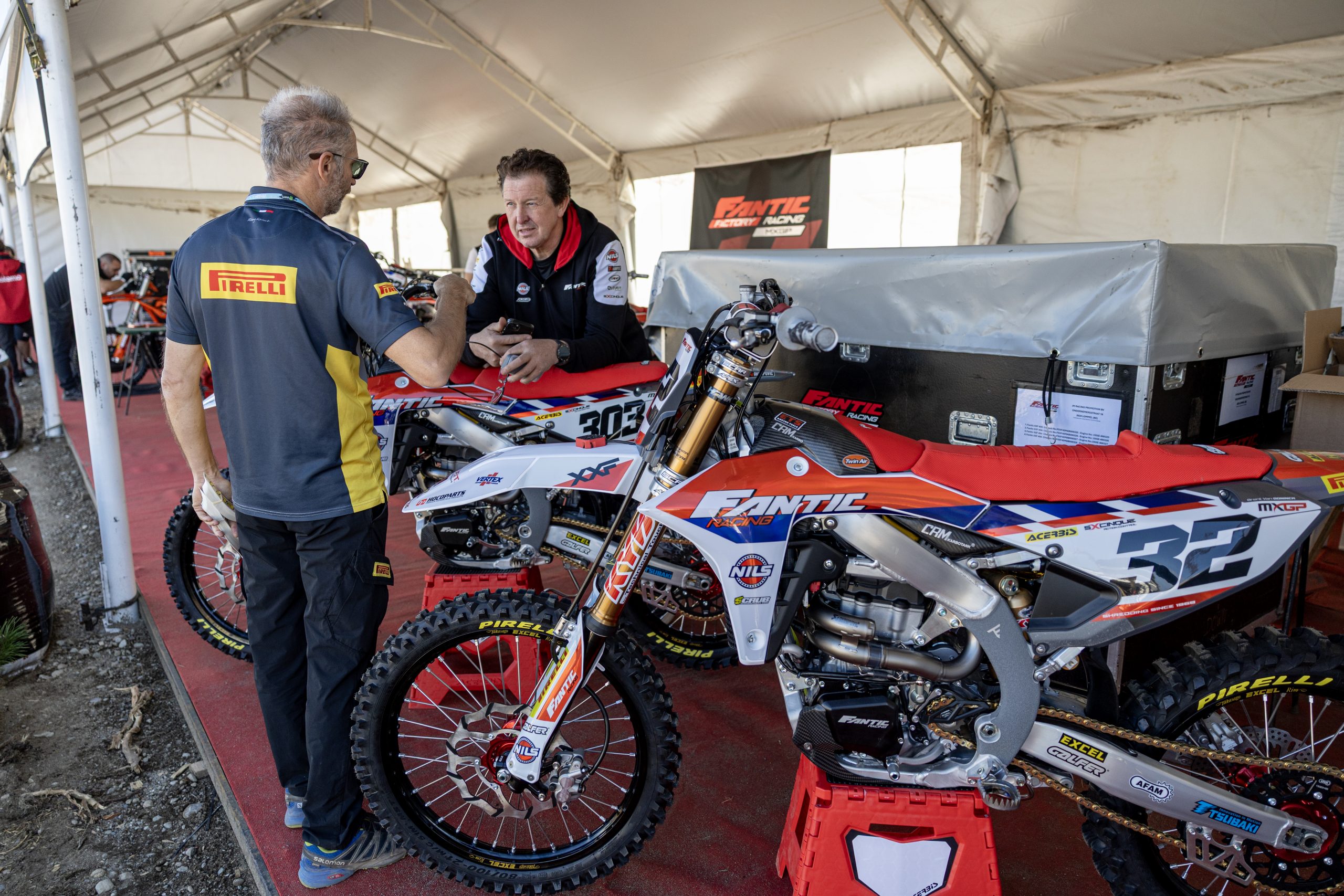
In a context where sponsorship budgets are decreasing, teams are having to broaden their search to maintain — or even increase — their financial resources from one season to the next. Like others before him, Jacky Martens highlights an increasingly demanding economic reality, particularly with constantly rising costs, especially for overseas travel. That’s why he reiterates that the main challenge remains the experience offered to partners — a true pillar of team funding in MXGP.
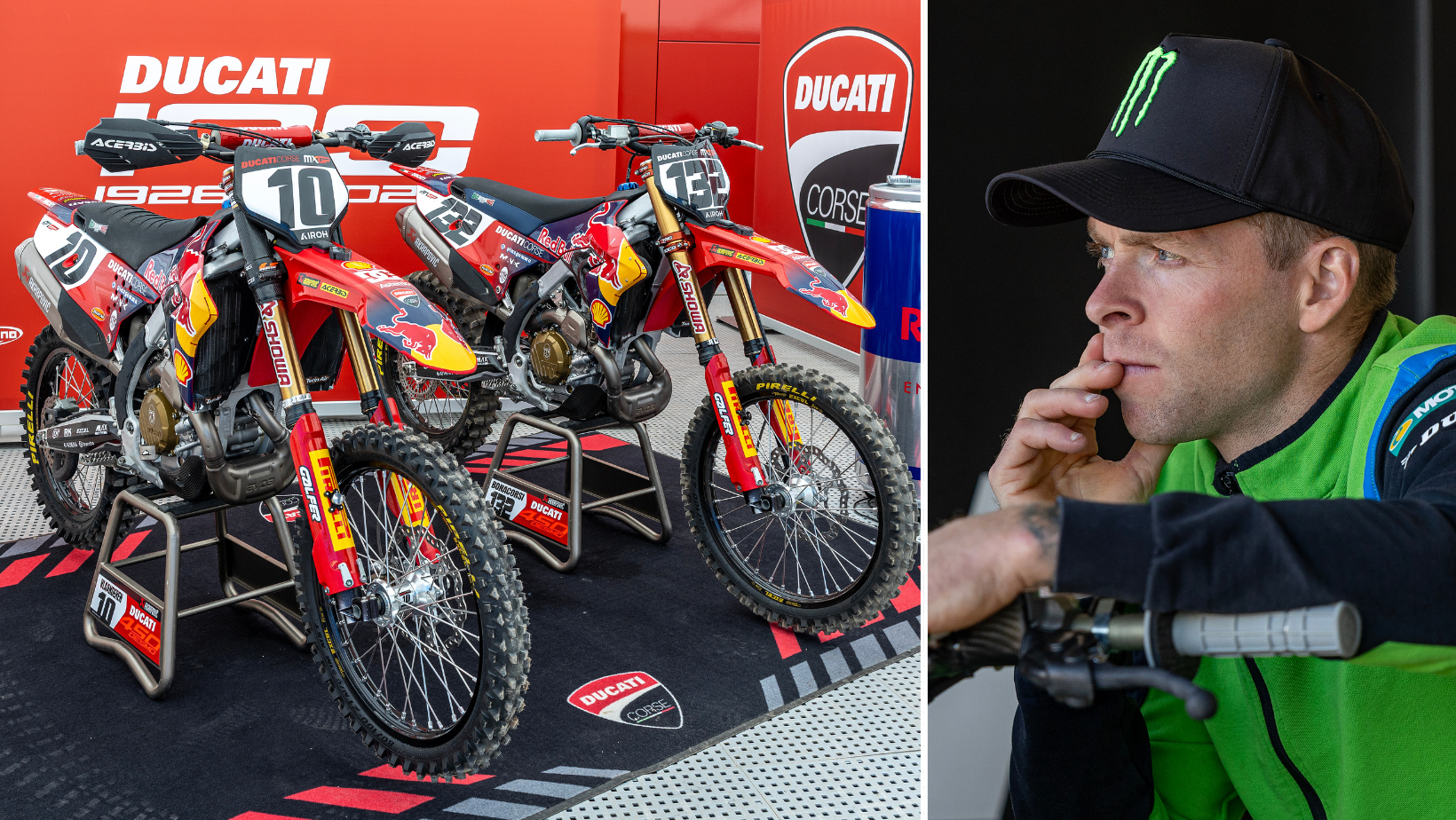
“Everyone can see that sponsorship budgets are decreasing, so we need more sponsors to cover the same budget, or even more, because every year we need to increase it by 20%. Overseas GPs are extremely expensive and represent a large part of the budget. When spectators come to the circuits, you can see they enjoy it. But for us, the partner experience is even more important, because it’s thanks to them that we finance the entire season. The big difference today, I see it with Ducati. For me, they use their MotoGP exposure to attract sponsors. They have WD-40, which we never see here, Shell as well, and even DC Shoes. When you look at the bike, many sponsors come from MotoGP. That’s exactly the direction to follow, but it will only be possible if we can invite partners without restrictions. If we have enough passes to bring them in, they will come, spend quality time with the team, and fully enjoy the experience.”
In his thoughts on the evolution of the MXGP paddock, Jacky Martens also touched on the overall organisation of Grands Prix and the space allocated to teams. Inspired by some MotoGP standards, the Fantic boss believes the development of the championship also depends on better infrastructure organisation, with clearer and fairer rules for teams and their partners. Between space management, hospitality and hosting capacity, he is calling for a more organised and efficient paddock model.
“As a team, you also need to think bigger. We should have a certain number of square metres allocated per Grand Prix for our structures, just like in MotoGP. If you want more, then you need to add another floor to your structure! But again, we need more opportunities for partners: more parking, more space to host them, more of everything. The sport is already quite big today, but the next step is to guarantee teams a defined area for their structures and partners. Then, if you want additional hospitality, you need to add one or two more floors to your structure, and it should be the same for everyone. That would also help organise the paddocks better, because some promoters lack the space to host everyone. If we can structure all of that, it would be more efficient.”
Looking at the bigger picture, Jacky Martens also highlighted an essential issue: the real connection between partners and the sport itself. While TV exposure remains an important argument, the Fantic boss believes it is not enough on its own to justify partner investments. For him, the growth of the championship also depends on greater openness toward partners, more dialogue with teams, and a better understanding of the ecosystem that finances the sport.
“Of course, visibility is important. But when you look around the paddock, do we really see sponsors investing several million purely for TV exposure? If we want to accelerate development, we need to create opportunities for those sponsors. The promoter should also come and work with us, take an interest in our partners, understand what they do. We are open to discussing it and explaining their activities. I already raised this with Infront, but for now this is the current situation, and I’m only speaking for my own team. Few teams have as many sponsors as we do. We also see sponsors moving from one team to another. I started with some sponsors who are now with De Carli for the Coenen brothers. I also have a sponsor who wanted to help a junior 125cc team because he liked the concept. The sport needs to open itself more to sponsors, even if they arrive late, because everyone can benefit. If a sponsor has a large budget and sees their brand on television, they may invest even more. But if they cannot attend the races and see where their money is going, then they won’t invest.”
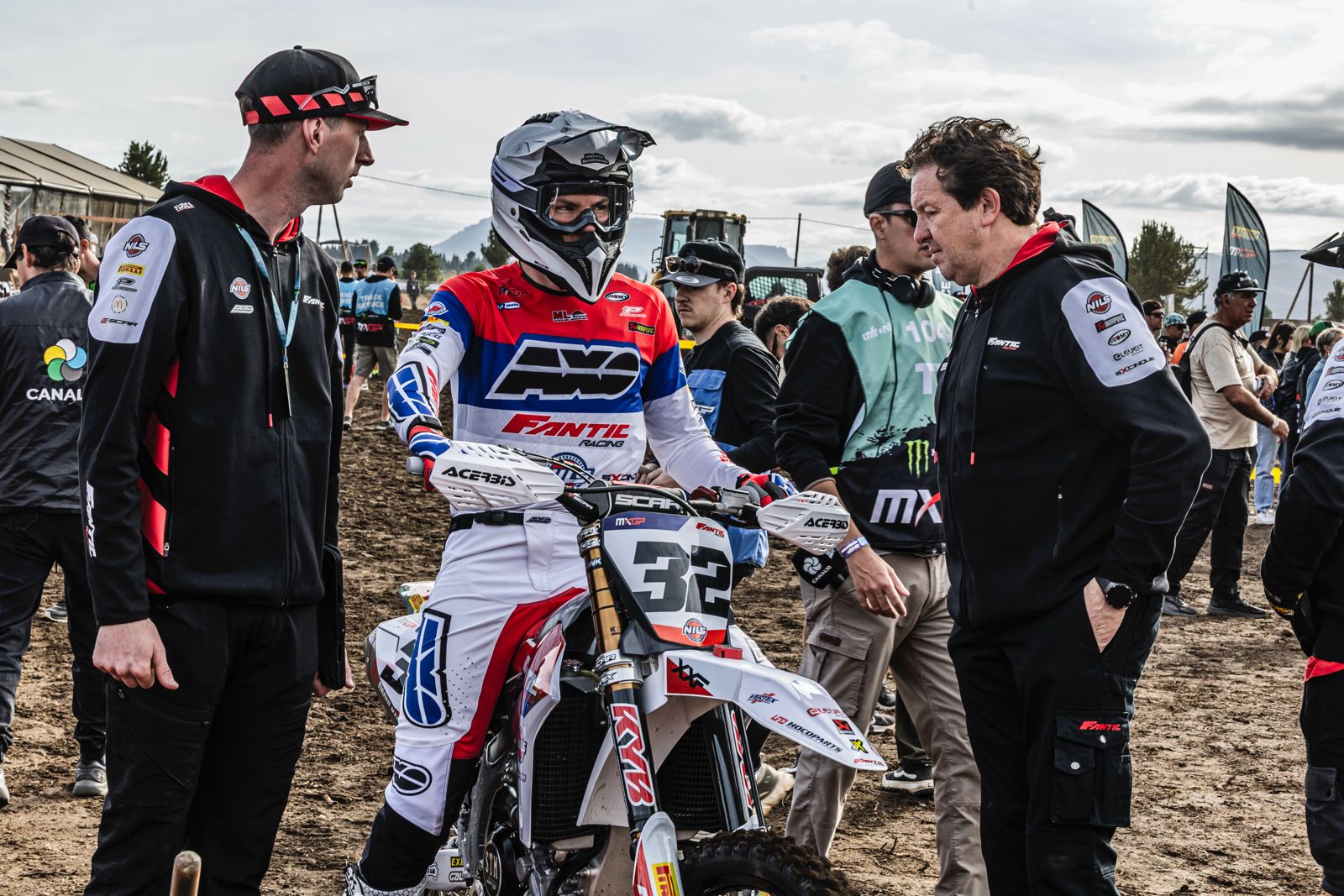
In an increasingly connected environment, the Fantic boss also stressed the growing importance of digital communication, although he made it clear that sporting results remain the best showcase for his structure. Very active on social media, the Fantic MXGP team has turned its platforms into a real visibility tool. According to Martens, this requires constant adaptation in order to stay ahead in a world where trends evolve rapidly.
“At the end of the day, sporting results remain the most important thing. At the end of the weekend, what matters is what’s written on paper. As a team, we are very strong on social media, and we always try to do special things that are often picked up by the big pages online. That’s where I focus. We were also among the first to introduce a new results format on social media, and now everyone does it. You always need to try to stand out, but that means constantly doing more; for us, it’s all extra work outside the sporting side. Still, we have 85,000 followers, so I think we’re doing a good job with communication.”
To conclude, Jacky Martens gave an overall positive assessment of the current season. Now leading Fantic’s MXGP programme — previously managed last year by Louis Vosters through Wilvo — Martens oversees Alberto Forato and Brent Van Doninck under the Fantic banner this year.
“I’m very satisfied with Fantic this season. I had some concerns because of rumours you hear here and there, but in the end the collaboration with the factory has been very good. For me, it’s comparable to the KTM group days, with a slightly smaller R&D department but the same competent people, the same engineers and very solid facilities. I’ve been positively surprised. This year, there’s no particular pressure because you can’t compare 2026 to 2025. Last year, Jeffrey wasn’t there, neither was Gajser, nor Kay de Wolf or Adamo in MXGP. If you remove them, we would have been on the podium with Alberto Forato this season. Wilvo [the official Fantic team until last year] is a very big team, very strong and solid. And I think we are doing an excellent job this year with Fantic. We are very happy with how everything is going so far.”