










The commercial appeal of the MXGP World Championship and the teams competing in it has become a major talking point for everyone involved in the series. Behind that discussion lies a key question: how can the sport increase its visibility and commercial potential without losing its identity?
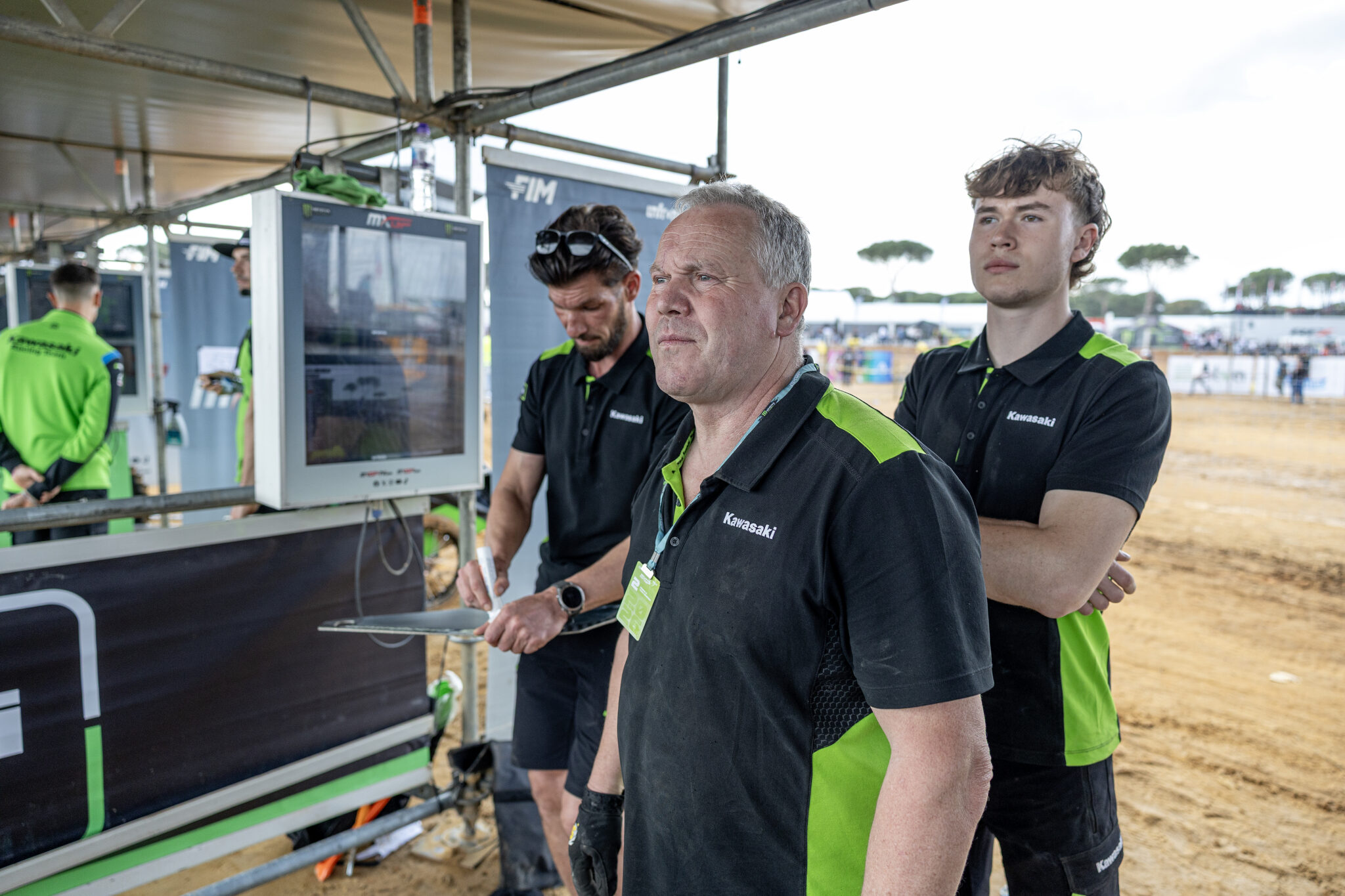
It’s a topic we wanted to discuss with Steve Dixon, who has spent more than three decades in the paddock with the Dixon Racing Team. For the Brit, one of the biggest challenges is making the sport and the championship more accessible to the general public, particularly through greater media exposure. The DRT Kawasaki team owner believes motocross suffers from a fundamental problem: it remains a niche sport.
“I’ve been involved in this sport for 35 years, and the World Championship has made huge progress in terms of visibility compared to back then. But it’s still difficult to attract the major television networks. In the UK, for example, you can hardly watch MXGP without paying for a subscription. If the championship was broadcast on free-to-air television, it would create a great opportunity for many companies to get involved with our sport because advertising would be much more affordable than in other disciplines.
“You also can’t really compare motocross to MotoGP or Formula 1. The number of people who drive cars is enormous, so brands can easily associate themselves with Formula 1. It’s the same with MotoGP – there are far more road motorcyclists than people who ride motocross. We’re a niche sport, a bit like rallying. Rallying enjoyed massive media exposure when it was regularly shown on television, but that’s no longer really the case today.”
The Motocross image
For Dixon, improving motocross’ image also means taking better control of how the sport is presented, particularly when it comes to the negative perception created by some social media content and mainstream media coverage.
“There’s also a lot of bad publicity around motocross, with people riding illegally in cities, doing wheelies and giving the sport a bad image. I think it all comes down to television and how we tell the story of our sport. Mainstream media don’t cover Grand Prix racing unless there’s been a serious accident – or something even worse.
“My sponsor, Bike It, is heavily involved in road racing, and they often tell me that television makes that sport look incredible. But motocross is different. In MXGP, you really feel involved. You’re in the paddock, the mechanics are working on the bikes right beside you and the riders are accessible. It’s nowhere near as exclusive as MotoGP.
“I’ve been to a Formula 1 Grand Prix before. You only see one corner and then it’s gone. In the end, you spend most of your time watching the big screens. You could almost just stay at home. At an MXGP event, the experience on-site is completely different.”
Major investment could help
When it comes to taking the championship to the next level, Dixon believes a major investment in promotion and storytelling could transform the sport, much like Formula 1 has done in recent years.
“It’s difficult to know exactly how to improve things. If a huge company came in and decided to completely transform the championship, it could change a lot. Formula 1 is a good example – films, productions like Drive to Survive on Netflix… that’s helped enormously.
“We also need to tell our story better and promote ourselves more effectively. But that level of production costs a lot of money, and someone has to be willing to invest. These days it’s already difficult enough to convince governments and clubs to organise events, so it’s not easy.
“A lot of people point the finger at the governing bodies or Infront, but I also see both sides of the story. You can’t simply take a circuit, an organiser or a club and expect them to immediately deliver at the highest level in every area – parking, paddock facilities, spectator experience, the track itself, infrastructure and the overall show. It’s incredibly difficult.”
The challenges facing MXGP go far beyond building a calendar, satisfying the riders or providing a platform for manufacturers. According to Dixon, the championship must also take a closer look at its business model and its unique relationship with its fanbase – one that is incredibly passionate, but not always easy to satisfy.
“Organising a Grand Prix without a major title sponsor still means relying heavily on ticket sales. That means you have to charge an admission fee, and that’s where things become complicated because motocross fans are different. They’re usually riders themselves who already spend a lot of money on their passion. It’s an expensive sport. Yet they’re also the first people to complain about the price of a Grand Prix ticket.
“I run Matterley Basin and we also host a music festival there. The situation is completely different. People sleep in tents on-site and they don’t complain. They’re happy to spend between £500 and £1,000 on a ticket and camping because they look forward to that festival all year. The campsite alone at Matterley generates several million pounds in revenue.
“Motocross fans have a different mindset. They almost feel like everything should be provided for them – they want good facilities, comfort and services. So I don’t know exactly what the solution is because it’s a real challenge. Motocross is also a hobby, a passion, and we have to find the right balance.”

MXGP needs to create stars
MXGP certainly doesn’t lack excitement, but it still lacks the personalities capable of taking the sport beyond its own boundaries. For Steve Dixon, the AMA championships have shown the way by turning riders such as Haiden Deegan, Ken Roczen and Jett Lawrence into genuine stars.
“The racing in MXGP is excellent. I think the work being done for television is good, but we’re still missing superstars. In America, they have Haiden Deegan, Ken Roczen and Jett Lawrence. But generally speaking, motocross riders tend to be quite reserved. We need to create icons and make our riders bigger than the sport itself, just like football did with players such as David Beckham. We need personalities who can represent the sport.
“I’ve seen Jeffrey Herlings in McDonald’s after a race, just a few miles from the circuit, and nobody was rushing over to speak to him because nobody knew who he was. On the other hand, you have someone like Haiden Deegan. He’s a rider who divides opinion – you either love him or you hate him. But whatever you think of him, you can’t ignore the numbers he generates. He’s been marketed extremely well, he works very hard on his image and he’s very good at what he does. The people around him have capitalised on that. It’s the same with Jett Lawrence. We’re starting to see them invited to high-profile celebrity events. Deegan is appearing alongside Jake Paul, Jett is attending those kinds of events too… and naturally that gives the sport even more media exposure.
“So who is responsible for pushing things forward? In the World Championship, it feels like the budget is mainly used just to maintain what’s already there – organising Grand Prix weekends and delivering a product that can be sold to television broadcasters. I think we need to go further, perhaps with that Netflix-style documentary series everyone talks about. That’s what would help us reach a much wider audience. We also need to create that real entertainment factor.”
Times have changed
Alongside the issue of image and creating new stars, Dixon also highlights another important factor: the dramatic change in the way people consume and follow sport today. Over the past three decades, motocross has been transformed by the digital era – a development that has also created new challenges when it comes to attracting fans to the circuits.
“When I first came into the paddock in 1991, there were far bigger crowds at the races. But you also have to remember there were fewer things competing for people’s attention. In England, for example, shops weren’t open on Sundays, there was no internet, no social media and far fewer distractions. You couldn’t follow the results live. You had to wait for the monthly magazines to see the photos and race reports.
“Today, people want everything within minutes and they can watch the races from home. I can skip a British Championship round, watch the live stream, follow the live timing and almost feel like I’m there. I can even call my rider and tell him, ‘You need to be faster through sector three.’ With the price of fuel and the cost of race tickets, it’s naturally becoming harder to convince people to come to the circuit. And yet I’m still one of the sport’s biggest fans.”
Despite that, Dixon doesn’t believe motocross needs to be reinvented. Instead, he feels the challenge is to market the sport better, tell its story more effectively and turn its riders into athletes capable of captivating audiences far beyond the core motocross fanbase.
“The sport itself, the tracks, the battles and everything that makes motocross what it is – that’s what makes it so fantastic. We mustn’t lose that. What we’re missing is the marketing element that can turn riders into genuine media personalities.
“I’ve been in this sport for 35 years, and I wouldn’t recognise many riders without their helmets on. If even we struggle to recognise them, how can the general public be expected to know who they are or care about them?
“We need to create superheroes and bring that sense of spectacle to show people what these gladiators really do. These riders are incredibly brave. They put their lives on the line. Some end up paralysed. Entire families make sacrifices – giving up time, money and personal ambitions to help their child reach the highest level. In the end, only a handful make it. Many fail, lose huge amounts of money and sacrifice relationships along the way.
“We need to show that reality, tell those stories and dramatise them in the right way. Show what these riders and their families really go through. I think a documentary like that could work. The next challenge is getting it distributed and sold. In my opinion, that’s probably the best way to give motocross back the ‘cool’ image it deserves.”
Challenges facing teams
While MXGP is looking to strengthen its commercial appeal, the teams themselves also face a major challenge: finding the funding required to support increasingly long and expensive seasons. For Dixon, the equation is a difficult one. Good results open doors, but turning success on the track into genuine commercial opportunities remains far from straightforward.
“At the end of the day, everything is driven by results. When you win, people become interested in you. When you don’t, it’s mainly your long-term partners who continue supporting you because they genuinely love the sport. They contribute money, products or services because they know they’ll never have a place in Formula 1 or MotoGP, for example.
“Bringing in major household brands like Ford or JCB is a completely different story. It takes a huge amount of time, there are multiple levels of decision-making, and those companies don’t necessarily want to be associated with a sport where riders can suffer serious injuries. Most partnerships come through personal relationships – someone knows someone, and it grows from there.”
“Back in 1997, we managed to bring Cadbury on board. Our truck was completely branded in Cadbury colours and we were winning Grands Prix with Paul Malin. But that partnership only existed because the company’s marketing manager was passionate about motorcycles. Once he left the company, the budget was simply redirected into a television series. That’s how it works.
“Today, convincing a major sponsor can take twelve months. The problem is that by the end of those twelve months, the season is already over. In this sport, we’re always one step behind. It’s also difficult to sell a long-term project because we don’t even know next year’s calendar yet, so it’s hard to promise sponsors exactly what visibility or return on investment they’ll receive.
“We’ve also worked with Chinese sponsors. Initially, they invest heavily, but once they properly evaluate the return they’re getting, their enthusiasm often fades. It’s a very difficult market.”
“The business model has also changed dramatically. In the past, manufacturers funded almost their entire race teams, with sponsorship providing an extra bonus. Today, manufacturers rely on private team owners to provide a large proportion of the budget. From a commercial perspective, it makes sense because the manufacturers spend less and outsource all of the logistics.
“Even so, I still feel it’s incredibly difficult to convince major mainstream brands. We always see the same partners – Monster Energy, oil companies and businesses that are already involved in the sport. Sponsors from outside motocross remain extremely rare, and that’s very telling.
“We won four WMX World Championships, yet it still didn’t attract brands targeting female consumers, such as cosmetics or haircare companies. Likewise, we don’t see sports betting companies or other major corporations investing in motocross the way they invest heavily in football. Those are exactly the kinds of sponsors – companies with no direct connection to motocross – that could take our sport to the next economic level.”
Steve Dixon paints a frank picture of the financial challenges facing teams today. In his view, securing sponsorship has never been more difficult, and modern-day budgets are a world away from those seen during motocross’ golden era.
“I’ve always been told that in sponsorship, if a company invests €100,000, it also has to spend another €100,000 promoting that partnership. In the end, it becomes a €200,000 investment. This winter, I was in discussions with a very large company. They liked the proposal, but then they started asking for dozens of VIP tickets and hospitality passes across several Grands Prix. I eventually told them it simply wasn’t worth it anymore. The hospitality and VIP tickets alone would have cost me close to €50,000. A few years ago, I probably would have accepted, but today I’d simply end up in debt by the end of the season.”
“Back then, many teams grew thanks to money from the tobacco industry. When those sponsors disappeared, everyone said it would be a turning point – and it was. A lot of teams had built their entire business model around those budgets. The budgets we’re working with today are just a drop in the ocean compared to those days.
“Maybe Chinese automotive manufacturers will become an opportunity in the future. I think there’s real potential in Asia. The problem is that it takes a huge amount of money… just to try and find money. Sometimes you have to invest €100,000 simply prospecting for a major sponsor, with absolutely no guarantee of success. That’s one of the biggest problems in our sport. From the outside, companies often feel that investing in motocross is simply throwing money away. They don’t necessarily see any return on investment, other than perhaps treating it as part of their advertising budget for tax purposes.”
Sponsorship
However, sponsorship is no longer won through results alone. At a time when social media plays a central role in brand strategy, Dixon believes motocross must learn to sell itself differently. But behind the race for views and engagement lies a bigger question: do these new performance metrics actually create value for the sport, the championship, the riders and the teams?
“Today we also have to compete with influencers. Some of them generate millions of views by working on a bike in their garage or posting videos that last just a few seconds. Meanwhile, we’re running a World Championship team, managing riders, looking after sponsors… and trying to handle all of the communication at the same time.
“These days, image is almost as important as results. Our sponsors look at the statistics, the number of views and the amount of exposure. Results are still essential because they give you credibility, but now they also have to be backed up by a genuine communications strategy.”
“Take Tommy Searle as an example. During his career, he focused solely on results, and it worked for him. Now he’s become an influencer and YouTuber. Brands continue investing in him because he generates visibility. The problem is that this money is going to a rider who’s at the end of his career rather than to the young riders trying to work their way up. The budgets aren’t increasing – they’re simply being redistributed.
“It’s the same with the gear manufacturers. Years ago, helmet, clothing and goggle brands paid significant money. Today, producing riding gear has become much easier and much cheaper. There are far more brands on the market, but they’re investing far less in race teams.”
The influence of social media
It’s impossible to ignore the impact social media has had on the way teams communicate and promote themselves. Yet behind the millions of potential views lies a more complicated reality: creating content requires time, resources and money, while impressive platform statistics rarely translate into tangible returns for the teams themselves.
“Of course, we could produce more content and become more influential. But that takes time, energy and money. We’d almost need to employ someone whose sole job would be creating content. But if I had that extra budget, I’d rather invest it in the bikes to achieve better results on the track.
“Since Kay Karssemakers has been consistently finishing inside the top ten, our team has received far more exposure. Two years ago, a simple video of our start practice generated more than 500,000 views on Instagram. That’s the reality of the sport today. But did those 500,000 views make us any money? No. They probably made Instagram some money… but not us.
“We’re comparing numbers that, in the end, don’t really represent anything. The world is changing, the sport is changing, and we have to change with it – in the right way.”
Several other key figures from the paddock, including Hans Corvers, Jacky Martens, Josse Sallefranque and Bruno Verhaeghe, have also shared their views on the subject, each offering a different perspective on this important debate. Their insights will build on these first four features. Stay tuned.