

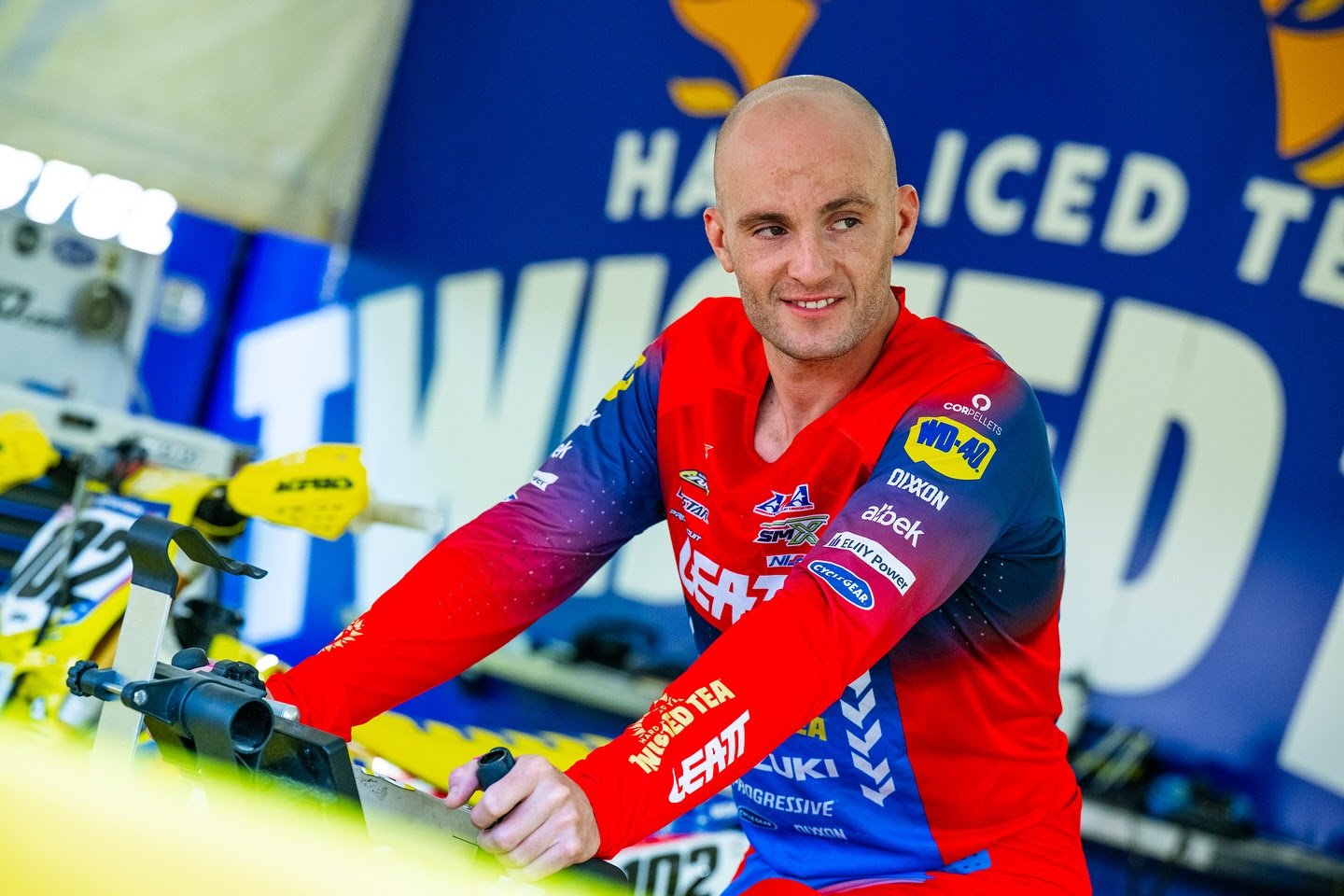
If Benoit Paturel has kept a low profile in recent months, the French rider hasn’t been inactive, as he’s aiming for a return to competition in 2026. In his sights — after spending summer 2025 in the USA with HEP Suzuki — Paturel hopes to secure an outdoor ride, or at least an opportunity in MXGP World Championship. Motocross in the US, the off-season, Brazil, ambitions… Paturel explains more.
Benoit, to start, what have you actually been doing since the end of the 2025 outdoor season? You seemed to go through a bit of an uncertain period for a few months.
Paturel: Honestly? Not much. To be frank with you, it was quite a complicated winter period, in the sense that it was supposed to continue with Suzuki for the 2026 outdoor season. In the end, at the last moment — late 2025 — it fell through.
From there, I had an interesting option with Yamaha in Brazil, which also fell through. Again, very late; it’s the ride that went to Glenn Coldenhoff. I found myself a bit stuck with nothing.
I didn’t really know what I was going to do. To go back to the USA, I would have had to race Supercross, but I didn’t feel ready to jump into the deep end of SX at 31.
There was a period of reflection and planning. I decided to go again for another year, with the goal of racing in the USA in 2026. I started preparing at the beginning of March.
I’ve been training flat-out for two months now. It’s starting to feel good. There’s about a month and a half left before the outdoor opener.
That deal in Brazil would have been a good way out for you.
Paturel: Exactly. It was a great opportunity. It looks like an interesting championship. Plus, Yamaha is a brand I really like — I love the bike. It would have been something different. It was a great option, but it fell through.
Let’s quickly look back at your American experience. What do you take from it? It feels like you had more in you than what the results show on paper.
Paturel: I think you summed it up well. I take a lot of positives from it in the sense that I went there on my own, bought a bike locally, and made it work. Thanks to private sponsors, I was able to launch the project. I went there hoping to find something.
After that preparation, a factory team called me. I was really happy. It was a great reward to work with competent people. I got back the structure and professionalism from my years as a factory MX2 rider, which was really cool.
It was also a new experience, with amazing tracks you usually only see on TV. It was a real pleasure.
In terms of results, like you said, some good and some not so good. At the beginning, I rode well, especially at Pala — that was my best round because I knew the track; I trained there a lot during preparation. It made things easier.
At the other rounds, you’re discovering the tracks. You don’t have much time — two sessions of 15 minutes to find your rhythm. There were also some race incidents, technical and mechanical issues, and some small mistakes on my part. Overall, I could have done better.
I finished 15th in the championship; I could have been in the top 10. But you can’t rewrite history. That was my level — I had the ability if everything had come together.
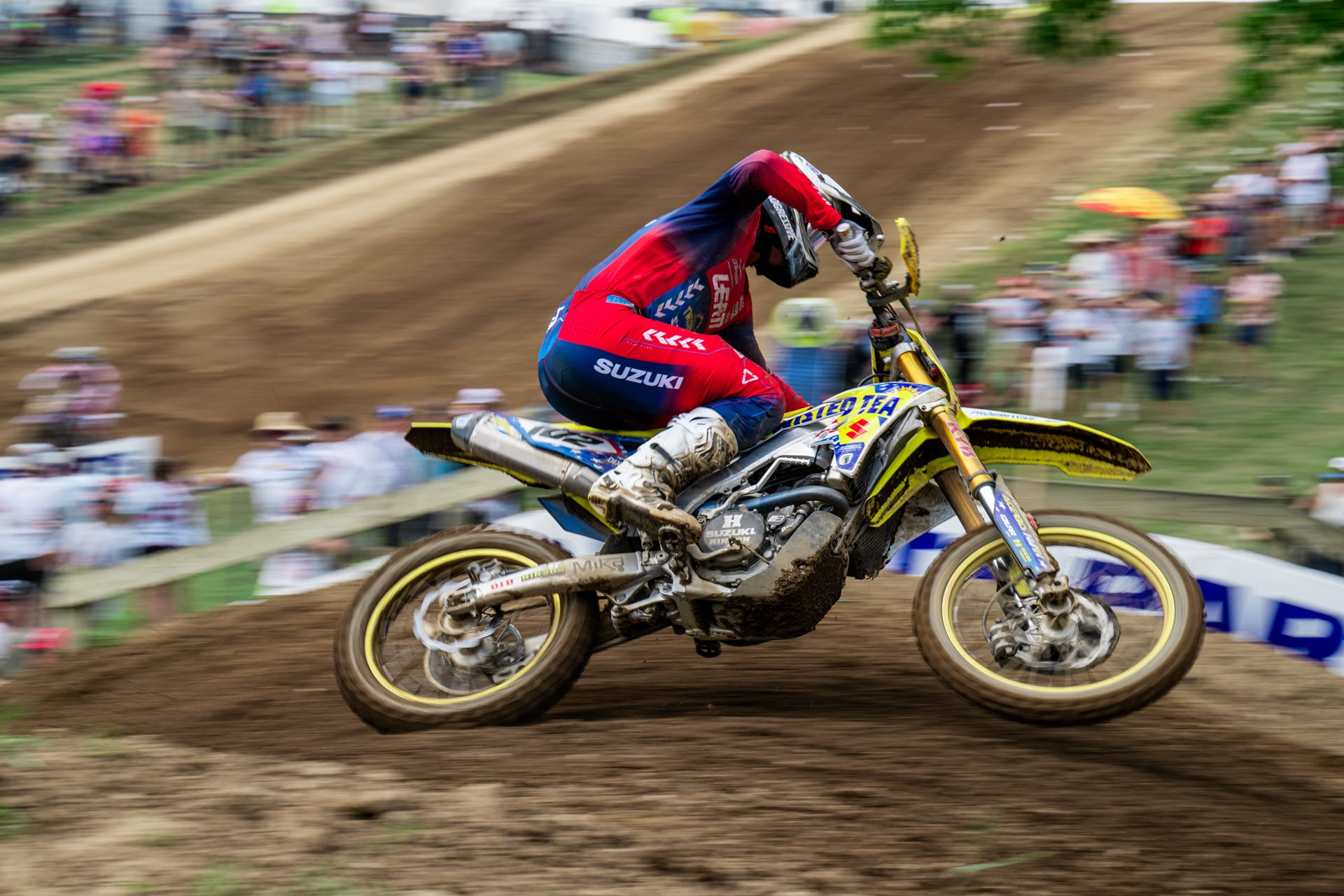
So it didn’t continue into 2026, even though that was initially the plan. Why? And why didn’t you race SMX?
Paturel: At the final outdoor round at Budds Creek, battling with Jorge Prado, I took a big knockout. For a week, I was pretty out of it. And since I haven’t done much Supercross in my career, the preparation time for SMX was too short.
On top of that, I could see the team wasn’t really pushing. We decided together to skip it. Then, at the end of September, beginning of October, it was decided things wouldn’t continue, even though at the end of summer it looked like they would. That was a tough setback.
Why not consider a program like Valentin Guillod — 250SX and 450MX?
Paturel: I had options to do a full season. I didn’t take them because it meant racing Supercross, and I didn’t feel it.
Like you said, maybe it’s not the perfect example, but actually, I think it is. Valentin is a very technical, talented rider. He’s done Supercross before, unlike me.
With Valentin, you can see how difficult it is — so imagine when you’ve never really done it. It’s a different sport. You can’t take Supercross lightly. In 250, you need a top-level bike, and it’s not easy. Valentin is known for his whips, scrubs, and jumping — that’s his thing.
Even if you’re a top-10 guy in 450 motocross, switching to 250 Supercross — even though it’s a smaller class — it’s still very difficult to put everything together. There are so many injuries every weekend. You have to take huge risks. I think it’s something you need to start young — around 20 or even earlier. You need to build yourself in SX, not play around with it.
You raced for the first time in five months at Thomer-la-Sôgne. How was it?
Paturel: Average. I knew I was lacking bike time. I only had about a month back on the bike. I wasn’t going there to dominate, unlike the previous year when I came back from the US fully prepared — and I won that event.
In the morning, I started well — third in practice — but I locked up my back in the first session and carried that all day. It was tough; I rode through the pain.
It was a very dry track where it was hard to make the difference. You had to start up front. I had a decent first moto, finishing third. In the second, I got a bad start and tangled with Harri Kullas. I didn’t take risks. Then I finished sixth in the last moto. Mixed feelings, but I know where I stand. It helped me reset and get a few starts in.
Now I’ll race at Sainte-Austreberthe on the May 1st weekend.
Your goal is to return to the USA. How will you find a ride there with the season starting soon?
Paturel: I have contacts and people I know there. Last year, I secured the deal with HEP at the last minute and only had two weeks on the Suzuki before the outdoor season. The next few weeks will be important. Either way, if the phone doesn’t ring, I won’t have regrets. I’ll have done my preparation. If it happens, it happens. If not, I’ll do something else and see what the future holds.
Last year’s approach worked — going to the US, training, and landing a ride. Why change it for 2026?
Paturel: Logistically, it was a risky move last year. I did it because I had nothing to lose. This time, it’s different.
I’m based in Belgium; the tracks are great for training because they’re tough. In California, conditions are perfect, but the tracks can be a bit too easy compared to Florida where it’s really rough. For now, the weather is perfect.
Logistics, training, mechanic, bike — I have support here. It’s easier to manage being based here this year.
And financially — is it still as demanding? Who supports you?
Paturel: I have a mechanic with me for training. We have a truck, a workshop, everything we need. I also have my sponsor Corpellets, who has supported me for a long time with equipment and bikes. Right now, I have everything I need to train properly.
If you return to the US outdoor series, will you change your approach?
Paturel: No, I don’t think so. It will depend on the deal I get and where I’m based.
But it’s obvious that the second year is always easier. You know what you’re getting into, you know the tracks, and so on.
It will be much simpler from that point of view. Hopefully I’ll have a good bike, be 100% ready, get good starts, and do the best possible job. But overall, my approach is solid.
The Grand Prix season has started. Would you be open to a ride in MXGP?
Paturel: Of course. For a good opportunity, with competitive equipment, I’m open to anything. I’m ready to take a chance. There’s also a one-month break in MXGP — and the outdoor season starts in a month as well. I’ll be close to 100% by then. That’s why I’m training hard right now. I feel like something will come. I don’t know where a door will open, but I’ll be ready.