
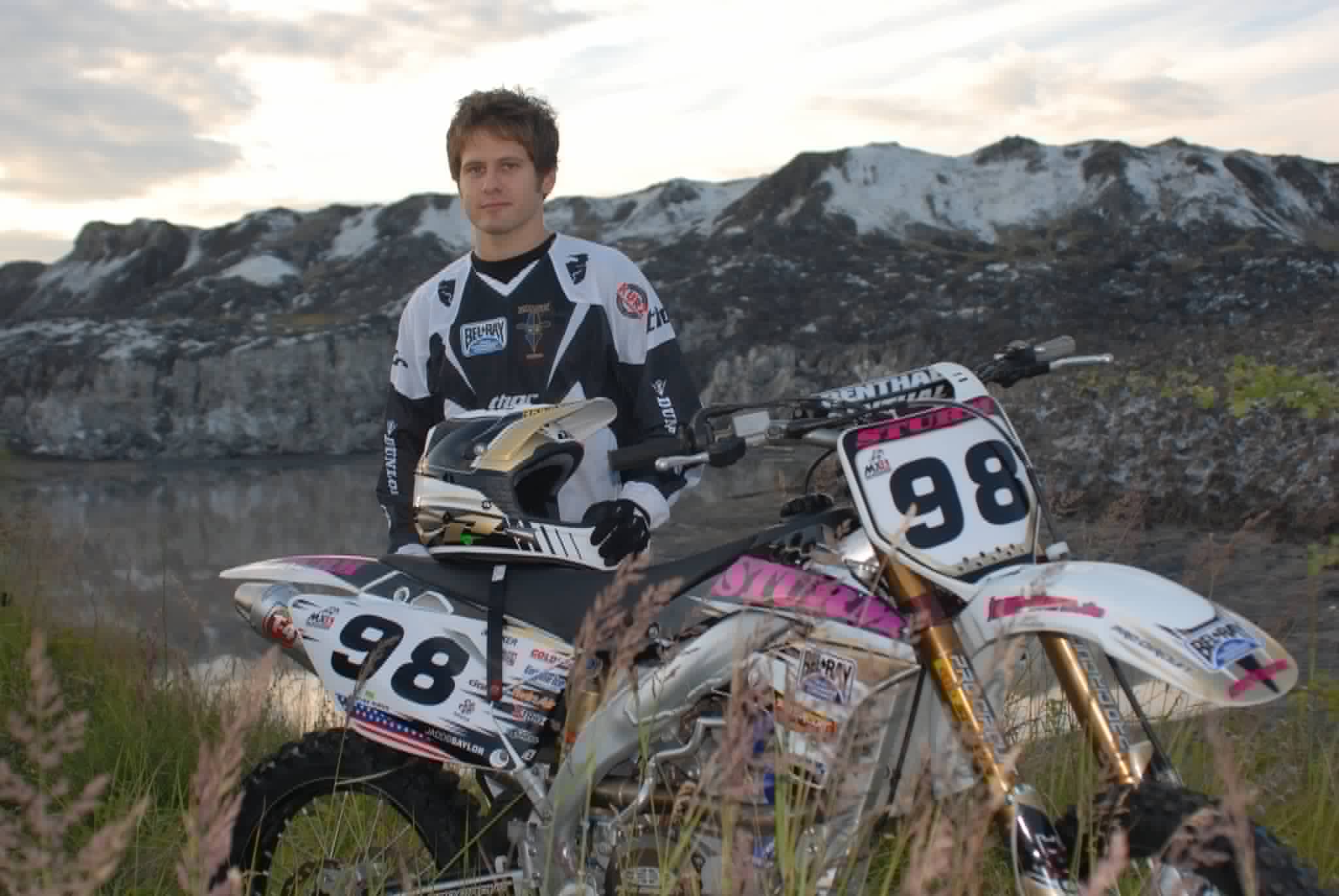
Few American riders have packed their bags and headed to Europe full-time to chase the dream of racing MXGP, but Jacob Saylor was one of the rare few willing to take on the challenge. After coming through one of the toughest eras in American amateur motocross and racing against names like Mike Alessi, Saylor carved out a respectable professional career in the United States before making the bold move overseas to race MX1 in the World Championship.
From brutal sand tracks to life inside the GP paddock and the lessons learned racing against the world’s best, Saylor’s European adventure left a lasting impact both on and off the bike. We caught up with Saylor as he opens up on why racing MXGP was the pinnacle of his career, why GP riders are often underestimated in America, and why he believes more young American riders should follow the same path.
GateDrop: You were one of the few American riders from that era to make the move to Europe full-time to race the World Championship — what made you take that risk?
Saylor: At the time, it didn’t feel like a risk. It felt like a great opportunity and a chance to see the world while riding my dirt bike so I fully embraced it.
GateDrop: At what point in your US career did you feel like you needed a change or a new opportunity overseas?
Saylor: At that point, I was a privateer in the US and was already racing international events like Belfast, Geneva, and the Canadian Nationals. So this opportunity was a gradual step in that direction.
GateDrop: How did the GP opportunity actually come together? Was it something you chased or did a team approach you?
Saylor: Dave Kimmey from Engine Ice was a sponsor and family friend. He was instrumental in connecting me with teams in Europe, and my results in the States and certain overseas events helped build those connections.
GateDrop: What were your first impressions when you arrived in Europe and saw the GP paddock for the first time?
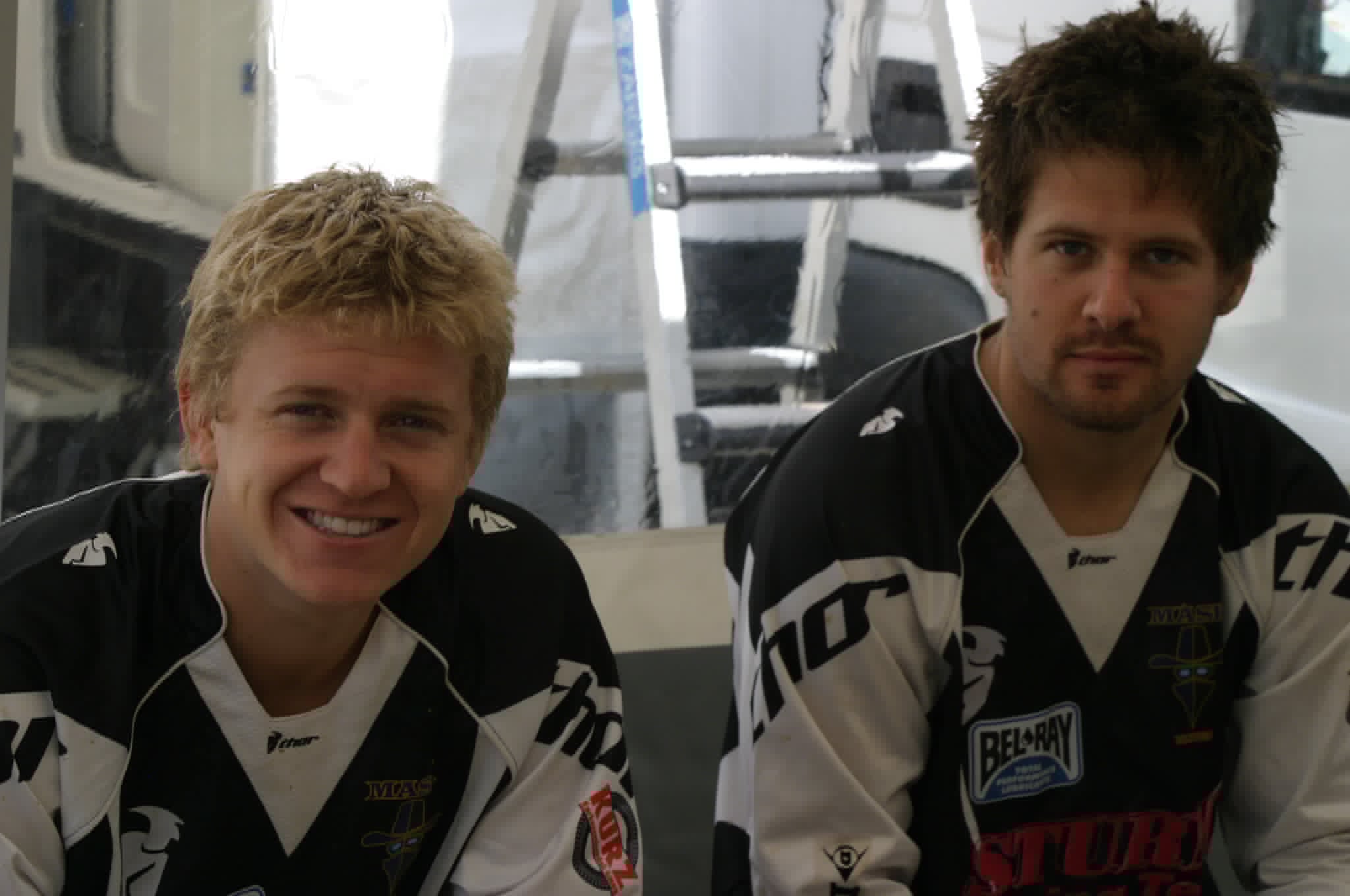
Saylor: It was very impressive, to say the least. The prestige and professionalism were very evident. Taking a group photo with the entire field on the podium was really cool. To be honest, I didn’t follow MXGP very closely prior to coming over, so I felt very out of place. But my team, Sturm Racing, was very accommodating, and I felt very grateful to be there.
GateDrop: How different was the level in MX1 compared to what you were used to racing in America?
Saylor: I ran inside the top 15 in US 450 Nationals, with a few top-10 lap times in qualifying. It took me a few rounds just to qualify for MX1! The level at the top was unbelievable.
GateDrop: Tracks like Lommel, Valkenswaard, and Lierop are completely different to most US circuits — how steep was that learning curve?
Saylor: That was the hardest part — adapting to the challenging tracks. They were way rougher than US tracks at the time. My first GP at Valkenswaard was rainy, muddy, and extremely demanding. In qualifying, I was 25 seconds a lap off Ken De Dycker! That was a wake-up call.
The sand tracks like Lommel were absolutely brutal. I raced in Florida growing up as an amateur and was a decent sand rider. Growing up, I trained with James Stewart, Kyle Chisholm, and Davi Millsaps on 85s at places like Dade City and Croom. Florida sand is nothing like the bottomless Belgium sand. Lommel was the roughest track I have ever raced.
GateDrop: Was there any GP track where it finally clicked and you felt comfortable racing in Europe?
Saylor: Round 4 in Bulgaria was the first time I qualified for the MX1 motos. That was a huge relief. I finally scored points at the last round, in the final moto of the season at Faenza. That was a huge milestone for me after how the season started. I grinded all the way to the end and scored four points. After a horrible season, it felt good to end it that way.
GateDrop: What was the biggest thing GP riders did differently compared to American riders at the time?
Saylor: My team stopped at a GP track in Spain to test and get some training in — Talavera, I believe. This track had not been touched in a long time. It was filled with rain ruts throughout this huge valley. Steve Ramon was there as well. He did three 45-minute motos on the gnarliest track conditions imaginable.
There were no groomed practice tracks we visited the entire season. The tracks we rode during the week were rough, technical, sandy, dry, muddy — all of the above. In my opinion, this made the top GP riders incredibly technical.
Also, the race IQ of those riders was elite. They could adapt to any track in any country and still perform at their best.
GateDrop: Did racing in Europe change your riding style or your approach to training?
Saylor: It did. I learned to carry more momentum and ride a taller gear. My corner speed improved tremendously. I was taught to gas hard and brake hard. I learned to get off the brakes and flow with more momentum.
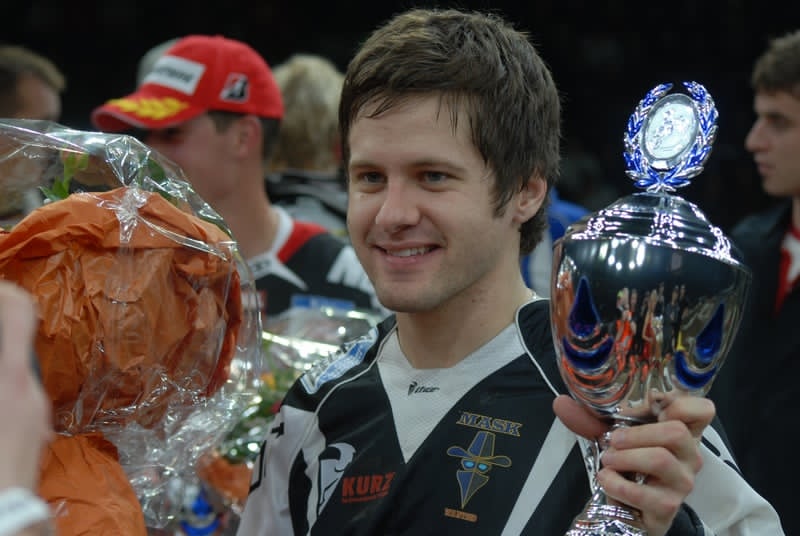
GateDrop: How tough was the lifestyle side of it — living abroad, travelling constantly, different languages, and being away from home?
Saylor: The lifestyle was amazing. That was actually the easiest part, in my opinion. Everyone my age spoke English. I loved being based in Germany. My team took such good care of me and made me feel at home.
Actually, I’m coming back to Germany at the end of this month. My entire family is coming to the MXGP of Germany. It’s going to be fun to revisit and enjoy a vacation together.
GateDrop: Looking back, was moving to Europe the right decision for your career?
Saylor: Absolutely. I am so thankful for the opportunity. The sacrifices my family made for me to race growing up led to the opportunity of a lifetime. Racing MXGP was the pinnacle of my career.
GateDrop: Do you ever wish more American riders would take the same route and try racing GPs?
Saylor: Yes, I do. It would make them better riders, 100%. If you ask Zach Osborne and Mike Brown, they will tell you the same thing. It will turn young boys into men.
Unfortunately, we value Supercross so much in America that I don’t think it will happen. I also don’t think there will be another American MXGP Champion unless that rider grows up in Europe and follows a different path.
GateDrop: What do people in the US still misunderstand about how difficult GP racing is?
Saylor: People think Prado struggling last year is a sign that MXGP riders are not as good. That’s not true at all. I would argue the top-15 talent pool in MXGP is deeper than US Pro Motocross. This summer, Prado is about to show everyone what an elite MXGP rider is capable of on his KTM.
GateDrop: What were the biggest differences between the AMA paddock and the GP paddock back then?
Saylor: I loved staying at the track and sleeping in the rig in the paddock every race weekend. No hotels. It made for a longer weekend and gave you more time to hang out with your team. I met a lot of amazing people during that time.

GateDrop: Did you find the racing itself more technical in Europe, or was it simply the tracks that made it harder?
Saylor: The technical tracks create more technical riders. Riders who focus on one discipline all year long. Riders who can make better predictions and decisions when the track changes. Riders take huge pride in winning an MXGP event.
GateDrop: How did bike setup differ between what you raced in America and what teams wanted in Europe?
Saylor: I liked a simple setup — give me a balanced bike and let me handle the rest. I struggled getting comfortable at the MXGP races. During the ADAC races, I felt really good, which was frustrating. The more stock-feeling the bike was, the better I rode.
GateDrop: Before turning pro, you were one of the top amateurs in the US and raced during a stacked era — what do you remember most from those days?
Saylor: If MXGP was the pinnacle of my professional career, my amateur career was the best childhood I could ever ask for. I learned the fundamentals from Gary Bailey and Donnie Hansen, but Ronnie Tichenor really brought out the best in me, especially alongside the rise of the four-stroke era. It was perfect timing to be on a Yamaha.
GateDrop: You raced against guys like Mike Alessi in the amateur ranks — how intense was that period in American motocross?
Saylor: He was so hard to beat. He was always a step ahead in speed, setup, and race IQ. At Loretta’s, I could hang with him for 15 minutes, but in the last five minutes he would pull away. All I could do was sprint and hope I didn’t get tired.
You could tell Mike was already ahead of everyone and ready for the pros. He got third at Steel City just a few weeks later.
GateDrop: You rode for Star Racing early in your pro career — what was that experience like before the team became the powerhouse it is today?
Saylor: Riding for Star Racing was a huge highlight for me. All the stories about Bobby Regan are true. He brought me down to Wiggins, Mississippi, to stay at his house, and he put me through a Rocky-style training regimen.
He would drive his truck 10 miles down dirt roads, then make me run back to town. He told me to call him if I got lost — and to count how many wild turkeys I could find out in the wilderness.
GateDrop: Was there a moment in your US career where you felt close to getting a breakthrough that never quite happened?
Saylor: I only spent one year in the 250 class — maybe six or seven races total before moving up to the 450cc. The 450cc suited my style, and I wasn’t afraid to grab a holeshot and try to hold my own.
Unfortunately, moving to the 450cc class so quickly put me into a privateer role fast. I rode for some great teams like Caterpillar Honda and MDK, but I was destined to stay in that role for the rest of my career.
I finished 12th at Anaheim in 450 Supercross, and every rider ahead of me was on a factory team. Factory Honda rider Travis Preston passed me for 12th with about two laps to go.
After that, I chased the dream, and it took me around the world. I’m thankful for that.
GateDrop: You raced against a number of elite riders back in the day — who would you say were the toughest competitors you raced against?
Saylor: I was blessed to race Jeremy McGrath when he came out of retirement. Not many people can say that.
GateDrop: What was the wildest or most memorable experience from living and racing in Europe?
Saylor: My teammate Bradley Graham and I took a train in Germany and disappeared for two or three days. We had an off weekend from racing, and we just backpacked around Europe.
My team ended up calling back home to my dad trying to find us. Luckily, we made it back in one piece and made a lot of memories along the way.
GateDrop: If a young American rider asked you today whether they should go race MXGP, what advice would you give them?
Saylor: I would tell them to 100% take the opportunity. I’d tell them to become a student of the sport and let it teach them. You will become a better rider, and the life experience will be unlike anything you can experience at home. Use a sponsor or connection to reach out and make it happen.
GateDrop: What is life like for Jacob Saylor now away from racing? It seems like you are still a fan!
Saylor: I’m still a huge fan. I married into a motocross family, and we all still go watch and ride from time to time. My son is 14 and rides a 250F for fun. Maybe we’ll get into racing one day.
I spend most of my time managing two dealerships — Chrysler Dodge Jeep Ram and Hyundai. The life lessons I learned from motocross have helped me in every avenue of my life, and I’m very thankful for that.