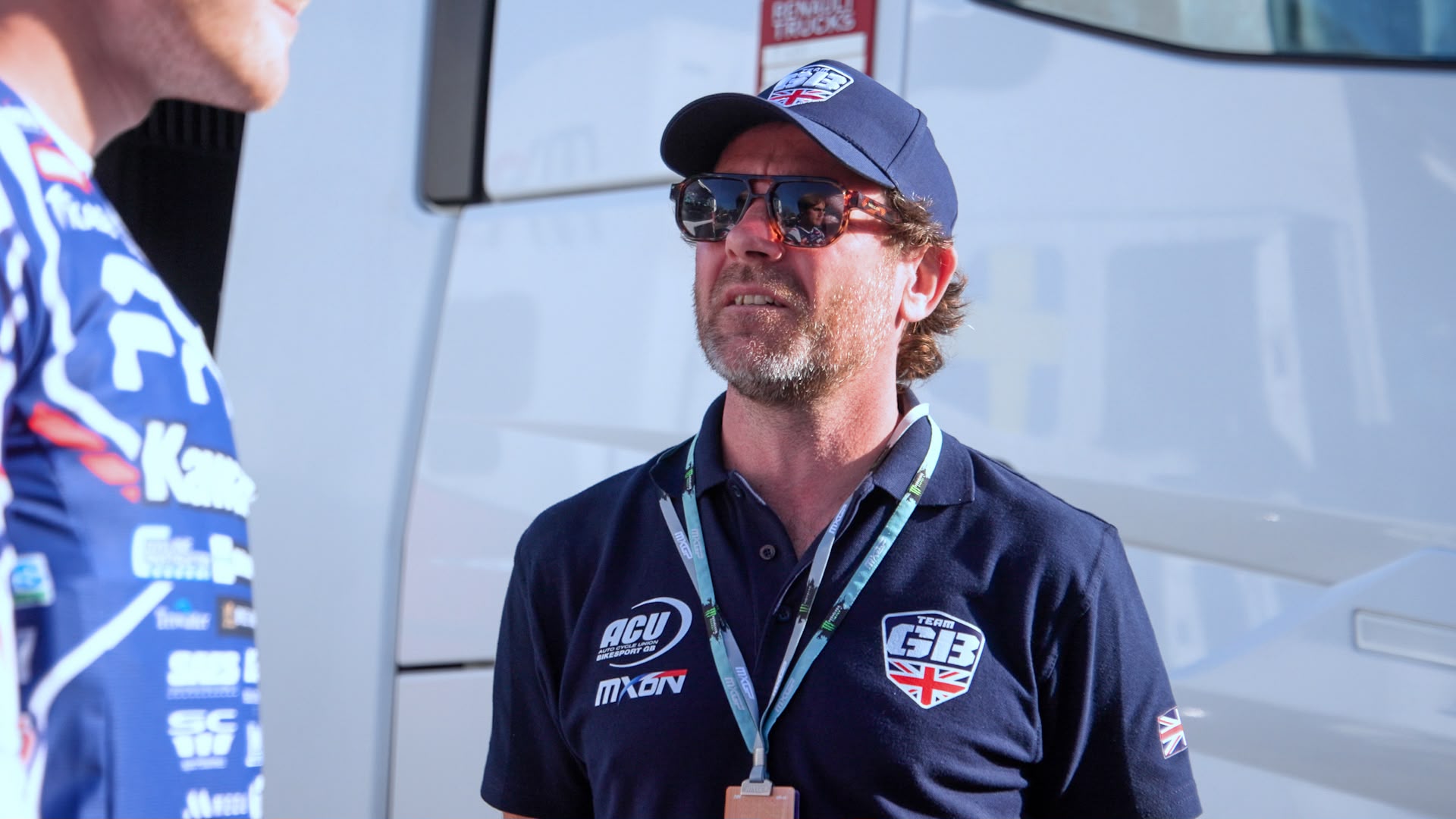


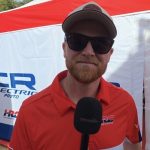


The Motocross des Nations brings together the cream of the motocross world every year, but for Joël Roelants, the event means something different today than when he was actually at the start himself. In 2009 and 2011 he represented the Belgian colors himself, and since 2024 he has experienced the Nations in a different role: as manager of Team Belgium.
In the lead-up to Ernée, Stouwer MX talked with Roelants about the switch from rider to team manager, working with young riders, the impact of a long season and injuries, but also about his own career and the way he looks at the risks of the sport today.
Joël, this is already your third Motocross of Nations as team manager of Team Belgium. Are there things you might have underestimated about the transition from rider to team manager?
Roelants: I don’t think I really underestimated anything. We all know that it takes a lot of work. I enjoy the contact with the teams, but the extra work, like looking for sponsors, suits me less. The federation’s budget is fairly limited, so we have to finance a lot ourselves. That takes quite a lot of time.
You yourself have started in the MXoN twice. What do you understand better about such a weekend now than when you were there as a rider?
Roelants: What I mainly remember is that the Nations is a nice way to end your season. All the championships are over, and you should just try to enjoy the weekend. Riding for your country is ultimately something unique, and I try to convey that to the riders as well. There really shouldn’t be any pressure. It’s something extra, and hopefully the riders also get an extra boost because it’s the only race you really do as a team, with all the fans behind you.
How difficult is it to make decisions for and with three young riders like Lucas, Sacha, and Liam, each of whom has their own opinion and vision, compared to when you were mainly thinking from the perspective of one rider – yourself?
Roelants: Actually, it’s not that difficult. For me, it’s mainly important that all three of them want to win. They’re three totally different personalities, but if all three want to get the best out of themselves, it’s relatively easy to make decisions. They really listen and all three want the best. That obviously makes it easier. If you have to work with someone who isn’t really motivated, there’s not much you can do. In that regard, it goes pretty smoothly.
Is there a moment during race preparation when, as a manager, you’d like to be in control, but at the same time have to accept that you can’t change anything anymore? Should you mainly motivate the riders then, or sometimes actually temper them in a bit?
Roelants: During the race, as a manager you can still give some information via the pit board. But in the end, all the work really has to have been done already. Whether you need to motivate a rider or temper them really depends on the person. Liam, Lucas, and Sacha are all completely different. I think my main task – and what I enjoy most – is figuring out how to get the best out of each of them.
One might need to be tempered a bit more than the others, but motivating these guys isn’t really necessary. They already want to give their absolute best on their own. It’s mostly about figuring out the best way to achieve that. That can, for example, be done by looking at which people we do or do not involve in the entourage, by training together, and so on. The most important thing is that the riders feel good and are relaxed.
After the 2025 MXoN, the original plan was to step down as team manager. In the end, you went on anyway. What made you change your mind?
Roelants: After 2025, I mostly looked to see if someone wanted to take on the financial side. There wasn’t really anyone willing to take over everything, so I ended up with Bert Vanlerberghe. He has been going to motocross all of his life, and so far that’s worked out really well. He’s extremely motivated and now mainly takes care of the financial side of Team Belgium, of course, always in consultation with me. Ultimately, I’m the one responsible if something goes wrong, but he’s really doing a fantastic job. I think we’ve taken a step forward in that regard.
Besides, he’s specialized in it and enjoys it too. I handle the other part: working with the riders and making arrangements with the teams, for example about clothing and the setup we’re going to ride with. Those are things I personally enjoy doing, especially working with the riders. So that’s a good combination.
Your career ended in a way nobody expected. Did you at the time think that years later you’d still be so involved in the GP paddock?
Roelants: Of course, that’s not how you want your career to end. I wouldn’t say I’m that active in the paddock, but I do commentate on TV and I was involved with a team for a few years as a mentor for their riders. So you do stay connected to that world.
Did I expect that? No, you can’t really plan for that. But for me, the important thing is that I can keep enjoying my hobby. It was, of course, also my job, but being able to continue my hobby and occasionally still ride myself is what matters most to me.
We’re witnessing an unusually high number of injuries and/or budget issues among several top countries this year. The Belgians weren’t spared either, with Lucas and Sacha picking up injuries along the way. Do you think that also changes the way you look at an MXoN selection?
Roelants: It’s a relatively long season in Europe. In America it’s actually even worse, because they already have twenty Supercross races that are extremely dangerous, then the Nationals, and after that the SMX races on top.
That’s obviously a long season. In the end, the MXoN is something extra. The riders really don’t need to train or make a huge leap physically two weeks after the last GP, they just need to make sure they start the race well-rested.
You won’t lose any physical condition in ten days. They just need to stay active and hopefully get a good feeling, because those overseas GPs really take their toll. If they want, I try to help them out a bit and give some input. In Lucas’s case, it’s just a matter of getting back to top shape.
Lucas has had quite a disrupted buildup, and for the outside world, it’s still hard to gauge how fit he will be and whether he can even participate. Nowadays, is the MXoN maybe more about getting three healthy riders to the start rather than simply picking the three fastest names?
Roelants: Getting three riders healthy to the start, especially for a country like Belgium, is indeed not always easy. We currently have three riders who stand out.
Of course, I can’t go into too much detail, but I think Lucas has been doing really well in the past few weeks and has already been able to ride the bike a few times. So we still have to wait and see, but I’m mainly trying to manage expectations and not put too much pressure on him. Then we’ll see.

You’ve also been regularly appearing on podcasts lately, like CrossTalk and To Talk Again. In the latter, you spoke openly about your own situation and that of your father Walter. Does a conversation like that feel different from a classic interview?
Roelants: For me, it doesn’t really make much of a difference. As long as I don’t have to write anything down myself and just can say what I think, I don’t mind whether someone interviews me directly and the story ends up in a newspaper or on a podcast. I do it because they ask me. If I can help people with it or it can be an inspiration to someone, that’s a nice bonus.
But in the end, I’ve said it many times: I can’t make decisions for someone else. I can only share my own experiences. There are different forms and levels of paralysis, depending on how high up the spine it is, and that always results in a different way of living.
I therefore never want to say what someone else should do or how I think things should be, because you don’t know the exact situation someone is in. I mostly try to share my own experiences. If others find it useful, I think it’s nice that they can take something from it. And if not, well, that’s just how it is. If they ask me something, I try to help, and after that, they have to decide for themselves what to do with it.
You’ve experienced first hand how quickly a motocross career can change with just one fall. Can you still watch motocross today without reservations?
Roelants: Yes, definitely. I don’t really think about it. Motocross has always been my passion, and it still is. Of course, you hope that both adults and young kids end up in that situation as little as possible. We also need to keep talking about that, for example about the airbags that are going to be introduced in the World Championship and how overall safety can be further improved.
Of course, it remains a very dangerous sport, we can’t deny that. But on the other hand, that’s exactly what’s always drawn me to this sport. There’s something about the adrenaline that makes it twice as fun for me. That’s also the reason why I race or ride motorcycles. I often push the limits too. That’s just how I am.
Finally: you know the GP paddock inside out. What’s the craziest or most remarkable thing that has stuck with you over all these years?
Roelants: I can’t give a direct answer to that. For me personally, my crash might be the craziest, or at least the event that had the most impact on my life.
Other than that, I can say that I’ve worked with a number of riders who sometimes amazed me with how incredibly talented they were. If you told them a few things at once, they could execute them effectively in a very short time. Sometimes it was really unbelievable how much talent some had. On the other hand, there are also riders who ride at that same high level but need something explained ten times and have to try it twenty times before they can even do it halfway correctly. And yet they ultimately reach almost the same level.
There’s a huge difference there. I especially noticed that from training riders. That might be one of the things that stick with me the most.
Joël, thank you very much for your time and best of luck in Ernée!