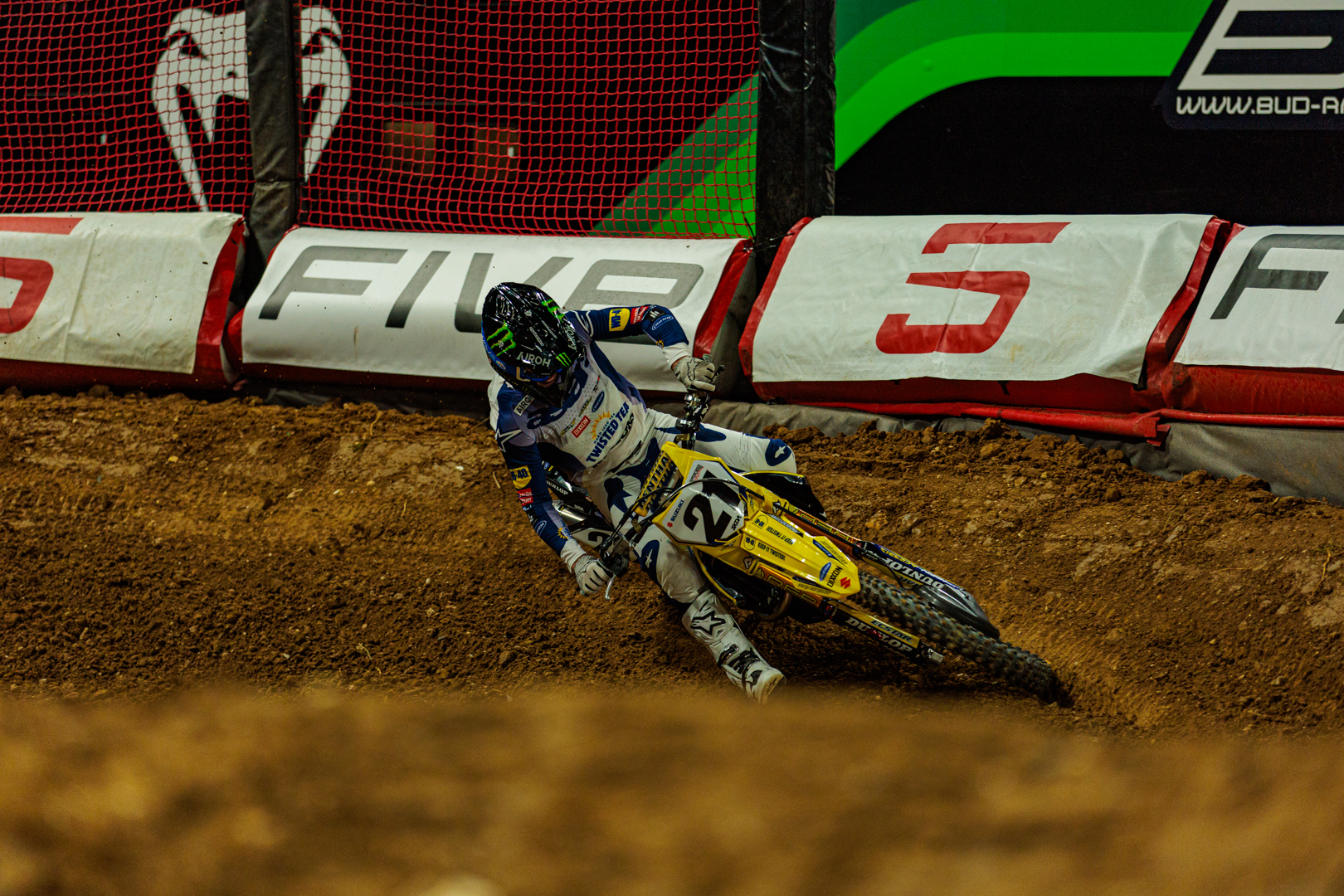

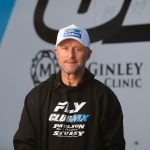

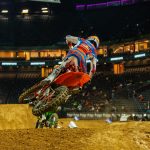

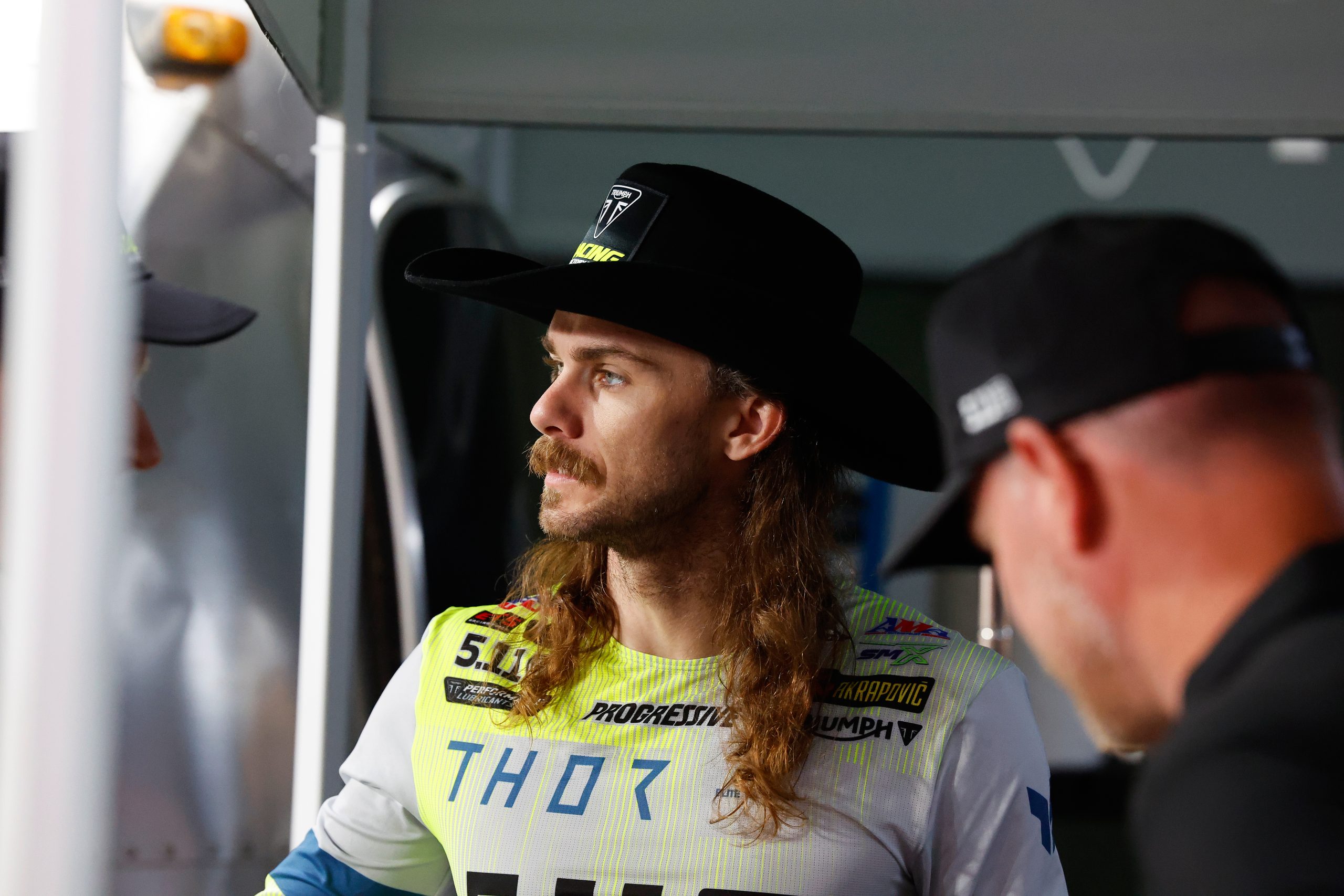
Aaron Plessinger is embarking on a new chapter in his career for 2027, having made the switch from KTM to Triumph after five seasons with the Austrian manufacturer. The American heads into the new challenge with plenty of experience behind him, having also spent seven years with Yamaha earlier in his career.
Following his debut appearance with Triumph at the Paris Supercross, Plessinger spoke to Marco Kamper about adapting to a new motorcycle, the importance of having the right people behind a programme, and why he’s still enjoying racing as much as ever. He also reflects on his journey to the top, his decision to embrace his personality and trademark cowboy hat, and the advice he’d give to the next generation.
Aaron, you’ve raced for Yamaha, KTM and now Triumph. At Yamaha, you saw just how different a bike could be depending on the team in charge of the programme. In your opinion, what makes the biggest difference: the bike or the team?
Plessinger: That’s a difficult question because you can have a good bike, but if you don’t have the right people to get the most out of it, things can quickly become frustrating. You know what the bike is capable of, but you can’t quite get it to do what you’re looking for.
Back when I was at Yamaha, when Star Racing took over the programme, they basically took the bike and did more or less what they had already done with the 250. They made it really good and a lot smoother as well. In just one year, they completely transformed the YZ-F. Between 2020 and 2021, it was a completely different bike, and that was a really good thing. That bike did wonders for me.
You’re now at Triumph. Do you feel like you’re having to start from scratch with this new bike?
Plessinger: Not necessarily starting from scratch, but yes, I obviously have to learn a new bike. I need to figure out how the Triumph behaves. I don’t think it’ll take me too long, but I’ve only had six days on the bike since signing. This is probably my seventh day in Paris, so we’re still very much at the beginning and I haven’t done a huge amount of testing yet.
We’ll head back to the USA, get some riding and training in, get to know the bike better, try some different parts and continue making progress from there.
When you get on a new bike, what is your very first priority? What’s the first area you focus on?
Plessinger: First of all, I want to feel comfortable on the bike. I need to feel good on it. Whatever that involves, whether it’s working on the suspension, the chassis or something else. The goal is simply to feel comfortable on the bike.
That’s exactly what I’m trying to do this weekend in Paris. We can worry about the power later on; that’s not the most important thing at the beginning. As long as I feel good on the bike, that’s the main thing.
At this stage of your career, do you have more confidence in your ability to adapt to a new bike? I imagine that with experience, you know what you need to work on to find the feeling you’re looking for.
Plessinger: It’s quite difficult because you can never really pinpoint exactly what needs to be changed. If I could do that, I’d be the best test rider in the world and everybody would be trying to sign me for that job!
But no, it’s a difficult question. What I do know is that I know exactly what kind of feeling I’m looking for, and I’m really eager to find it. Every time I get on the bike, I get a little bit closer. Overall, though, we still need to try different parts. Like I said, I haven’t had a whole lot of time to work on the Triumph yet.
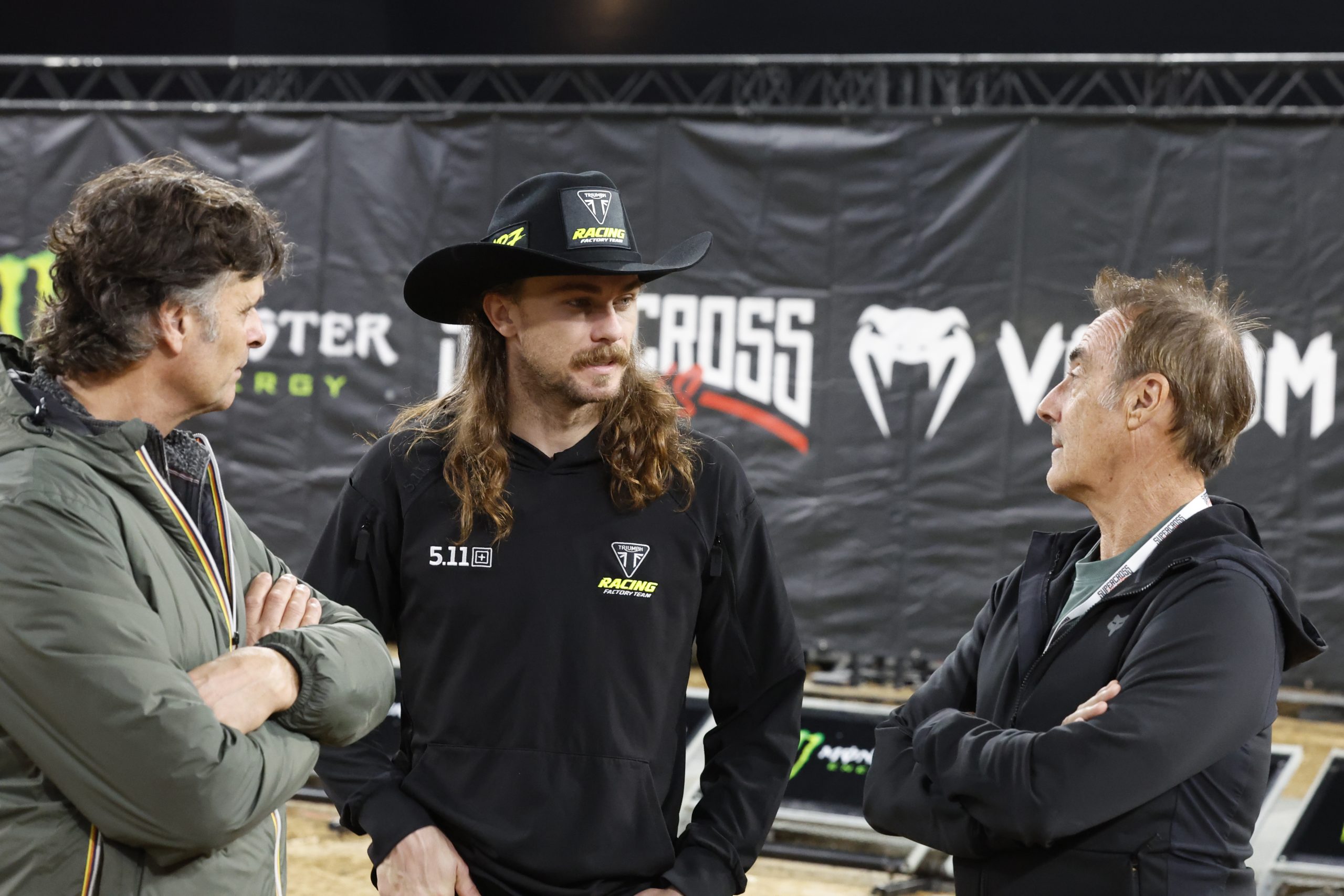
Have you already identified certain things you’d like to change on the Triumph after Paris?
Plessinger: Yes, a little bit. I know which direction I’d like to go in, but overall, I think I just need more time riding this bike.
I need to put in more days and more hours on it, understand it better and figure out how it reacts, when it reacts and why. I need to understand the changes I need to make, but also what I need to do with my body to compensate for certain characteristics of the bike. Overall, I simply need more time on the Triumph.
There was a time when riders would retire before they reached 30. Nowadays, when you look at Webb, Roczen, Anderson, yourself and Smith, you’re all over 30 and still performing at a high level and competing at the front. What’s changed compared to riders like Ricky (Carmichael) and Villopoto?
Plessinger: I think Ricky had made the money he wanted to make, so he decided to stop. It’s difficult to answer that question, but I can speak about my own situation.
Nowadays, I’m having a lot more fun than I used to. When I’m not enjoying myself on the bike, I try to find enjoyment elsewhere. When I’m going through a difficult period, I just remind myself how lucky I am to be able to ride dirt bikes, and that it’s still a lot better than having to do some physically demanding job.
There are so many things in life that could be worse. I try to keep that in mind, and it helps me keep going and moving forward. I’ve always said that as long as I’m having fun, I’ll keep racing.
Do you take a step back and realise just how different your life could have been compared to other people?
Plessinger: Yes, absolutely. I could so easily have gone in a different direction, never made it to where I am today and ultimately never become the person I am now. So, for myself, my kids and my family, I’m happy that I persevered. It wasn’t easy at the beginning, and I didn’t really get noticed until quite late.
I was almost 18, which is a lot older than most other riders when they start getting recognised. So yes, I’m really grateful that I didn’t give up. My dad was also quite demanding with me. He wasn’t extremely tough, but he was tough enough to keep me on the right track. Well, at least he tried! (Laughs)
But no, I’m really happy that I stuck with it. I’m glad I’ve made it to where I am today. If I could go back and do it all again, I wouldn’t change a thing about my journey.
At one point, you decided to be 100% yourself. You started showing up at races with your American flag and cowboy hat. What made you decide that you wanted people to see you for who you really are?
Plessinger: I think it was seeing people’s reactions that made me start to realise a few things. I don’t know if there was one particular lightbulb moment, but I simply got tired of not being myself. I wasn’t trying to become somebody completely different either. I’ve always been patriotic, a bit of a redneck, a bit of a hillbilly, whatever you want to call it!
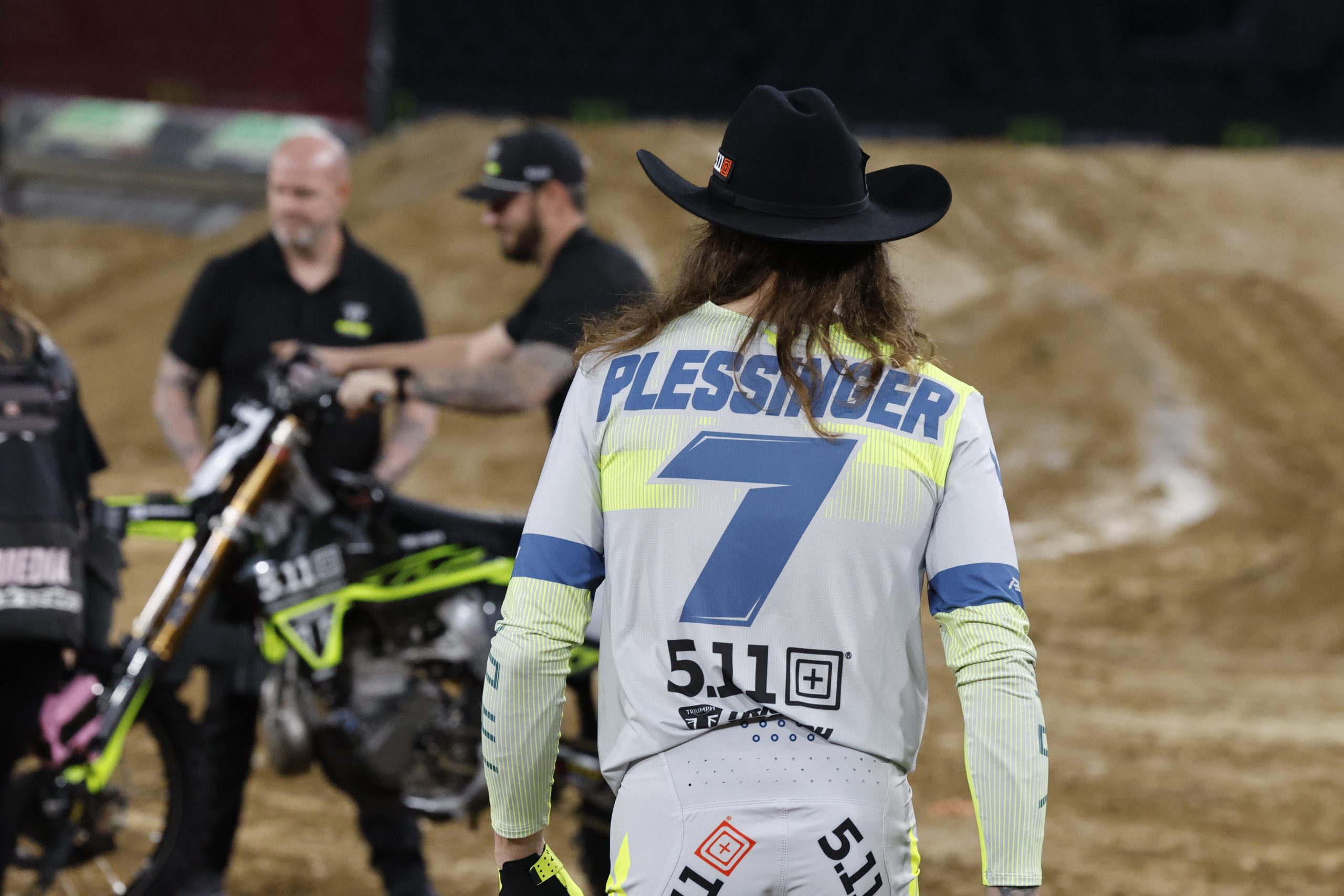
But when the cowboy hat came along, it changed the way people saw me. It just grew from there. You could say I’m a character in my own right. I like having a personality and building something around that character because it’s something that represents who I am. I’ve been wearing that hat for a long time now, and it’s kind of become my trademark.
Finally, what’s the best piece of advice you’ve received throughout your career that you’d like to pass on to others?
Plessinger: I’d tell people to keep having fun. Keep enjoying yourself, no matter what you do in life. Whatever the situation, keep things simple and light-hearted. Don’t take everything so seriously all the time.
Always have as much fun as possible, keep smiling, even through the difficult times. You’d be surprised how far that can take you.