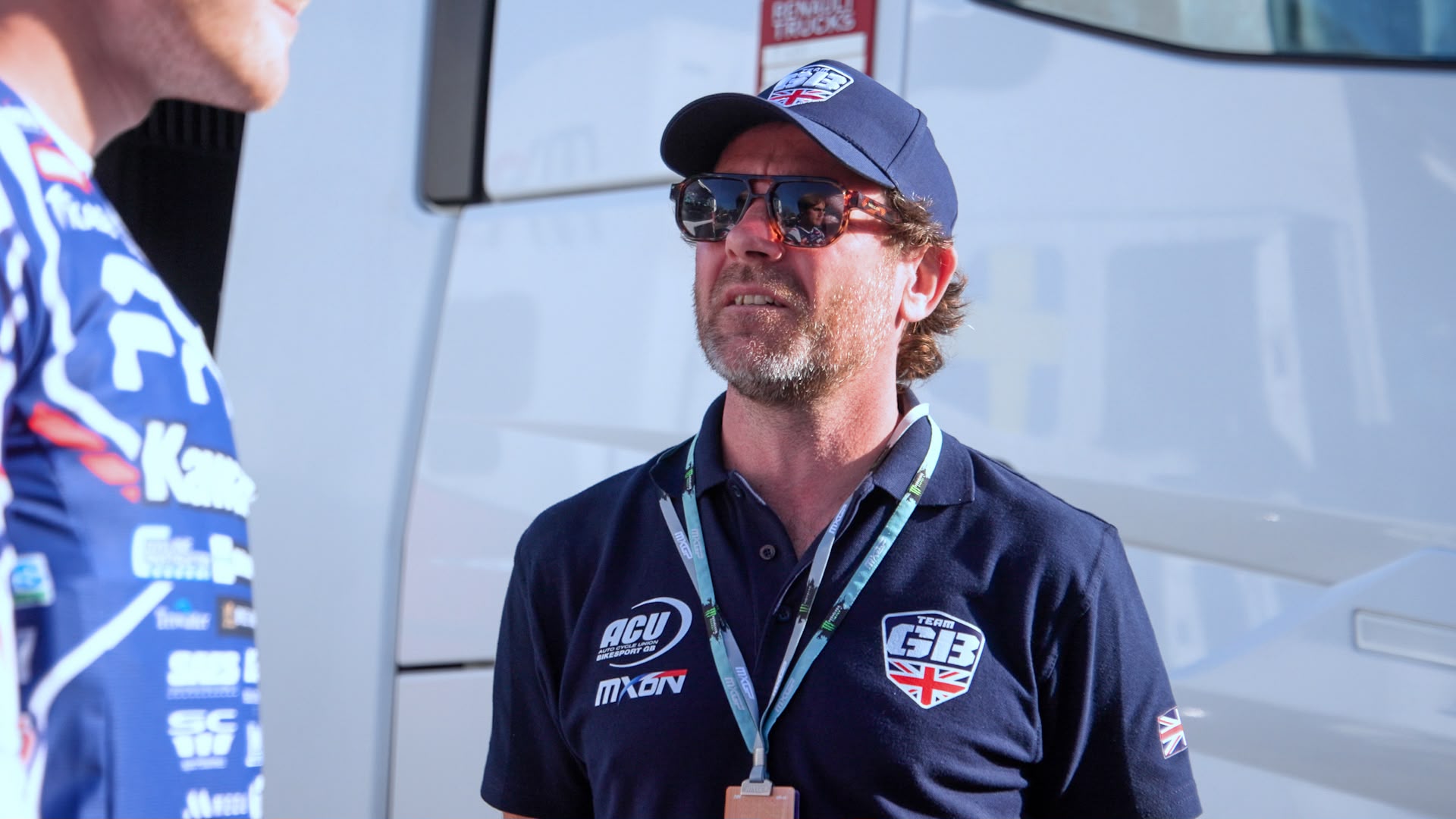
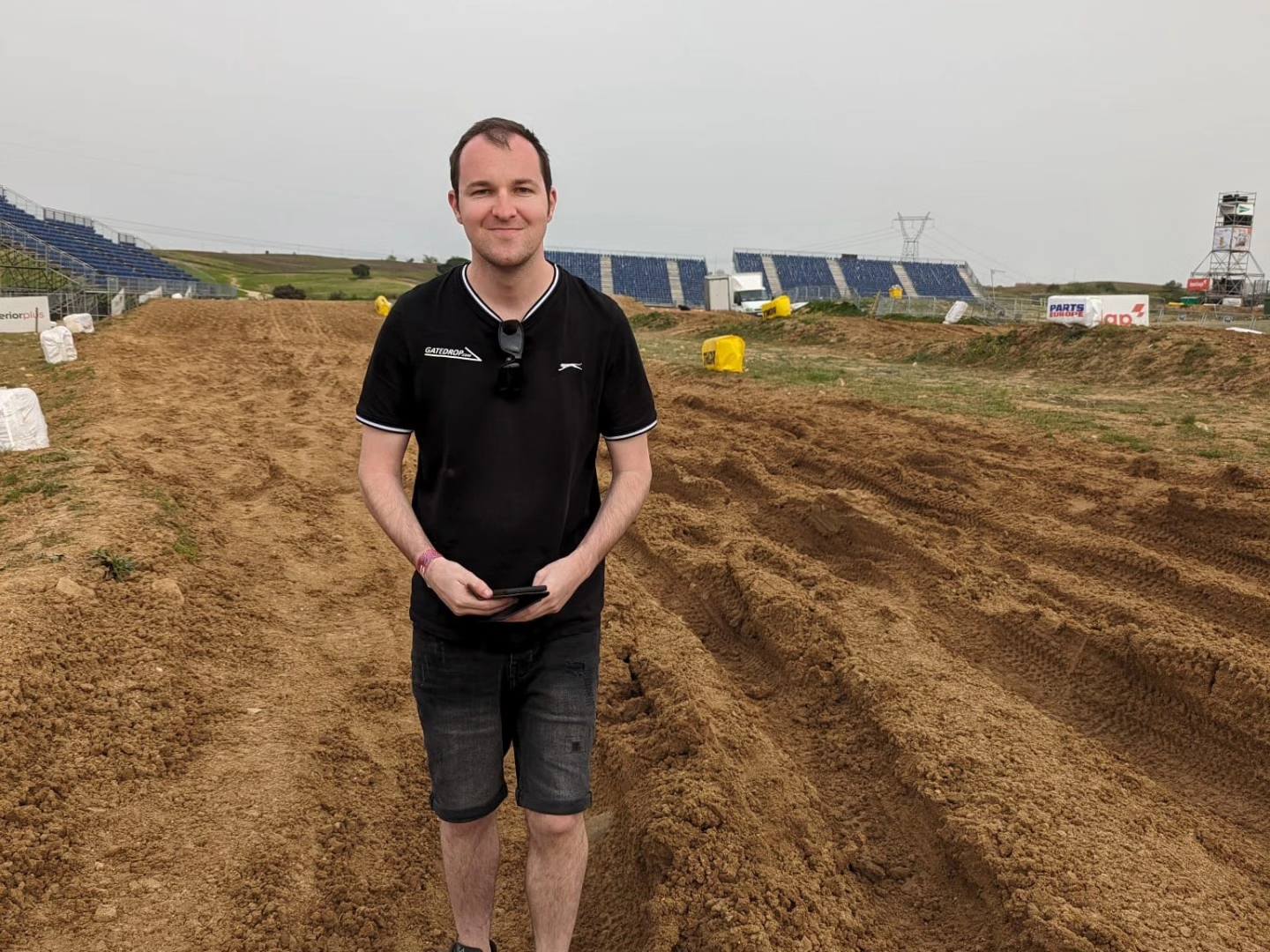

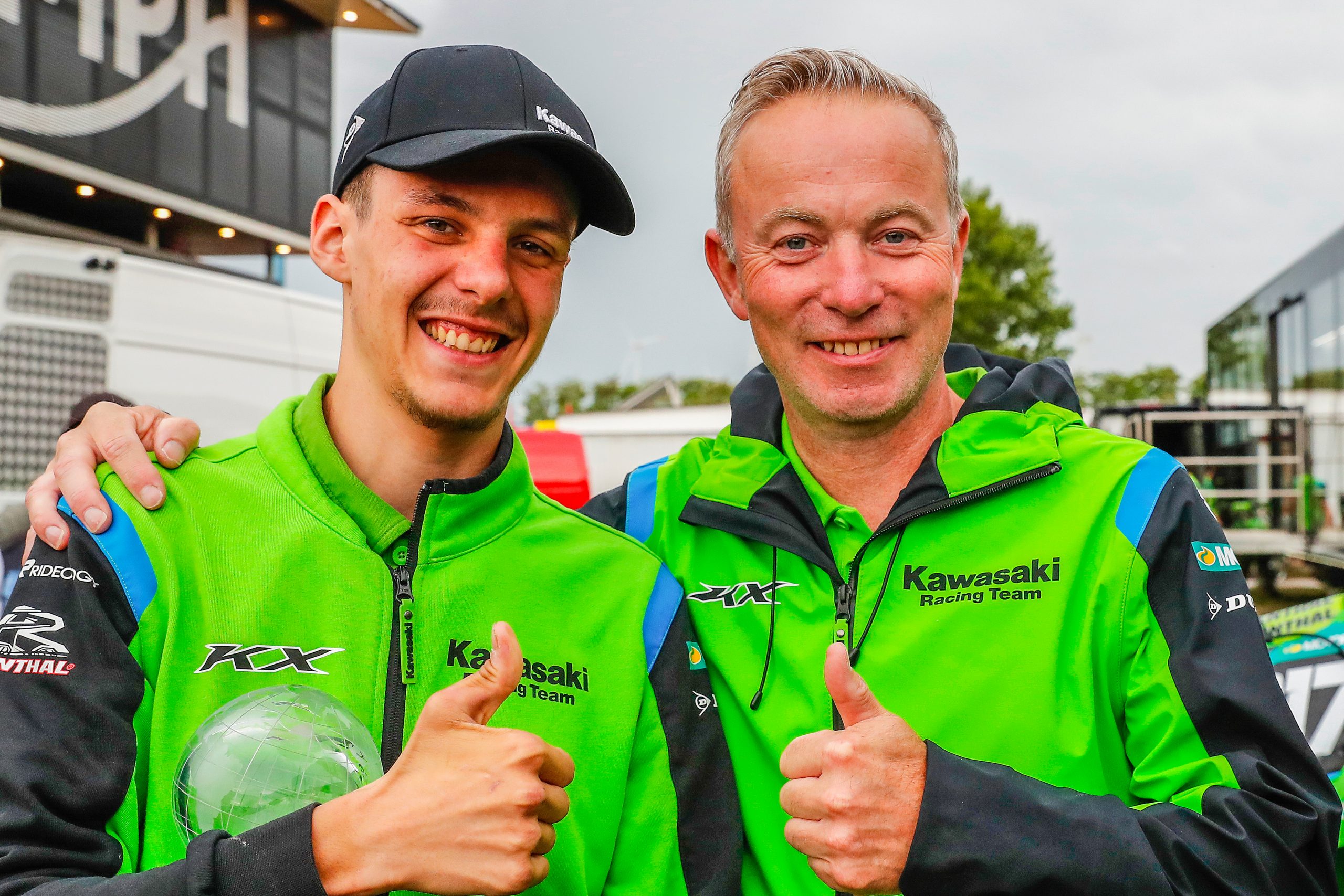
Steve Guttridge has been one of the key figures behind Kawasaki’s racing programme for more than two decades, helping shape the manufacturer’s success across both Motocross and road racing. As Kawasaki Motors Europe’s Race Planning Manager, he plays a pivotal role behind the scenes, working closely with factory teams, riders, team managers and Kawasaki’s headquarters in Japan to ensure the brand remains competitive at the highest level.
With Kawasaki entering an exciting new era following Romain Febvre’s MXGP world title, the return of a full factory MX2 effort in 2027 with two riders and an impressive production line of young talent coming through the ranks, we caught up with Guttridge to discuss the manufacturer’s long-term vision. From the importance of Team Green and rider development to budgets, future plans and the ever-changing landscape of world Motocross, Guttridge offers a fascinating insight into what goes on behind the scenes at one of the sport’s most successful manufacturers.
GateDrop: Steve, your role with Kawasaki is the KME Race Planning Manager, how did you get the opportunity to have this role and how long have you had this role for?
Guttridge: I joined Kawasaki Motors UK (Ltd) – in 2001, heading up the Team Green Co-ordination job for off-road. When Kawasaki Motors Europe was expanding in around 2004, they asked me to make the same role for Europe (including the UK) but overseeing the Motocross GP teams too. Then, in 2008, my Japanese manager in Europe asked me to cover the Road Racing area too, (we’d just pulled out of MotoGP so this focused-on World Superbike) which I’ve been doing ever since. That means I’ve been in the KME Race Planning role for the past 22 years now!
GateDrop: For people that don’t know, can you tell me about what your role with Kawasaki involves?
Guttridge: Not even my own family claim to know what it is that I actually do…(laughs) – so I guess that means most people don’t actually know. I mainly work between our main World teams in MXGP and WSBK, linking the agendas between their activities with KME, budgeting, legal, accounting, accessories and marketing involved around our racing programs and then working with KMC (the factory in Japan) in the same alignment areas. Daily I might be writing a rider’s contract, following order issues like special racing parts and bikes, updating budgets, discussing rider strategy with team managers to align Kawasaki’s perspectives and then also attending the World races (WSBK & MXGP) throughout the season.
GateDrop: Let’s go back to last year, Romain Febvre won the first MXGP title and the last premier class champion since Seb Tortelli I believe. A long time coming. Just how special was last year for everyone at Kawasaki? A lot of hard work goes into it behind the scenes!
Guttridge: Honestly the amount of hard work that goes on behind the scenes is incredible. There are so many variables in Motocross that factor into such a successful season or – to put it another way – there is a fine line between it working and not working out well. The rider is still super important of course in MX; Last season Romain had both the skills and experience to manage the Championship superbly. Everyone at Kawasaki realised how incredible the achievement was and our appreciation of our very professional Kawasaki Racing Team run and steered by Antti (Pyrhönen) grows season by season.
GateDrop: Kimi Räikkönen is the MXGP team owner. Just how much of a vital role does he play? It’s great for the sport he is involved!
Guttridge: Kimi’s role is super important to the team functionality and planning too. Antti checks-in on all the priority decisions with him daily and so he is a strong support to the team and Kawasaki. His passion for MX is huge and both he and his son ride off-road. He attends rounds when he can, but he does not want his presence – and the media impact it has – to upset the professional rhythm of the team.
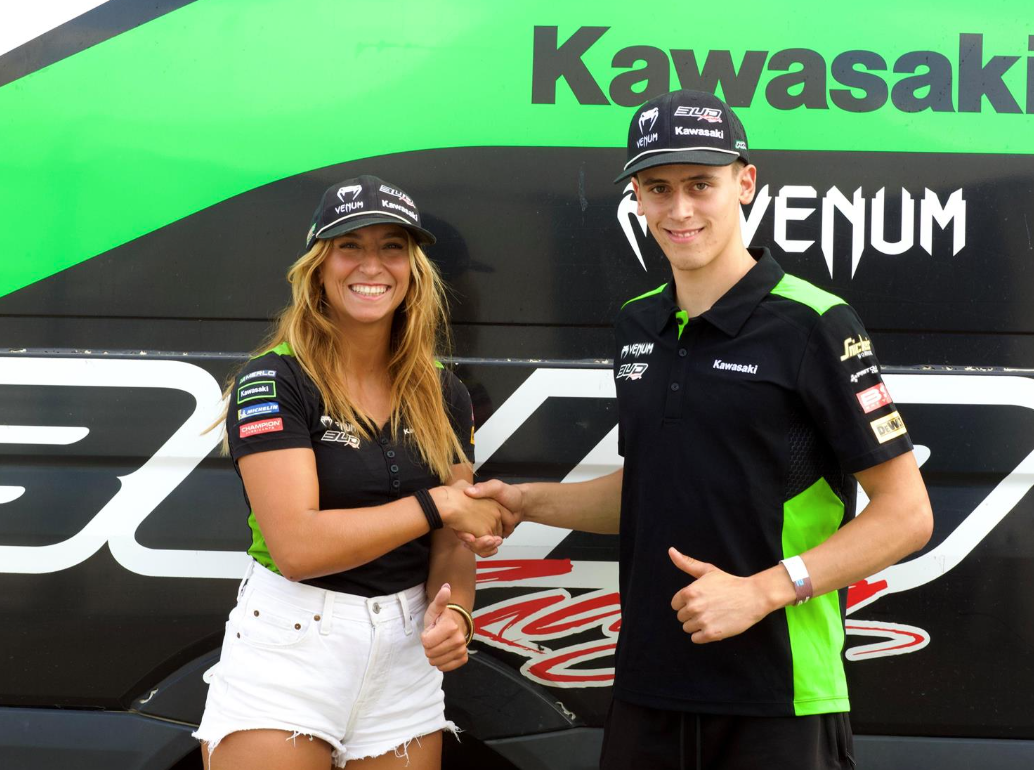
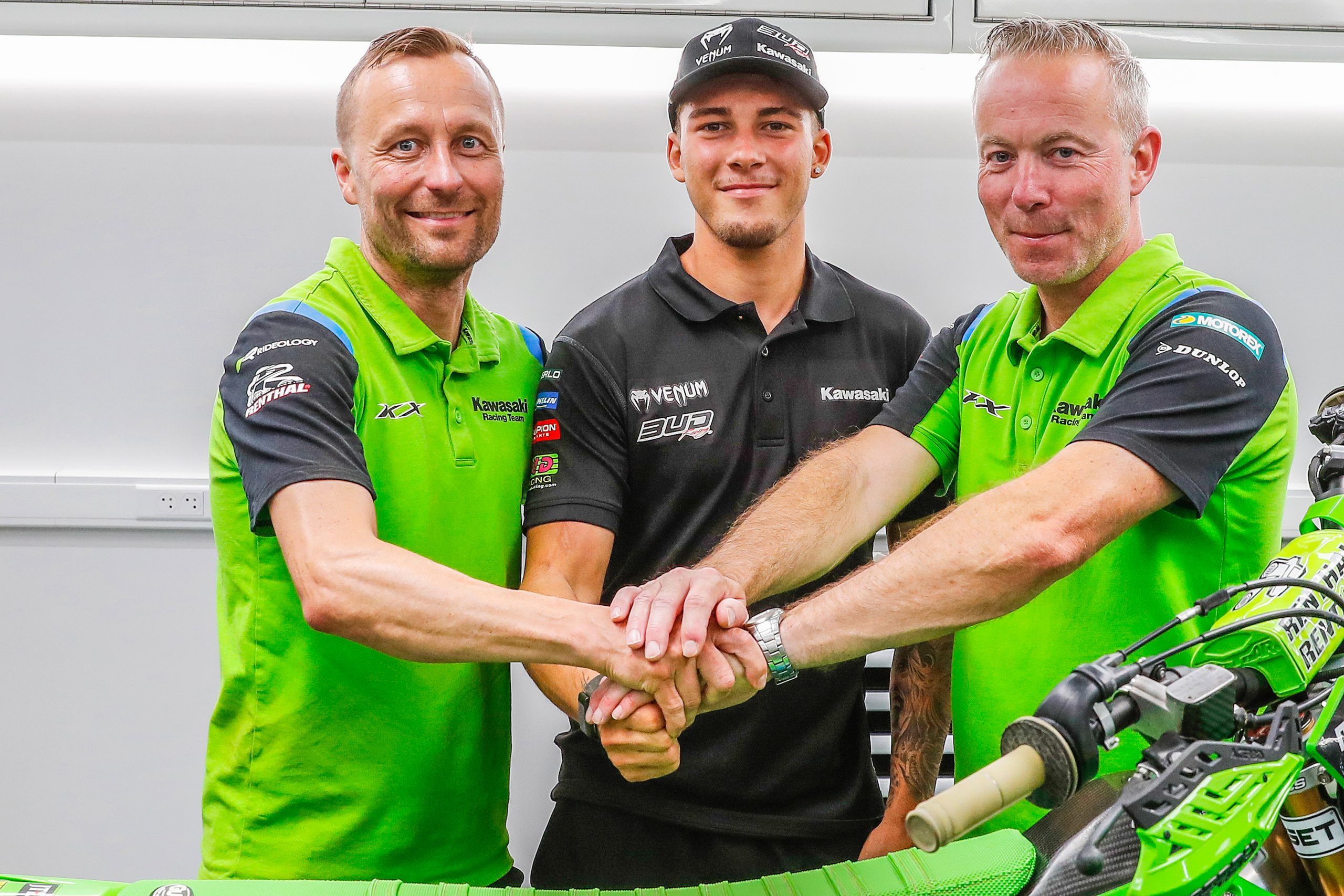
GateDrop: There will be two full factory MX2 GP riders in 2027 – amazing news. You must be pleased to keep Mathis Valin and Francisco Garcia in green? They both had a lot of interest and should have a bright future!
Guttridge: It is amazing news – yes, we are so pleased that such young talents are flourishing inside our teams and feel that they are happy to stay Green, knowing that they have the tools around them to hit their targets longer term too. This is perhaps the best manifestation of our Team Green ethos, to bring young riders up via a structured path inside our partner teams encouraging then to discover their true potential.
GateDrop: Valin won an overall MX2 GP this year – the first time since Dylan Ferrandis since 2016. You must have been pleased to see that? A long time coming!
Guttridge: Yes, for sure I was. I know winning an overall has been elusive but in reality, we’ve won races and had a lot of podiums over the past decade too with riders like; Horgmo, Van de Moosdijk, Boisrame, Jacobi, Sanayei, Sterry, Beaton, Brylyakov, Petrov and Haarup. But unfortunately, we also suffered the brunt of a lot of injuries too – which is of course is the downside to our sport and a big limitation to guys reaching the top step too. Like now, I’m sure Valin would have recorded a few more overalls at least this season – but unfortunately has to sit out to recover from his crash in Portugal (whilst leading…).
GateDrop: Whilst it’s great that we’ll see two full factory Kawasaki MX2 GP riders – in terms of budget is it then a balancing job after that for the other green teams to keep the support they had? For example, DRT Kawasaki – I’d like to see them run two MX2 GP riders again in the future…
Guttridge: Yes and no… the Factory MX2 budget is currently managed out from Japan (KMC) and DRT comes out from KME’s direct budget. KMC (Japan) manages global budgeting and the balance overall, so KME align with the total allowable Kawasaki racing budget in the end. The commitment to run just one top rider in MX2 (Kay) for the entire MXGP series is substantial… And unfortunately – despite better Marketing and promotion of the MXGP series, teams don’t have lots of outside (or now even industry) sponsors knocking on the door in the current harsh economic environment. So, we’d prefer to focus our support on only one MX2 rider inside DRT, field a British rider inside the National series (Taylor Hammal) and help the team survive rather than overstretch the teams’ resources and see another British team disappear from the MXGP paddock.
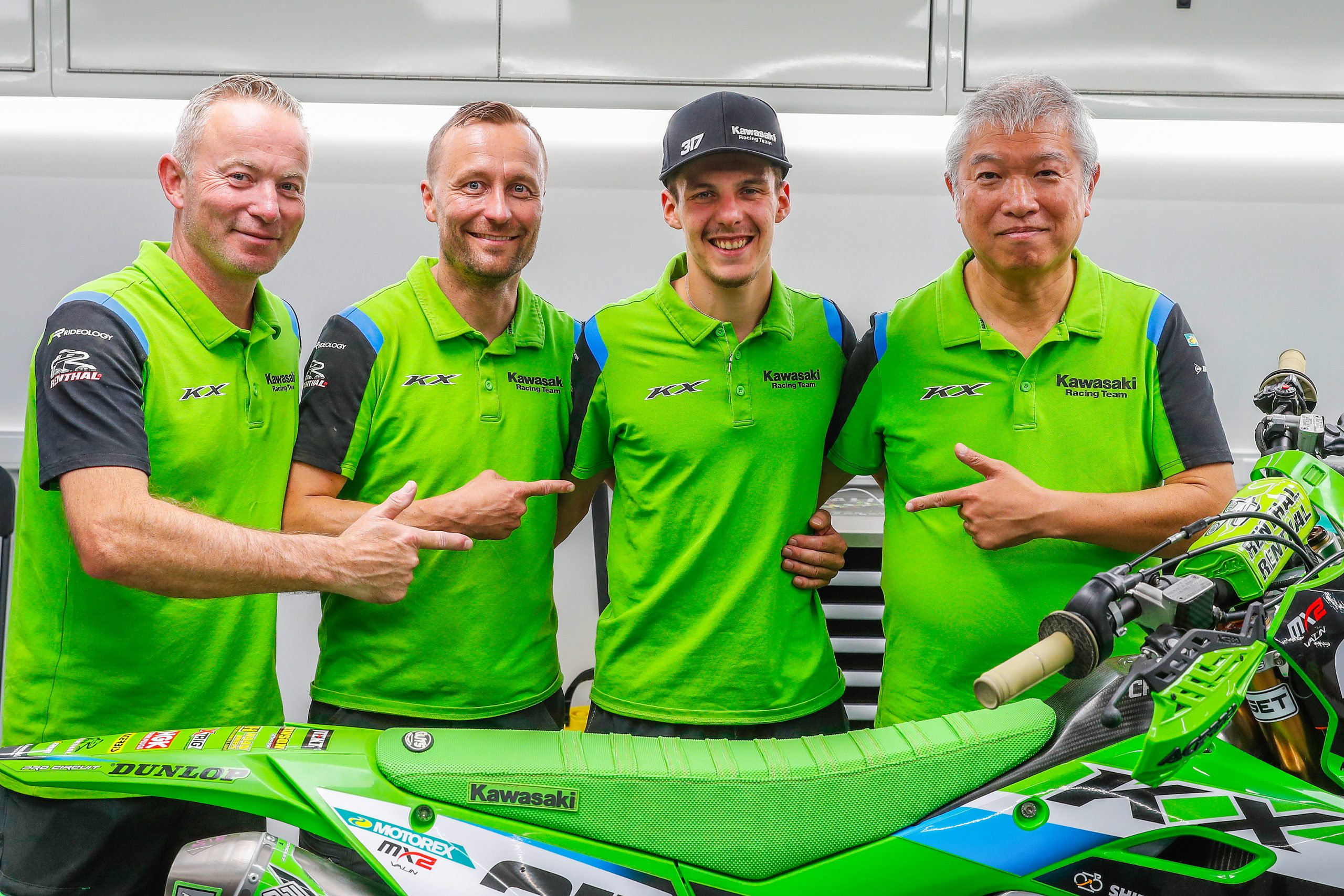
GateDrop: It was stated in a recent press release that Francisco Garcia will race selected AMA Pro Motocross events this year. Other than Southwick what other rounds will he race alongside Jake Cannon?
Guttridge: The focus now is on winning the EMX250 title as a priority. After that the team will check the relevance of extra races in the US and will get very busy with the WSX series commitments.
GateDrop: I’ve heard there is an MXGP clause in Garcia’s contract for the future – is this something you can confirm or deny?
Guttridge: For sure, we are invested in Garcia to provide the option of moving up into MXGP with KRT. It’s the logical goal of everyone who’s involved.
GateDrop: If Francisco wins the EMX250 round with a few rounds to go (it’s looking likely). Would Kawasaki consider moving him up to MX2 for the final rounds of the championship this year so he could learn for 2027? Is that something that’s been discussed?
Guttridge: We check step-by–step. Francisco needs to stay focused on the actual goal this year which is the EMX250 title. And also, his potential selection to his National MXoN Team. The final MXGP rounds are long-haul overseas which makes it a more difficult have a view on the logistics to accommodate him to make those races too – but if there’s a good value to it – let’s see…
GateDrop: More brands announce deals as ‘multi-year contracts’? What’s the reason for this from Kawasaki’s side? It makes my job harder (laughs) – can you confirm how many years Valin and Garcia have signed for?
Guttridge: They’ve signed for multi-years (laughs)… Seriously, it usually refers to plus 2 years then an optional continuation.
GateDrop: As well as two MX2 GP riders – is the plan to run two MXGP riders in 2027 as well?
Guttridge: The MX2 structure to run two riders is a very positive step in the right direction to be able to sign “multi-year” with the young guys coming through now. They will be the next top pro’s in MXGP very soon. As you’ve heard by now – Romain unfortunately will not be staying green next year as things move on naturally, we wish him all the best in his next adventure.
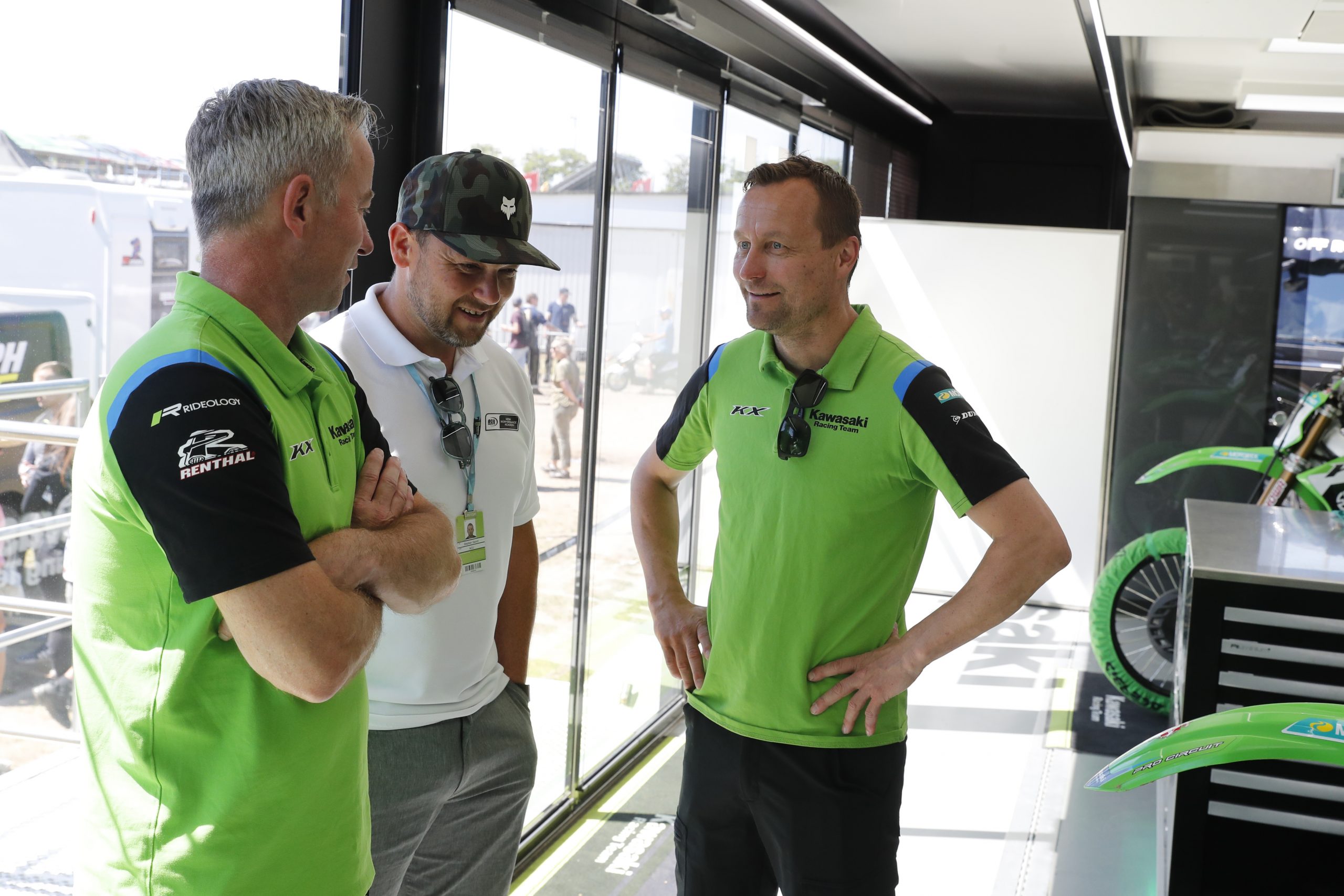
GateDrop: BUD Racing has provided – soon to be two EMX250 champions in the last three years. Are you happy with the way the team has been developing young talent on the green machines? The factory MX2 GP setup is also back; does it create an even more attractive pathway for riders considering a future with Kawasaki?
Guttridge: Absolutely – over-the-moon! I’ve been working with BUD Racing for the past 20 years now and several years back we decided together that it was a good direction that the team fully focus on the EMX categories and the younger talents coming through. Stephane (Dasse) the owner is an expert at spotting talent from around the world and this format has been paying dividends as you say, especially in the last few years. The path for those top kids is always going to be to secure a factory ride and bike – and so yes, the factory MX2 set-up does indeed achieve what we are trying to achieve. Antti (KRT) and Stephane (BUD) now work very closely along with KME and KMC on putting all this together which also massively helps reach Kawasaki’s end goals.
GateDrop: The MXGP calendar is 19 this year but it’s usually 20 per year and the EMX rounds seem to always increase. Does this make it more difficult in terms of budgets etc?
Guttridge: Yes, in EMX (250) the number of rounds had been on the increase especially after a round was added inside the Finish MXGP’s schedule past season, Manufacturers have asked Infront Moto Racing to cap the number of them which (ideally) – is no more than 12 or 13. Obviously if there are more rounds to commit to that increases the teams costs, or in many EMX cases, a family’s costs to participate in the whole series continuously.
GateDrop: With most manufacturers now offering a full development ladder from EMX125 through to MXGP. Is the addition of a 125cc two-stroke something Kawasaki are considering in order to complete their structure?
Guttridge: New product lines are always under consideration including now again the KX 2-Stroke range coverage. The development ladder is important to Kawasaki.
GateDrop: With Kawasaki’s US program currently facing more difficulties compared to the MXGP side, is the factory actively working with the American team to support their development and help close the performance gap?
Guttridge: Our teams have a historical line of communication with their US equivalents, especially with Mitch Payten from Pro Circuit. KMC regulate KRT’s technical information and of course can overlay with the US team’s data. The variable factors inside the competition (fuels/noise/Production or Prototype rules/Supercross or outdoor one day events compared to heavily used MXGP circuits two day set ups etc.) can make it very different overall – and so it’s difficult to create a standardised (US/EU) set-up or technical development direction per each rider.
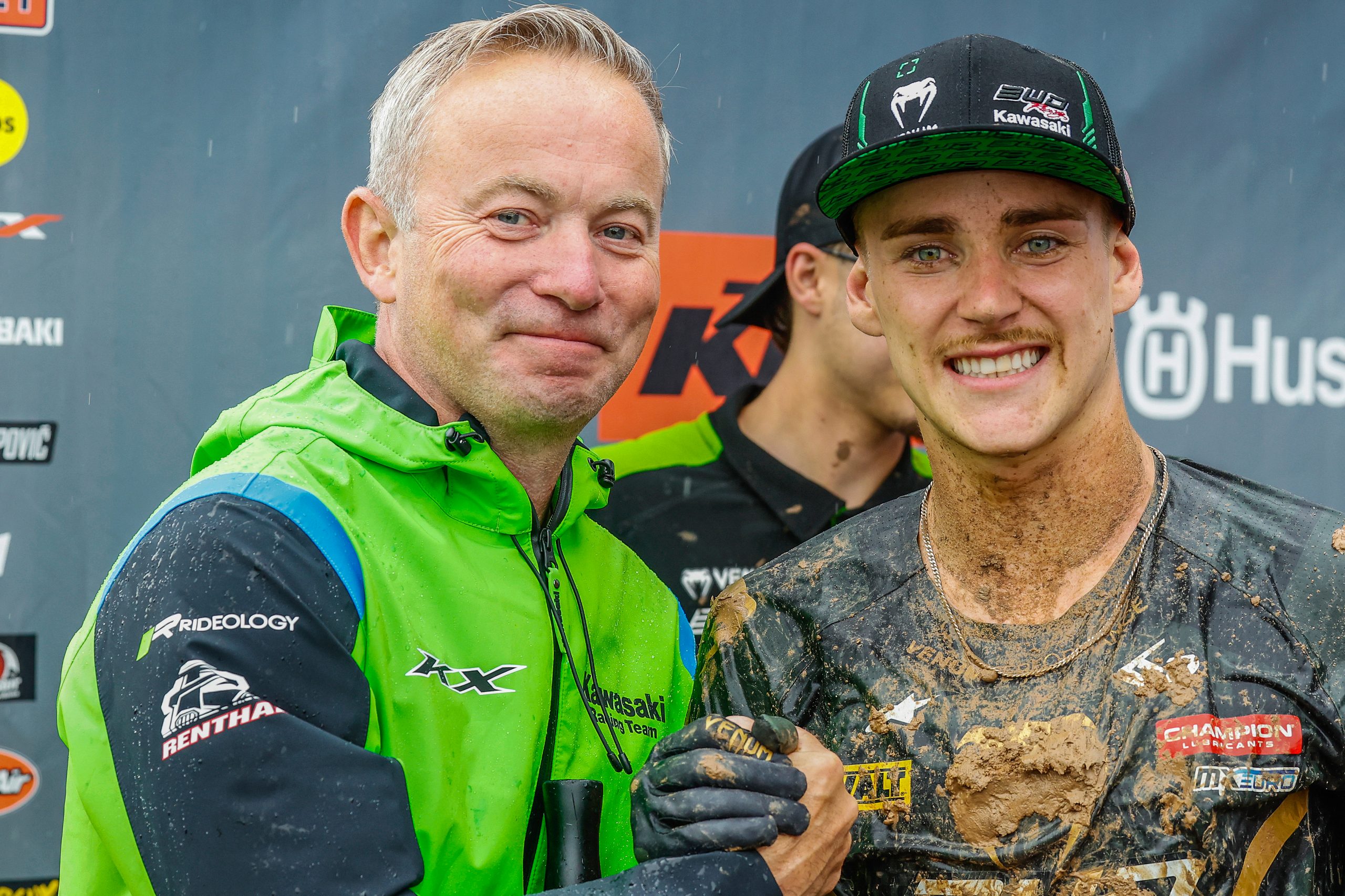
GateDrop: In an increasingly competitive landscape, with new manufacturers entering the sport, has it become more difficult to retain riders due to the growing competition?
Guttridge: It can be. I mean, new or established – it’s always difficult to retain a rider who is being courted by a team or manufacturer promising them the World. But competition is good, new manufacturers signal that the Motocross market is healthy and worth entering. Then, in my experience, money speaks of-course… but most up-coming riders put the bike preference and a good team first.
GateDrop: Romain Febvre is often described as a rider with very specific setup preferences, and it seems the bike suits him perfectly. But by nature, that can also mean it may not suit other riders in the same way. How does one find the right balance between developing a machine that works for Romain, remains competitive for his teammate and is still suitable and accessible for production modules and the wider public?
Guttridge: Essentially the Factory bikes originate from the standard production KX450 bike base and so the differences with how Romain or Pauls set up their individual KX450-SR’s starts in the early off-season and continues from there and is very much depending on their own personal inputs and requirements. Obviously, the bikes have a standard DNA which Romain has always said he loves. When the test team find something that works for the wider spectrum of riders then that can be transferred back to our R&D in Japan who consider future production bike development. This is also why competing inside MXGP – which has prototype rules in place – is so important to us too.
GateDrop: So, Steve, you have over twenty-five years’ experience of race planning with Kawasaki, how do you see the future of Motocross?
Guttridge: In my opinion the future’s bright overall. By that I mean manufacturers are investing continuously in new technologies such as electric and clean burn 2 stroke etc. And let’s not forget people love Motocross, It’s such a great sport, hobby and family leisure time all rolled into one, Contrasting that is the fact that everything in society becomes more and more regulated naturally – so the MX community must be very careful to look after the sport as well…like abiding to noise controls and planning regulations to help clubs avoid losing more circuits. Motocross remains one of the most accessible motorsports and so as long as we keep in line with the professionalism of other sporting and leisure options, Motocross in general will continue to have a good future.