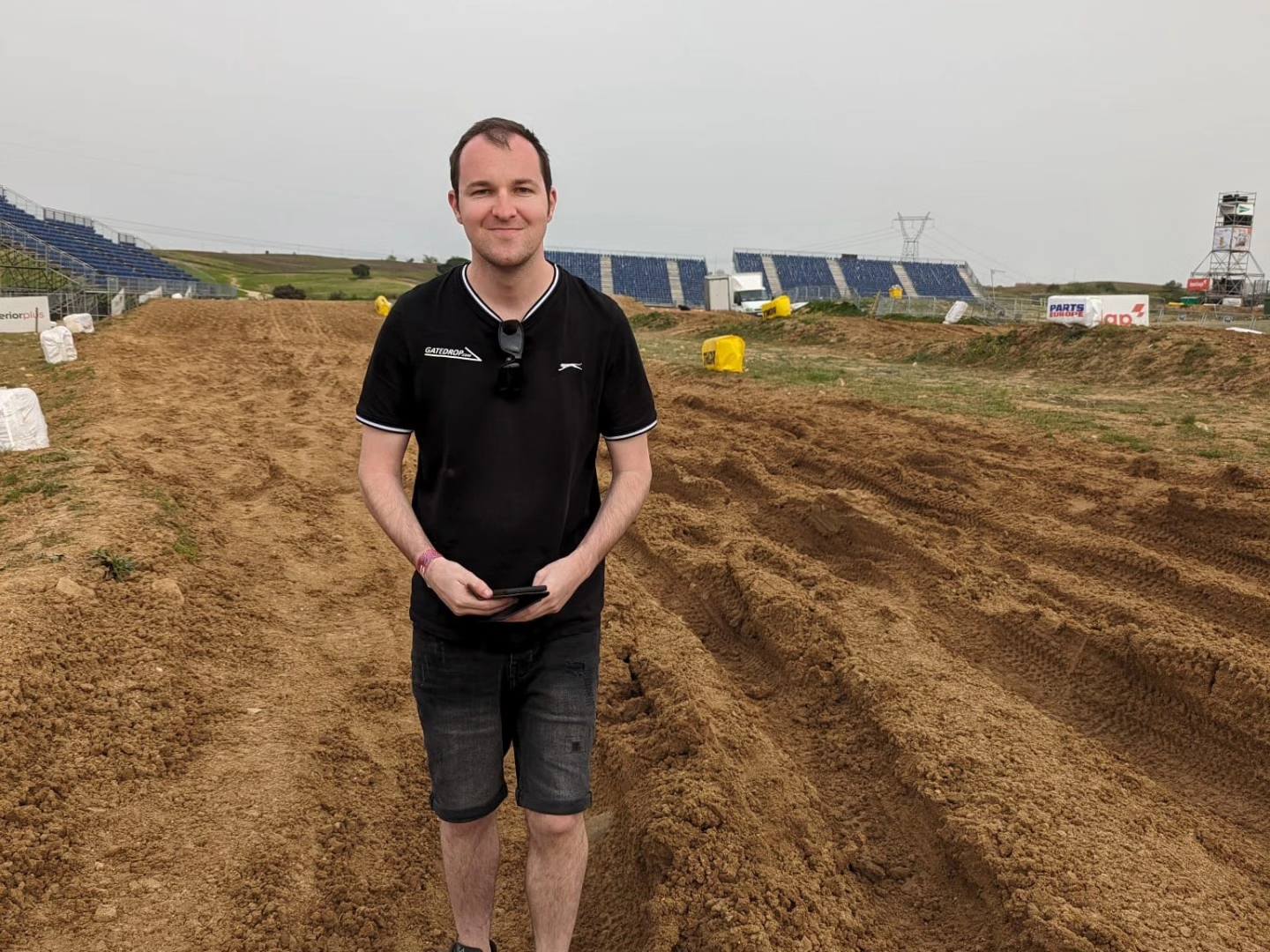



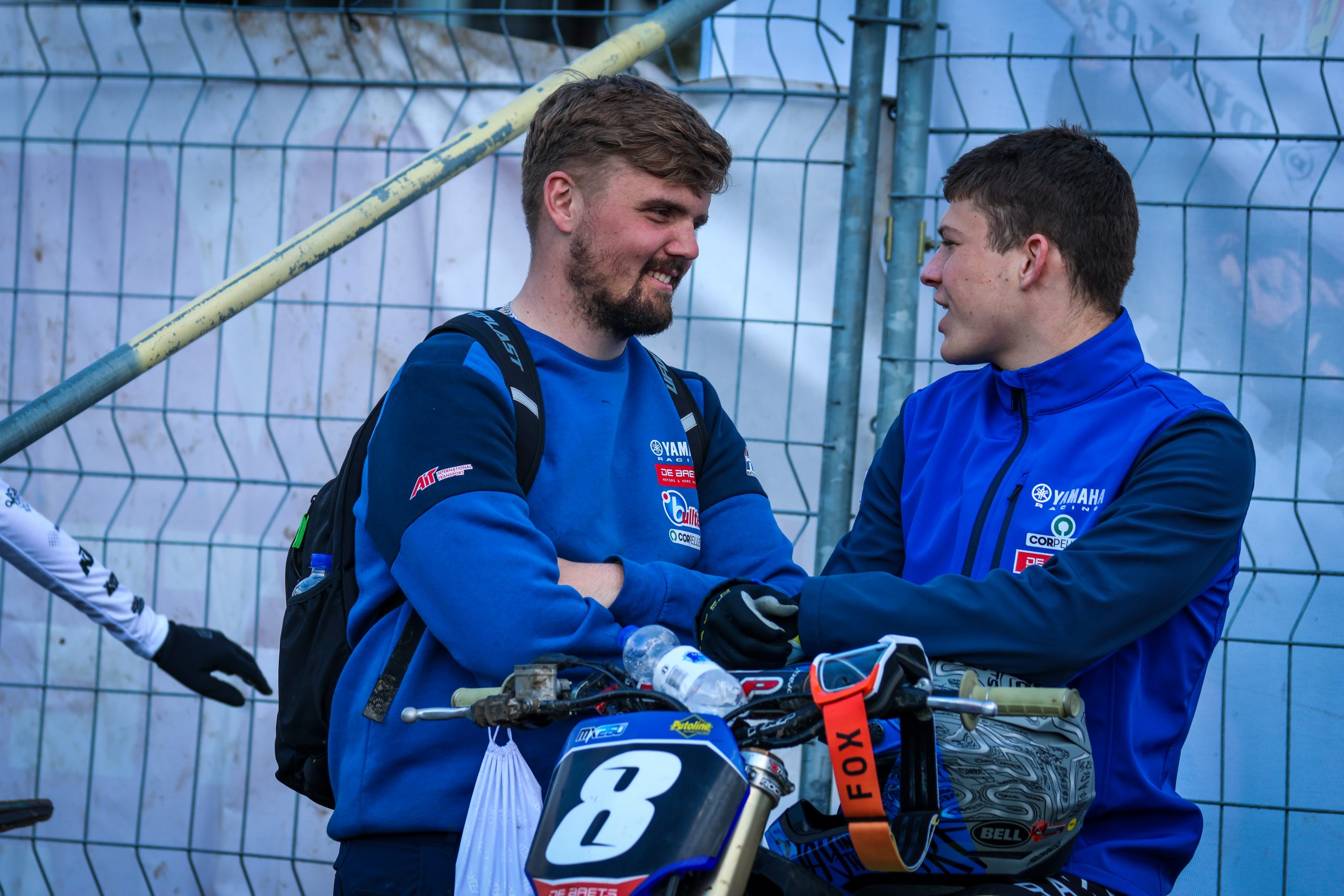
For many, the dream of Motocross revolves around lining up behind the gate, chasing victories and glory on track. But for Ollie Kingston, the journey has taken a different — yet equally demanding — path. After growing up racing and riding for fun, an injury forced Kingston to rethink his future in the sport. What followed was an unexpected opportunity that would see him swap handlebars for tools and dive headfirst into the intense world of the MXGP paddock.
Now in just his second season at the top level, Kingston has already experienced the highs, pressures and relentless workload that come with being a mechanic on the world stage. From long-haul drives across Europe to last-minute bike rebuilds under pressure, his story offers a raw and honest insight into the side of motocross fans rarely see.
We caught up with Kingston reflects on his unconventional route into the paddock, working alongside top riders, adapting to life on the road and what it truly takes to succeed behind the scenes in one of Motorsport’s toughest environments.
GateDrop: Ollie, firstly, can you tell me how you got into the sport? You know, before being in this paddock and becoming a mechanic, I believe you did used to ride for fun and done a bit of racing, but when did you first get the idea that you wanted to be a mechanic?
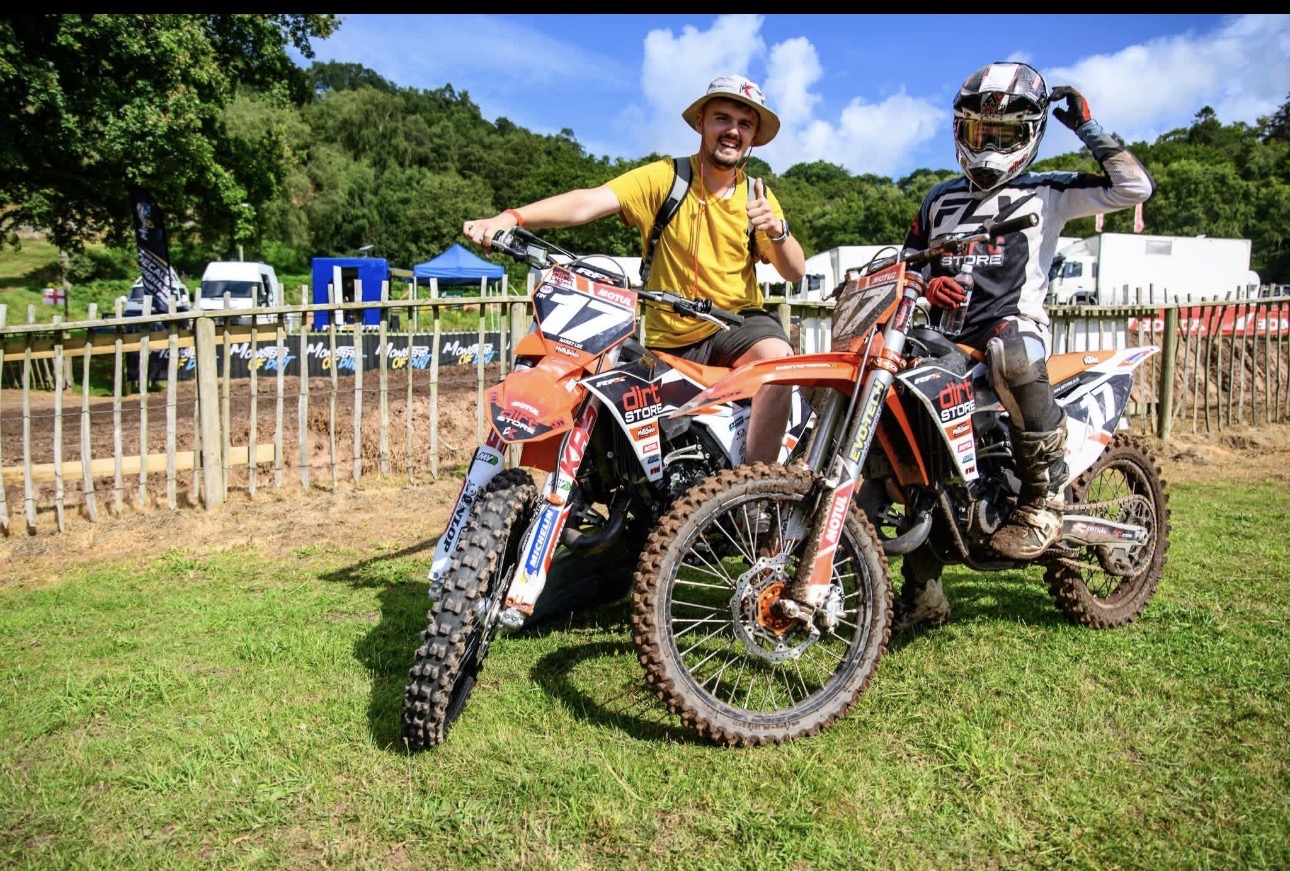
Kingston: I rode as a kid all the way, since I was like five years old until 2024. It was in 2024 when I had quite a bad accident. I broke both my legs and my ankles. I was off work and my neighbour, Harry Lee, started to get quite good and his Dad said, do you want to come to the races’? He just started his first time doing the British Championship and stuff. I’d go to watch and one week turned into another. That’s sort of how I got the idea of it, because I was off work and stuff like that.
GateDrop: Just on that first role with Harry Lee, that was obviously the very first role for you. How did you find it? You must have enjoyed it, because here you are still doing it…
Kingston: Yeah, it was different because I was working in my family business and I was enjoying it. Of course it was as a family so it was different and it just sort of went from there. I really enjoyed it – I made sure I took quite a lot of pride and effort into it. It obviously wasn’t like the level of this, but it was fun, fresh and new.
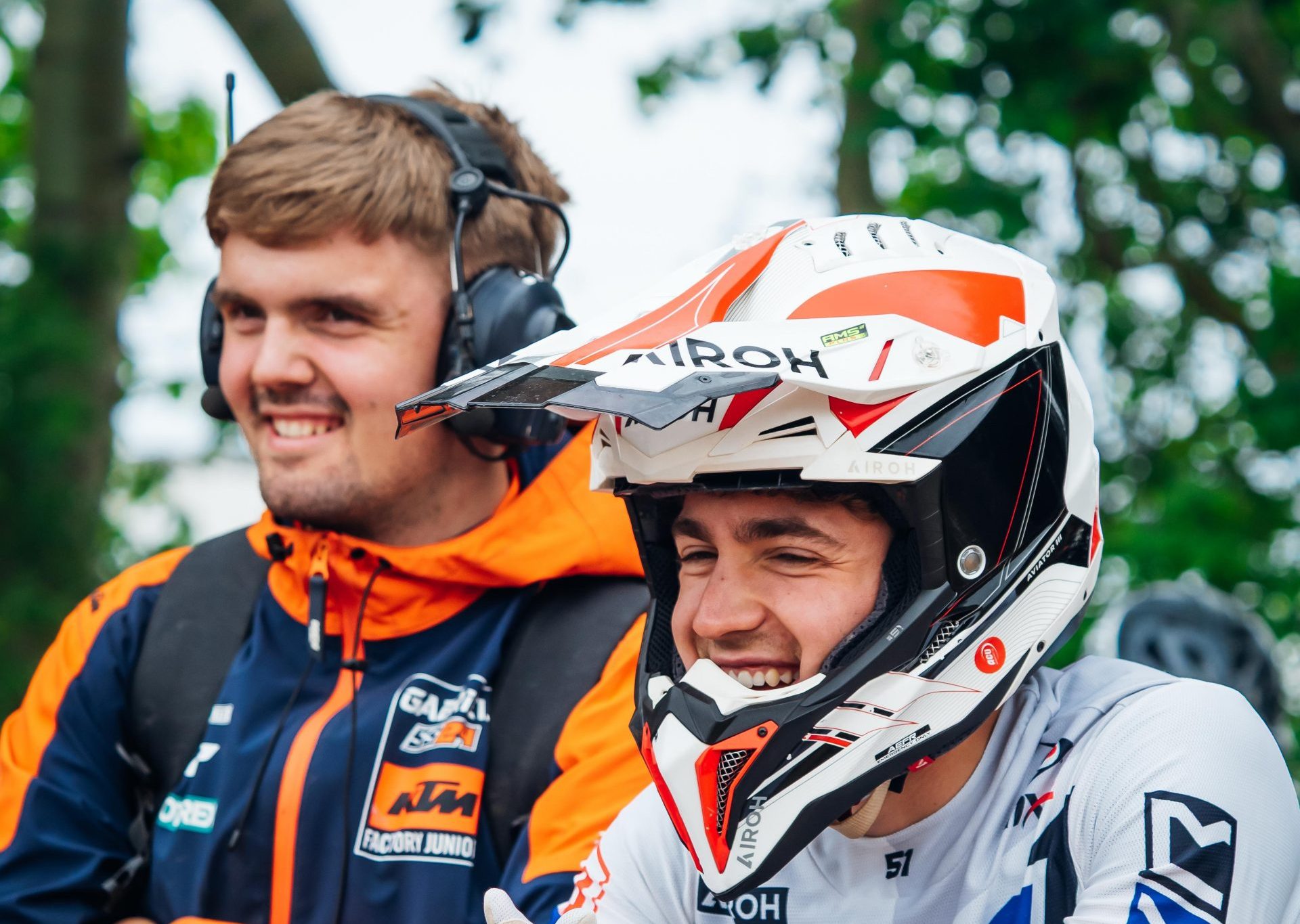
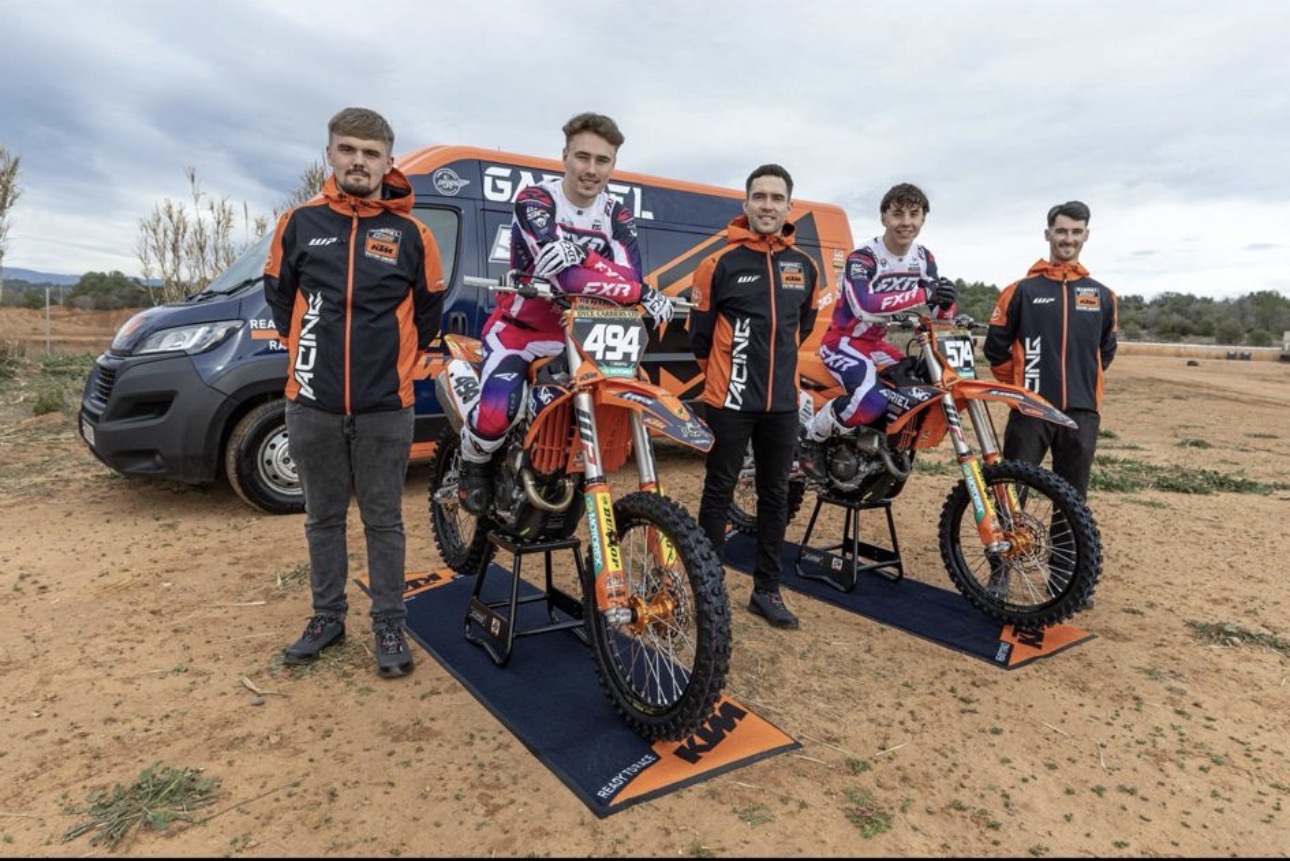
GateDrop: After working with Harry Lee, you got the opportunity with SS24 Gabriel KTM, one of the best British teams. You got an opportunity with them and also to work in the GP paddock. How did that come around, first of all?
Kingston: I mean, normally you wouldn’t get that opportunity to go straight into the GP’s, but I got quite lucky. I knew a guy called Gary Boxall. I knew him from when I was younger when I was racing myself. He used to help me and my brother with a local Motocross shop he used to work at. He was the mechanic of Michael Ellis and he was a really good friend of mine. I just got speaking to him, I think it was at Hawkstone Park for the British Championship. He asked me ‘what are you doing’? And I said, ‘oh, I’m injured and I can’t really ride anymore and I can’t race’. I had just been doing this for a bit of fun to pass the time. He called me and asked, ‘do you want a job’? I said, ‘you know what? Yeah, I’ll go for it’. It was quite different, but it was good.
GateDrop: With that team, you worked closely with Shaun Simpson. How was it working with him? I’m sure growing up, watching Shaun. He’s one of the best British riders in our generation. As a British kid, I am sure he was one of your heroes.
Kingston: I actually had a photo of him in my room, and it was really cool. It really brought the inner kid out of me to start with. You know, I’ve actually become really good friends with him and I’m still good friends with him now. It was quite cool to have Shaun as someone I looked up to as a kid.
GateDrop: What was the biggest culture shock, moving from the British paddock to the MXGP paddock? Obviously, it’s two days, twice the amount of effort. And then you’re going all around Europe. Was that something you enjoyed?
Kingston: It’s not even two days. It’s really four days. You are here on a Wednesday or Thursday and you leave on a Monday. It’s four days and it is full on. There is no rest all weekend and especially if you’re doing MXGP and MX2 like we were last year.
GateDrop: What does a typical race weekend look like for you, behind the scenes, for the people that don’t see you? How much effort and how hard do you guys work?
Kingston: I mean, for this weekend here in Trentino, I was here on Wednesday night. And I’m not leaving until Monday morning. To get here, you drive 11 hours on Wednesday morning so the weekend starts at 9 or 10 a.m on Wednesday. When you get here, you have to build a tent and this usually takes a couple of hours. On Friday, you have to check your bikes and make sure everything’s good or finish whatever you’ve got to do. I mean, for me, I’m not really the race mechanic this year so it’s a bit easier. But, you know, if you’re a full-on race mechanic, it’s from when you get here until you finish, you don’t stop the whole time.
GateDrop: What is something you think fans would be surprised to learn about the work that you guys do during a GP? Is there anything that jumps out at you?
Kingston: I mean, just how much you don’t actually get to watch the races. This year, I think I’ve watched maybe three or four races all year. Last year, obviously, I was more focused on MX2. But, you know, you don’t actually get to see much of the racing. I drove home from the last round, and I didn’t even know the results from anything until I got home.
GateDrop: How intense is it, especially when there’s back-to-back GPs, is the turnaround between races and especially with travel as well?
Kingston: Yeah, it’s not easy, especially if you’re flying. Sometimes you can’t fly until the Monday. If it’s back-to-back GP’s, you’re leaving on Wednesday again to go to the next GP. So really, you only have Tuesday in your workshop if you’re flying to get anything sorted or packed up you need and you drive to the next race, something like this. Or if you’re flying, you only get a day, a and a half to get everything sorted back home, then you have to come back and get stuff ready again.
GateDrop: What would you say the most challenging mechanical issue you’ve had to deal with under pressure or is there anything that jumps out at you that you’ve had to deal with?
Kingston: It was in Switzerland last year with Oriol Oliver. We had a problem with his bike. He actually finished the race, so we were like, cool, he’s finished. I think he had a sixth or something, so it was quite good. His bike broke on the finish line landing, and I think it was an hour and a half break. We were trying to find the problem and we couldn’t find it. So, I think about 30 minutes before we had to leave, Oriol decided to just take the spare bike, but he wanted the suspension swapped, so that was quite intense. It was tight for time but the end, we were pretty good and we got it sorted.
GateDrop: Coming into the 2026 season, how stressful is it? Everyone talks about riders getting deals, but for you guys trying to get something, from talking to you on social media, it did sound like you had a few options, but you ended up with de Baets AIT Yamaha, so you must be happy to get to end up here?
Kingston: I’m really happy. Petar (Petrov) and Danny (de Baets) are really professional so it’s a really good team. I left Shaun’s team at the end of last year for some personal reasons. Honestly, I was actually going to stay at home and not do any of this. But it was really late and I had a few options. I had one option to go to America, but I didn’t get my visa approved, unfortunately so that was a bit of a shame. It’s not stressful, but it is if it gets too late then it can be. With it only being my second year in the paddock, you don’t really have that name for yourself either. I think after a couple of years it will be a lot easier but the first two or three years are the most difficult to keep a job.
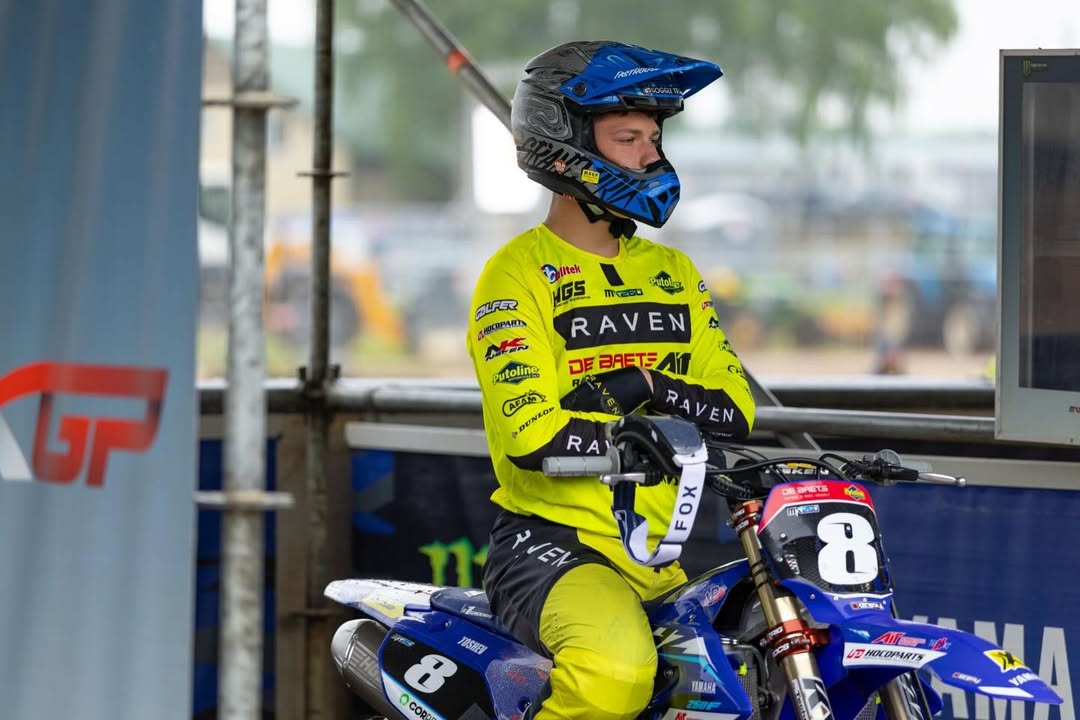
GateDrop: What’s it like working with Vencislav Toshev? I think you’re working very closely with him this year. How do you build trust with him as a mechanic?
Kingston: I’m actually Vencislav’s training mechanic. I see him probably three or four times a week. He’s a really good kid and he’s got a lot of potential. As you can see in the results, it’s not necessarily anything bad, but he needs that extra little bit and then he’s going to be there. It’s his first year in the EMX250 class but he’s a really, really good kid. He works hard and I can’t fault him. It’s just sometimes you get a bit of bad luck as well with the groups in the EMX250. He’s on a good path and if he keeps going, he’s going to hopefully do well.
GateDrop: Last year you were working closely with Oriol Oliver, he actually didn’t start the year with the SS24 Gabriel KTM team, but the team drafted him into the MX2 World Championship. But this year you’re obviously working with an EMX250 rider. Is there much difference between a GP guy and an EMX rider?
Kingston: It’s more the age and maturity-wise, let’s say, because I actually started with Max Werner last year in the EMX250 class. I actually got to work with him back-to-back, with him and Oriol. Oriol is an all-round professional. Everything he does, he lives, breathes, every decision he makes is around the sport. It was really refreshing to see and it’s just also the maturity. He’s a lot more mature. He’s an adult over instead of a kid so it was really good to see this.
GateDrop: How does working with a Belgian-based team like the De Baets AIT Yamaha team differ from your previous experience? Although I do think you were in Belgium quite a lot with your previous team anyway. Do you like Belgium?
Kingston: Last year I was based in Lommel with the Gabriel SS24 team. The thing is, as much as we were in Belgium, we were an English team. Everyone there was English so it was quite easy with the language and the banter in the workshops and stuff like this. But this year it’s still good. Everyone there all speaks English, but it’s just, let’s say, the language barrier is a little bit difficult for me personally.
But no, we all understand each other and we know everything. We understand when we’re being joking and being serious and stuff like this.
GateDrop: I assume you live in Belgium and you’re away from home a lot. How do you find being on the road all the time and being away from home with all the travel? It must be tough. You probably don’t get to see your family that much…
Kingston: Last year we were doing the British Championship, so I was going home and I was actually seeing my family for a few days, plus or minus some races. But this year, actually, I’m a lot more settled down in Belgium so it’s quite nice. I’m actually really much more enjoying my time this year than I did last year. Of course, I miss home sometimes, but right now I think I’ll get to go home during this break. Obviously, I’m still young, so it’s quite difficult to be away but I’m getting used to it and it’s getting better and nicer for me.
GateDrop: What are the biggest lessons, would you say, that you’ve learned since entering the GP paddock last year? Is there anything that jumps out at you?
Kingston: Just that nothing is guaranteed. Last year, I’m not going to say I was guaranteed a position somewhere, but kind of got taken away. That’s how I ended up leaving the team. I’m not going to say I was guaranteed a spot there, but nothing is guaranteed. You always have to not check your back, but just make sure everything is actually good and not just thinking it’s good.
GateDrop: What skills would you say are essential for someone wanting to follow your path and get into this?
Kingston: You have to want it. It’s a difficult job and you have to work hard. A lot of hours, a lot of driving, a lot of late nights in the workshop. You have to work hard, and you have to get on with the people you work with as well. This is a very big thing I learned last year. If you’re not enjoying your team, your work goes down and you have to really have a bond with your team. You spend nearly every single day of your life, Monday to Sunday, with your team. You’re in the workshop, you’re travelling with them. You’re always with your team. If you don’t like them and you don’t want to be around them then you don’t want to be at work, that’s sort of what happened last year a little bit as well. You just have to enjoy your team and work hard.
GateDrop: Where do you want your career to go next or in the future? Obviously, you’re probably happy where you are at the moment but more long-term…
Kingston: Right now, I’m really happy with the team. I can’t say anything bad. They’re really cool and I’m really happy. I want to be a world champion mechanic, if that makes sense. Obviously, everyone wants to win, but I just want to make a good career and to say, in X many years I’ve done this, and you have good memories. If I stop one day and I haven’t been a winner, I’ll be happy, but I just want to make a career of it and earn good money, because you can earn really good money in this job. That’s my goal. I just want to have a good time and I would like to win a world championship as a mechanic, because that would be pretty cool as well.
GateDrop: This is your second year in the paddock, but what would you say is the best moment in the paddock so far for you personally?
Kingston: Just travelling to the races. You’re in a different country every weekend. I had one specific one, but it was the British Championship in Canada Heights, where I won, well not me, but Oriol did. For me, that was the first time I really thought, holy shit, this is the feeling I want to have every week, winning. That’s what really gave me the drive every week to do it. That was probably my favourite moment, but just travelling and meeting the people, and seeing your friends every week. It’s really just everything, I love it.
GateDrop: Is there any race weekend that you’ve been involved in so far that you remember for being the most stressful? Probably one of the ones where it rains constantly, I’d imagine.
Kingston: I’m going to say it was my first ever GP, it was really funny, it was Cozar last year. I have a really funny story I’m going to tell you. The wash bay was not working, and this was my first ever GP. I have no idea what was going on, I’ve never really been to a GP to watch. I’ve been to Matterley Basin two or three times, and the Motocross des Nations in Ernee, and that’s it, before this race. It was just mud, chaos, the jet wash bay was not working, I didn’t even know where the jet wash bays were. I had no idea what was going on. It was in the wash bay. Shaun Simpson and I had an old fuel can, there was no water, but we had a big pool of water, we were running back and forth, filling this can up, so we could just jet wash. That was for me probably one of the most stressful ones, because everything was new this weekend, everything. I’d done Lierop before, a round of the Dutch Masters, and a British Championship but that’s it. I didn’t know anything about how the GP’s worked.
GateDrop: Have you got a favourite track to work at, that you’ve been to so far anyway, or not so much?
Kingston: Trentino, obviously for the views and stuff, and if it’s dry, it’s not so bad. I would probably say this is my favourite.
GateDrop: Do you feel mechanics get enough recognition in Motocross? It’s a tough job, isn’t it?
Kingston: Yes and no. You see some people and they just think, oh, he just turned up on the weekend. But then also you can see some people, and they do recognise. So I’m going to say yes, we do.
GateDrop: In terms of the British Championship, you done them last year, me and you were actually chatting at the Dutch Masters about how amazing the Dutch Masters is. How do you think the British Championship can be improved for the future?
Kingston: Honestly, I think less races, because you have Hawkstone International, which is a really good event. You have seven or eight British Championship races. If you look at the Dutch Masters, they have Lierop in the start, you have the mid-race at Heerde normally, and you have Valkenswaard at the end. You have a total of, I think, five big races. I think this is something the British Championship organisers could actually look at and think, OK, let’s do Hawkstone in the year, then you have the GP, and then you do an international at the end where you get the big riders in. Maybe just have four or five British Championships for the die-hard Motocross fans to go. But if you get the likes of the big riders in for those international races, you have some amazing tracks you can do near the boat area. Canada Heights, you could do one there, or you have the GP at Fox Hills. Matterley Basin, you could have an International there too. The fans would actually turn up all over Europe for this, because you have the big riders there. It would be like a little GP, but I don’t know if they want to go that way. If you look at a Dutch Masters round, it’s really busy. It’s not even just the Dutch Masters either, the international races as well, I went to a couple last year. It’s like a little GP. If you go to a British Championship, it’s quite bland. It’s quite boring in comparison.