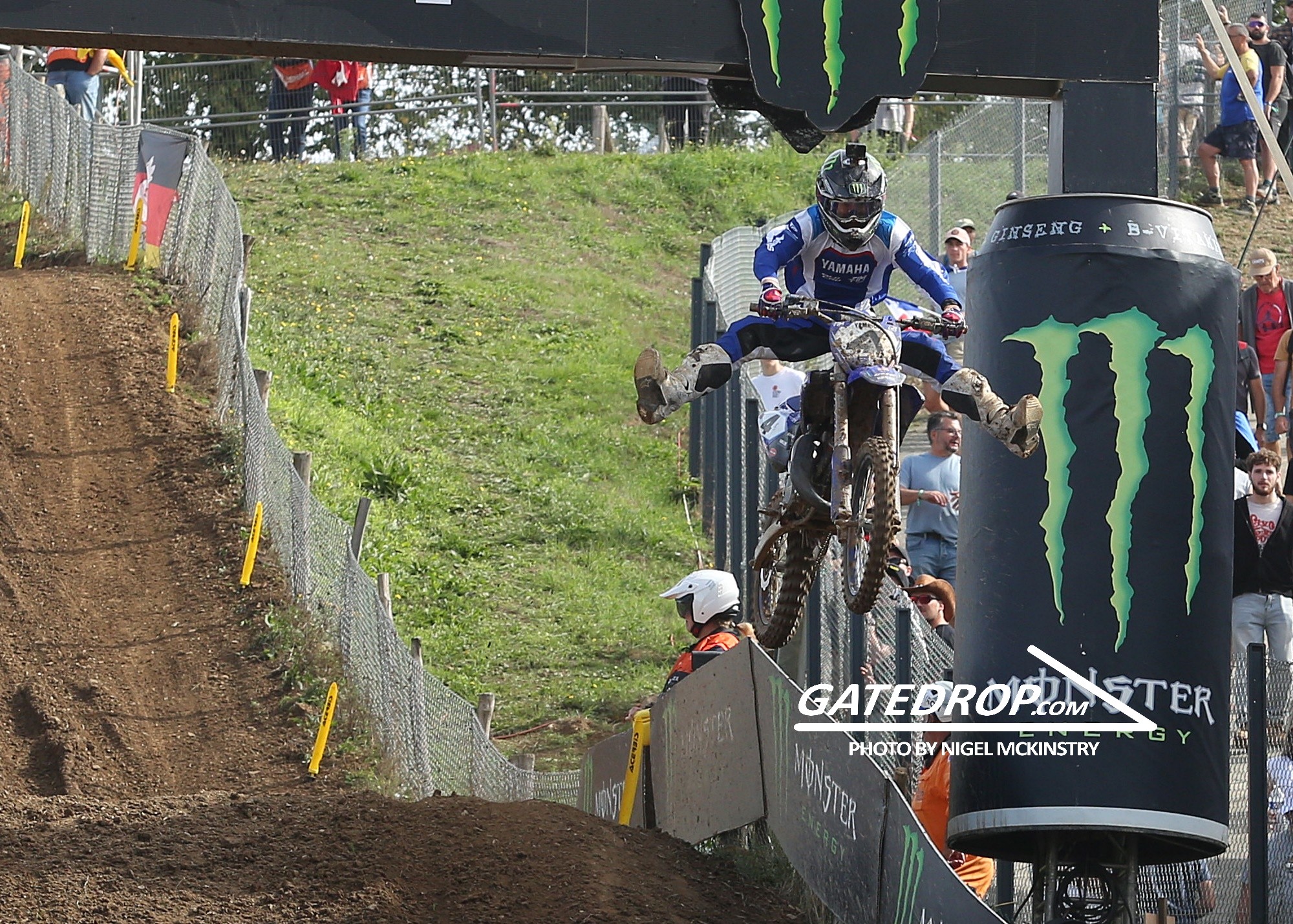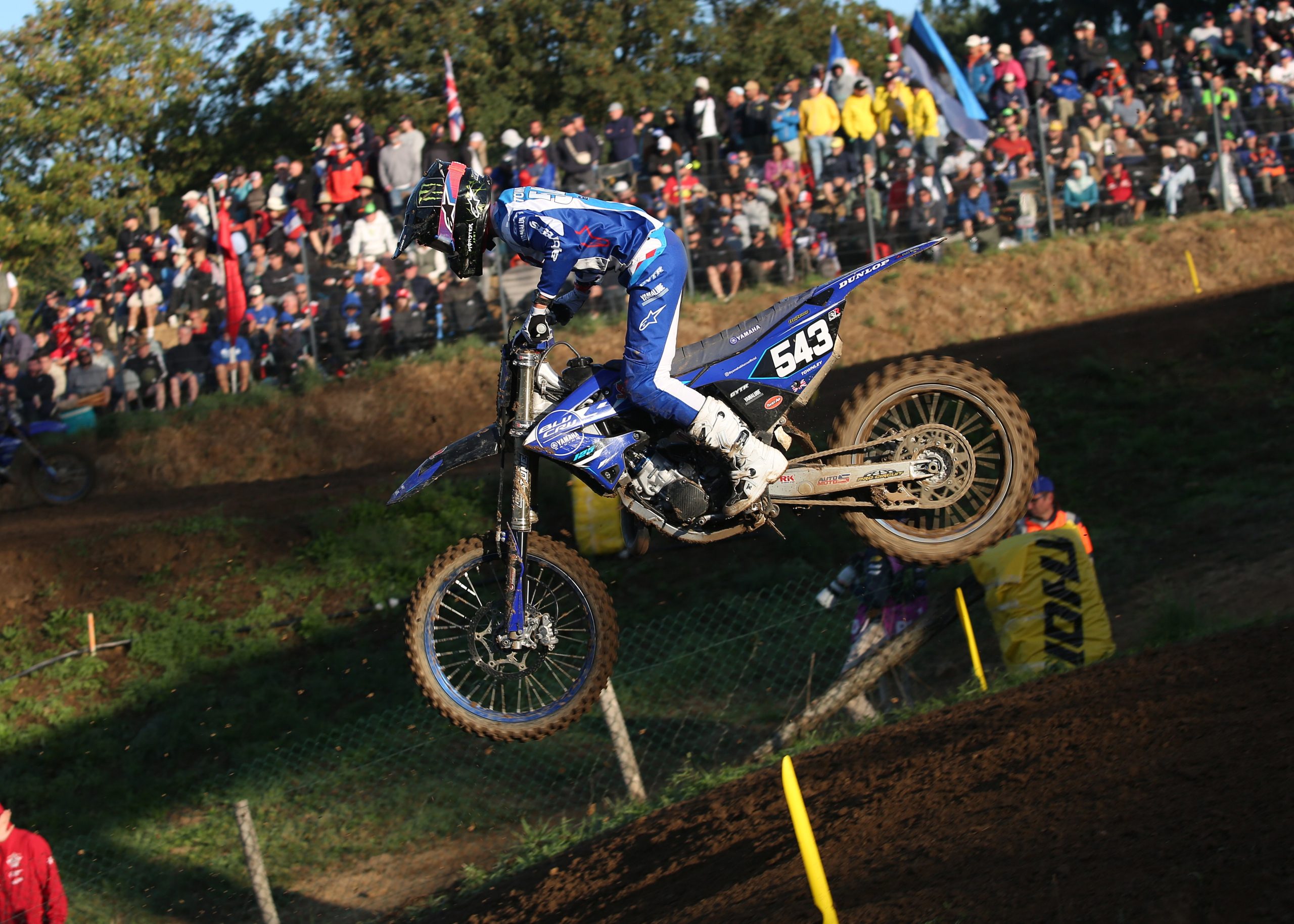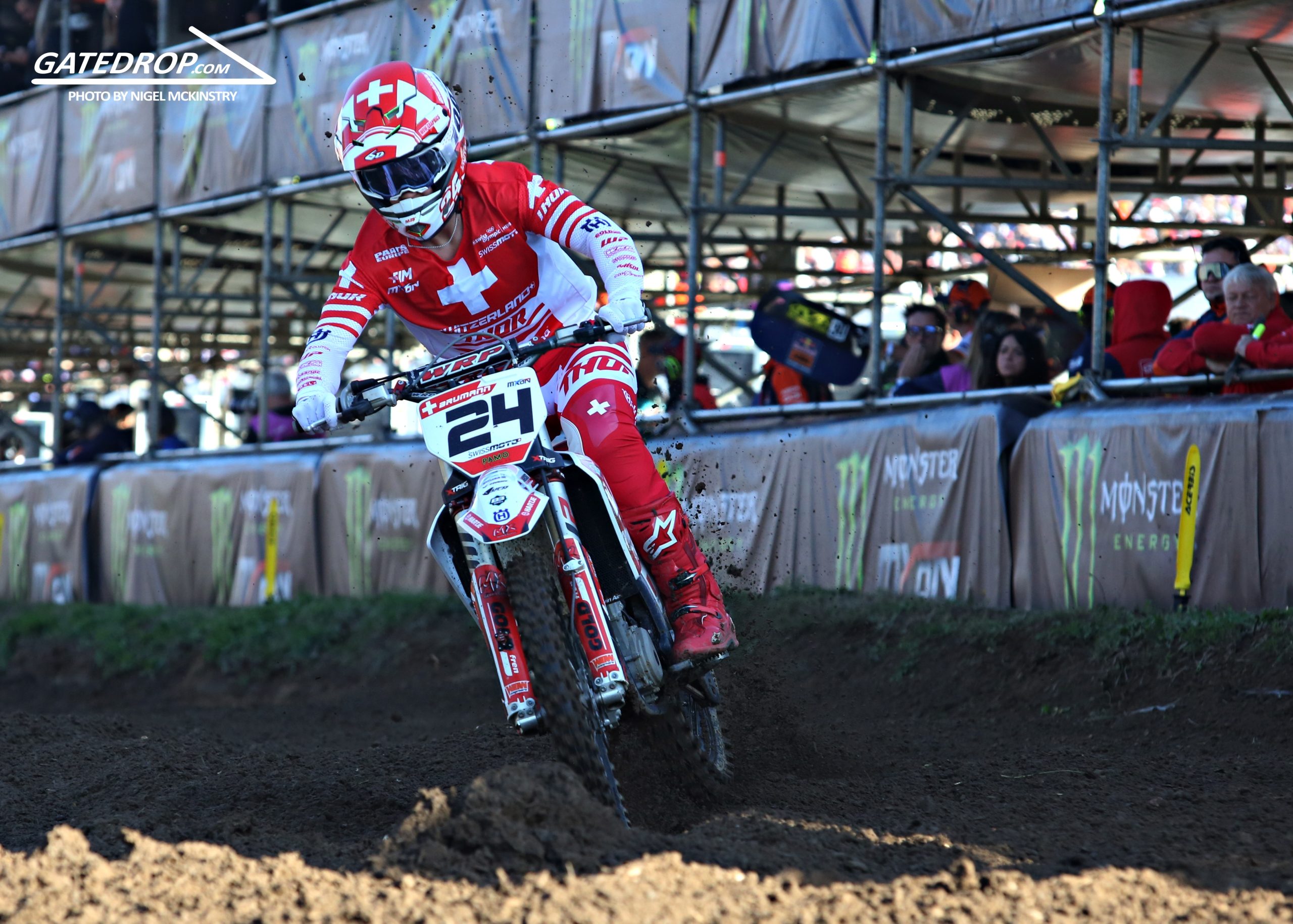
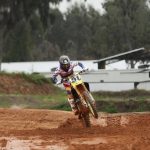
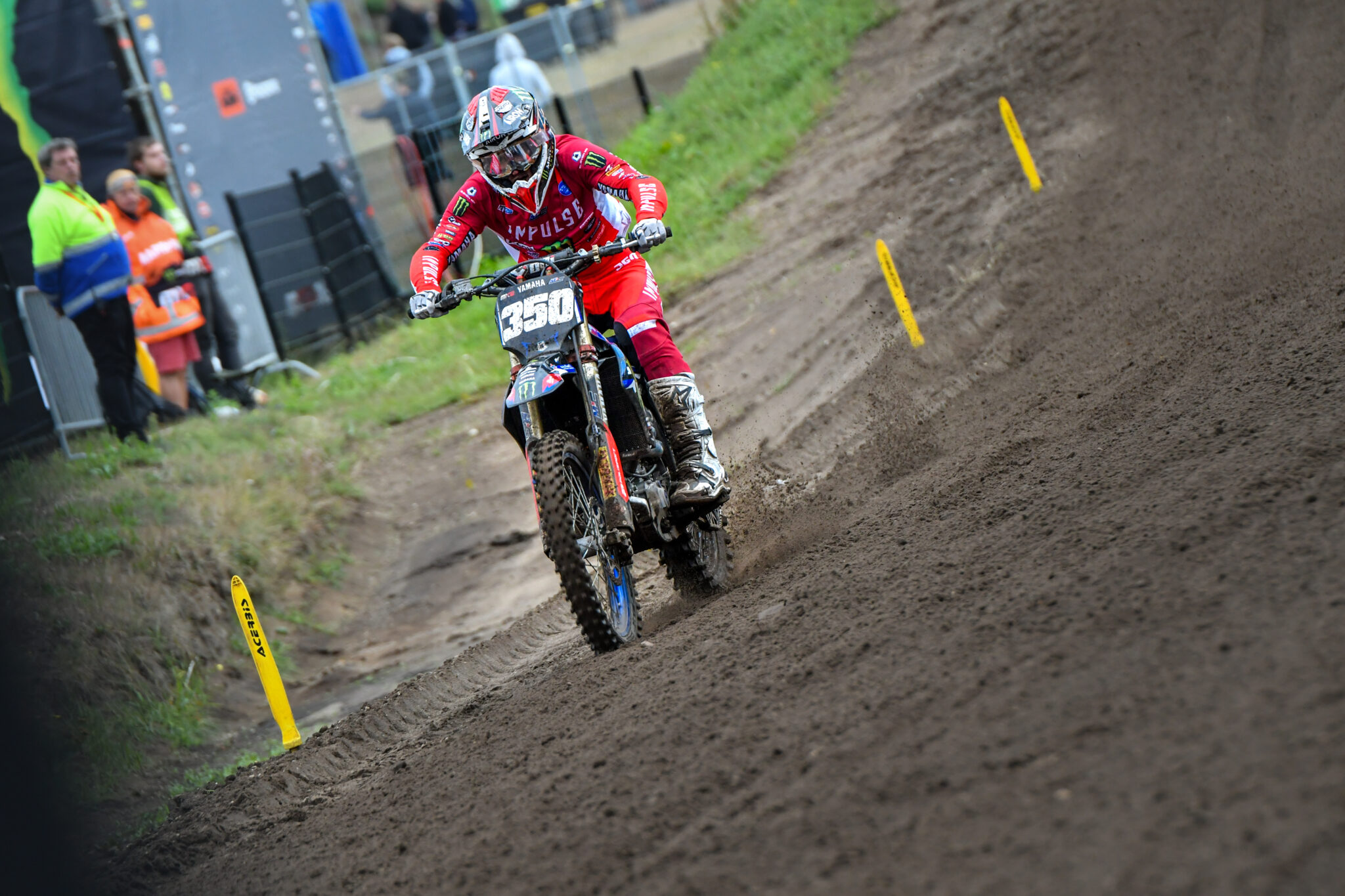
At just 16 years old, Sleny Goyer has established himself as one of the best French prospects of his generation. Third in the 125cc European Championship heading into the final round in Turkey, the MJC Yamaha rider is enjoying a strong 2026 season. At the Dutch Grand Prix, the Frenchman decided to spice things up and take on the EMX250 riders. It was a mixed experience: with only a handful of rides on the YZ-F 250, Sleny Goyer was unable to make it through qualifying. However, that first experience only confirmed his desire to make the step up next season.
From his journey as a privateer alongside his father to joining MJC Yamaha, his 2026 season, his ambitions in America and his future in the EMX250, Sleny Goyer caught up with Kevin Frelaud in the Netherlands.
Sleny, obviously, this first attempt at EMX250 in Arnhem didn’t go as you had hoped. I don’t think you had expected such a scenario. What happened?
Goyer: In fact, I had only trained four times on the bike: twice on hardpack — concrete — and twice in the sand. So I hadn’t ridden in the sand since Sardinia, at Riola Sardo. On top of that, the suspension on the 250 was completely stock; it hadn’t been prepared.
The first day of riding at Lommel didn’t go well at all. I had back pain and, on top of that, I was making quite a few mistakes. I actually crashed and hurt myself a little. The next day, we did some suspension testing. We asked Wilfried to come and help us set the bike up a little, since he doesn’t live very far away. From that point onwards, things were already much better.
When I arrived here, I still struggled a little during free practice. On the clock, however, things were better. The engine was stock and, more generally, I didn’t know the bike very well yet. But I still think the riding was positive. With my coach, I always train with another rider; we do all our training together. Usually, we run at roughly the same pace, and it was the same here: I was riding at his pace. So, for me, the riding was pretty positive. I gave it everything I had and, unfortunately, it wasn’t enough to get through. But I still think the riding was good.
I can hear from what you’re saying that you had very little time to prepare on the 250. Why so little time?
Goyer: Actually, we had asked for a bike for Germany because I had seen that there were no 125cc bikes at that race. So I thought: why not try EMX250 at Teutschenthal? But in the end, we didn’t get the bike. We asked again afterwards because Levi Townley was planning to race Lommel in EMX250, and we wanted to try and do the race with him. At the last minute, Levi didn’t race in Belgium, so it didn’t happen for us either. So we still didn’t have a 250. We therefore had to buy one. My dad bought a used Yamaha, which had around ten hours on it, I think. That’s how we were able to start riding. The project had actually been planned for a long time, but we simply weren’t able to get the bike beforehand.
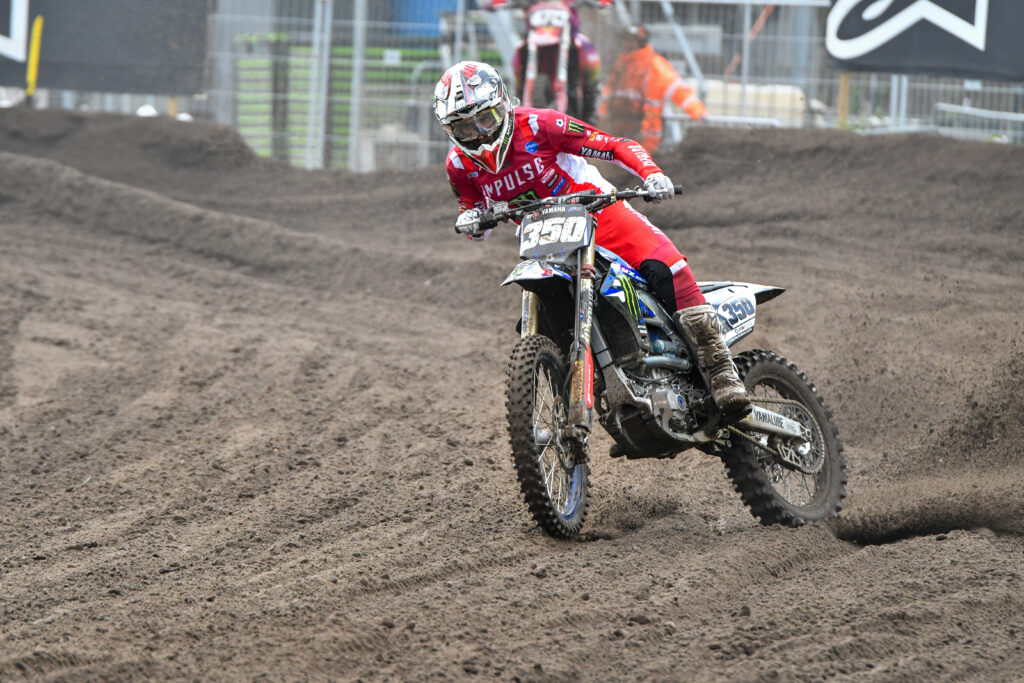
In a way, perhaps it’s better to take this “little slap in the face” this weekend than next year at the first round. Now we know where we stand and what we need to do for 2027, even though there are a lot of factors to take into account.
Goyer: Obviously, there are a lot of things to take into account. First of all, the lack of riding time on the 250 makes a big difference, I think. We also know that you need to do a lot of training to adapt to the engine size, but I think it’s normal to need some time to find new reference points and get used to a new bike. There is inevitably an adjustment period, even though it’s disappointing this weekend. But yes, I think you need to ride as much as possible. Next year, things should obviously be much better because the preparation will be completely different from what we did for Arnhem.
Last year, you were a privateer in EMX125 with your father. I’m curious to know under what circumstances you embarked on that season. That 2025 season must have made you stronger mentally… What was it like?
Goyer: It was really difficult. We did the entire start of the season, just my father and me. For winter training, we went to Spain in a camper van. We received the van on December 24th. My dad had installed a Decathlon table, two or three chairs, and we put everything in the back. We then put the bikes in and quickly made a bed. My dad had prepared everything with my grandfather during the night. We left on December 25th, straight away for a month. When we came back, we had to wash the bikes and get everything ready because the season was already starting.
The first round of the championship was in really deep mud as well. My dad took care of the bike and, on my side, I had to cook and take care of everything else. It was really tough. There was nobody there to help us. We only had support from Yamaha Europe, but at the tracks, it was just us. Even for food, we had asked to have access to the Yamaha restaurant, but they wouldn’t let us because I wasn’t an official rider. So every time, I had to cook while also trying to stay focused on the races. It was really complicated.
And then we’d leave with my dad for a month, a month and a half, sometimes two months, with weekends coming one after another. On Sunday evening, we had to find bike-washing stations, but also laundrettes for our clothes. We’d pre-wash the clothes with a pressure washer and then go to the laundrette… It was a huge amount of organisation, honestly.
Were there moments last year when you said to yourselves: “This is starting to become too complicated. If things don’t get sorted out for 2026, it’s really going to be impossible for us”?
Goyer: Yes. My dad and I had said that if I didn’t receive an interesting offer for 2026, we weren’t going to do another year like that. So, on my side, I really had to do my best. In the end, we got an offer from MJC. It was interesting for us and allowed us to start something completely different, with a proper programme.
That MJC Yamaha offer, after all the sacrifices you made last year, must have been a great reward for you. It must also have taken some pressure off the family. I imagine your dad is a little more relaxed these days.
Goyer: Yes, for sure. These days, my dad takes care of fewer things. The team handles all the parts and everything like that. It’s really much easier. Above all, he can work a little more on his own side. Even though there are still quite a few things to do. He’s still at training with me, for example, he takes me everywhere, etc. He can’t necessarily always work as much as he’d like, but it’s still much easier than last year.
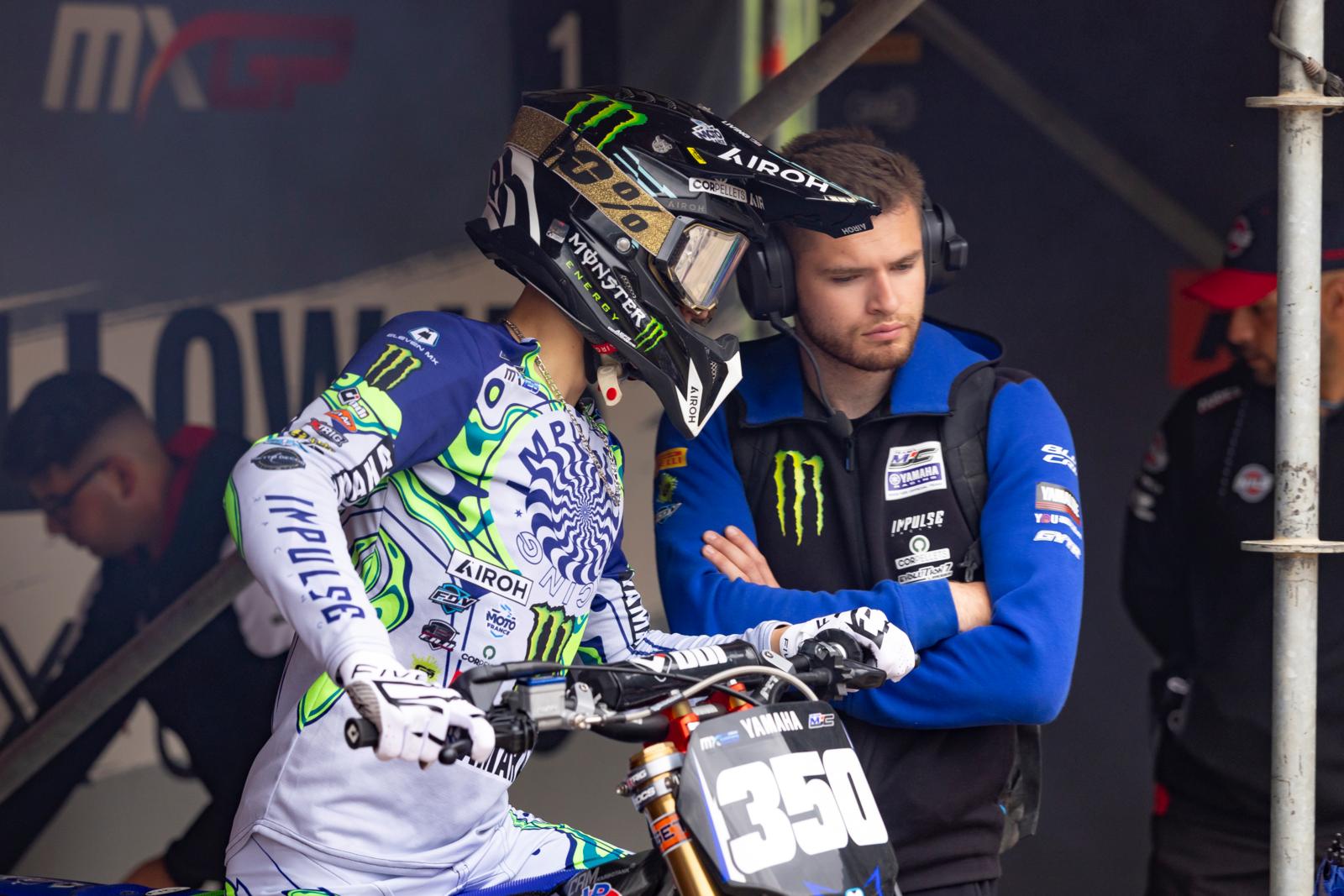
What does your daily life look like today? I imagine it must be very different from that of other boys your age. What does a typical week look like for you?
Goyer: It’s running every day, physical training every day. In the winter, I ride three or four times a week. It depends on the weeks and the amount of work, sport and everything else. During the season, when the weekends come one after another, it’s more like two or three rides a week. But otherwise, sport every day, swimming, running… I also do school by correspondence. I turned 16 this weekend, and up until now I was required to follow a standard school curriculum. Now my mother has enrolled me in the equivalent of the 10th grade.
Do you feel that difference compared to other young people your age? Because in this sport, there ultimately isn’t much room to do anything else.
Goyer: Yes, I do feel it. When I was still at school in the equivalent of 9th grade, I was missing a lot of classes, and I could feel that my lifestyle was different from the others. Sometimes, it was even a little difficult to fit in. I don’t know if the others at school understood. I think they mainly thought I was trying to act like a big shot… I don’t think they really imagined what I was doing or where I was at. Now, I received a few birthday messages from my former classmates. I think they’re starting to understand a little more about what I actually do now.
You share the awning with Levi Townley, a name that obviously carries some weight in the paddock. We know about his father Ben’s career. In fact, Ben has a very clearly defined plan for him. How is it living alongside the New Zealanders this year?
Goyer: It’s good. At all the races, we had two separate trucks. But here, because it was Arnhem, we only had one truck because the team also has to prepare everything for Turkey at the same time. But otherwise, we get along well. At the races, we don’t really have much time to talk, to be honest. We stay really focused on our work, each doing our own thing. But otherwise, we get along really well.
A word on this season. Some very good races, but also a few mechanical problems. I’ve been impressed by the step between 2025 and 2026: in one off-season, we’ve seen you go from a privateer fighting for the top 10 to a rider who is there to fight for wins. What allowed you to make such a big step compared to last year?
Goyer: First of all, it comes down to the starts. Last year was difficult because the bike was in stock configuration. My dad didn’t have the means to buy equipment for the bike. At the start, my bike simply wouldn’t come out of the gate. It worked really well around the track, but it didn’t launch well from the gate. We weren’t really sure what to do, but with experience, we eventually found solutions. But it was a little too late. We needed a slightly harder clutch so that it would launch harder. Every time I came out of the gate, the bike tended to bog down. I was starting really far back, right at the rear. Every time, I had to spend the entire race making my way back through the field. I always came back to somewhere between eighth and 12th. The speed was there, but we hadn’t realised that the clutch was a major problem. My dad thought I was the problem, that I was scared or wasn’t willing to push hard enough. In the end, with experience, he realised that we needed a different clutch. It would have been easier last year, that’s for sure.
But this year, it’s going well. Things are going pretty well. The results are there. I think I missed out on quite a few wins and it wasn’t necessarily my fault. Obviously, I would have preferred to win a little more. I had a lot of second-place finishes. There’s still one round left in Turkey. We’ll try to win the final one. I’d say I’m still a little disappointed that I haven’t picked up more wins.
I’m curious to know how you deal with the pressure that comes with the need to succeed. We’ve seen it many times: sometimes it doesn’t take much for a career to take off… or go in the wrong direction. Mentally, does it weigh on you knowing that you’ve made so many sacrifices and that you “have to succeed” so that they haven’t been made in vain?
Goyer: Yes, obviously, we don’t really have a choice: we have to succeed. We can’t leave anything to chance. You always have to do as much as possible. Whatever you do, you have to give 110%. In theory, it should work if we continue like this. You really have to be serious and stay that way as much as possible until we reach EMX250. From that point onwards, we’ll really have to perform as much as possible. After that, it will get increasingly competitive. Spots within the good teams are valuable. So, you really have to be serious and get good results.
Has joining MJC Yamaha, an official team in EMX125, taught you a lot about the way you work and prepare? Has it changed your approach, or did you already have a good methodology before joining the team?
Goyer: No, not that much. When you’re in the Yamaha programme, you’re required to have a coach. So the team told me: “We’ll take you, but you need a coach.” There had to be proper support. I spent the entire winter training at Nico Aubin’s with another rider. It was good because we ride at roughly the same pace. We pushed each other throughout the winter. I spent the whole winter with Nico and, recently, I’ve returned home a little more. But Nico continues to handle the physical programmes and everything that goes with them. It’s going well.
I imagine the 125 you used last year isn’t comparable to the one you have this year…?
Goyer: Actually, it is, to some extent. Last year, we were privateers, but I had a good engine builder who prepared my engines. I think he’s the best because he has won a lot of titles with his riders. In the Elite championship, in the French 125 championship, almost all of his riders are at the front.
Last year’s bike worked really well. There wasn’t much done to it, I think it was just a different cylinder… I don’t know exactly what was on it, but I felt really good on it. This year’s bike works well, but when it’s hot, it tends to struggle. We’ve also had a few reliability problems.
We’re often our own harshest critics. In your opinion, what is your biggest strength today? And, on the other hand, your main weakness?
Goyer: My biggest strength, I think, is being able to deal with people who criticise me. It doesn’t affect me at all. Well, I listen to them because, obviously, you always hear what’s being said. But when I hear nasty things or whatever, it doesn’t affect me. I’m able to stay focused, in my own bubble, and move on.
And as for a weakness… It’s difficult to say just like that. I have some, that’s for sure, but right now I can’t think of one.
World 65cc runner-up, 85cc European Champion, 125cc World runner-up… You’re a competitor at heart, so you’ll probably tell me that this is only the beginning. But your record in the smaller classes is still pretty impressive. The guys who are running at the front in the GPs didn’t necessarily have the same success at your age. Do you already realise what you’ve achieved? And does it mean something to you today?
Goyer: Obviously, it’s good. I don’t necessarily think about it, but when you list them one by one like that, it already makes for an impressive record. But we’re going to continue like this and try to achieve as many results as possible. In everyday life, I don’t necessarily think about it, whether I’m training or in other situations. But it is still important.
Do you think money plays too big a role in “amateur” motocross today? Of course, the sport is starting to become professional at your level, with riders joining teams, but we’re not at the world championship yet. And yet, we’re already seeing a real arms race, particularly in the 125cc class.
Goyer: Yes. We don’t have a lot of resources, we don’t have much money. Last year was difficult with all the travelling and everything that came with it. We were very careful about everything we did, every little thing, every expense.
But I think that when you have money — and there are a lot of people with money in the paddock — sometimes you have a little more difficulty pushing yourself. You see that some people find it a little harder to fight because they don’t necessarily need to push too hard: they have a Plan B, so to speak.
I’m fine with things being this way. I like it because, precisely, my dad and I have learned in our daily lives never to give up. So when things aren’t easy, I try to get past them and use them as something positive so that they make me stronger.
You’re very good at motocross and particularly perform well in the sand. We’ve seen you win twice at Le Touquet in the smaller classes. There’s inevitably a question about supercross. Is that a discipline you already practise, or are you considering it in the future?
Goyer: Honestly, I like supercross. But with Yamaha, we’re not allowed to do it because of the potential for injuries. That’s how it is in the contract: we do motocross, not supercross.
It’s a discipline I like. Last year, when I was still a privateer, I did some at my coach’s place, who had an SX track. I probably only have two or three hours of supercross experience under my belt, but it’s really something I enjoy doing.
I’d have to try to get into it. I think it could be interesting for motocross, and even for the future. Ideally, I’d like to go to the USA. And when you’re in the United States, supercross is a necessity.
Do you already have a medium- or even long-term plan? What does Sleny Goyer’s roadmap look like today?
Goyer: I’d like to do at least one year in MX2. The idea is to continue next year with a season in EMX250. Depending on the results, maybe spend two years in the class, and then move up to MX2 for a season.
Obviously, all of that depends on results, contracts and opportunities… From there, I’d like to go to the USA because I’ve dreamed about it since I was a little kid. I don’t see myself staying in Europe.
The American tracks are a dream for me. I watched the Budds Creek race yesterday and the tracks are completely different. They make me want to go there. After that, it will depend on a lot of things. I don’t think anything could stop me, apart from certain contracts or obligations that I might have. But the USA definitely attracts me more than the World Championship.
2027 and the transition to EMX250 are already confirmed. So the EMX125 European Championship title doesn’t interest you?
Goyer: No, it doesn’t interest me.
You’re under contract with Yamaha for next year. But at Yamaha, there is still a lot of uncertainty for next year, particularly with the EMX250 programme, VHR… Do you know how it’s going to work?
Goyer: No, I have no idea at all what I’m going to do. In fact, with the Yamaha contract, it was a 1+1 deal. Depending on the results, they would keep me or not. And now they’ve sent us an email telling us that they want to keep us for 2027.
With which team?
Goyer: I have no idea at all. With VHR, it’s still a little unclear. But generally, they deal with the MXGP contracts first, then the MX2 ones, and finally the EMX250 and 125 contracts.
We’ll know more a little later. The senior classes still have a few Grands Prix left to race, so we’ll have to wait until the end of the year, but we should know more fairly soon.