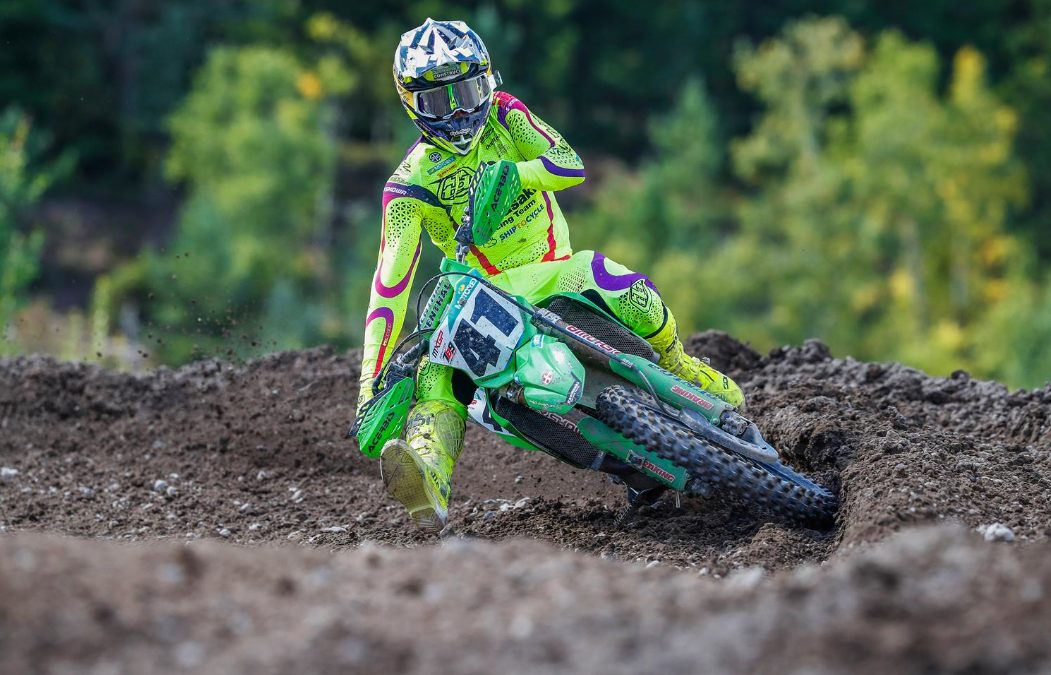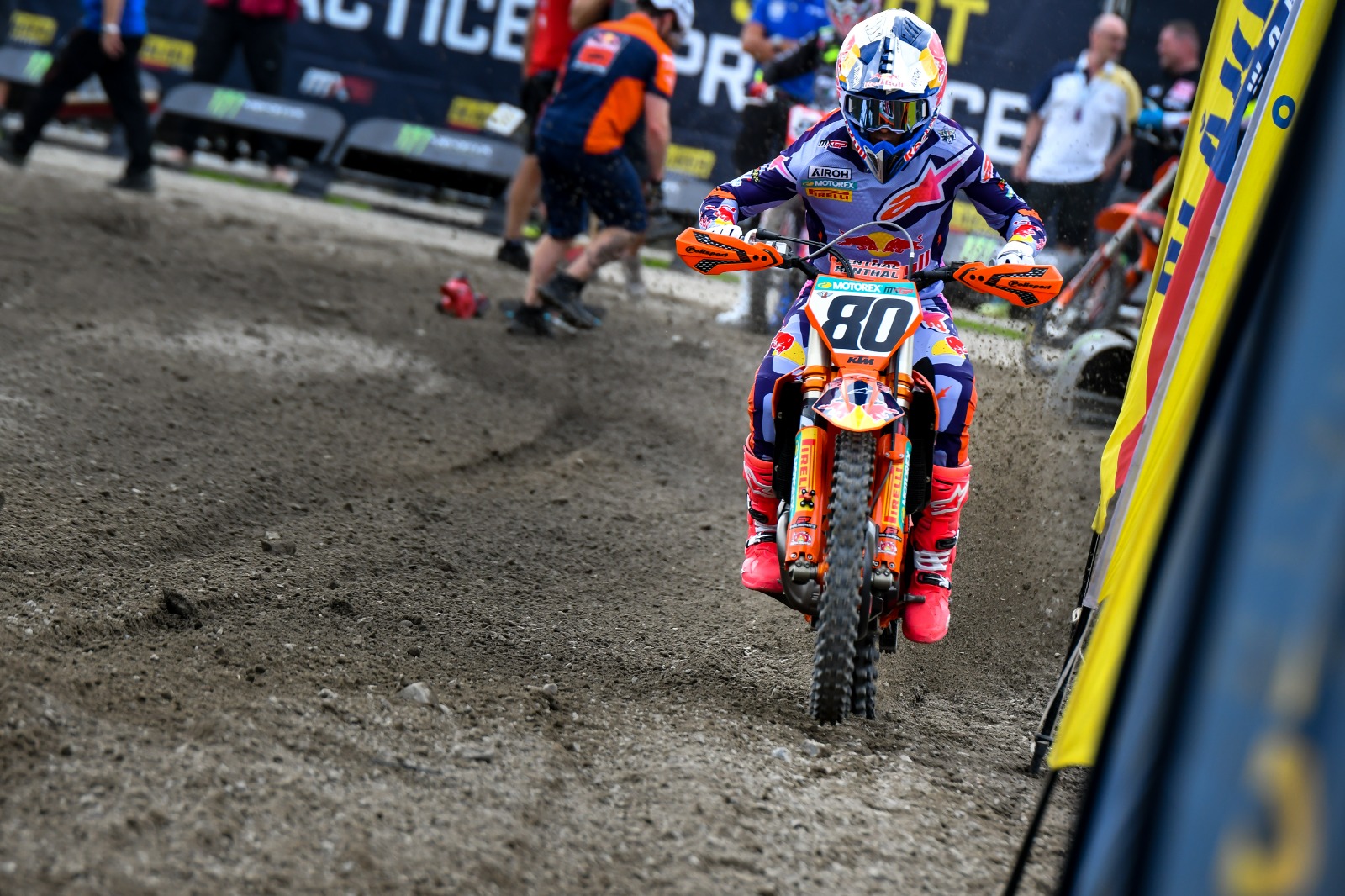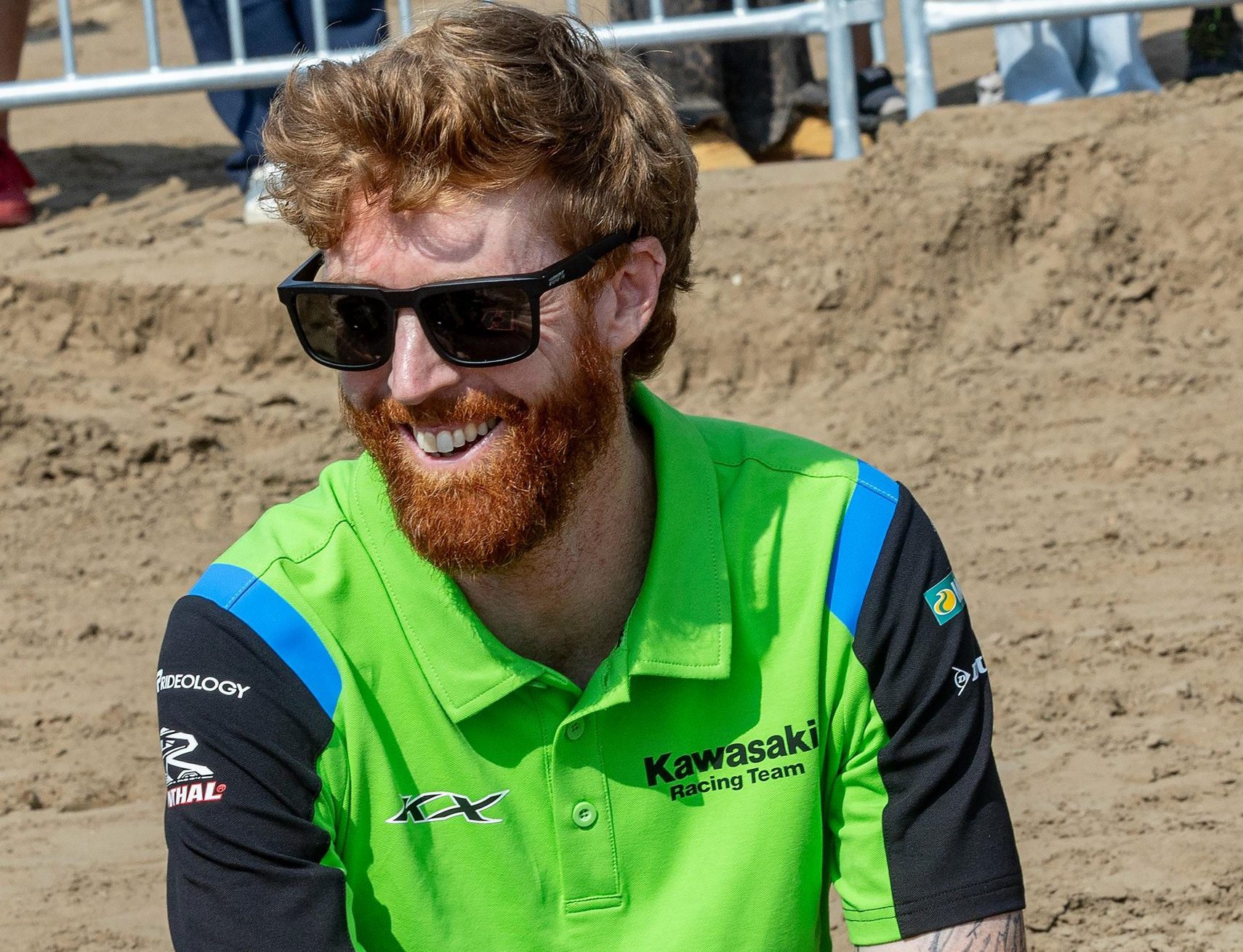


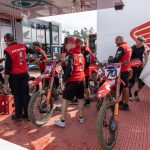

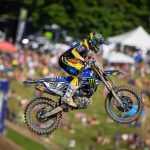
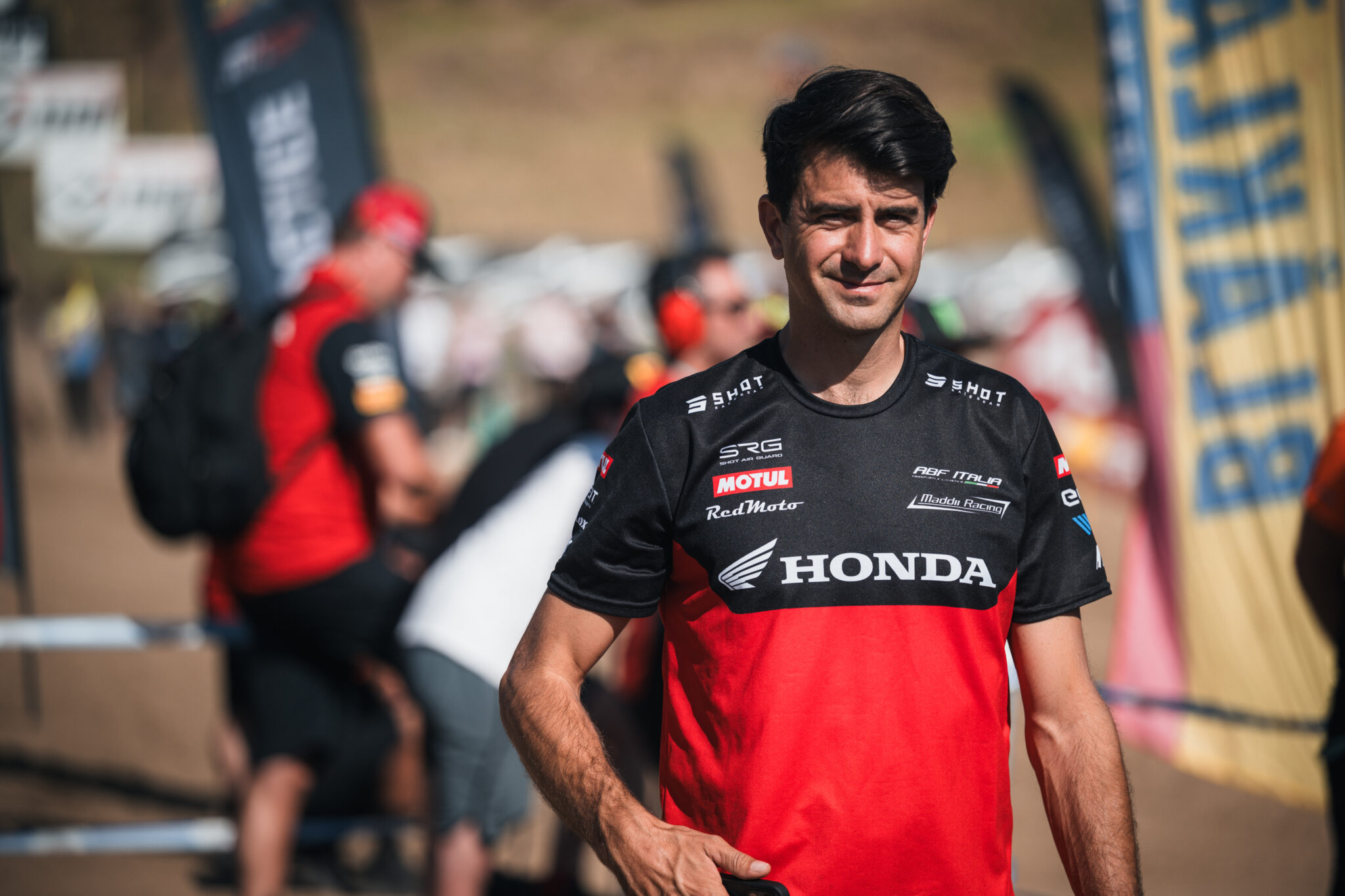
The 2026 off-season was particularly eventful for the Maddii Racing team. After turning the page on the Ducati Factory MXGP programme, the Italian outfit had to quickly rethink its plans, change manufacturers and start a new project with Honda. In this context, the arrival of Maxime Grau was also decided in the final weeks, almost as a last-minute gamble.
A gamble that has now paid off handsomely, with the Frenchman quickly establishing himself as one of the surprises of the season and now regularly finishing inside the top 10. For Marco Maddii, 2026 with Honda has already been a year full of lessons.
We look at the change in direction, the Maxime Grau gamble, the relationship with Honda, the Ducati project, bike development and ambitions for 2027 as the Italian team manager answers our questions. Interview by Kevin Frelaud.
Marco, the end of the season is approaching. I imagine it has been a very good year for you with Maxime, Nicolo and Elias. Considering what happened even before the start of the season, with Marc-Antoine Rossi and Niccolo Manini leaving, it seems to me that things ultimately went even better than expected?
Maddii: Yes, clearly, it went much better. Actually, it was a good thing for us to make those changes at the beginning of the season because with Marc-Antoine and Niccolo, we weren’t really able to work properly together. We didn’t have the same goals, the same approach or the same mentality, so it was quite complicated.
But Marc-Antoine had also made some personal decisions: he simply wanted to stop motocross. And Manini was also going through a difficult period. You know, we ask a lot from the riders because we live for motocross. It’s our life, our lifestyle. We want the riders to be 100% committed to what we’re doing. So if the rider isn’t as involved as we are, it becomes complicated.
So I’m really, really happy that we made those changes at the beginning of the season to form a better group with Maxime. When Maxime joined the team, he brought a lot of positive energy and a good mentality. It was also beneficial for Alvisi and Escandell to have him in the team, so they could push each other.
Things were therefore very complicated at the beginning of the season, but this change was really beneficial for us.
Maxime wasn’t your first choice at the start of the season and he joined the team at the last minute. Considering that, you must be particularly pleased with his season so far. He’s having a really solid season, perhaps even beyond what everyone could have expected, maybe even beyond your own expectations.
Maddii: Yes. To be honest, before the season we hadn’t thought about Maxime because he was, let’s say, a little bit behind the other riders.
Honda had proposed Marc-Antoine, so it was Honda’s choice to take Marc-Antoine. We agreed, we were happy, but after things went wrong, we had to find a solution. Maxime was managed by the same manager as Marc-Antoine. We were therefore in discussions with him to find a solution, and he told us: “Why don’t you do a test with Maxime?”
I thought about it and said, “Okay, why not?” I thought it could be a good idea. Maxime immediately came to us. We did a week of testing and I immediately called Honda to tell them, “I think this is the rider we need.” I felt that he was extremely motivated and he was riding well. He liked the bike. From the beginning, everything went well with Maxime.
Of course, it took a little time because he hadn’t really had a solid winter, so everything had been done at the last minute. He needed some time to adapt to the bike and understand everything around him. But after that, his progress was impressive.
Today, Maxime is consistently riding inside the top 10 and we, as well as Honda, are really, really happy with his work.
Still on Maxime, he could potentially be on the radar of some factory teams next year. That must say a lot about the work you’ve done as a team, because I imagine you’ve had to work extremely hard since the beginning of the year to get to this point.
Maddii: Yes, our job is to prepare young riders so they can join a factory team. We’re very happy with Maxime, and it seems that he has all the cards in his hands to join a factory team next year. So I hope it happens, because that’s our job, and if in the first year we’re able to produce a rider for a factory team, it means we’ve done our job in the best possible way. So it’s clearly very positive for us and also in Honda’s eyes.
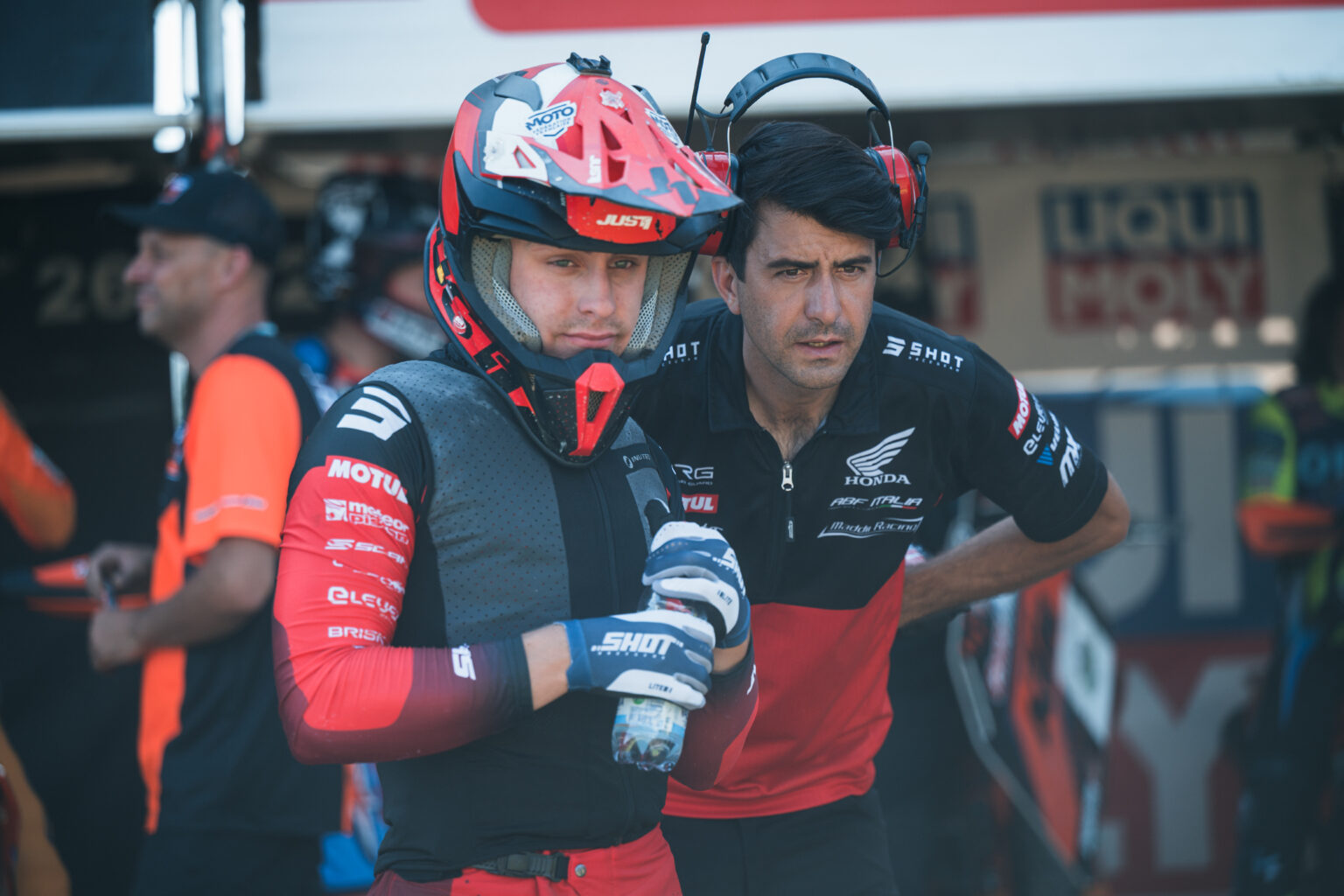
Obviously, Maddii Racing ran the Ducati Factory MXGP programme last year. Then everything changed over the winter. How difficult was it for you to step away from that project, change manufacturers, build a new programme around young riders and essentially start from zero?
Maddii: It was really difficult. It wasn’t in our plans to stop with Ducati because we had a three-year contract, but things changed quickly.
So we found ourselves in a slightly complicated situation, but fortunately, with Giacomo and Honda, we found a very good agreement. We were very happy with what we put together with them. But yes, there were obviously difficult moments because we didn’t know exactly what to do or what our future would look like.
But I’m really happy with where we are today and, in the end, I’m also happy that we changed direction. I think we’ve found our place for now, with Honda, with this MX2 and EMX250 project.
With Ducati, we were very happy too. It was an incredible project. We also achieved very good results: two podiums and the Italian championship title. To be honest, for the moment, we’re still the team that delivered good results for Ducati, even today. So I think we did a good job with Ducati, and we can be proud of that.
But we also wanted to be a little more involved in development and have more freedom to work in our own way, and that wasn’t possible. So ultimately, it’s a good thing that things turned out this way.
What will you take away from your partnership with Ducati? It was a huge project to take on. It certainly wasn’t simple, as it was a completely new bike in the most competitive class. And when you look at their 2026 season, as you said, you’re still the team that brought results to the brand last year.
Maddii: It was a difficult project, you know, with a new bike in the premier class, against the best riders. But despite that, we were able to get on the podium and finish inside the top five a few times. In the first year, we won the Italian championship with Alessandro Lupino. It was difficult, but we still managed to do a good job.
I feel that we did the job last year. I don’t know if Ducati really realised that. Maybe they thought they could do much better than that, but for the moment, it seems that’s not the case.
But it was incredible. At the beginning, Ducati was a new brand coming into motocross, with a huge amount of media coverage, a lot of attention and the spotlight on the project, which we liked. We also like working under pressure, let’s say. But Ducati came from road racing and was entering motocross, a completely new world. So they naturally had huge expectations.
We tried to do our best. And I think the final result was pretty good, especially when you look at what they’ve done after us. One year later. In our first year in MXGP, the bike was a real prototype.
We were even seriously lacking parts and bikes. The logistics concerning all the equipment and bikes were also very complicated to manage. And our mechanics did an enormous amount of work throughout the year to make everything work.
My father and I faced a huge number of difficulties during the season, things that nobody saw because everything was happening behind the scenes. It was really hard work. And probably from the outside, it looked easy, but it wasn’t. It’s never easy.
Maddii Racing seems to be an excellent satellite team for Honda’s MX2 programme. You are once again proving that you know how to develop young riders. You’ve done it in the past and you’re continuing to do it today. With that in mind, being a Honda satellite team seems to make a lot of sense for you. Do you hope that this could translate into even more support from Honda and HRC in the near future?
Maddii: Yes, of course. That’s what we hope for. At Honda, they’re happy and would like to increase and improve our cooperation. Obviously, we’d be very happy with that. As a team, what we want is to progress. For the moment, what we’re doing is working really well. But if Honda gives us more confidence, we’re obviously ready to take the next step.
When I speak to Maxime, he keeps telling me that his bike is close to a stock bike. When I see the starts he gets and the races he’s doing, I sometimes find that hard to believe! Is your Honda really that close to the one you could find at a dealership?
Maddii: What Maxime says is true. Our bike has some specific parts, but it’s far from being very different from the production model. I think we’ve mainly done a very good job of optimising certain parts in the right way, without modifying the bike too much. And also keeping the costs at a reasonable level.
We developed the bike ourselves with our group of engineers. So yes, what Maxime says is true. The bike isn’t that different from the production model.
If we look at Valerio Lata at HRC, the Maddii Honda doesn’t seem to have much to envy from the factory bike.
Maddii: No, that’s true. It seems that our bike is more or less at the same level as theirs. So, knowing that this is only our first year, we’re really satisfied with that. Of course, at the beginning of the year, it was a little difficult because we needed a bit more time to actually be ready. But after a few months, we managed to put together a good package for the bike.
Maxime and the riders are really happy. They’re able to get good starts in both classes. And once you start at the front, in my opinion, the bike makes much less of a difference. Everything comes down to the start. So if he can start at the front, he has all the tools necessary to fight with the best riders. And they’re often in the middle of the factory riders. Sometimes, we can even beat them. So for us, it’s great.
You’ve worked with many riders over the years. What has changed the most in the way young riders approach their careers today?
Maddii: Our team has now existed for almost ten years, since my father and I restarted the project in 2017. So I’d say that between 2017 and today, things haven’t changed that much. But of course, things have changed a lot since my father’s era, that’s for sure. Even so, hard work, with a slightly old-school approach, remains the best thing for everyone.
I therefore think motocross remains a simple sport and you still need to do this old-school work. Ride the bike, train, repeat and work hard. Nothing really crazy or too sophisticated, you know. It’s still the same work as it was back then for the riders, but with a modern approach. The riders are different, their mentality is different, it’s a different generation. They’re perhaps also a little more professional. But the old-school system is still the one that works best.
Your father created the team in the 1990s. It seems to me that he’s still involved in some way. What is his role today?
Maddii: His role is to take care of the suspension. And for anything concerning technical aspects or problems, we try to solve them together. We try to draw on his long experience in the sport. So he’s both an adviser and a technician. His presence within the team therefore remains important.
Would you say that the gap between ‘private’ bikes and factory bikes is getting bigger or smaller? Today we see many private riders getting closer to the factory riders, I’m thinking of Mikula, Karssemakers and, of course, Maxime.
Maddii: No, I’m certain it’s getting smaller. The gap is shrinking and today, it’s no longer as important to have a full factory bike. You can prepare and set up a production bike and be competitive in MX2 and MXGP. Obviously, if we’re talking about going for the world championship title, that’s different. But for a rider who wants to show his potential, like Maxime is doing by demonstrating that he can fight with the best riders, it’s clearly possible.
And I think that in my father’s time, it wasn’t possible. So over the last 30 or 40 years, I think the gap has become smaller because production bikes have become very competitive. And we see it often. Roczen won the Supercross championship on a bike that was ten years old. That’s a good example. So yes, I think the riders still make a big difference and the bikes are more or less at the same level and competitive.
I simply think that some teams modify so many things on the bike that they eventually lose their way. Sometimes it’s better to go back to something closer to the production model to get a better overall package.
If you could change one thing to make life easier for teams like yours in the championship, what would it be?
Maddii: That’s a difficult question, but we would certainly need to improve the level of all the infrastructure a little. I feel that the paddocks, facilities, toilets and parking are still a little behind for the world championship. We should improve all of that. They should make small improvements here and there to help the championship progress.
And then, finding a sponsor today is difficult. Getting support from a manufacturer is also difficult. It’s not easy for teams to be here. Budgets are always tighter, we’re spending huge amounts of money, more and more money, travelling to races. What a team needs, and what we need, is more support from sponsors and the organiser. That’s why I’m pointing out very simple things: improving the paddock, toilets and parking at the events. That would allow us to professionalise the sport and attract more major sponsors to the races. Today, going to a race means being in the mud and giving up your comfort. Today, people want comfort.
To have more fans and spectators and attract sponsors, that’s how it should be done. I think I would also have a lighter programme, a one-day format. The idea would be to make it easier to watch on television and shorter, also for spectators at the circuit. Because the days are really, really long. For enthusiasts like us, that’s fine. But not everyone is like us and you have to take that into account. I would condense the programme, the amount of time spent on track, etc. I think we could put a lot of things in place without spending huge amounts of money, and it would make a real difference.
In 2027, should we still expect to see you running riders in MX2, or will you focus on the European Championship?
No, next year we’re going to do the same thing as this year. A few riders in EMX250 and one rider in MX2. So our line-up will be more or less the same. We’ll have to see which riders. But there will be no change to the programme in 2027, for now.