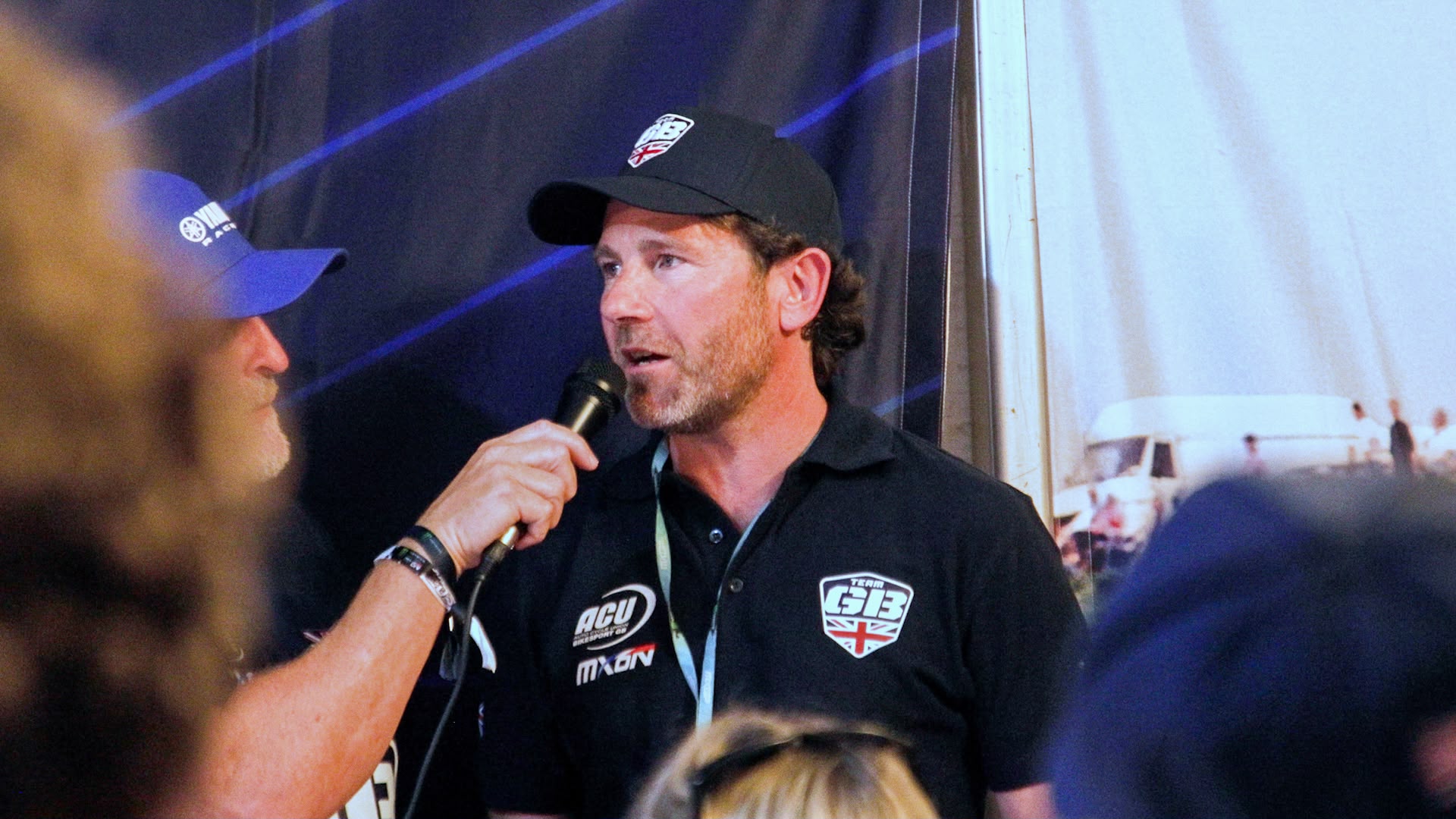






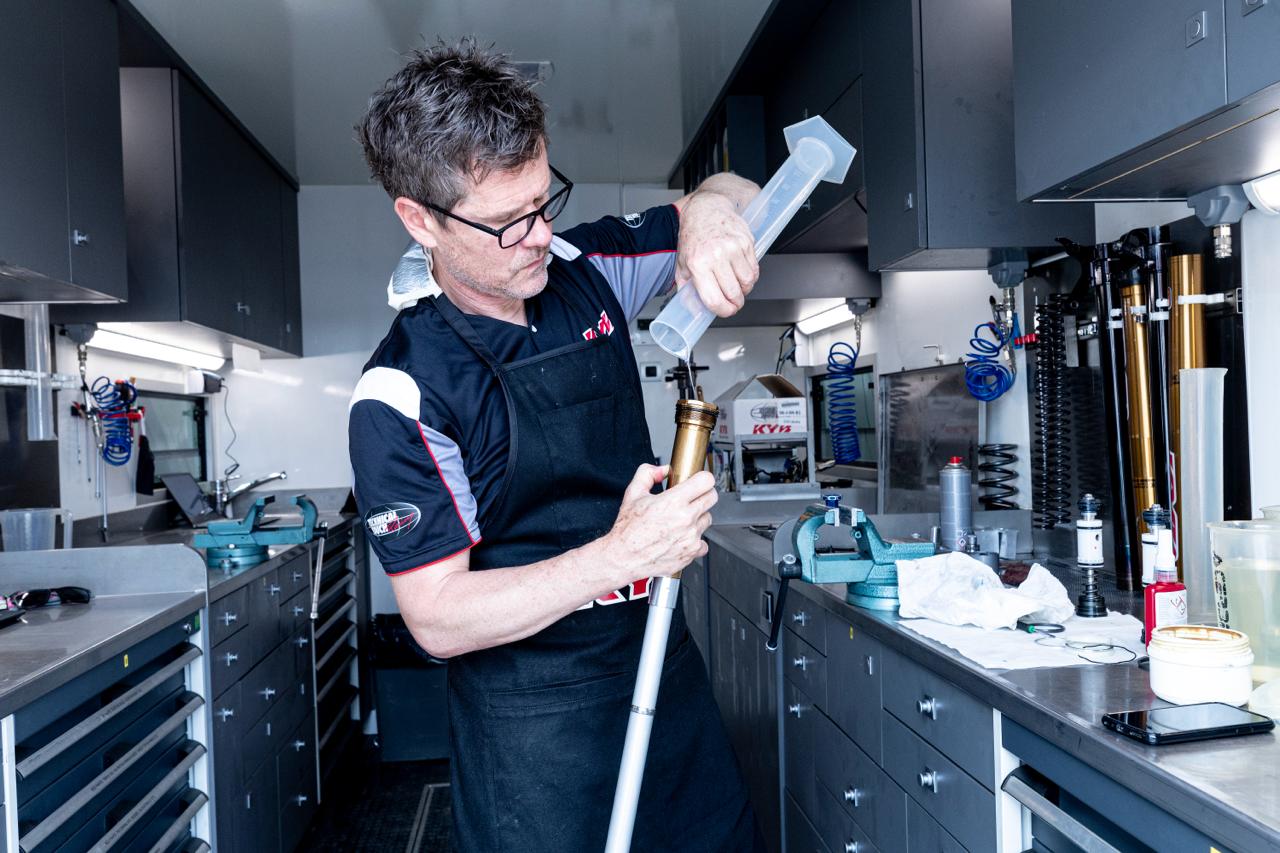
After more than a quarter of a century in the Motocross Grand Prix paddock, few people have witnessed the evolution of Motocross quite like Gunther Geerts. Having joined Technical Touch in 1999, the Belgian has worked alongside some of the sport’s biggest names, from Mickaël Pichon and Josh Coppins to Tim Gajser, while playing a key role in the success of KYB suspension across multiple factory teams.
Today, Geerts serves as Racing Manager for Technical Touch, overseeing everything from suspension support to the logistics that keep the company’s busy Grand Prix operation running smoothly. We caught up with the vastly experienced Belgian to discuss his remarkable journey, life behind the scenes in the MXGP paddock, the secrets of top-level suspension setup and why there is still plenty of room for development despite the incredible performance of modern Motocross bikes.
GateDrop: Gunther, for the people that don’t know you, can you introduce yourself and tell me about your role within KYB?
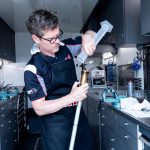
Geerts: My name is Gunther Geerts, I’m from Belgium, living in Bocholt, close to Lommel. Working for Technical Touch since August 1999. So about 27 years there now. Crazy how fast it all went. But great memories. My business card says that I’m the racing manager. Practically it means that I’m responsible for all what revolves around the racing service. Not only suspension but also organizing all what is necessary to keep everything rolling in a the smoothest possible way.
Organizing all the traveling, booking flights , hotels , rental cars, spare parts, etc… Communicate with Japan about suspension, tests, etc…
GateDrop: How did you first get involved in Motocross suspension and eventually end up working for KYB in the MXGP paddock? What was your first year in the paddock?
Geerts: Since a young age, I was racing myself, and a mechanic of mine was already working at Technical Touch. They were looking to hire somebody new, just when I stopped riding, and from there on it went.
GateDrop: Was motocross always your passion, or did you come from a broader engineering background?
Geerts: I have a technical background, but motocross was my passion since I was a kid. My 2 older brothers were racing when I was young. Every weekend I went to see them ride. It was a family thing. There I got infected and started to ride in the back of our house with a Honda Dax. After that a 80cc and so on.
GateDrop: What does a typical GP weekend look like for you from Friday morning until Sunday evening?
Geerts: We mostly arrive on Thursday afternoon. We are lucky because we don’t have to build any awning. Just park the truck, hydraulic stamps out, electricity connected and that’s it. I check out the team(s) I work for and see that there are any requests and get some idea about the work that needs to be done before it all starts.. Sometimes I already collect some training – or race sets that need to be serviced.
Friday morning I have briefing with the team manager Vince Bereni and Manu Volpato. Manu is the link in between Vince and the mechanics. There we decide the bike set-up and if anything needs to be adjusted, depending on the type of track and track conditions. I set-up the suspension and check if everything is okay. I service some material in the KYB service truck if needed. It takes time to properly service and check all the bikes. In between taking care of the material, I’m going to check out the start practice sessions. The day is quickly over. Saturday morning we have the 1st practice session and I stay in the pitlane, in case they come in. I listen to the comments and make changes based upon the riders comment. After this session Vince, Manu and I have a debrief with each rider, separate from each other. We listen, assess and decide what needs to happen or not. There we take the decision what to do, always thinking of the positives and the possible negatives.
Vince always has the last call on anything that happens, what is normal. He’s the one who is responsible towards Triumph. It is always interesting to hear what the riders have to say. Sometimes we also have funny moments, for sure if Guillem Farres and Camden McLellan are the riders you work for.
When he’s attending the GP, Clément Desalle also joins these debriefs and gives his opinion to both riders. His role is more to advise on starts, lines and strategy. That process goes on after every practice session or race.
Sunday morning warm-up in the pitlane and debrief. Same procedure after Moto 1 and Moto 2. In both moto’s I’m not staying in the pitlane. I prefer to walk around to see the bikes behaviour in different parts of the track. I take this impression with me and share it with Vince/Manu. If necessary, we make some adjustment. At this point in the season, we have a pretty solid base and big changes are very rare.
GateDrop: How many riders and teams are you responsible for supporting during a Grand Prix weekend?
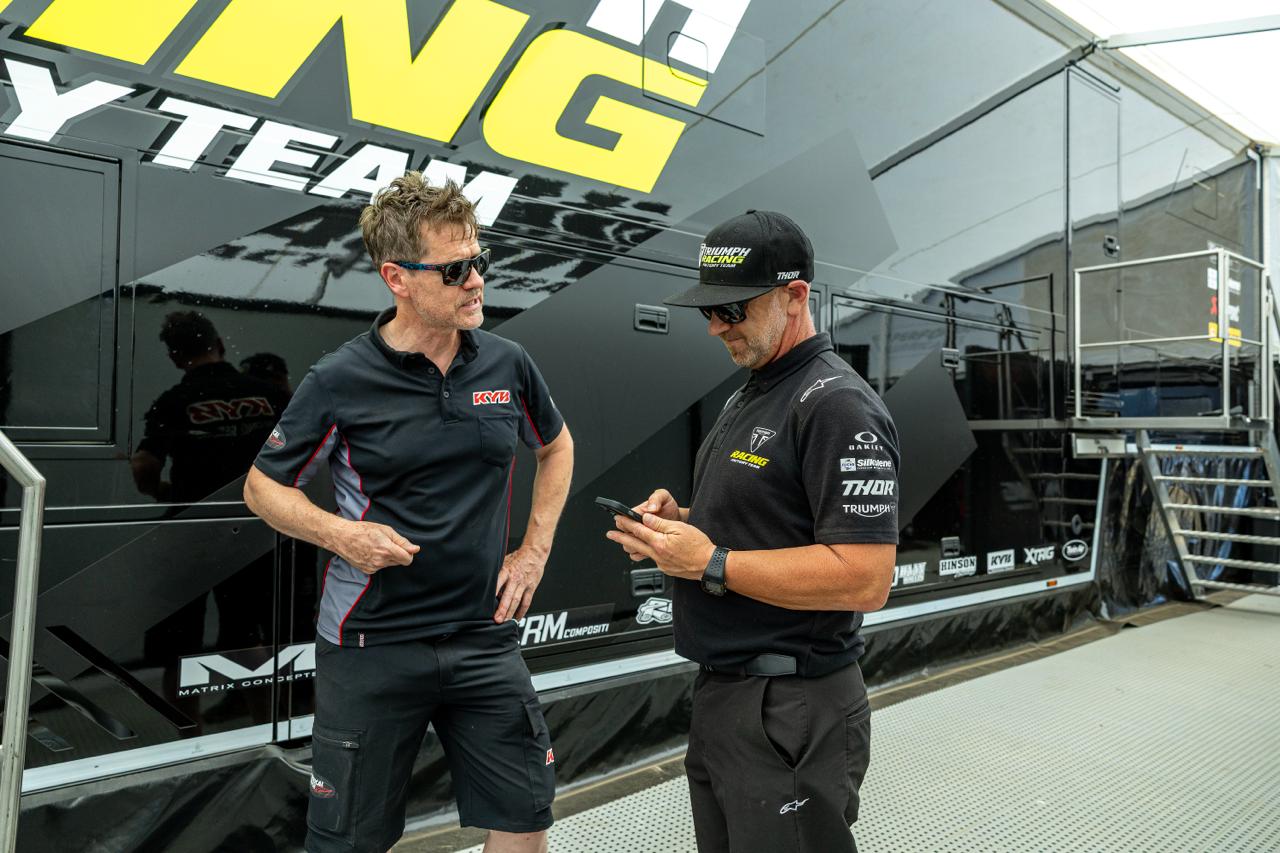
Geerts: My main job this year is the MX2 Factory Triumph team with Farres and Mc Lellan. I also assist the in-house suspension tech from the Yamaha factory MXGP team. That means that I follow the set-up during the GP weekends.
GateDrop: How much preparation work is done before arriving at a GP? Back-to-back GP’s must be tough as you don’t have much time to do everything you need…
Geerts: We are pretty busy in general. The Triumph team has a rotation system with a lot of suspension sets that need to be taken care of. Like this weekend (at Foxhill), we try to leave ASAP after the second moto and catch the last boat to Calais. We drive to the Technical Touch workshop that same night and catch a few hours of sleep. I will be at the shop in the afternoon to prepare some sets that were used at the GP of Portugal and also a few FF training sets that need to be done.
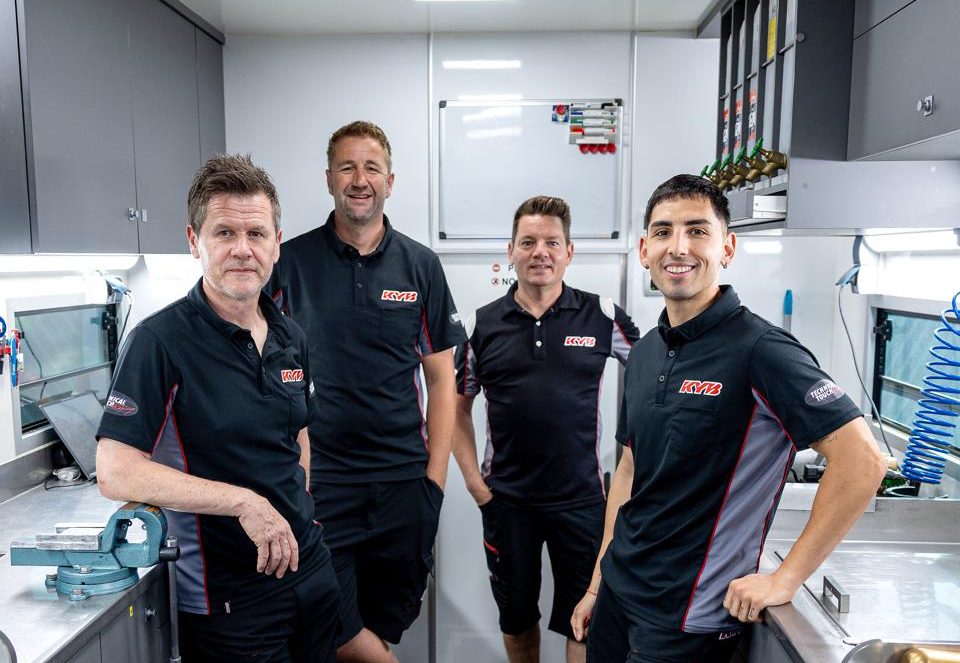
On Tuesday the sets that were used in SA come in for service. So that needs to be done also. The truck needs to be cleaned and spare parts checked before leaving to GP Loket on Wednesday, late afternoon. I’m not doing this on my own of course. We are a team of 4 in total that take care of this.
GateDrop: Is there much work carried out at the track itself, or are most suspension settings established beforehand? I guess ideally the riders should have a good base and it’s just a matter of changing the clicks here or there during a GP weekend?
Geerts: We do a lot of testing during the winter period. That means in October/November and before the new MX season starts in January. The Triumph team has a spot in the South of Spain, were they stay the whole time during the off-season. They ride at many and different tracks.
GateDrop: I guess a winter can be long for you guys as you have to go with the teams to test? What’s that period like? I guess you don’t get much time off after a season?
Geerts: Testing periods are pretty intense. You lose track of time easy. Working for a professional team like most motorsports is exciting. Everything is clear/transparent and no shortcuts.
GateDrop: How important is rider feedback when setting up suspension?
Geerts: It depends of the rider. A good test rider is priceless. That’s sometimes difficult with youngsters, because they didn’t develop that skill enough yet.
GateDrop: What makes a rider particularly easy or difficult to work with from a suspension technician’s perspective?
Geerts: A rider needs to tell us what he feels, without making any assumptions himself. We do this day in, day out, and it stays a complicated thing to do. It’s not an exact science. Maybe in theory yes, but not on the track. He’s there to ride the bike as fast as he can, not to be a suspension technician.
Some think they know how it all works, but after a while we know from suspension changes Vs riders comment, that it’s not like that.
GateDrop: How much has suspension evolved in MXGP over the past ten to twenty years? These days suspensions look amazing – can they get much better (laughs)?
Geerts: When I was young and saw Malherbe, Geboers, Thorpe riding on those exotic 500cc HRC bikes, it looked like the best bike ever. If I watch them now on some YouTube footage from Ettelbruck or Hawkstone Park, the bike looks like a disaster. I could say that the bikes of today are at its best, but probably they will look bad also, looking at some footage, 20 years from now.
GateDrop: Are riders now asking for different characteristics compared to previous generations?
Geerts: It’s obvious that the racing speed has went up a lot, because of the chassis and engine performance. Just look at the average speed during a lap. More speed, means higher impact into bumps, face-off for a jump or jump landings. Damping and springs went up a lot in the past two decades.
GateDrop: What are the biggest misconceptions fans have about suspension setup?
Geerts: That “factory material” would make an average rider 5 seconds faster in a lap.
GateDrop: What is the biggest challenge when preparing suspension for tracks that change so dramatically throughout the weekend?
Geerts To get the rider happy with the bike and doesn’t slide into doubting his set-up during the weekend.
GateDrop: Which MXGP tracks are the most demanding from a suspension standpoint?
Geerts: On a deep sand track like Lommel were a lot of suspension stroke is used, because of the size of the bumps, the temperature of the shock rises a lot, that is very demanding on the material.
Certain tracks like for example Loket create a lot of damage on inner- and outer tubes.
GateDrop: Have you worked with riders who can immediately feel the smallest change in settings – even if it is minimal?
Geerts: Yes, I met a few, but not many during all the years. The first one I would say was Mickael Pichon, the second one is Andrea Bartolini and the latest one is Clément Desalle. He did a great job giving comments and directions during the development of the 250 factory bike.
This in combination with the technical skill and experience from Vince Bereni and the lead engineer of the project at that time, John Stewart, made them a very competitive and reliable bike from day 1 it got into competition. Translating the test riders comments into practical bike changes is a skill that very few people have. Vince Bereni is for sure one of those who understands how to do that. It was and is still exciting to witness that process of development happening.
GateDrop: Is there a current MXGP rider you believe has exceptional technical understanding? Who could perhaps be a good test rider one way?
Geerts: Difficult to answer this one. I think it’s possible to learn, but I also think it’s in a riders DNA or not, to be a good test rider.
GateDrop: KYB suspension seems to be used by many top riders. What do you believe makes KYB so successful at the highest level?
Geerts: The Japanese quality of all the materials used is exceptional. Even today it still sometimes surprises me how good it is. The collected KYB experience they have in the Japanese design section and the relentless search for improvement, how little it may be. We are just a small part at the end of the chain. But as you know, a chain cannot brake either.
GateDrop: What’s the strangest setup request you’ve ever received from a rider?
Geerts: I can’t really recall an extreme crazy set-up.
GateDrop: Where do you see motocross suspension technology heading in the next five years?
Geerts: It’s difficult to say really. It all depends on budget. As you know, MX is not F1 and budgets are limited. They won’t develop something crazy/expensive that will never be possible to put in a production bike because of the bike getting too expensive to be sold.
For sure there is all kind of technology, but it has to be possible cost wise to use it.
GateDrop: There’s usually 20 GP’s a season these days – only 19 this year but it must be tough for you guys? How many rounds would you prefer? But do you still enjoy your job even though it’s a lot of time away from the family etc?
Geerts: It’s heavy and takes a lot of energy. It’s not only the MX season what makes it heavy. It just keeps on going. I remember the days where we had a few months off in the winter period – minimum two months. Now the season stops at the start of October. Immediately after that we start testing for a minimum of two weeks. After that they keep on training and only stop for the Christmas period. On January 4, they start the new season again.
I still enjoy my job, but I wouldn’t mind it to have some more time/free weekends in between races or after the GP season.