





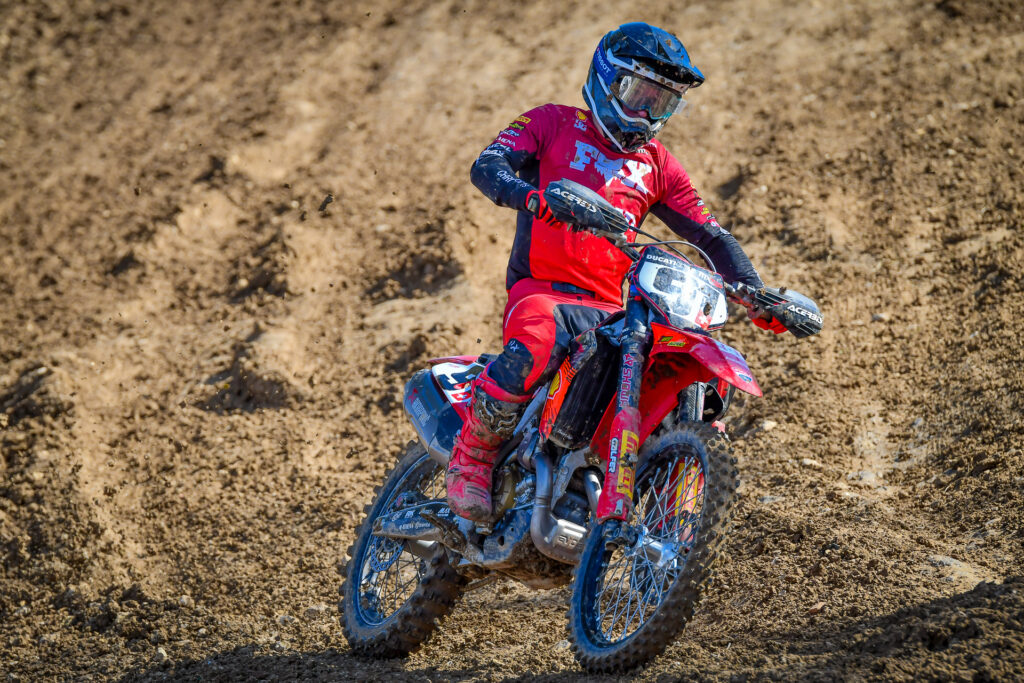
After a challenging first season with Ducati in MXGP, Jeremy reflects with honesty on consistency struggles, lost confidence, and the growing importance of machinery at the highest level of the sport. Now back with the Vosters structure and entering year two of the Ducati project, the three-time MXGP vice world champion opens up about his physical condition, mental reset, winter frustrations, and the work still required to return to fighting at the front. With the new season just around the corner, he speaks candidly about expectations, preparation delays, the evolution of the bike, and his long-term future in the paddock. Interview by Kevin Frelaud.
Jeremy. Last year, you showed that the Ducati was capable of fighting for top-five finishes, even podiums. What will it take to take the next step and win with it?
Seewer: Honestly, good question. Last year, I had two or three good GPs out of the twenty in the season. So that clearly shows that consistency just wasn’t there at all. Usually, that’s actually one of my strengths, but I couldn’t manage to be consistent. I finished 10th in the championship, far from my performances in previous years. Overall, it was complicated, even though we managed to pull off two or three good results on tracks that maybe suited us better.
In the end—and luckily—it’s still motocross. It’s a sport where the rider can still make a difference on certain tracks. But there’s a huge amount of work to do to compete with the other manufacturers, because they have enormous experience. They’ve been in the sport much longer.
On top of that, Ducati came in with a bike that’s completely different from everyone else’s. I think we still need to work very hard. The season starts in two weeks, but on my side, there’s still a lot of work to do, to be honest.
And personally, how do you feel?
Seewer: I’m in great shape. I worked as hard as possible this winter. I’m doing everything I can on my side. Honestly, I think I’m in the best physical shape of my life. And that’s something that, in my opinion, has really evolved in our sport over the last five or six years. Five or six years ago, the bike was already important, but I felt like the rider could still make a big difference on the track.
Today, with such a strong and tightly packed field, the bike has become even more important. In my opinion, you can’t make the difference on your own anymore. Everyone is sharp, everyone works hard outside of racing. Five or six years ago, maybe a bit less. I’m not saying they didn’t work hard before, but the level wasn’t as high as it is today, and above all, there were fewer fast riders.
I really feel like the bike plays an increasingly important role.
Correct me if I’m wrong, but I get the impression you’re behind in your winter preparation. Where do you stand today?
Seewer: Yes, clearly. I’m very late. I’m not going to lie. Like I said, physically I’m in great shape, and that’s very positive. But I can’t translate that onto the track. I won’t hide it—people will see it soon enough. The season starts soon. I’d like to be in a better position, but I’m simply doing the best I can. It’s as simple as that.
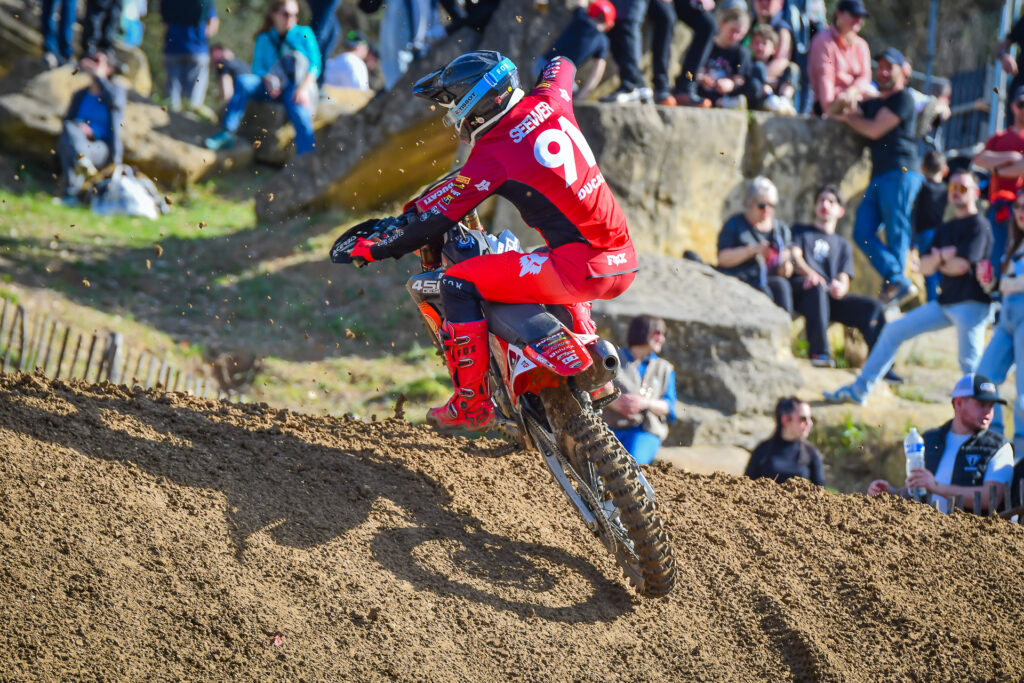
How different is the Ducati in Sommières compared to the Ducati in Australia at the final GP of the season?
Seewer: The base is the same. There haven’t been any major changes as such, but a lot of small details have evolved. We’ve done some work on the suspension and the geometry to try to fix our weak points, at least partially. We’ve adjusted quite a few small things, but nothing revolutionary.
Your teammates rode in Alghero and Mantova, but we didn’t see you there. Sommières is your first preparation race. Why?
Seewer: I simply didn’t feel ready enough. I wasn’t able to train at the level I wanted to in order to be in good conditions. It’s as simple as that. If everything had gone perfectly and I’d felt ready, I probably would have done Alghero. But I preferred not to go because I don’t want to show up at a race unprepared. Now I’m doing this one, and then there are 19 Grand Prix’s, so that will be more than enough racing during the season.
A word about last year. Your season seemed quite unusual. The start was solid, even though we know you’re capable of more. Then midway through the season, it felt like you hit a ceiling, and the second half of the year was more complicated. What happened?
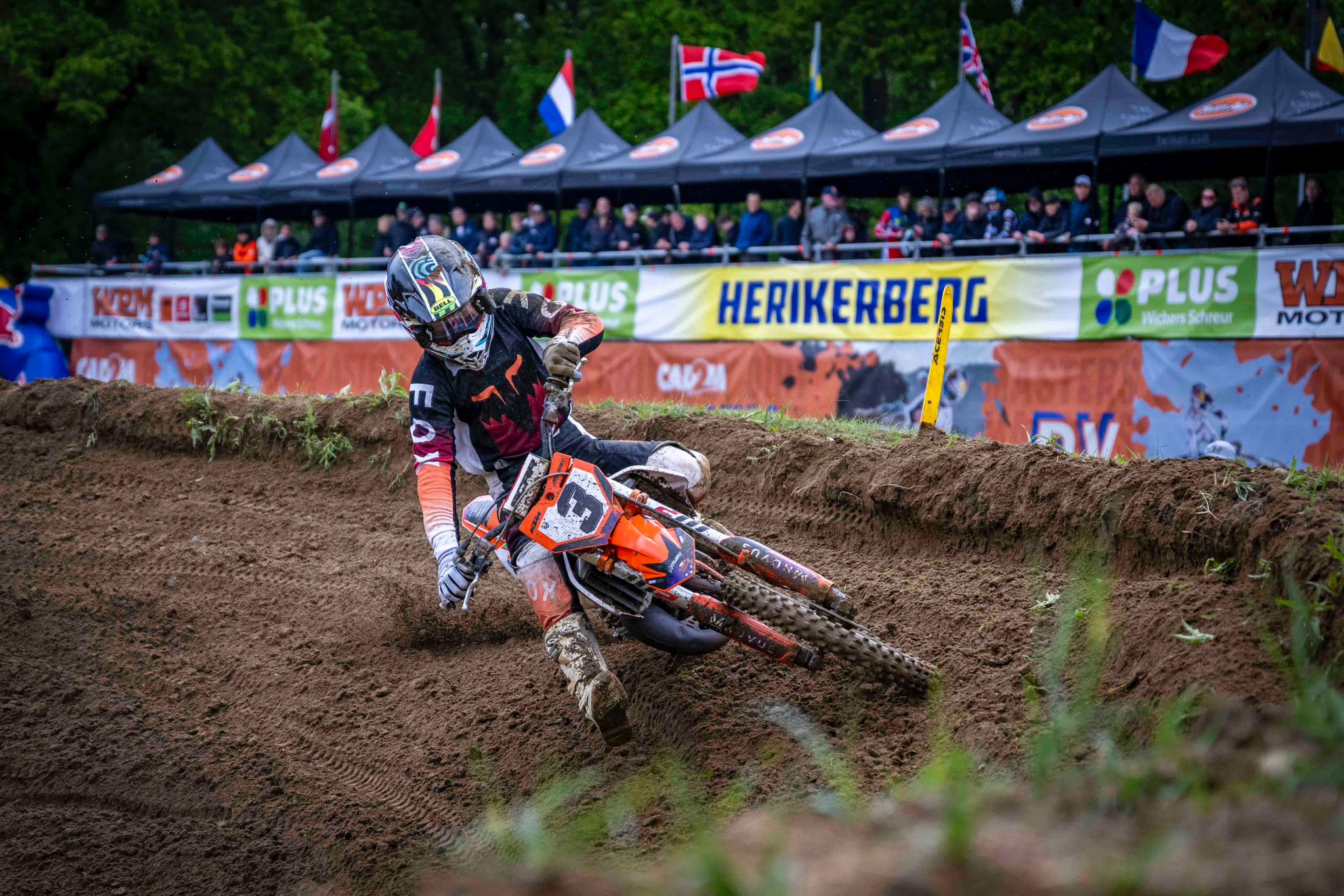
Seewer: I completely lost confidence. I struggled all season. I did my best. Like I said, that’s motocross. I managed to pull off two or three good results, but I also crashed a lot. I went down quite a few times, and that obviously hurts your confidence.
At some point, I mainly tried to manage the season. I attack when I feel ready to do it. Obviously, I always try to be at 100% as much as possible without taking too many risks, but I only do it when I feel it’s the right moment. I can’t force things. It has to come naturally, and it also has to remain enjoyable for me. At the level we race in MXGP, if you force it and push too hard, you’re going to end up crashing… and getting seriously hurt.
You’re back with Vosters this year. You never hid the reasons for leaving Yamaha for Kawasaki. Then you did a year with Maddii Racing on the Ducati, and now you’re back with Vosters. How did the winter go with your return to Louis’ program?
Seewer: Very well, honestly. They now have much more experience, and above all, a lot more staff, which helps enormously. Before, Maddii was a smaller-scale team, but they did an incredible job with limited resources. The budget is also different today—you can feel it. There’s more personnel. The budget isn’t unlimited, of course, but they have more means to work properly and train in good conditions. Everything happened very naturally. I already know them. I know their strengths, I know their weaknesses, so it works quite well.
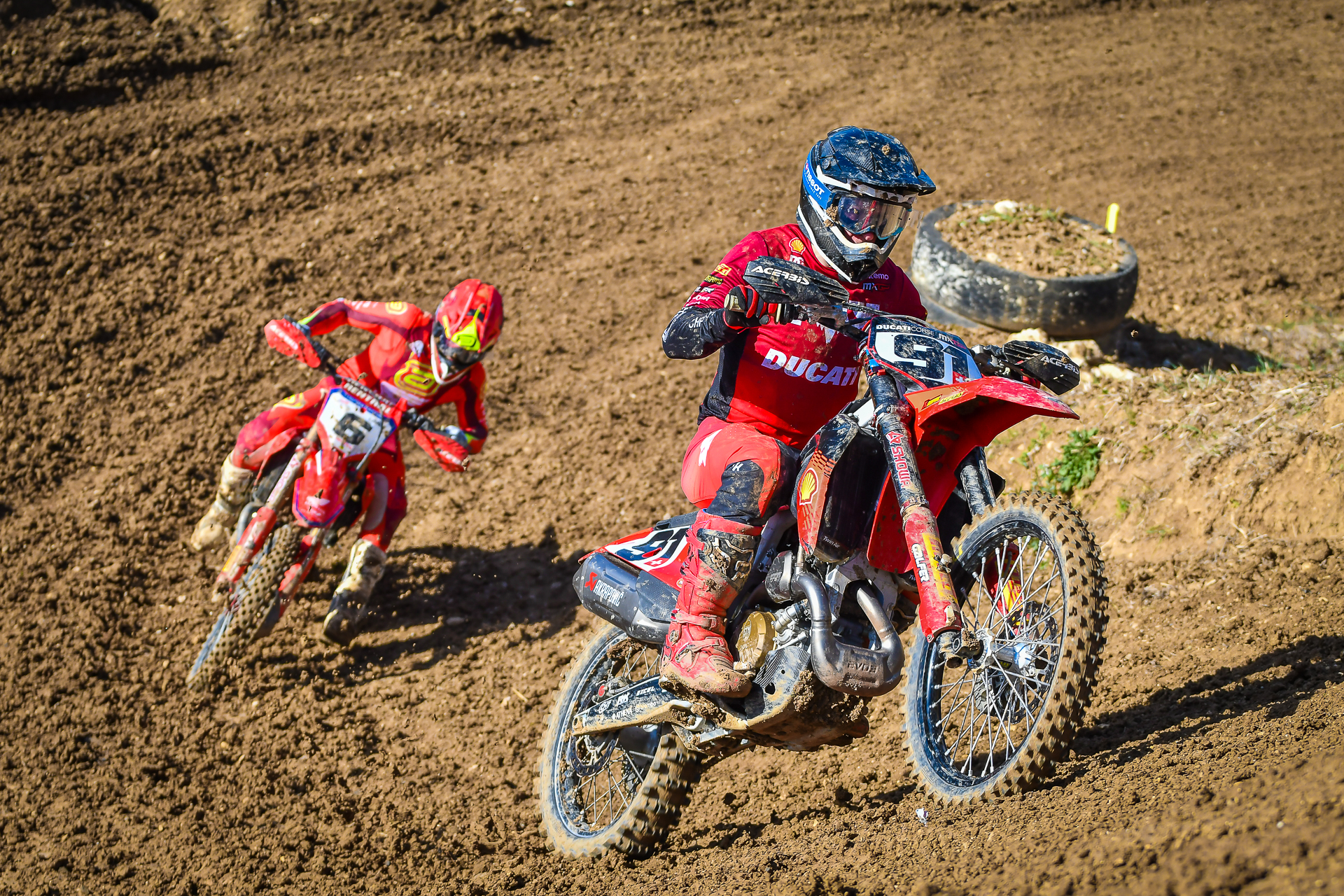
I imagine that in the first year with Ducati, since everything was new, the options in terms of settings and parts must have been limited. Now it’s the second year—do you have more options in that area?
Seewer: Yes, last year, like you said, we didn’t have many possible changes on the bike. Now we definitely have a lot more parts available. But I’m not someone who likes to change the bike too much.
When I find something I like, I want to stick with it, ride, and improve personally. Right now, I’m still kind of waiting and searching for the missing piece of the puzzle—the one that could give me back my confidence. It’s a big job, because as a Grand Prix rider, you want to go do your motos in training, go home, focus on physical work, recovery, work on the mental side, and so on.
But if you have to spend all your time testing because you don’t feel confident, it takes up a huge amount of time and removes an important part of your training. Usually, we show up, ride two or three hours, do our motos, go home, rest, recover. Mentally, it’s much simpler than spending entire days testing and searching. When you get home, you’re exhausted, worn out from riding nonstop without even doing a proper moto all day. So having to do both at the same time is honestly complicated—and that’s the situation I’m in right now.
Mentally, you’re clearly not where you’d like to be, and not where you were in recent years. You’re a three-time MXGP world championship runner-up, you’ve won many Grands Prix. Now we’re not even talking about wins or podiums. Is it hard, mentally, to accept that—to take a step back and focus on regaining that confidence?
Seewer: Yes, it’s very hard. Honestly, I kind of lost it, especially during the winter. Last year, I knew the program would need time, and I gave it time.
But I thought it would take six months, not two years, you know? So that’s where I am today… I was very frustrated this winter, and I really had to change my mindset. I had to adopt a different mentality. Until now, I was used to going out and fighting for the win and performing the way I always have. I know I’m still capable of it, and when I look at my physical data, I see that I’m in my best shape. So I tell myself: “Why wouldn’t I be able to do it anymore?”
But the reality is that there are other factors to take into account, and I have to accept them. I need to change mentally, adopt another approach, and see how we can improve, how I can find what I’m missing to win again. Because right now, clearly, I’m not in a position to do that.
Let’s talk about the Swiss GP. For you, it’s great to have a GP in Switzerland, but I still get the feeling that there are circuits with more potential than Frauenfeld. We’ve heard rumours—you might know more than I do—that Payerne could return to the calendar. That would be crazy, right?
Seewer: Yes, it would be insane. First of all, full respect to the Swiss organizers—it’s incredible what they do to manage to organize a race in Switzerland. But yes, the track—we all know it—it’s too small to allow for really great racing. Sure, there are other tracks on the MXGP calendar that aren’t really Grand Prix level either, but Frauenfeld is still very small for a world championship event.
Payerne would be incredible. For me, it’s one of the most beautiful tracks in the world. It’s a real motocross circuit, in a magnificent setting—big, with great jumps. It would be crazy. It would be the Swiss GP we really need…
Your contract runs until the end of 2026, and securing a ride is never easy. We saw what happened with Coldenhoff: third last year, and no ride this year. Even if he probably could have found one, he chose not to sign certain offers. I know the season hasn’t even started yet, but the fact that Glenn didn’t have a ride this year—does that worry you a little for the future?
Seewer: If I were younger, yes, it would worry me. Right now, the direction this sport is taking in Europe isn’t the right one, in my opinion. I don’t want to blame anyone, but I think we need to work to put it back on the right path.
Regarding Glenn, I think he would have liked to continue in a good team and all that, but he’s also at an age where he doesn’t need to stress if he doesn’t have a ride. He’s done everything he could. He’s achieved a lot, he’s had a great career. Do you need to keep going until you’re 40? At some point, you also need to know when to stop—you know what I mean?
I’ve never planned to race that late into my life. At some point, I’ll say, “Okay, my career is over,” and I’ll focus on other things in life. So no, it doesn’t worry me at all. Of course, I’d like to finish my career differently from the position I’m in today—and that’s my goal.
I don’t want to end my career fighting for 10th place, because that’s simply not who I am. I know that. And I want to work as hard as possible, in whatever direction is needed, to get back to fighting where I should be fighting. At least then I can go home at night and say, “I did my best, and I’m proud of it.” That’s always my goal. Where it will lead me? We’ll see next year.