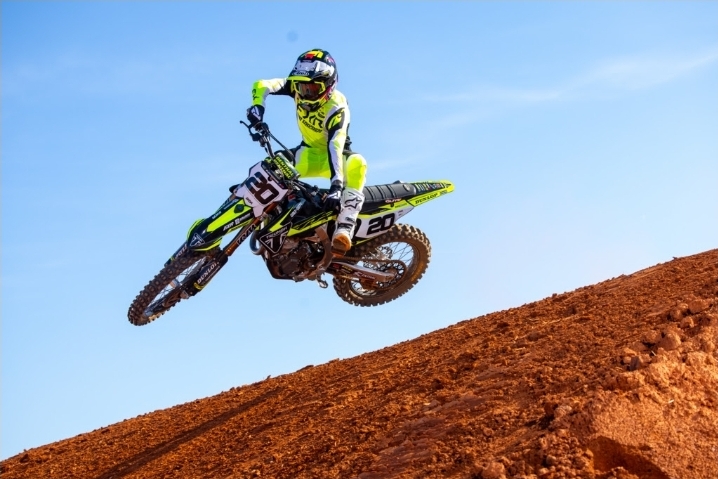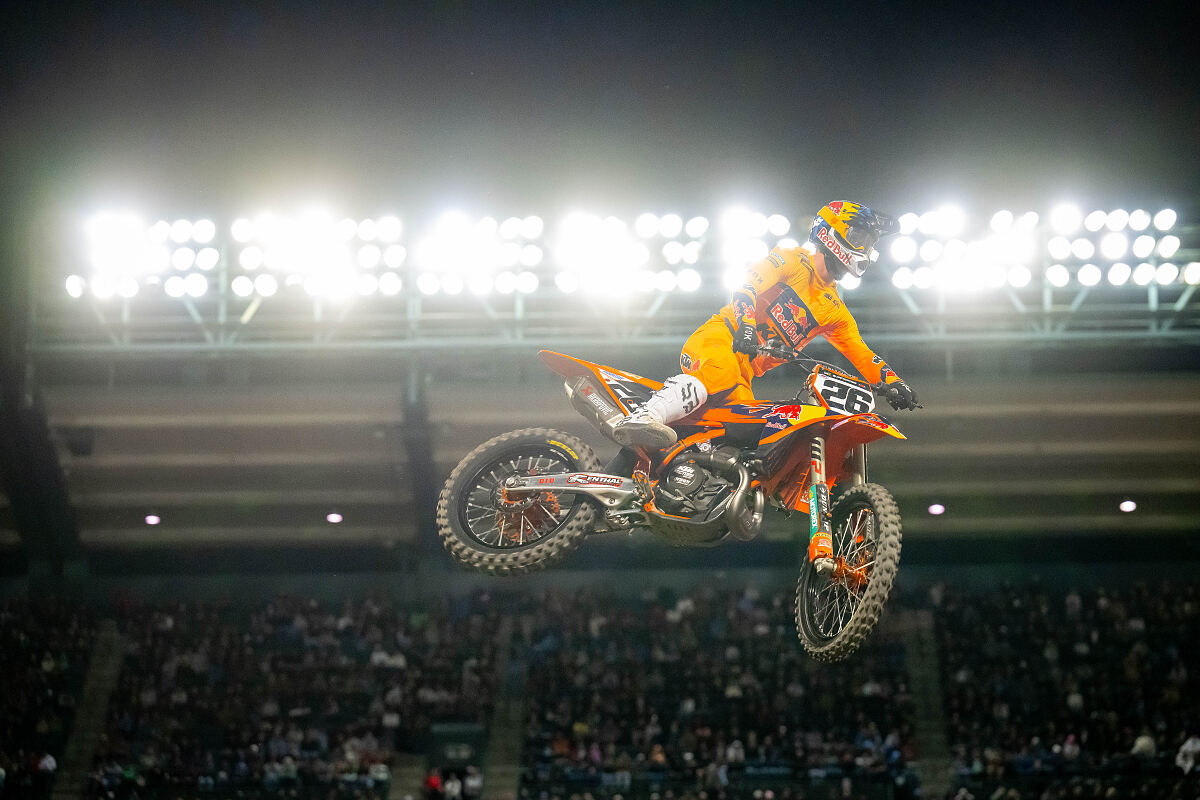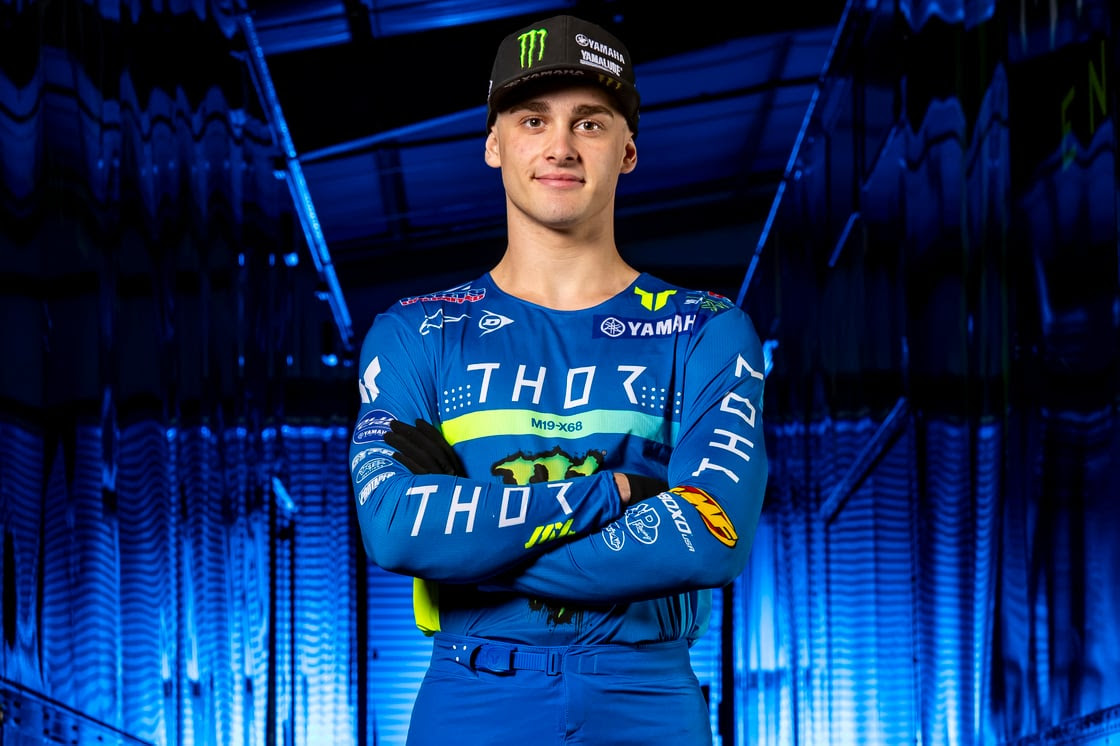




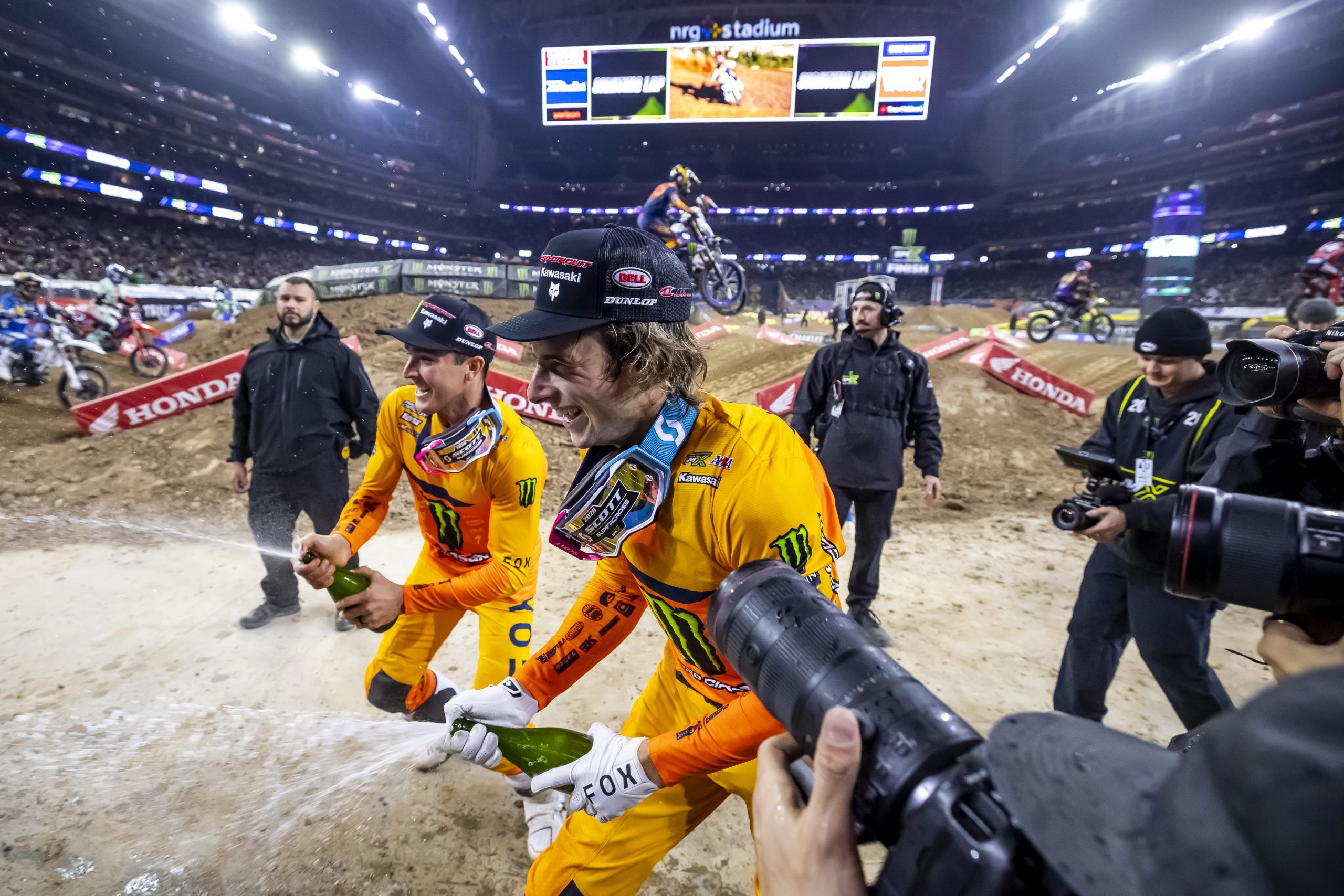
After a difficult and frustrating start to the season, Levi Kitchen finally delivered the kind of performance his raw speed has always promised, standing on the podium in Houston. Strong starts, solid pace and an intense battle at the front marked a clear step forward for the young American, even if there’s still work to do. Kitchen caught up with the media after the event to reflect on his positive weekend, racing aggressively against Haiden Deegan, and how he stays mentally grounded amid the pressure and noise surrounding the 250 class.
Levi, a first podium this season. Your speed has never really been in question, but your start to the season was… complicated. Did you change the way you worked before Houston, or was it more of a mental breakthrough that helped you get this result?
Kitchen: Honestly, I didn’t really put the focus on anything in particular, nor did I change anything in the way I work. I did some testing with starts; we mainly worked on fixing the problems I was having with my holeshot device, because it was staying stuck down. We made some progress, but there’s still work to do on it—it got stuck again on the starts this weekend.
I’m not really sure… I didn’t change anything in my training. I knew that at some point I was going to have to make it through the first corner while staying on two wheels. It was a good thing to finally manage that and put together a few good mains. The pace up front is clearly getting higher as the season goes on—that’s how it feels to me. I still have a lot of work to do, but it’s a good starting point.
What was done to fix the holeshot device issue? Was it raised? Was the fork too compressed?
Kitchen: Maybe. I raised it a bit higher on the fork before the last main, but I didn’t get a very good start. The margin is really fine. Too high, and the front wheel lifts when you leave the gate. I don’t know exactly what’s causing the issue on that side. At first, I thought it might be because I ride with a very stiff fork, but in reality I’m not the rider with the stiffest fork on the team. So I don’t know. Maybe I need to learn how to disengage it myself in the first corner, at the end of the straight. We’ll keep searching.
With three mains and therefore three starts this weekend, you must have thought it was going to be tough, right?
Kitchen: Yes and no. I mostly told myself that I had three opportunities to fix these problems once and for all. Overall, I had a good night. It was my first race in Houston, I really liked the track and the dirt texture was very good. There were some good races and some nice battles. It was cool.
In the second main, we finally saw what we’d been waiting for since the start of the season. You were fast, with Haiden behind you. What do you take away from that, even though he beat you?
Kitchen: There’s a lot of positive to take away from that night for me. In the second main, I was a bit mentally rusty while leading. It had been a really long time since I’d been at the front of a race. You tend to forget that feeling, and nervousness takes over.
I rode well for the first six laps. The gap was stable. But as soon as I got into lapped traffic, I started making mistakes. I missed quite a few rhythm sections, and that’s where Haiden was very strong all night. He was really fast through the rhythms and didn’t make mistakes there. I need to improve in that area. The positive tonight is that I managed to get through the first corner three times, and the result is pretty decent.
We saw you talking to Ken before the last main—what did you say to him? And how do you defend against a rider like Haiden, knowing that if you leave him an opening, he might squeeze you into the hay bales?
Kitchen: Regarding the conversation with Kenny, I just wished him good luck for his race—same with Chase, actually, my buddies and all. I also talked to them about a few tricky sections, because I want them to stay safe. I gave them two or three tips and mainly wished them good luck.
As for Haiden, I know very well that he’s going to make contact if he gets the chance. I’m going to do exactly the same with him. I don’t really know how to prepare for that or how to approach that kind of scenario. I need to gain more experience in those situations. But it’s fun—I like that kind of riding. Even with Cameron in the last main, we had a good battle. I like aggressive racing, and I expect others to be aggressive with me as well.
You tried to dive up the inside of Haiden in the first lap after the finish line in the last main. What do you take from that move?
Kitchen: Yeah, I tried to dive up the inside to push him as much as possible. I thought I’d managed it, but he cut back really quickly, and he ended up squeezing me into the hay bales. I don’t really know what I could have done differently. It’s complicated, because on the track you don’t have eyes in the back of your head to see what’s happening. But the more I’m faced with those kinds of situations, the better I’ll get—and it’ll probably be the same for Haiden.
You seem like a very calm person by nature. Is it difficult to block out all the noise around you, the trash talk, and so on?
Kitchen: Honestly, no. At the beginning of my career, I wasn’t even fighting at the front anyway, so I wasn’t really exposed to it. Then I simply got used to the trash talk. I’ve had a complicated career so far—a good career, but with a lot of ups and downs—unlike some of the riders I race against, who’ve had smoother paths. When I go home, I don’t really listen to what people say, unless it’s my friends, family, or people who matter to me. I live my life and try to enjoy the good things outside of racing, honestly.