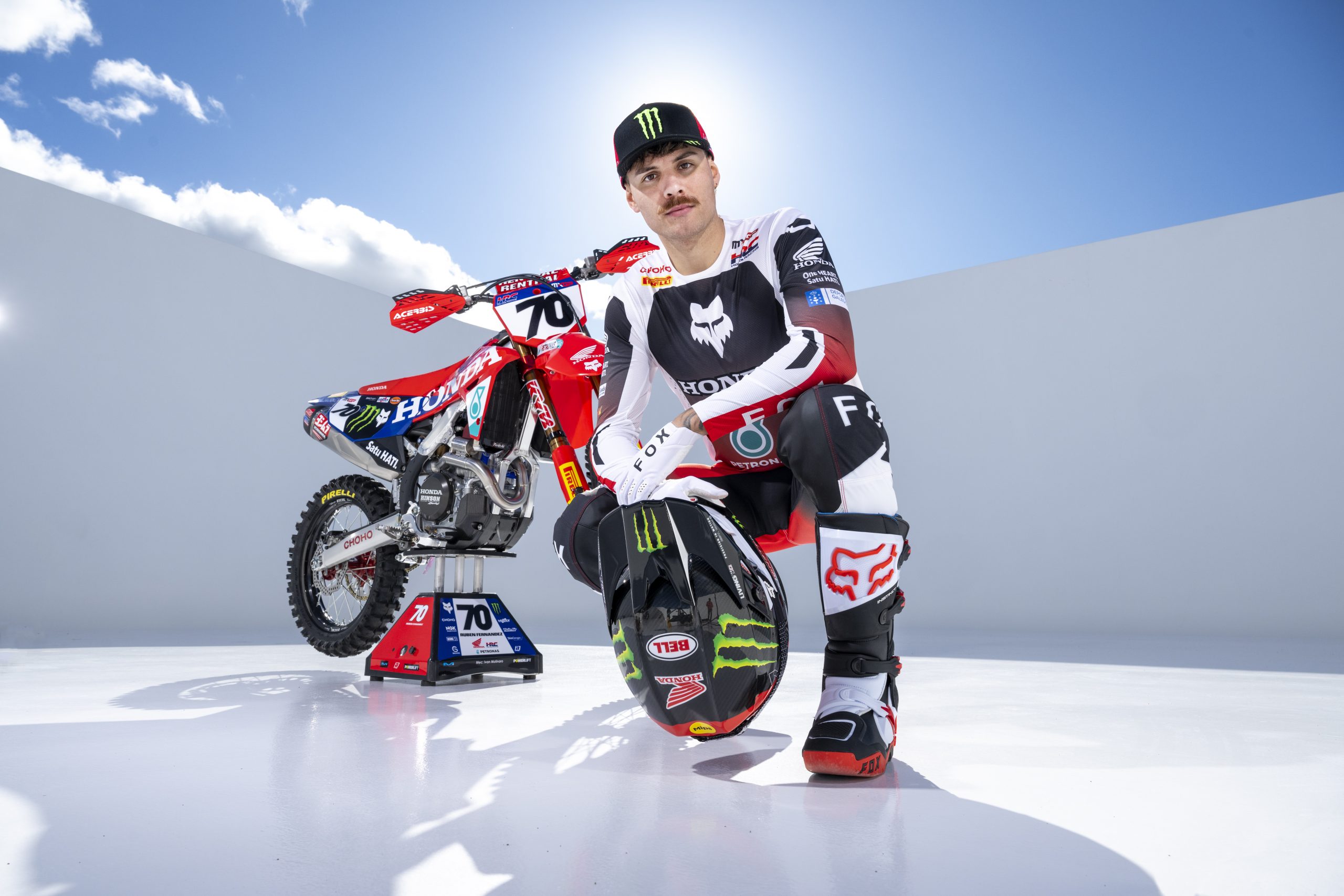

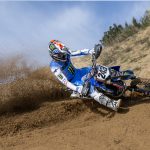
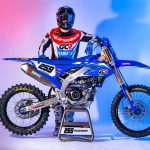
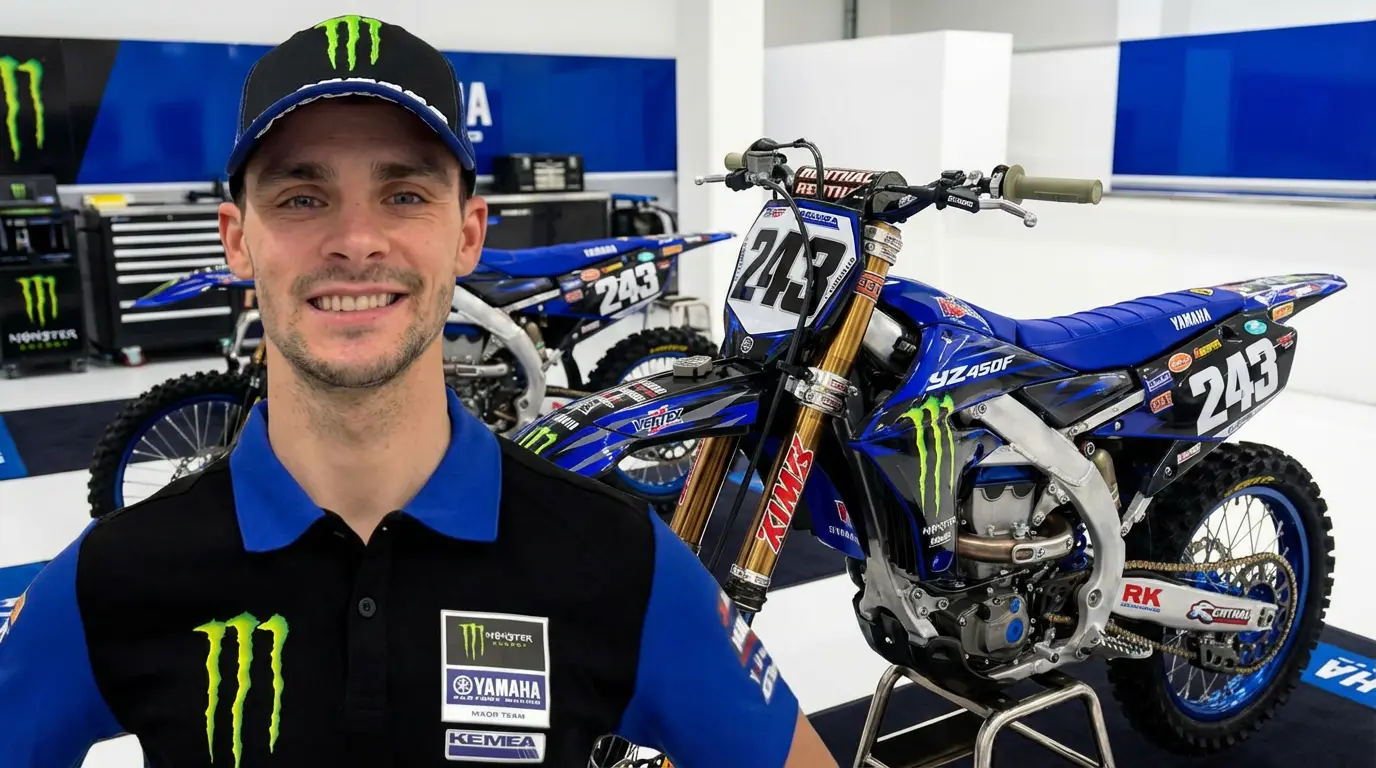
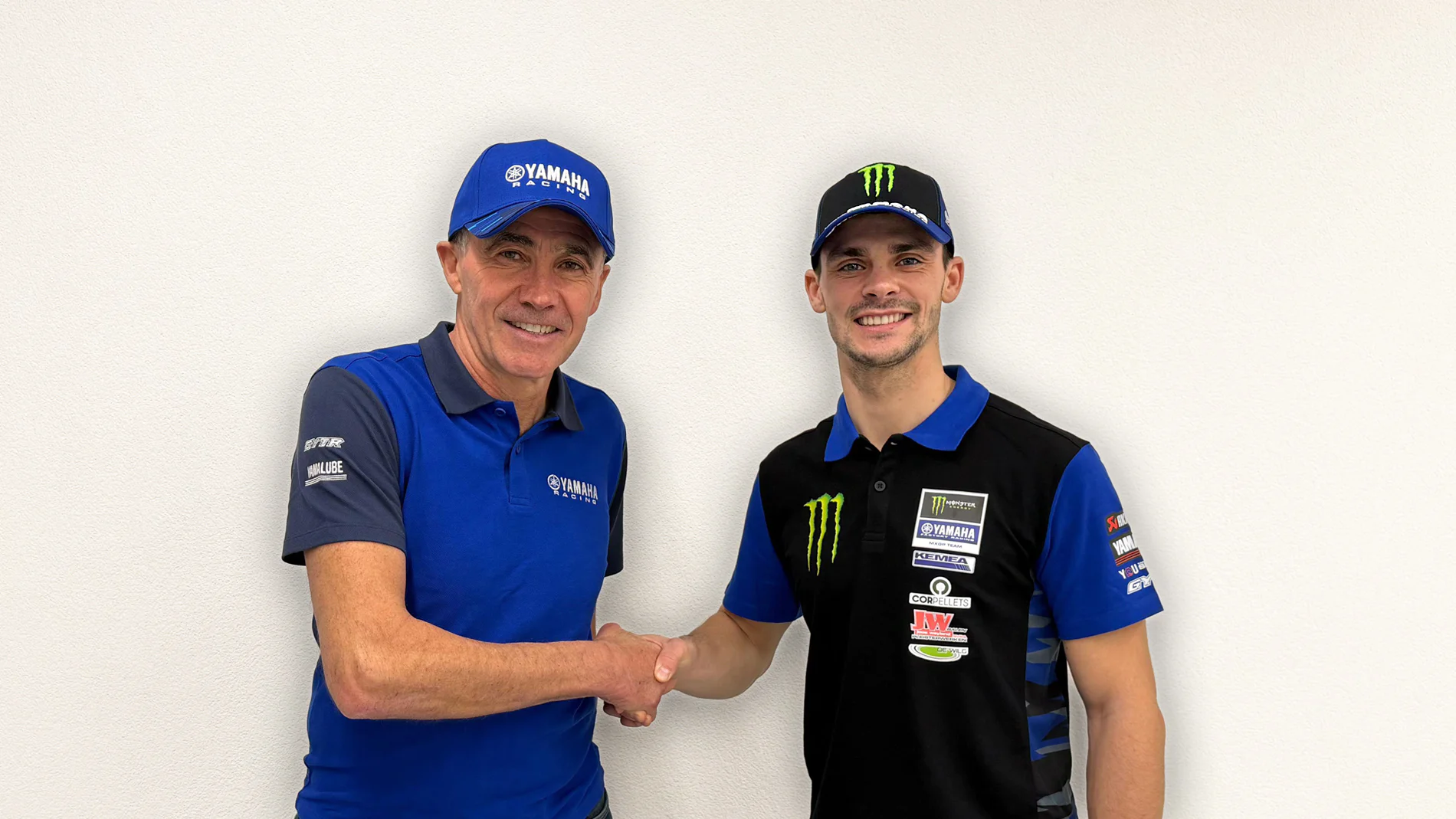
After more than a decade of loyalty to Honda HRC, five-time world champion Tim Gajser enters 2026 at one of the most intriguing turning points of his illustrious career. The Slovenian, long synonymous with the iconic red machine, has embarked on a bold new chapter with Yamaha – a move that has a lot of excitement in the MXGP paddock.
We caught up with Gajser as reflects on the emotion of leaving the brand that shaped his rise to the very top, the excitement of a fresh challenge, and the realities of adapting to a completely new environment at the elite level of the sport. From testing a new bike to the importance of trust within his inner circle, Tim offers rare insight into how a champion approaches change, pressure, and progress.
GateDrop: Tim, when did you know you would be leaving Honda and how did that make you feel after many years with the brand? I am sure on one side it was emotional but on the other side – excited for a new challenge?
Gajser: The idea had been in my mind for quite some time, but after 12 years with Honda it was of course not an easy decision. It was an emotional moment because that chapter meant a lot to me, but at the same time I felt excited. I see it as a new challenge, fresh motivation, and an opportunity to keep growing and pushing myself forward.
GateDrop: Once it became common knowledge you wouldn’t be staying Honda – did you have much interest from other teams? I think you tested a Ducati, any offers from outside the MXGP paddock and was it an easy choice to sign with Yamaha in the end?
Gajser: Even before it was known that I wouldn’t be staying with Honda, there was already strong interest from other teams. That was very nice to see and confirmed the value of what I’ve built over the years. I didn’t test any other bikes. In the end, signing with Yamaha felt like the right step. The project, the people involved, and the long-term vision made the decision clear for me.
GateDrop: Having stayed with Honda HRC for so long, racing and training must have become a real routine. You knew everything: the bike, the setup, the parts, the gears, the brands, the people… Now, everything is changing, even the smallest details on and off the bike. At this level, there are so many pieces of the puzzle that have to fit together to gain that small edge over your competitors. You are a professional, but this is the first time in your career that you’ll experience such a big change. How did you manage not to let all of that overwhelm you during the off-season? You must have been thinking in every direction — exciting, but also stressful times, right?
Gajser: Yes after so many years with Honda, I really knew every detail of the bike because I invested countless hours of testing into developing it together with the Japanese. That’s why testing has always been one of my strengths. I understand how to work with a bike. If you could see the difference between the Honda I started with and the one I finished with, it’s huge.
GateDrop: We’ve seen a lot of transfers this off-season, both in America and in MXGP, which naturally raises a lot of questions. It seems that admitting doubt is sometimes seen as a weakness, when in reality it’s just a very human response. You’ve gone through a manufacturer and team change yourself, so I’m sure you still have questions about the whole lot. How confident are you today in this new chapter, knowing that you may still have more questions than answers a month and a half away from the 1st GP ?
Gajser: What made the change easier is that many key elements around me stayed the same. I’ve always trained independently with my own training mechanic alone in Slovenia, Croatia… worked with my own physical trainer, and during race weekends I have my own camper with a personal assistant who takes care of everything. That group gives me a lot of stability, and they all made the move with me. Because of that, the change never felt overwhelming.
GateDrop: When you first got on the Yamaha, what was the very first thing that struck you? For his first day on what used to be your bike, Jeffrey admitted he felt completely lost. How about you — how did that initial feeling hit you ?
Gajser: I feel confident. Of course, I don’t have a lot of time on the bike yet and we’re still in the testing phase, but my mentality is fully focused on the positive side. I also believe that all these changes bring extra excitement to the sport. We’ll have a very strong gate this year with many top riders, and that’s what makes it interesting.
GateDrop: Can you talk us through the first major changes you’ve made on the Yamaha to suit your riding style? Not only do you need seat time to adapt to a completely new bike, but there must also be a lot of testing and fine-tuning involved. How do you balance all of that, and what have been the biggest surprises or challenges so far in getting the bike to feel just right for you?.
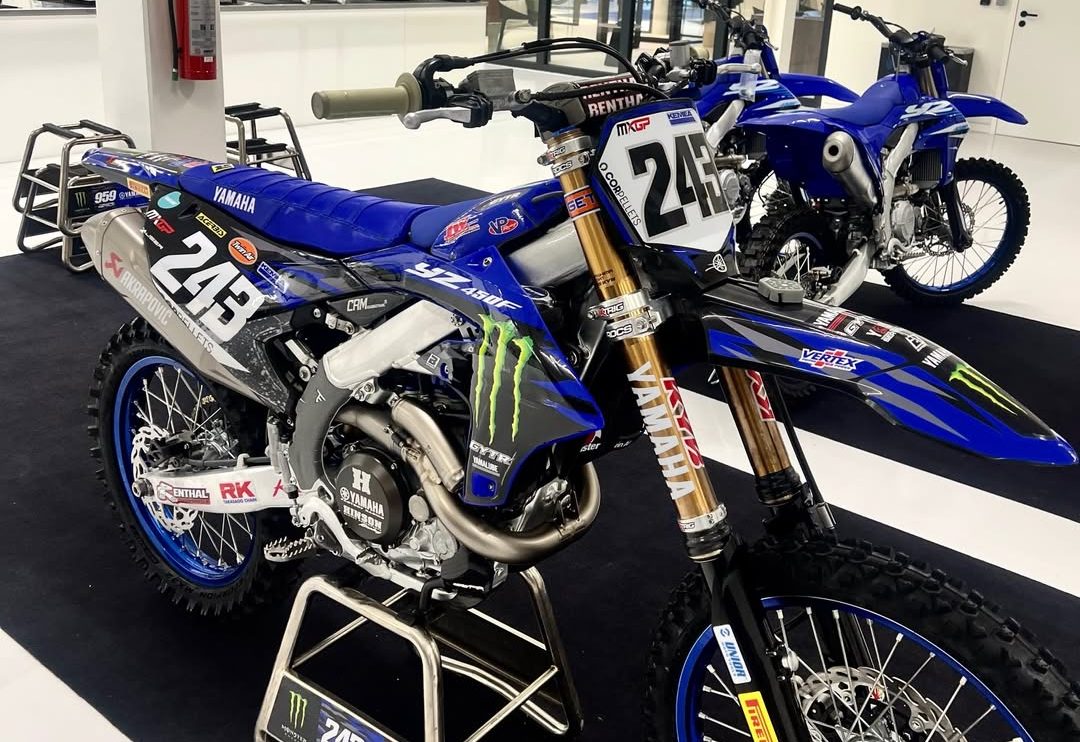
Gajser: I don’t want to go too much into detail, but I was positively surprised the first time I rode it. The feeling was good straight away. Of course, there’s still a lot of work to do and we’re continuing to test, but from the first laps until now, the overall feeling has been positive. I don’t want to go into too much detail. We’ve been working step by step with a lot of testing. It’s still a work in progress, but we’re moving in a good direction.
GateDrop: When you signed your first factory ride back in the days, you were younger and way less experienced than you are today. You probably relied on the more experienced people that were surrounding you at the time, people that you grew, evolved with, made mistakes with, and ended up winning with. Now, the scenario is different. How does it feel to approach a new team and a new bike with all that experience under your belt? Do you find yourself taking on more responsibility for guiding the development, making decisions, or shaping the direction of the team compared to when you were starting out?
Gajser: There’s a big difference between then and now. When I first started, my main focus was simply on riding, and I didn’t pay much attention to everything else around it. Today, I have a lot more experience in all areas. Not only on the bike, but also off it. Training, recovery, nutrition, sleep…everything matters at this level, and I approach it in a very professional way. I also have a strong group of people already around me who help me perform at my best. With that experience, I naturally take more responsibility.
GateDrop: The Yamaha has an aluminium frame and you are still running KYB suspension – has this made the transition easier?
Gajser: Yes, of course. I’m used to it, so that definitely made the transition easier. It’s great that I can continue with something familiar.
GateDrop: You’ll be working closely with Hans Corvers (team owner) and Michele Lavetti, so far what’s it been like working with them and your new team?
Gajser: From the first time I met Hans Corvers and Michele Lavetti, they made it very clear that if there’s any issue, I should speak up and they’ll take care of the rest. They’re very direct, and that’s something I really appreciate. With the whole team, the feeling has been great. They work in a very professional way and really care about what I need as a rider. For me, respect is the most important thing, and I’m happy to both receive it and give it.
GateDrop: Massimo Castelli is also following you to Yamaha – this must be somebody you really trust and I am assuming you were the one that tried to make that happen? You must be happy to have him in your corner once again in 2026!
Gajser: To be honest, when Massimo Castelli found out I would be leaving, he told me straight away If you leave, I leave. At first, I didn’t really believe it, because he helped build the team from day one and was deeply involved in the project for many years. Later, we had a long and honest conversation, and it turned out that his reasons and my reasons were very similar. That’s when it made sense. I’m really happy to have him with me again. Trusting the person working on your engine is extremely important, and Massimo knows the bike very well. He’s always given me good advice, and having that level of trust and experience around me is a big positive.
GateDrop: I believe you’ll race the two Italian International Championships during pre-season – do you think there’s a chance you might want another pre-season race after those? Would love to see you at Hawkstone International!
Gajser: No, I’ll stick to the Italian International rounds. I’ve always prepared this way, and it works well for me.
GateDrop: You’ll be in Belgium/Netherlands in 2026 because that’s where the team is based so you’ll have to do some testing there – that’s not really something you’ve done in the past. Are you looking forward to spinning laps around the likes of Lommel during the season?
Gajser: Yes, I’m really looking forward to it. I grew up riding mostly hardpack tracks, so riding and testing more on sand is something I’ve always needed to work on. I see it as a good opportunity to keep improving. Like you said, the team has everything there… from a massive workshop to top hospitality so I’m excited.
GateDrop: In terms of 2026, I am assuming the goal is to battle for the championship?
Gajser: My goal has never been anything less than that, and until the end of my career, it will always stay the same.
GateDrop: MXGP in 2026 – I can’t wait. With you and Jeffrey moving brands, Kay, Andrea and Tom along with the regulars, it’s going to be super-fast at the front – you must be really excited for the season to start?
Gajser: Yes, definitely. It brings fresh motivation and new challenges, and that’s what really excites me. After so many years of starting the season in the same way, this one feels different…almost like the first one again.
GateDrop: You once were a kid dreaming of this all. You made it to the top of the sport, and you have been able to stay there ever since. There is no proper guide on “how to” create such a successful path. For the youngsters who are dreaming, just like you back in the days: How did you stay motivated and focused through the ups and downs, and what lessons or habits would you share with those who are trying to follow in your footsteps?
Gajser: You have to work hard and go all in on what you want to achieve. There are no shortcuts. You’ll have to make a lot of sacrifices along the way, but in the end, it’s worth it. Just as important is staying thankful, even during the hard times, because that’s when you learn the most. The hard moments are what make the good ones possible.