
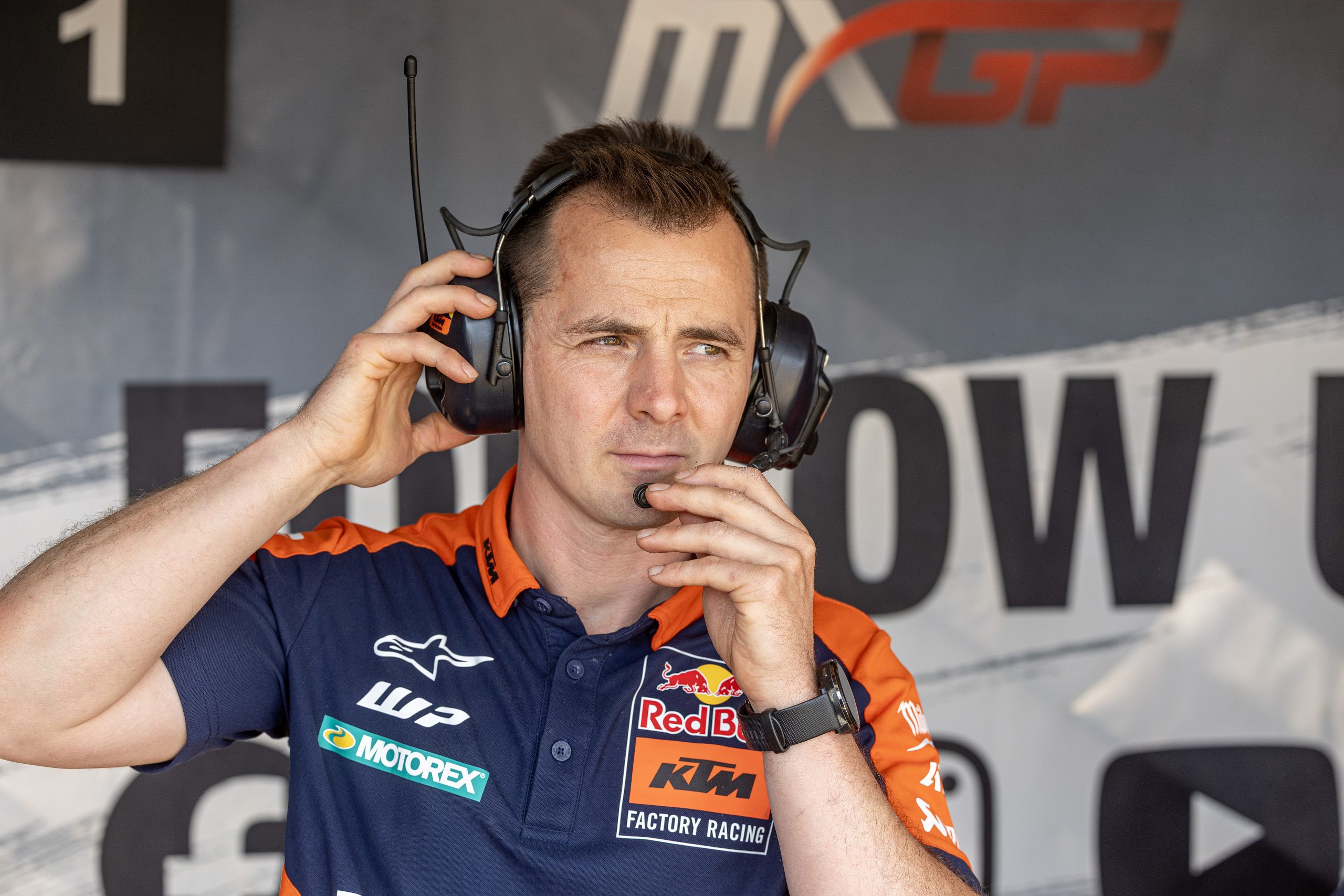
For the past three seasons, Italian mechanic Miki Doro has played a key role behind the scenes at Red Bull KTM, working closely with one of the sport’s greatest ever talents – Jeffrey Herlings. Known for his relentless work ethic and incredible speed, Herlings demands perfection both on and off the track, and Doro has been the man ensuring his factory KTM 450 SX-F is always race-ready.
We caught up with Doro as he shares his journey from racing in Italy to becoming one of the top mechanics in the MXGP paddock. He opens up about what it’s like working alongside Herlings, the challenges and rewards of life as a factory mechanic, the importance of trust between rider and mechanic, and his future goals – including a dream move to the United States to work in Supercross.
GateDrop: Miki, first of all, how did you get into the sport and what you made you become a mechanic?
Doro: Motocross is a family passion for me. My father, grandfather, mother and sister all raced so I was born into two wheels. I raced in the Italian championship until 2004 and after that I stopped racing because I had a back injury. During that time, I took care of my bike, it was part of my passion to be a mechanic and rider. I also enjoy a lot working on my bike.
Starting to work as a mechanic started by chance. I was in Mantova back in 2011 for a race and my father was talking with one family friend. He had said that the team where my son rode that they were looking for a truck driver/mechanic for the 2012 season. I didn’t wait one minute and I called them, we went out for a test and at the end of 2011 I joined the team.
GateDrop: How long have you been Jeffrey Herlings mechanic for?
Doro: I have worked with Jeffrey since 2023, so it’s been three years working with him.
GateDrop: How did your working relationship with Jeffrey begin, and what were your first impressions of him as a rider and as a person? Did you know him before you started working together?
Doro: In 2022 I decided to take a break year from the Motocross. I got a call from Harry Norton and he asked me what my plan was for 2023. It took me a couple of months to decide what to do but I called him back and he said: we need a mechanic for Jeffrey Herlings . I was like “ohh wow” because he’s one of the fastest riders on the planet so I told myself you only get one chance at something like this in life, so I took it with both hands.
I obviously knew who he was, but I had never spoken with him. He is a good guy, and we joke together even before the sighting lap of a race. To see the real Jeffrey you have to earn his trust – he has a small group of people that he really trusts.
GateDrop: What’s it like working with someone as intense and determined as Jeffrey on a day-to-day basis?
Doro: Working with Jeffrey is an honour and a privilege for me. It gives me a lot of motivation. With Jeffrey everything has to be perfect every time. If we have five options, we have to be ready for all five. We have a lot of responsibility as a mechanic, so we have to be 110% every time. I love watching him ride especially when he is in “beast mode”, every times he surprises me with what he can do on the bike.
GateDrop: How much input does Jeffrey give on bike setup, and how do you find the right balance between his feedback and your own technical instincts?
Doro: He is good to set up the bike. Within the team there are really good technicians with a lot of experience working together. We try every time to give Jeffrey the best bike possible.
GateDrop: Is there a particular race or moment from your time with Jeffrey that stands out as especially rewarding (or stressful)?
Doro: The best emotional race with Jeffrey for me was Riola in 2023 because that was when we won the first GP together… Also Argentina in 2023 was a good one because he came back after the injury. The most rewarding thing with Jeffrey is when he comes up after the race and says “really good job today Miki, thanks”. Then you know all the hard work has been paid off.
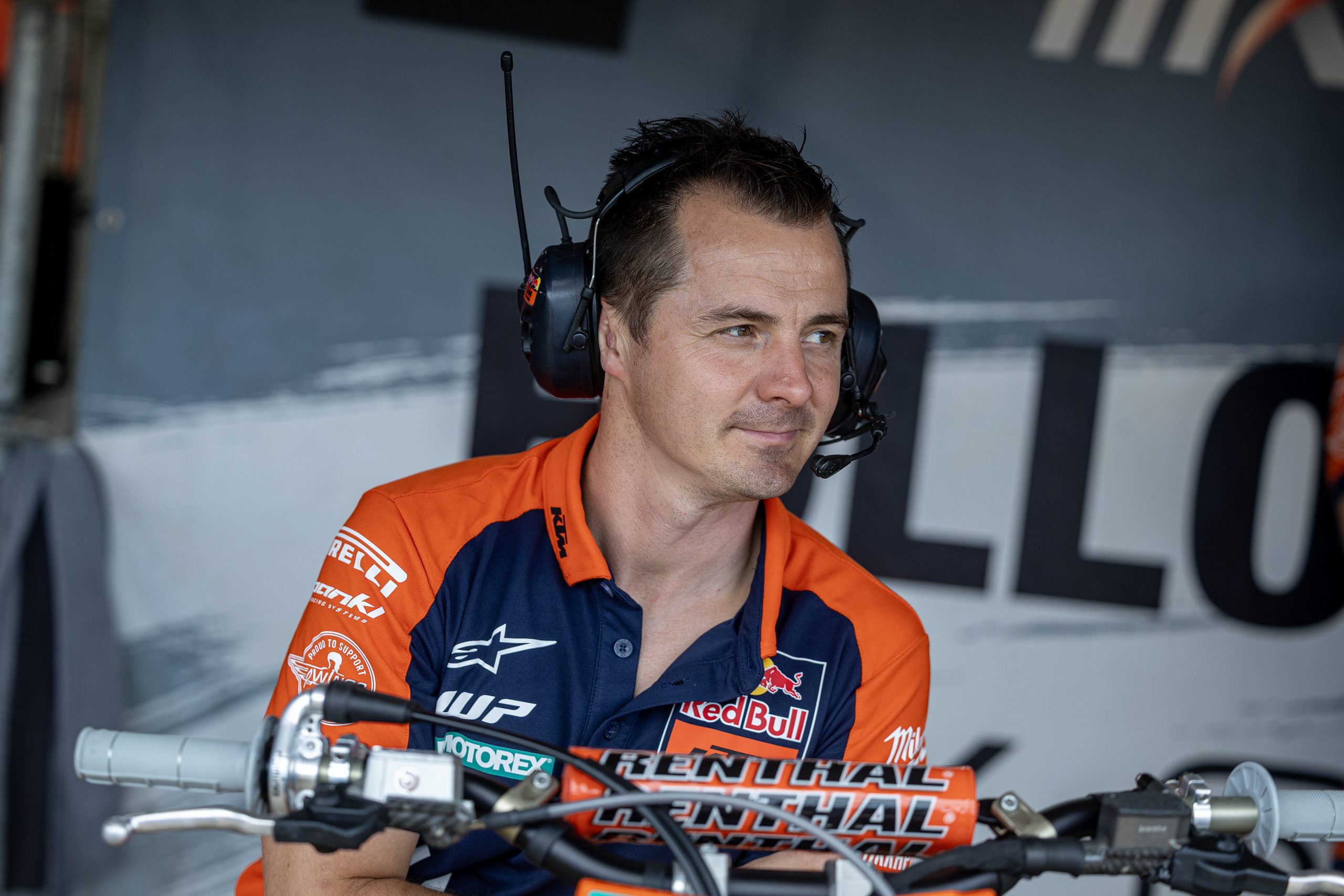
GateDrop: What are some of the key technical challenges when preparing a factory KTM for MXGP conditions?
Doro: Some of the key technical challenges to prepare a factory bike is to find a good suspension set up for every GP.
GateDrop: How different is a Jeffrey bike setup compared to a “typical” MXGP rider’s preferences?
Doro: Every rider is different on the bike set up but Jeffrey likes stiff suspension and this is due to the speed that he is able carry.
GateDrop: I’m sure there are many differences between Jeffrey’s race bike and a standard production 450 KTM machine. Can you explain the differences?
Doro: The biggest difference between Jeffrey’s bike and a stock bike is the quality of the materials – it is like this for all the factory bikes in the paddock.
GateDrop: Has Jeffrey got something unique about his setup and if so, what?
Doro: Something unique that Jeffrey has in his set up is that he uses brake and clutch lever really low like back in the 80’s.
GateDrop: In terms of the lifetime of parts on Herlings machine, how often are they used? For example, is it one frame per GP? How many clutches would Jeffrey use on a GP weekend etc?
Doro: (laughs). Let’s just say when Jeffrey is in beast mode, we go through quite a lot of clutches.
GateDrop: How much does the team adjust the bike from track to track and how quickly do you need to adapt during a GP weekend?
Doro: During the GP’s, we don’t do so many changes. Sometimes we change some clicks on the suspension but that’s about it.
GateDrop: Could you walk us through your routine on a race weekend – from Thursday setup to Sunday teardown?
Doro: We start on Thursday by setting up the truck and the awning. On Friday morning I do a bike check that everything is okay. We bring the wheels to Pirelli for the fresh tyres. In the afternoon we do the start practice and the last thing we do as a team is to have a meeting to discuss the organization for the race weekend.
On Saturday morning we do a bike check before free practice. In the afternoon after the qualifying race, we do the service to the bike and check everything is as it should be. Sunday morning, again we do bike check – it’s better to do it to be 110% sure that everything is ready. After the races, we do the service to the bike for the next GP if the next one is the weekend after – if not we tear down the awning, we pack up and we go back to the workshop to service the bike.

GateDrop: I imagine you are really busy during the week too – when Herlings rides is that down to the practice mechanic too or would you go as well? I imagine you spend most of the week in the workshop?
Doro: During the week, Dave (the practice mechanic) is with Jeffrey for the training. During the week normally we are in the workshop to service the bike, clean all the stuff /truck and we prepare the spare parts that we need for the following races.
GateDrop: What’s the biggest misconception fans might have about a factory mechanic’s role?
Doro: I have saw many fans criticize on social media that we lift the rear wheel of the bike to go to the start gate. That is the only way to be sure that the tyre is 100% clean and we do our job 110% as a mechanic – this is to give the riders the best chance for a good start.
GateDrop: What are the main qualities a mechanic needs to succeed at this level?
Doro: I think it’s to have a big passion for the job and to be humble because you always learn something new every time. It’s also important to be calm under pressure.
GateDrop: How do you manage the pressure when a championship is on the line and every detail counts?
Doro: The pressure is part of the game, but it helps to keep you focused. My biggest antistress is being involved in the sport. During the race I like to joke with everybody.
GateDrop: You’re constantly travelling and working under tight schedules – how do you keep focus and motivation?
Doro: You have to love this job because it takes a lot of your life. I always say to myself that not so many people in the world can make their passion a job, so I feel that I am lucky to be able to do this.
GateDrop: Have you ever had to make a critical last-minute fix that made a real difference in a result?
Doro: No, I never had a critical last-minute fix, honestly. Some really small things but nothing serious luckily.
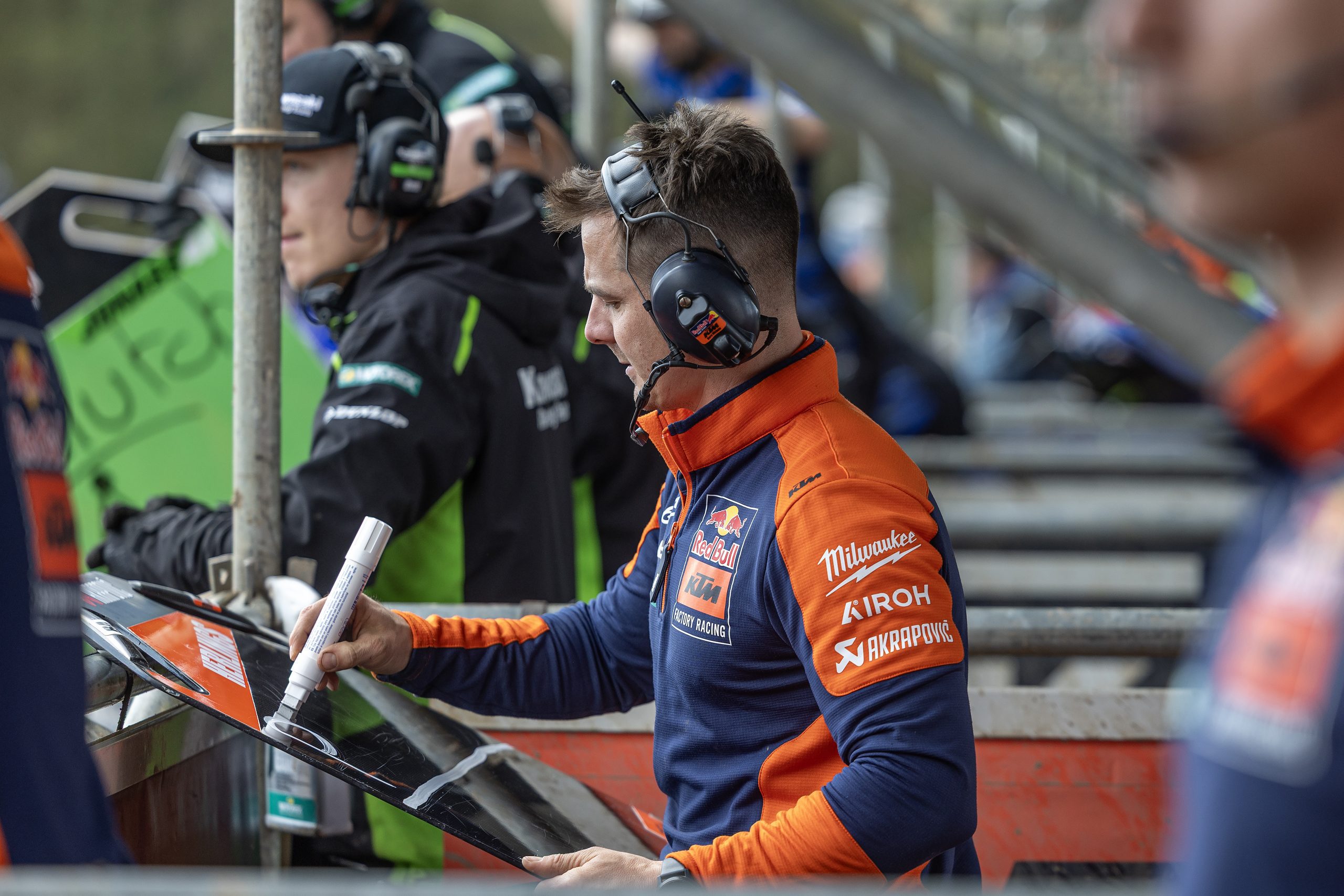
GateDrop: What’s your approach when something goes wrong during a race – how do you stay composed and learn from it?
Doro: If something goes wrong during the race you always have to think really fast about all the options that you have. It is important to keep calm and to think clear. If I do some mistake – it doesn’t have to happen, but we are humans and under pressure so it can happen. I apologise and I try to learn from it.
GateDrop: How do you and Jeffrey build trust, he is known to keep his circle small – and how important is that bond between rider and mechanic?
Doro: Trust, communication and respect between the mechanic and the rider is one of the most important things. You have to be humble and when you always give your 110% effort, the rider understands. With Jeffrey I give always my 110% just like how he does at the track so we respect each other.
GateDrop: What’s the atmosphere like in the Red Bull KTM garage during a GP weekend? It looks like great vibes in the team with Valentina, Joel and Stefan etc…
Doro: Within the team we have a really good atmosphere. We always give 110% to achieve the goal. Normally we do a barbecue every Thursday night together at the GP. I think the key is that we have a lot of fun and we joke a lot.
GateDrop: What’s been your proudest moment so far as a mechanic?
Doro: Obviously when you have a good result but the proudest moment as a mechanic for me is when the rider at the end of the day comes and says: “Really good job today, miki”.
GateDrop: I believe you’ll work with Andrea Adamo for 2026, he is already in the team so I assume you know him well so it should be an ‘easy’ transition for you to work with him?
Doro: Yes, next year I will work with Andrea. I think that for sure we need to know each other better in details as a rider/mechanic relationship. Andrea has a strong character, he is a hard worker and of course I’m excited to work with him next year. I hope I can help him in the MXGP class.
GateDrop: I also believe you want to go to America in the future, is that the end goal for you and what’s the reason for that? Is it Supercross that appeals to you?
Doro: To work in USA for Supercross is one of my biggest dreams so I hope it can come true soon. Honestly, I really don’t know what it is, but I grew up watching Supercross on the TV when I got my first bike for my third birthday. Every morning before school I watched the Supercross VHS on the TV – Ricky Johnson, Jeff Ward, Jeff Stanton, Mike Kidrowsk and Jeremy McGrath etc. Supercross has always fascinated me.
GateDrop: What advice would you give to young mechanics who dream of working in MXGP one day?
Doro: My advice for a young mechanic is hard work, never stop learning, be humble, be respectful and never stop dreaming. The dreaming keeps you alive and passionate about the sport.