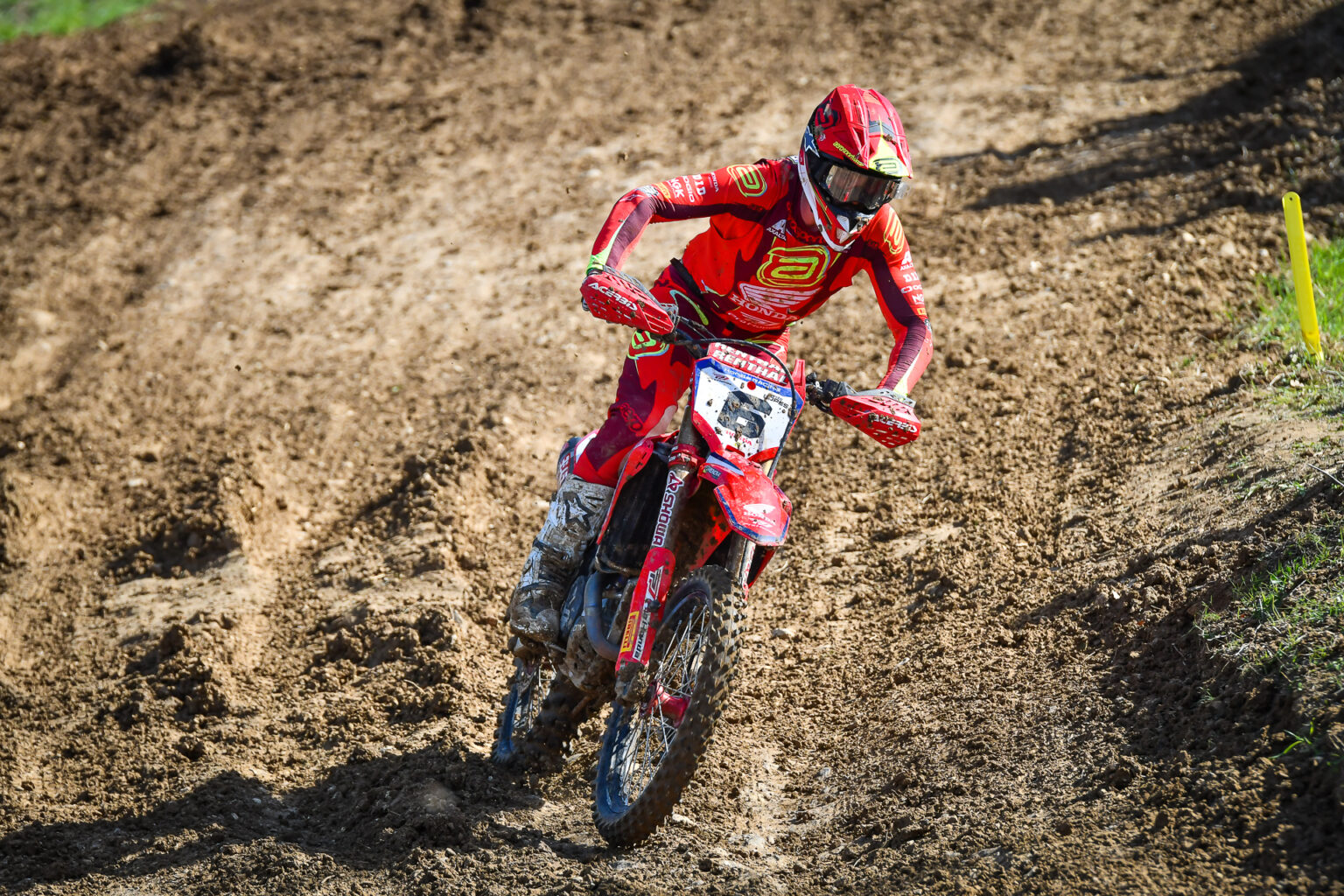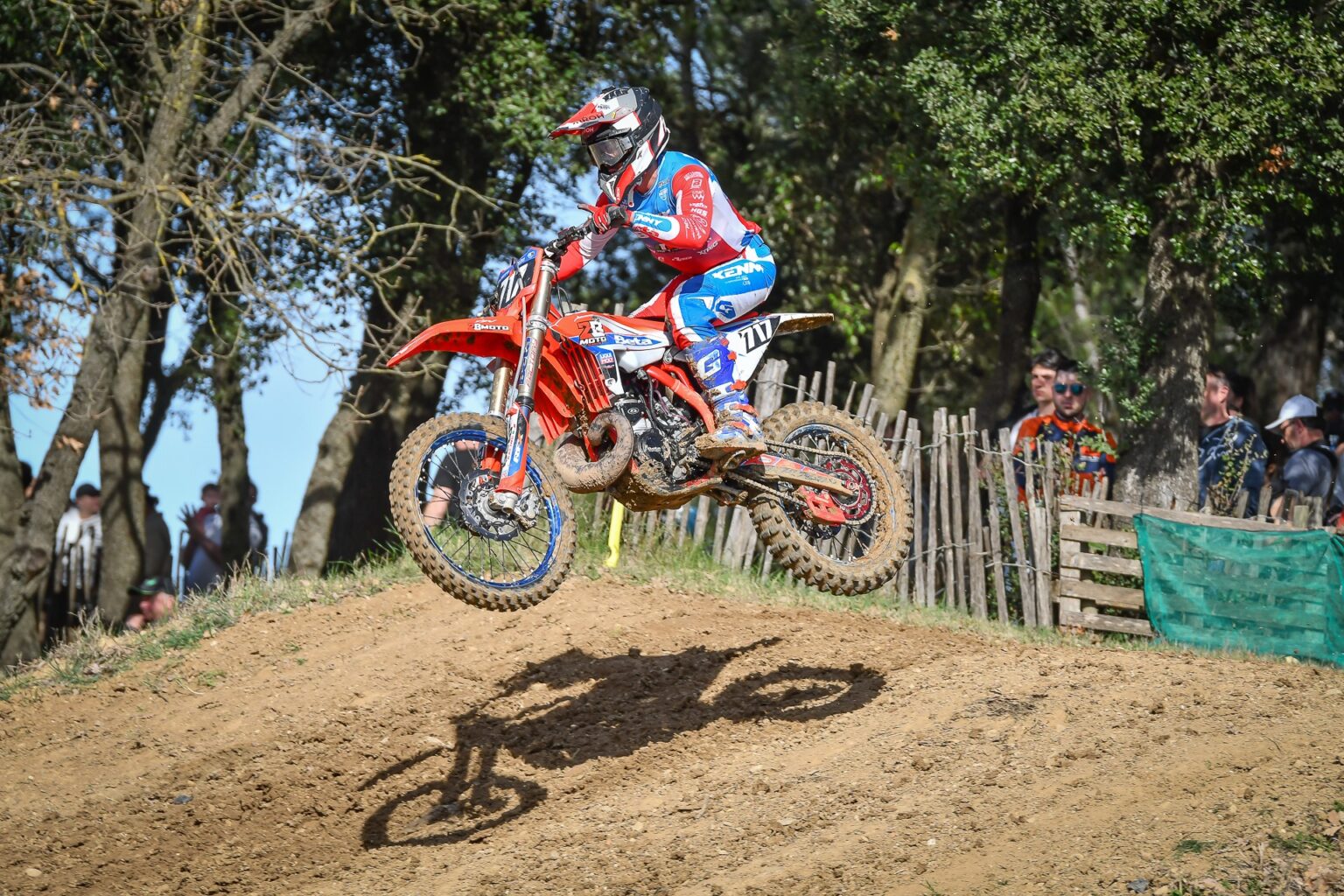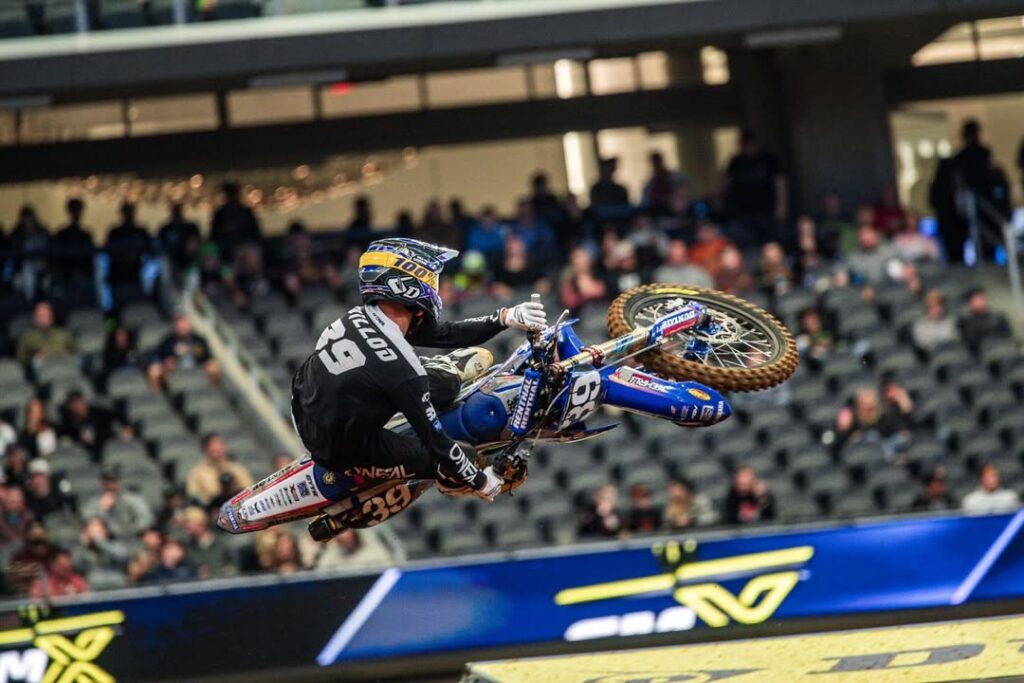
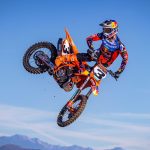
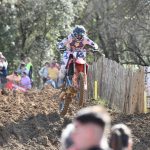
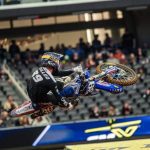
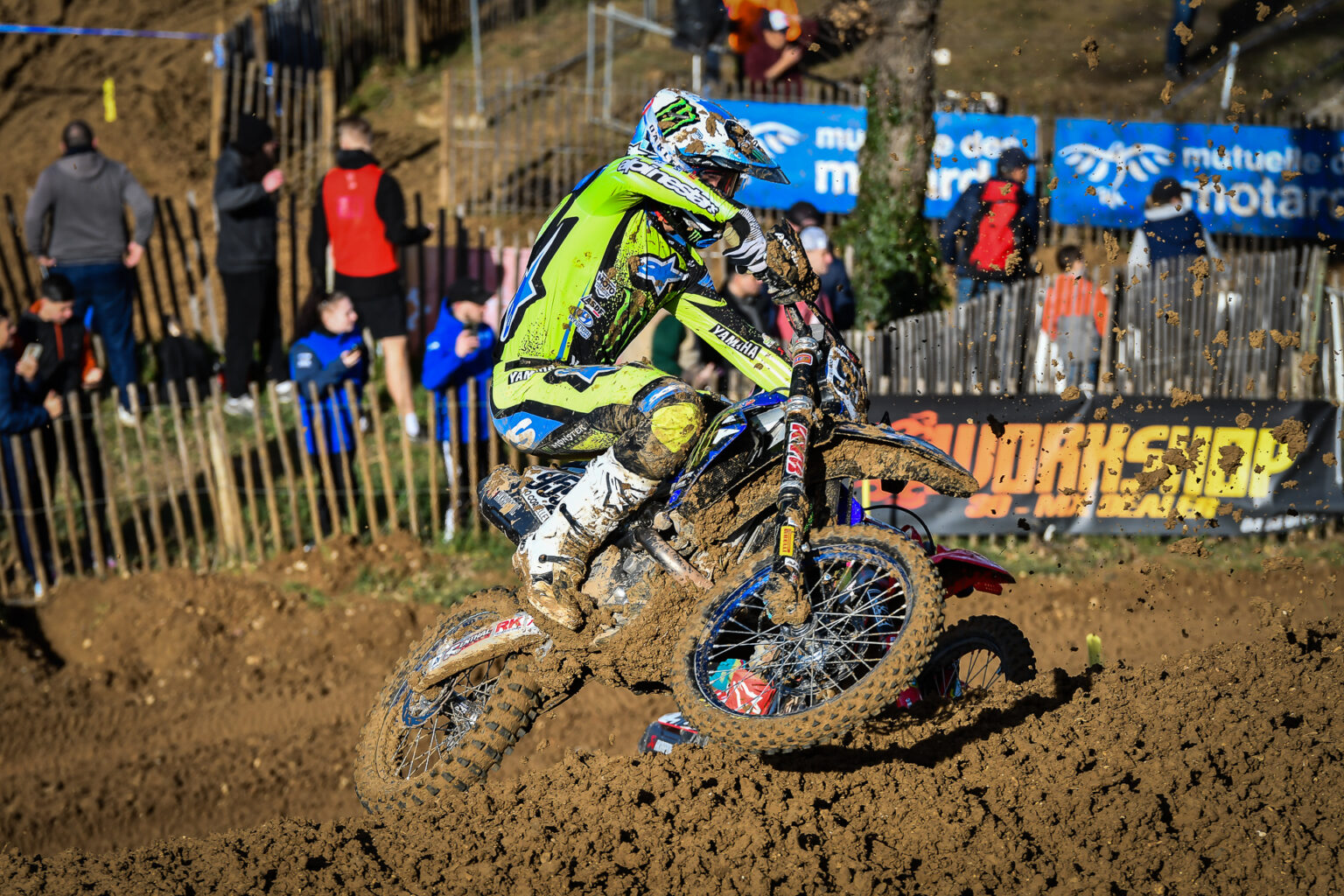
As the new season approaches, Maxime Renaux heads into another important year in the MXGP World Championship with high expectations and renewed motivation. After an off-season focused on development with Yamaha, the French rider has been using pre-season races to evaluate progress, test new parts and rebuild momentum following injuries that affected previous campaigns. In an interview with Kevin Frelaud, Renaux opens up about winter testing, changes to the bike, his physical condition, the arrival of a new teammate, and the mindset he’s bringing into what he hopes will be a full and consistent championship campaign.
Maxime, to start with, when you come to a preparation race like this, what questions are you trying to answer? At Pernes, for example, the conditions were difficult — can you get the information you hoped for in that kind of context?
Renaux: Yes and no. Obviously, those were special conditions. But we also race a lot of GPs in similar conditions, so it’s better to be ready to fight at the front. These preparation races are about gathering as much information as possible, seeing how we feel on the bike in race conditions. It’s also about trying the new improvements we’ve made to the bike during the winter, because we know that training and racing are very different. There’s also arm pump — you need to loosen up a bit before the start of the championship. That’s mainly what these races are for; that’s really the objective of these events.
A word on the 450 YZ-F. There was a lot of talk last year, with people saying the Yamaha package wasn’t the most complete. Is your bike this year different from last year?
Renaux: We made good progress this winter, there have been some changes, but we don’t yet have all the answers as to whether we are really better with these changes or not. Personally, I feel pretty good. But in training, it’s always different. We’ll need to see how the starts are this year. Starts are something really important in MXGP right now, so this weekend we’ll be able to see where we stand. At Pernes there wasn’t a starting gate, but here in Sommières there is one. We’ll have conditions that are a bit more similar to the GPs when it comes to starts, so it’ll be good to see how it goes. Then we’ll see if we need to make changes or adjustments, and we’ll see where we really stand this season.
I imagine you’re starting this season again with big expectations. Having a new teammate — Tim Gajser — is that extra pressure or, on the contrary, motivation for you? People always say you have to start by beating your teammate.
Renaux: Neither, actually. No matter what, we know that Tim Gajser is a guy who will show up. For the brand, it’s good to have him in the team; it makes a strong line-up and it’s great for them. But whether he’s at Yamaha, Honda, or any other manufacturer, he’s still the same competitor in my eyes. He’ll be on the starting gate, and my objective is to be world champion, so that means finishing ahead of all my competitors. I also think it’s good to have him in the team — he’s brought a new perspective on the bike. He’s a rider with a lot of experience, obviously, so it’s also a good thing to have someone like that in the team who can give information to Yamaha. After that, we’ll see what they do with that information and whether they use it in the right way. Tim is a rider who knows how to ride, so it’s always positive to benefit from his experience.
If I ask you how you are physically, I’m sure you’ll say “I’m good.” But people talk — I’ve heard things about a femoral neck, an arthrodesis, a hand injury. Knowing that, physically, where are you really at?
Renaux: Physically, I feel good. I’ve started running again, which is something I wasn’t really able to do over the last two years. I had a lot of trouble with my right foot. The arthrodesis on the right foot went well. I still have the flexion movement in the foot, but I no longer have the rotational movement, so I won’t be able to become a great trail runner once I retire — but that wasn’t really the plan anyway. On the other hand, it doesn’t limit me. As for the femoral head, yes. I broke the head of the femur last year in the crash in Switzerland — it was a really hard hit. I’m not making excuses, and actually that information didn’t really come out. There was no reason to hide it, but it didn’t really come out last year because I didn’t want to give myself excuses regarding the results I had afterwards. But obviously, it was bothering me.
But you came back quickly, right?
Renaux: Yes, I didn’t miss a race. It happened in Switzerland and two weeks later it was Portugal, in the mud. I was straight back on the bike, so yeah, it was an issue. Now it’s much better. They’re a bit of annoying injuries, because there’s always that aspect around the joint — it’s not really great to get injuries in those areas — but like I said, I’ve started running again so it’s no longer really something that bothers me. The hand is the same — everyone knows about that. I had surgery immediately right after the injury, we went to the GP two days later, we rode, we gritted our teeth, and today I’ve got a bump on my hand. But I’ve completely recovered — the strength and everything has returned to normal. It’s just that I’m a bit more intimidating if I throw a punch [laughs].
I have to ask this one and try to do my job. There was a lot of noise last year about a possible move to Ducati. It didn’t happen. What’s the politically correct version of why you didn’t leave for Ducati and stayed with Yamaha?
Renaux: There were some frictions. It’s true that with Yamaha we had some pretty intense discussions about development. It wasn’t an easy season. After that, we explored every possible option, and that also meant looking at the options we had here and there. Obviously, we tried to find common ground with Yamaha — that was the goal because I was still under contract, and we didn’t want to just break a contract like that. It wasn’t easy. We tried to make ourselves heard, and we were heard. We also saw that there had been some evolution. Positive or negative? Evolution — things moved. Hopefully the results will speak for themselves this year. Of course, things spread very quickly in the paddock and it makes noise, but it mainly came from a disagreement that made me question my future, my next few years, and what I wanted to do. That’s all. We moved forward, we continued the contract with Yamaha — we didn’t want to throw away all those years together. I decided to trust them again and we’ll try to do the best possible this year, both them and me, to be at the front.
I was surprised to see that you’re already starting your fifth year in MXGP. Time flies, and we know there have also been a few injuries that slowed your ambitions. Today, how do you look back at these first four MXGP seasons?
Renaux: Obviously, there have been a lot of good things proven. I think that since moving up to MXGP, I’ve shown that I have the potential to be a rider who can go for the title. If we look back at all the seasons, yes, there were injuries every year. But before those injuries, I was always in the top three in the championship: twice second and once third. So I’ve always been at the front when I was at 100%, or without a major injury. There’s good and less good. The injuries are really the big thing to eliminate. I don’t think I ride beyond my limit necessarily, but there are some things we’ve tried to correct. Maybe sometimes there’s a bit too much risk-taking, not-so-great starts that sometimes penalize me and force me to push a bit more, and take risks in the opening laps to pass riders and get back to the front. There was also that rookie mentality when arriving in the 450 class and wanting to smash everything. I have a bit of that temperament. The years go by and I think I’m gaining wisdom — I don’t approach races the same way anymore. I realized that to be world champion, you need to finish all the races. That’s really the goal for me this year. I’m starting this fifth year in the category differently from the previous four. I’m not saying it will necessarily be the right one, but the mindset is different. I’m trying to learn from those last four years, which weren’t easy with injuries. I’m also trying to keep that fire inside me and the speed — because we know I have the speed and that I’m there. Now it’s about allowing a margin of safety, whether that’s by taking good starts or sometimes accepting to finish 3rd, 4th or 5th to avoid playing with fire and be able to finish the championship. In 2026, I want to complete a full season without a major injury.
We’ll finish with a question of opinion: the impact of exposure and social media in a rider’s life. I’ll take the example of Cairoli. Fifteen years ago, his interactions with fans were probably limited to those who took the time to see him at the races. Today, everyone can see you on social media, comment, etc. — those who like you and those who don’t. When things go well everyone is happy, but when things don’t go as well, there’s the other side of the coin. Do you try to detach yourself from that? Do you have to learn to live with it? How do you manage this aspect, which is now an integral part of your lives?
Renaux: Obviously, social media is present. Everyone has Instagram, Facebook and so on, so we’re exposed to a lot of things — positive messages, negative messages, opinions. At the beginning, I tended to look at it, and maybe even be a bit affected by negative opinions or things like that. Obviously, it’s never nice. You’re there giving 200% and sometimes people talk without knowing all the ins and outs. So it’s never easy. But we live in a world of hyper-media exposure. Everyone allows themselves to speak without necessarily knowing, or to give their opinion — it’s part of the job. And in the end, thankfully those people exist because they’re the ones who create excitement and fans, etc.
Today, I deal with it. People who aren’t necessarily fans? I don’t have a problem with that — not everyone can be a fan of a rider. Respect, on the other hand, is important. I haven’t really experienced too many cases of disrespect so far, but as long as it stays respectful, it’s fine. After that, whether people think I’m not a good rider… or that I am a good rider. Of course it’s nice when there’s a positive opinion, but when there’s a negative opinion, you can’t really say much either. Social media is important, but as riders we distance ourselves from it. When you’re 30–34 years old, or whatever age you retire from the sport, all those people who didn’t necessarily have nice words for you won’t be there anymore. They won’t be anywhere in your post-career. You can just do this sport for yourself, for your family, build your own little world on the side, and leave your sporting career without any regrets.