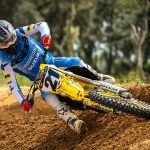
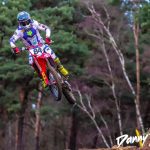
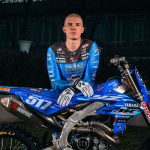
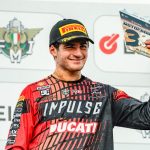

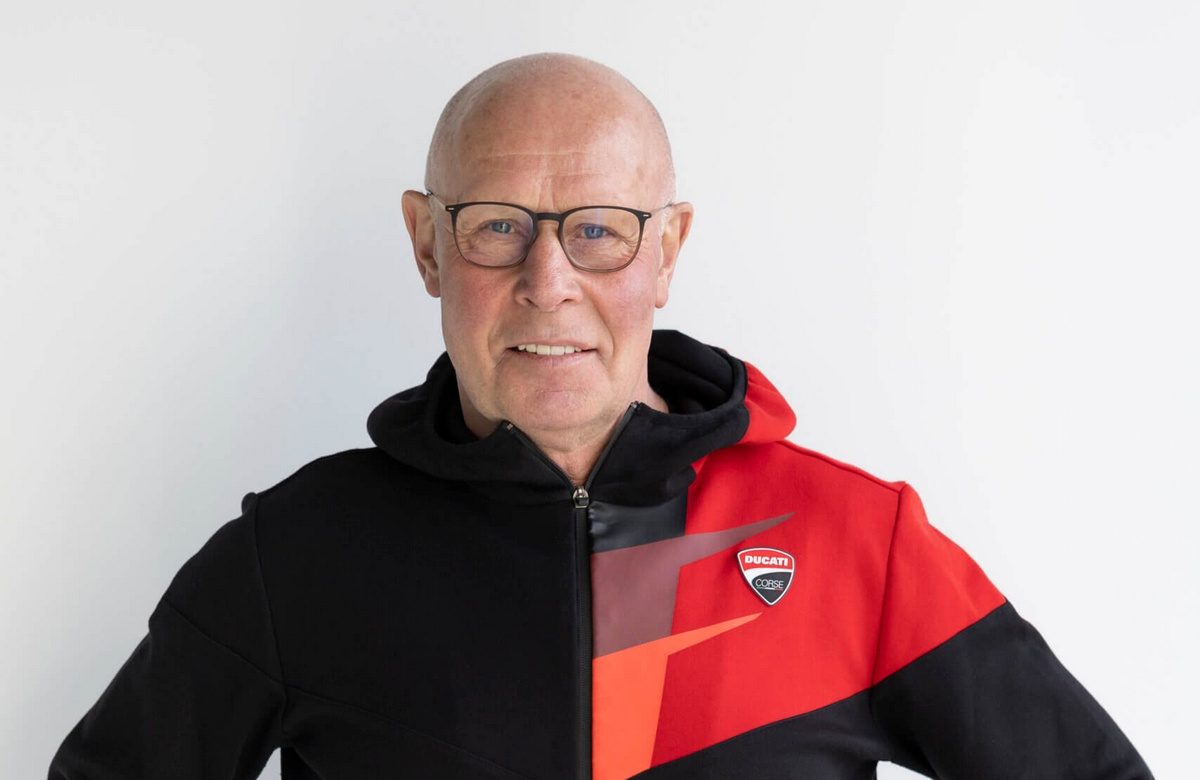
As the MXGP World Championship approaches, a new chapter is being written behind the scenes at Ducati. After a first exploratory season, the Italian manufacturer is stepping up its ambitions in motocross — and at the heart of the project is a team owner – Louis Vosters who is embracing both the challenge and the long-term vision required to succeed at the highest level.
Having previously led successful programs with Yamaha and Fantic, he now finds himself guiding Ducati through a crucial phase of development. With a diverse rider line-up, a bike still evolving, and growing expectations from the paddock, the 2026 campaign represents more than just another season — it’s a test of structure, patience, and belief.
Kevin Frelaud sat down with Vosters to discuss pre-season preparations, factory expectations, rider management, the broader state of the sport, and what it will take for Ducati to become a consistent front-runner in MXGP.
Louis, to begin with, how would you assess the day in Sommières with your riders? The track wasn’t easy.
Vosters: Yes, we can say it was a particularly demanding venue, a rather technical and quite narrow layout. But I think it was good training for our riders in preparation for the Grand Prix’s. It’s a very positive thing for us to ride on tracks like this before the season starts.
Do you learn more on tracks like Alghero or Mantova — in difficult conditions — or on a track like Sommières?
Vosters: In my opinion, it’s good to be able to ride on sand circuits as well as on layouts like this one. Next weekend we’ll be in Lierop, so back in the sand again. We need data, especially in our situation. Ducati is a new brand, the experience is new for us, and it’s important for the team to be able to race on all types of terrain.
We know you led the Yamaha team for a few years, then headed the Fantic program. What motivated you to take on a new challenge with Ducati in 2026?
Vosters: The decision was quite simple for me. It was a long-time dream. It’s a great brand; they’ve achieved a lot in the world of racing. I wanted to have that experience with them, to be part of that family. I’m a Ducati fan, but above all I’m a fan of racing. It’s great to work with the factory staff — we’re in contact with many people, and they listen to us. We listen to them in return, and we try to improve day after day. So far, it’s been very positive.
Another structure handled this program before you, and Jeremy rode for them last year. Are you starting from scratch with Ducati, or continuing the work based on the Maddii foundation?
Vosters: No, I don’t know at all what was done with the previous team. We started from a production bike that had received an engine upgrade. With Ducati, we worked — worked a lot — to make progress over the winter through testing. Day by day, we’re moving forward. Of course, we know it will take some time before we’re in a position to fight for the very best results.
Are there specific expectations from the factory? The first year was a learning year. I imagine Ducati expects improvements for the second season?
Vosters: Honestly, I don’t know what the factory’s expectations are. They’re not putting any pressure on us. But if we can consistently fight for top-five results during the season, I think they’ll be happy. Personally, I hope we can secure a few podiums. But what matters most is that we do our best, and that’s what we do every day. What Ducati expects in terms of results? I don’t know.
You have different profiles within the team: Andrea is young and joining Ducati; Calvin is experienced but discovering the bike; and Jeremy is also experienced and already knows the bike. How do you manage a full program with three very different riders?
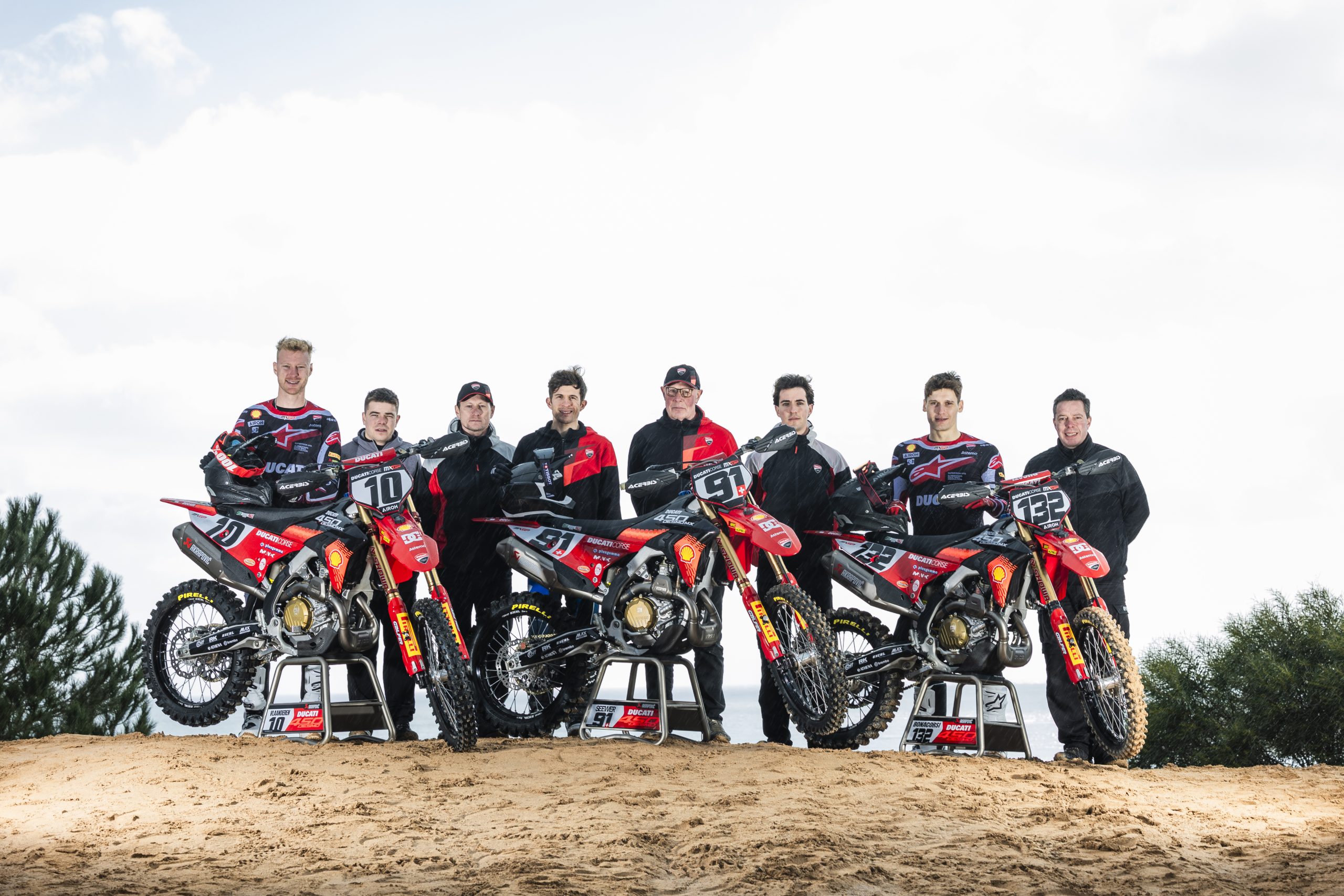
Vosters: For now, everything is going well within the structure. In January, they spent the entire month in Sardinia training together. After that, we came to France. What I see is that the group works well together. They enjoy themselves and work hard. The atmosphere is good, and the collaboration between team members is strong.
Last year, we saw that the Ducati could aim for podiums and top-five finishes. What was the main focus over the winter to take another step forward with the Desmo?
Vosters: It’s difficult to answer that precisely. Let’s say everyone understands that we need a bike capable of winning, but also a bike capable of starting up front to fight for strong results. We understand that, and Ducati understands it as well. They’ve made significant progress in that area, and we expect further improvements soon.
We spoke with Maxime Renaux about last year’s rumors and his possible signing with Ducati. In the end, Vlaanderen was recruited. What’s your version of the story? Maxime would have been a strong asset for the team as well.
Vosters: Yes, we would have liked to have him in our team, but at the same time, I’m very happy to have a rider like Calvin Vlaanderen too. Let’s say it was more or less a contractual issue on their side that they couldn’t resolve. Neither Ducati nor I were involved in that. Ducati simply told Maxime that when he was free of any contract, he would be welcome with them. It didn’t happen. It would have been good for our team and for Ducati. Calvin, on the other hand, was in the opposite situation in the end. Ducati signed Calvin, and I’m very happy to have him with us because I believe we can achieve great things with him as well.
With just two weeks before the first GP, are you on schedule? Are you ahead, behind, on time?
Vosters: We’re in a good place, but not exactly where we would like to be, to be very honest. There’s still work to do with Ducati. But I think — and hope — that after four or five Grands Prix, we’ll be at 100%. For now, we still need to keep working.
Again, it’s hard to explain in detail what we’re missing. As I said, we’re working well with Ducati, everything is going very smoothly, but Rome wasn’t built in a day. Creating new parts takes time, and you also have to understand which parts to request. The factory is working hard, and I’m convinced that together we’ll reach the level we’re aiming for, with a bike that’s 100% ready to compete.
I’d like to finish with a few opinion questions. Glenn Coldenhoff won’t race the GPs this year. He rode for you for years. He finished third in the 2025 championship and didn’t find a ride matching his ambitions. How do you interpret that signal for the sport in general?
Vosters: It’s not a good thing at all for the sport. Glenn was with me at Yamaha and then Fantic, five years in total. I was really happy to have him with me, but we changed manufacturer and in that specific case I followed and accepted the brand’s choices. I’ve always been a big fan of Glenn; to me, he was like a member of my family. He rode very well last year, scoring six podiums and finishing third in the championship. It was a very good year for him. On the other hand, he also turned 35. He’s getting older, and I think he had one of the best seasons of his career last year. But it’s still a bad signal for the sport. Seeing a rider who finishes third in the world championship unable to find a ride — that’s not right.
We did a feature with Giacomo Gariboldi to get his opinion on how to increase the value of teams and the world championship. I’d like to ask you the same question: how do we attract more people to our sport?
Vosters: For me, the most important thing is visibility. We already know the sport — we know which channel it’s broadcast on, we know how to watch it via subscription on the MXGP platform. But in our country — the Netherlands — you can watch speed skating and cycling all day on TV, it’s incredible. Those sports have grown massively, and more and more people watch cycling, football, speed skating because they’re on television. If our sport doesn’t become more visible, it will be very complicated. For me, the key is to have Motocross on the right TV channels, in as many countries as possible, not only on specialized channels or on the MXGP platform.
People need to be able to find our sport easily on national channels. For me, that’s really the key point. We also have to be professional in how we present our sport. At the moment, we’re not doing too badly, but Motocross needs to be visible — people need to be able to see the races.
And at the team level, what have you done to attract new partners and investors personally?
Vosters: We try to be as professional as possible — at the races but also in our workshop. Everything is handled properly on that side. It’s very important for outsiders to see that image. That’s who I am, that’s how I want to work, and it’s how I ran my company in the past. We have to be professional to show people who we are and how we work. We want to show them that this sport is beautiful to watch, that it’s worth following the teams’ work — it’s very important.
Finally, if you had the keys to Infront Moto Racing, what would be the first change you’d make to the MXGP World Championship?
Vosters: That’s a difficult question. For me, at the moment, the situation is quite good. I’m happy we’re not racing 20 GPs this year but 19. That’s already a lot, and I think we should consider the teams that are not factory-supported, so they can follow the same program as us without it becoming too complicated or too expensive for them. Maybe 16 events would be enough for our sport. That seems like an important point to me. That said, I think Infront is doing a good job. They’ve brought Motocross to a new level of professionalism, and that’s a good thing. For me, visibility is the key to everything — people need to be able to see our sport and what we do!