










You see her without really seeing her – always by his side, always just outside the spotlight. Her? That’s Amélie Schmitt. Present alongside Benoît Paturel since his very first steps in the professional ranks, Amélie plays a central role in his career. Discreet yet determined, she is one of those behind-the-scenes figures whose quiet support contributes to the success of high-level athletes. Naturally reserved, Amélie speaks with sincerity. This sport brought them together in their teenage years, shaped their story, moulded their life as a couple, and sometimes left deep marks. Between laughter and tears, Amélie steps out of her comfort zone to share a testimony that spans half a lifetime. Interview by Kevin Frelaud.
Amélie. To start with, can you introduce yourself in a few words and tell us about your background, up to your first meeting with Benoît?
Schmitt: To begin with, I’m a very simple person. I live a completely normal life. I spent my childhood at the tracks because my brother also rides, actually. I have a lot of great memories. My life “before Benoît,” let’s say it ends quickly, because I met him when I was 16. I was still in school at the time. I worked for a few years at the hospital and then eventually moved to Belgium to join him.
In what context did you meet him, and where was he in his career at the time?
Schmitt: I met him at a race my brother was taking part in. We were parked next to each other. I didn’t pay much attention to Benoît at that moment – I was fully focused on my brother. I didn’t know that Benoît had already noticed me at the time [laughs]. Back then, Benoît wasn’t a professional rider yet; he was semi-pro. He only had some support from Bud Racing. He was racing the EMX250 championship – it was his first year.
Did you expect that your story – and Benoît’s career – would grow to such proportions or take this direction?
Schmitt: No. Not at all, since Benoît wasn’t a professional rider. I was 16, a bit in my own world, and honestly, I only had eyes for my brother’s racing. Nothing else mattered around that. For us, motocross is a family thing, because my dad used to ride as well. I spent my childhood traveling to races with the whole family.
We talked about doing this piece last year. You must have known we’d touch on personal aspects of your life. You could have refused, but you accepted – why?
Schmitt: I accepted because it came naturally in our conversations. I don’t like being in the spotlight, and I’ve always chosen to remain discreet – even more so when it comes to my private life. I can easily do without social media, for example. But I think it’s good for people to also realize certain things, in certain areas.
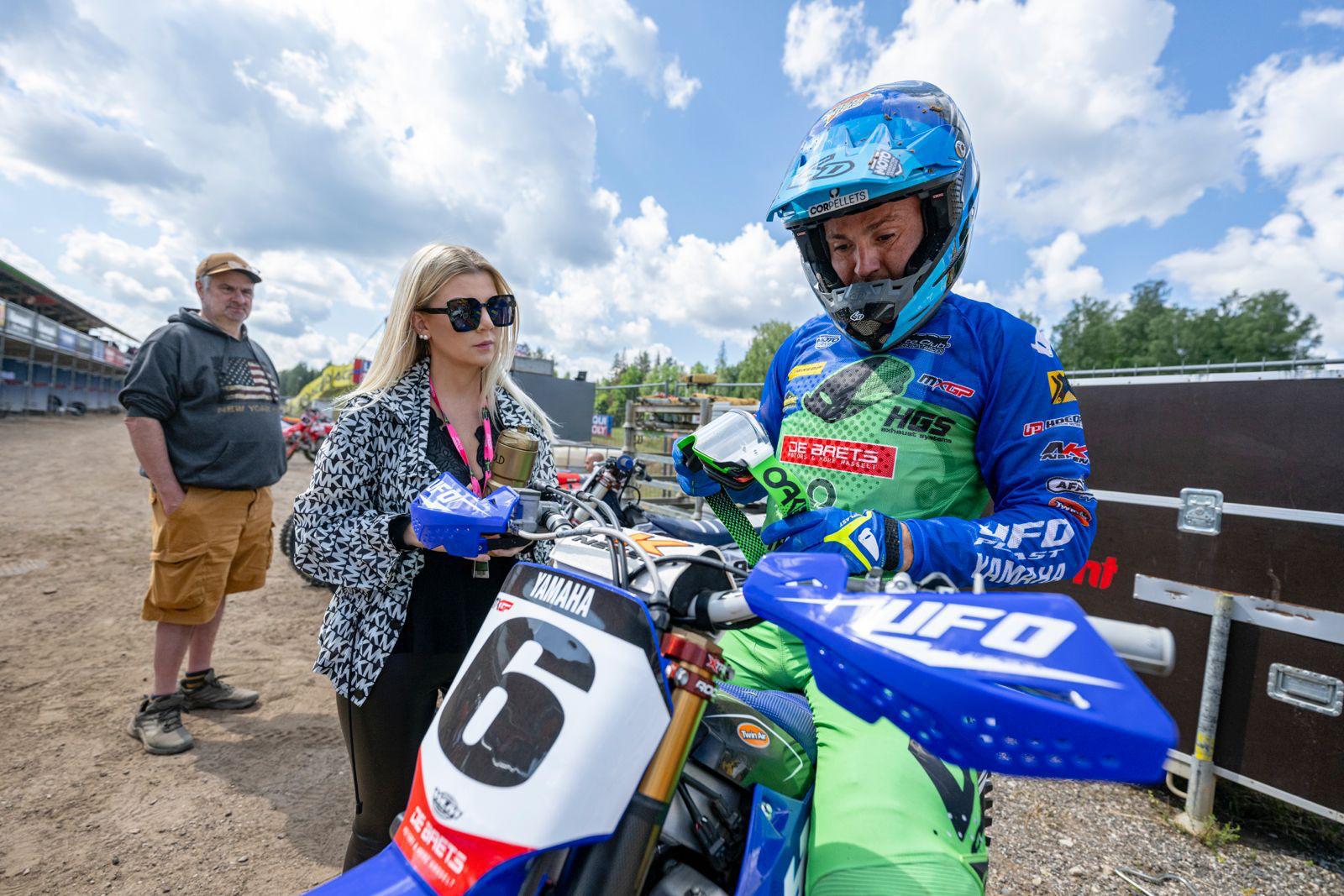
To support Benoît’s career over the past ten years, would you say you’ve had to make personal sacrifices, especially professionally?
Schmitt: Of course – I’ve had to make choices and sacrifices in many areas. I had to stop working and leave my family. I’m not afraid to say it. Benoît never forced me to do anything. It was my choice, and I’ve always been happy to be by his side. From the beginning, he told me that his career was the priority. We agreed on that right away.
Practically speaking, what does your daily life look like? I imagine you always had to organize things, to some extent, around Benoît’s schedule and his sporting career?
Schmitt: I’ve been present at almost every Grand Prix – I didn’t miss many. During a GP season, we leave for the races on Thursdays and come back on Mondays. The weeks are very short: everything has to be cleaned and prepared again. Meanwhile, Benoît trains – both physically and on the bike. It’s intense.
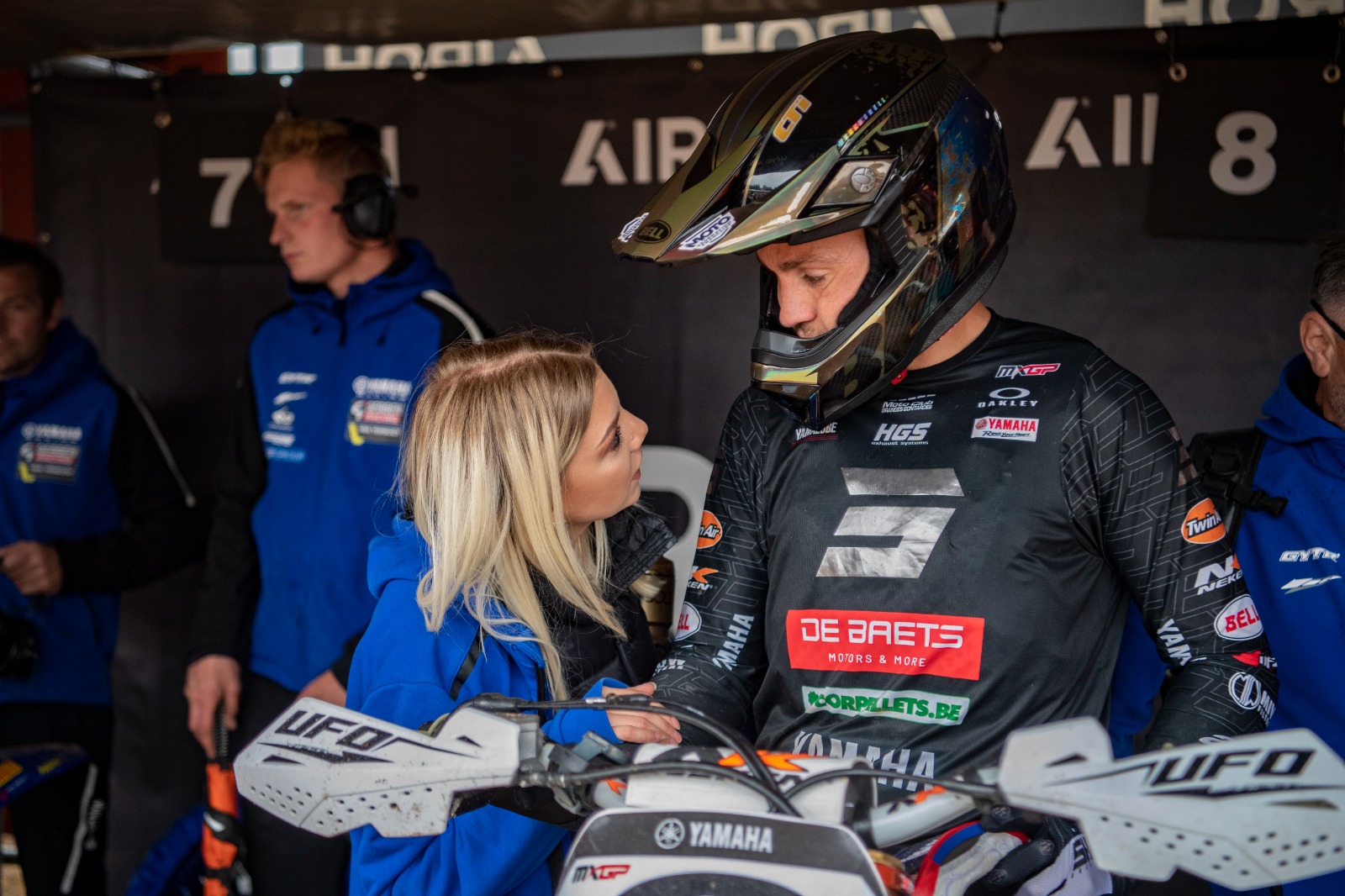
During a Grand Prix weekend, I help him prepare his gear, his meals, organize his drinks, his recovery. Everything has to be ready so Benoît doesn’t have anything to think about besides his job. He needs everything around him to be structured. It’s a whole system.
Today, we live in Belgium. Belgium is fine, but it’s not my country. It’s just the two of us, so it’s not always easy. I wouldn’t see myself staying there doing nothing, in the end. During the winter, for example, Ben goes to Sardinia or Spain for a few weeks to train. That’s when I take the opportunity to go back home to my family.
How do you find the balance between what’s best for you personally, for the two of you as a couple, and what’s best for Benoît as an athlete? There must be a lot of compromise involved.
Schmitt: I’m incredibly lucky to have someone like Benoît, who is very respectful and has always been grateful for what I bring him. He’s also very present. If I decide to start something new tomorrow, he’ll be there to support me. We don’t set everything aside – but almost, to be honest. We have very few friends. Family gathering only happen at the end of the year, and as for life outside of motocross, well… let’s say there isn’t much of it. Often, Benoît is resting, we go on vacation, and then after that, it’s back to work. I’m lucky, and I can honestly say I’m perfectly fine with that. I’m not the kind of girl who needs parties and all.
I’m curious to know whether it was easy for you to find your place – within the paddock – by Benoît’s side. Knowing when to be more present to support or help him, but also when to step back and let him handle things. There are good days and bad days too. How do you do enough without doing too much?
Schmitt: Honestly, it’s not easy. I’ve always been very mature – thankfully. At 16, I probably already had the mindset of a 25-year-old. That’s probably why it worked. I always told myself that racing was his job. We also went through some really difficult moments in his career, where I had to stay strong, and that was very hard. Benoît and I don’t have the same personality. I’m the type to speak up quickly when something bothers me; I can read situations very fast. Benoît, on the other hand, is very calm. He needs time to analyse things. I respect that difference in our characters. I never took a decision for him. He always asks for my opinion, but the final decision is his and his alone. I admire him for that. He managed to show respect to people who didn’t respect him in return. I applaud him for that, and I often tell him.
Outside of the whole motocross world, which obviously takes up a big part of your life, is personal fulfilment something important to you?
Schmitt: Yes, it’s something very important to me. I’m a very simple person – even solitary. I need my quiet moments to myself. But I’d say I’m someone who’s easily fulfilled. A picnic by the water, a horseback ride, and I’m happy.
Is the private-life aspect important for you both? Benoît is not one of those riders who are very active on social media. Is that something you decided together – to really separate personal life from professional life?
Schmitt: No. Honestly, it’s just that Benoît is not into social media at all, and neither am I. I’m not a professional rider, so I don’t owe anyone anything on that side. Benoît still tries to be careful – for example, in the US, his contract required him to post a certain number of times on social media. So I try to keep an eye on that for him. If Benoît could disconnect completely and stay off social media entirely, I’m pretty sure he would.
Within “Team Benoît Paturel,” how many hats do you wear? I laughed a lot when he went to the US and you told me he probably wouldn’t have time to answer me anymore because he’d have to do his own laundry [laughs].
Schmitt: Let’s say I give my best to make sure he lacks nothing. As far as the training sessions and riding go, I’ve never interfered. I have no skills whatsoever to tell him whether what he’s doing is right or wrong – everyone has their role. That’s also what matters with an athlete: everyone stays in their place. As for the laundry, yes, he was overwhelmed [laughs]. We laugh about it, but it’s true. When I’m not with him, things are definitely different.
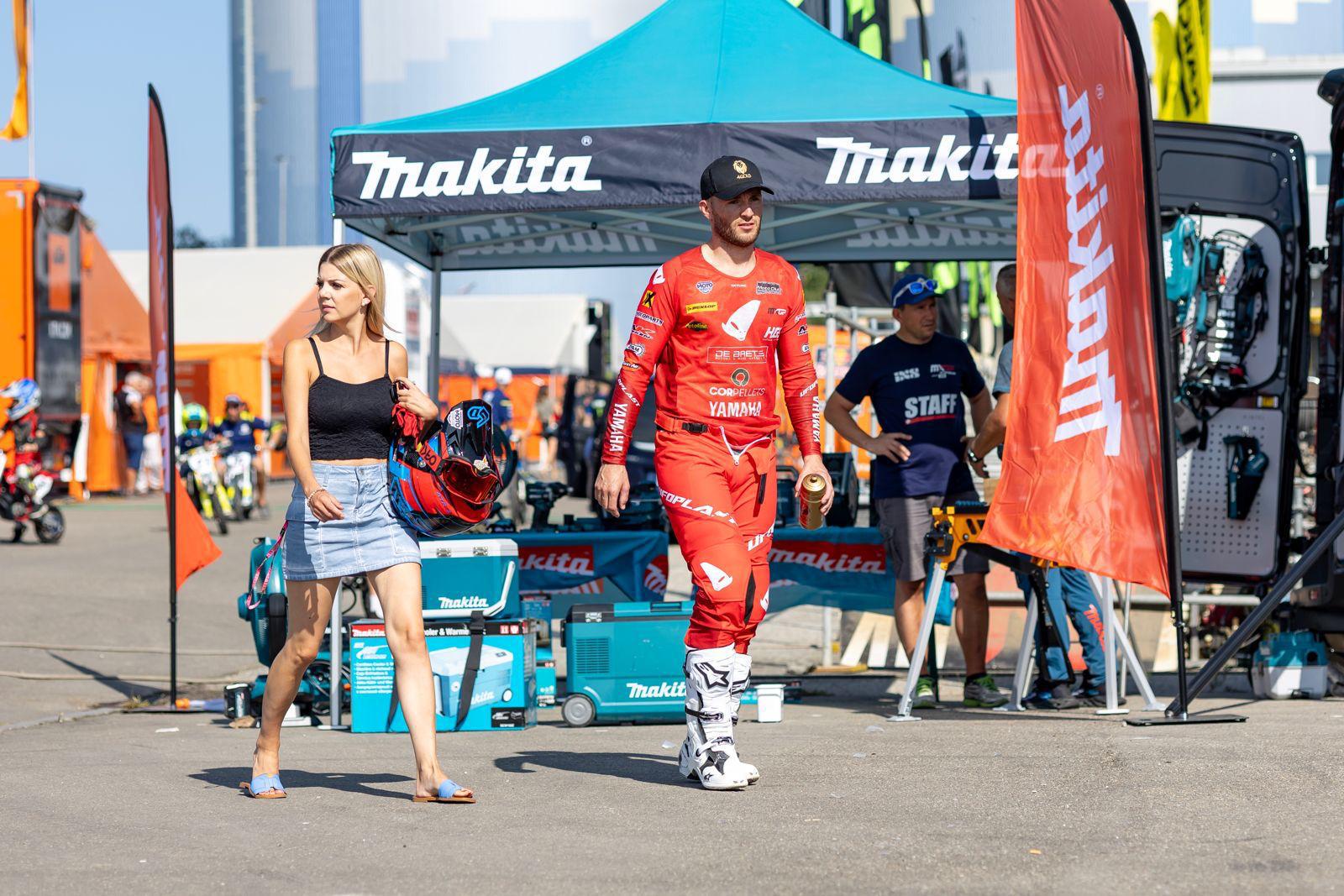
You’ve lived through the off-seasons from the inside: winter training, physical preparation, endless days in Lommel… with everything that implies in terms of discipline and constraints. Do you think people are aware of the reality of the effort and sacrifice these guys put into their sport?
Schmitt: No. People have absolutely no idea what the life of a high-level athlete is actually like – training in Lommel at -5 degrees, training in the rain. When he gets home, he still has his recovery to do, he has to eat well, sleep well, wash everything, get ready for the next day. There are physical days where he spends six hours on the bicycle – it’s intense. Again, there’s a program that has to be followed to the letter.
Benoît had some great years in MX2: wins, podiums, the spotlight… As an athlete, you need to handle being adored as well as being criticized – sometimes overnight, as we’ve seen again with Jorge Prado this year. It must be hard to read certain comments or messages, especially from people who only have a very partial view of reality. You have to learn to step back, or even ignore people altogether? Sometimes it feels like sport dehumanizes things a little, like people forget that under the helmet, there’s just a guy like them.
Schmitt: That’s exactly it. Under the helmet, they’re human beings, and people tend to forget that. I struggled a lot at one point with social media. I read a lot of completely pointless things about Benoît, about some of his decisions. That’s when I realized people can be cruel. I think humans feel stronger when they criticize – even though they have absolutely no idea what the athlete might be going through at that moment, nor any idea of what the reality of top-level sport truly is. I think most people wouldn’t be able to endure what a high-level athlete handles in a single year. Jorge – I don’t know him personally, but when I saw him in the US, he looked sad. I’m speaking on a human level here. I genuinely felt sorry for him. He’s a champion, and I hope he bounces back – I truly wish him the best.
Would you say you play a role as support and mental anchor today?
Schmitt: Yes, absolutely. I think Benoît has a very strong mindset. Very few people truly know the real Benoît, and he’s been through difficult things. I think being by his side has also made him stronger. Faced with challenges, we’ve never let ourselves fall, never collapsed. We’ve always managed to lift our heads again.
As a high-level athlete, visibility and media exposure are important. A lot of people know Benoît the rider, but very few know Benoît the man. Who is Benoît Paturel?
Schmitt: In the end, when there’s no motocross involved, Benoît is still a high-level athlete. Honestly, it barely ever leaves him. He’s been conditioned that way – he started riding at 4 years old. Everything around him needs to be structured and precise, and that takes a lot of energy. You also have to be strong during the periods when he’s waiting for contracts, when our life is basically on hold. It’s not always easy, but Benoît is an incredible person – kind, with a sense of respect I’ve rarely seen. He’s always in a good mood, and that’s very important for me. Like you said, when people meet him, they see Benoît Paturel – the rider. That’s nice, but sometimes people overstep; they think they know everything. It can be annoying.
You must have lived through so many Grands Prix by his side. It’s a world of passionate people, with good and bad, like everywhere else. With your experience, how would you describe the world of high-level Motocross?
Schmitt: I would describe it as a magnificent but very tough environment – extremely tough, because motocross, like most high-level sports, is above all a business. You can trust no one, not even those who look you straight in the eyes with a big smile. So I shut myself off. At the races, I tell myself I’m at work. Of course there are a few people I get along with – thankfully! I’ve met some great people, but it remains very limited. Benoît often tells me that from the outside, I might look like a wild person [laughs]. But I prefer it that way – it’s my way of protecting myself.
What has been your best memory by his side?
Schmitt: My best memory, without a doubt, is at Ernée, when he won the moto at the French GP. The crowd was screaming, I was in Pascal Finot’s arms, it was Mother’s Day, and that day he was crying with me.
And on the other hand, your worst memory?
Schmitt: The worst is, of course, the day Benoît lost his mother. That day changed his life – and mine too. He lost his other half, his right hand. He had a very close, almost fused relationship with his mother; she was the most important person to him. That same day, Benoît went out and ran for two hours. The entire Kemea team came to the funeral, which took place on Thursday. On the Friday, we were at the Loket GP. I couldn’t even stand on my legs anymore.
That weekend, Benoît finished fourth at the Czech GP. Everyone kept asking me how he managed to do it. He achieved incredible things after living the hardest moment of his life. From that moment on, I told him that nothing and no one should ever affect him again. He’s a champion, and I often remind him.
What do you feel during a race? Spectators have some distance – they don’t have a personal bond with the riders… For you, it must be completely different.
Schmitt: I try to be as calm as possible. I’m very focused because I’m the one who prepares everything for him before the race. I don’t want him to feel any stress from me. I can tell from his attitude exactly whether he’s feeling good or not. When he’s up front and I see him give everything, it’s amazing. For example, this year, watching him fight every weekend in the US with Malcolm Stewart – it was really crazy.
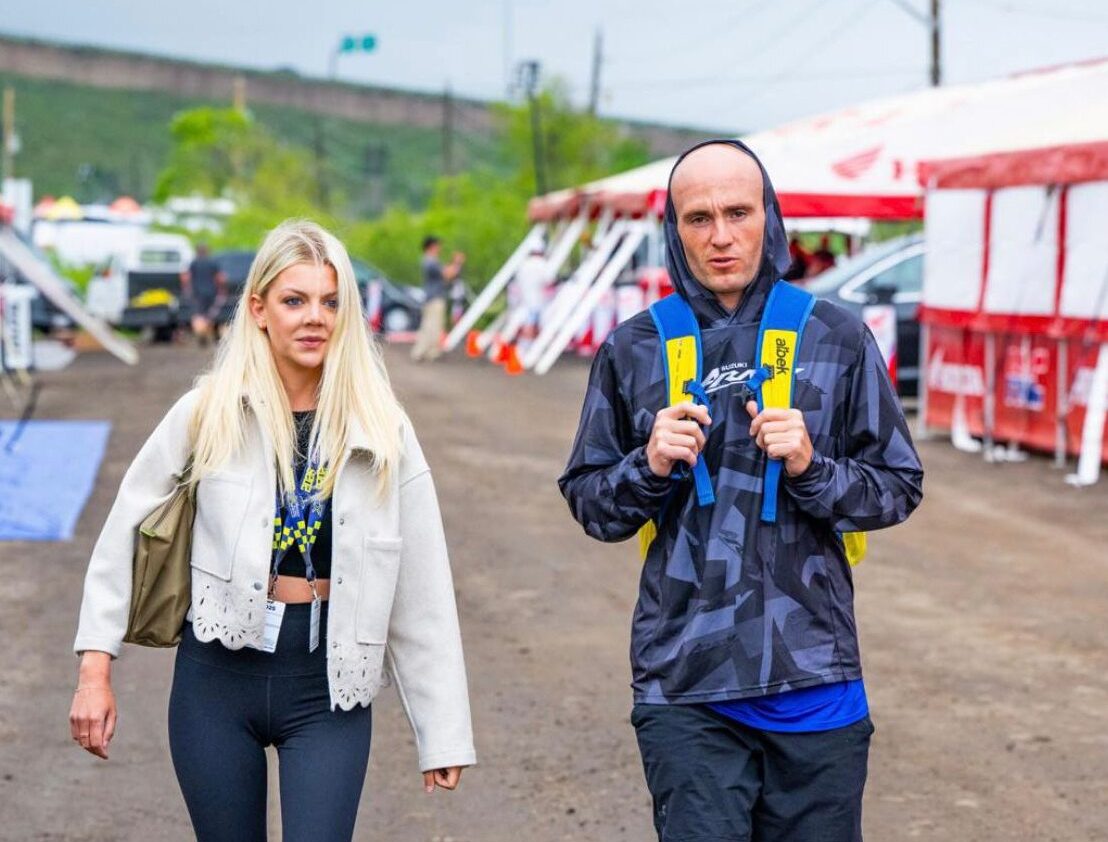
In the more or less near future, Benoît will put an end to his sporting career. Reaching the top level in motocross means starting very young and dedicating your entire life to this sport. And inevitably, a career ends quite early. Beyond turning a major page of his life, hanging up the gloves also means having to find a new purpose, a new professional path. Yet, the options are often limited: many don’t have diplomas, having left school very early, and have never known anything other than motocross. Is the “after” something you think about, that worries you, a topic you discuss between yourselves, or rather a somewhat taboo subject?
Schmitt: No, it’s not a taboo subject. But we also have to be realistic. As for me, I don’t see him in a normal life, with office hours, etc. Benoît has never worked in a company, only a little in his parents’ restaurant when he wasn’t yet a professional. His father told me that he would arrive at noon because the mornings were for training. He made coffees for the customers, and then he would sit at the table with them for hours talking about motocross. His father can confirm: some customers waited a good while for their coffees [laughs].
His mother also told me that at school, when he was little and asked what profession he wanted to do, he would answer “Motocross racer.” They told him that didn’t exist, so he said he wanted to be a postman on a moped, so that he could ride every day!
As for me, the “after” doesn’t worry me too much. I know there is something beautiful waiting for us. We have a few ideas, but for now nothing very definitive.
What would you see him doing afterwards?
Schmitt: Honestly, I don’t know. Benoît is a true competitor. He doesn’t ride his motorcycle just to ride – he rides for performance. That’s how he is in everything he does. When he rides his bike, it’s with a goal in mind. When he does sports, he always has an objective. If he comes back without having achieved the performance he set for himself, he’s not happy.
I laughed a lot once when I saw him going back and forth in front of the house during his run. I wondered why he was doing that. The reason? He had one minute of running left and didn’t want to stop before finishing, so he went back and forth. Stopping afterwards doesn’t matter, but before? Never. As for what kind of job would suit him, I really don’t know. I think he doesn’t see himself in a conventional job anyway.
The day he stops, will he have to completely detach from all of this? Will he stop riding altogether, be able to step away from the sport and performance – in your opinion?
Schmitt: I think he’ll never stop doing sports, because that’s in his DNA. The day Benoît stops his racing career, he won’t come back just to do a Grand Prix or an occasional ride. With him, it’s always been all or nothing. But I think he wouldn’t mind doing some enduro or something like that. For me, the day he stops, he won’t compete anymore – but I could be wrong.
Looking back, after experiencing the highs and lows of his career, which season did you feel Benoît was the happiest, the most fulfilled? And conversely, which one do you think he was the least happy in?
Schmitt: The happiest, I think, was with Kemea Yamaha, in MX2. That was his first professional team, and it’s with them that he won his first Grands Prix. I’d also say this year in the USA. He got that contract all by himself, doing a test in the middle of nowhere.
Conversely, the seasons where he was least well, he had a virus for almost four years after his time with Yamaha. The doctors told me it was depression, that he had suffered an emotional shock after the loss of his mother. I was also told it was mental. They told me all sorts of things, but deep down, I knew it wasn’t that. He’s very strong physically, mentally too, he never complains, so I knew something serious was going on. He was out of breath just climbing stairs… Until the day we finally found a doctor who detected the virus, which was very strong and well established. It was very hard to treat, but at least we knew we weren’t imagining things. Today, this virus is much better known, but eight years ago, it was a taboo subject.
On your side, do you have projects or passions you’d like to develop, maybe alongside or after Benoît’s career?
Schmitt: Of course, I have many – probably too many. Let’s just say I’m never short of ideas.
Have you ever thought at any point that you wished Benoît would stop? Because of disappointments, after an injury, etc.?
Schmitt: No, never. I would never allow myself to tell him to stop, or even to continue. My role is to support him, whatever his decision. When he gets injured, of course, it’s horrible. I’ve lived through really difficult moments. In Latvia, he injured his vertebrae. We were in extreme conditions. I was alone with him at the other end of the world for a week because he couldn’t be transported. No one checked on him. He was treated on a stretcher – a wooden board. I’ve never been so scared. In those moments, I’m no longer the sweet little Amélie. People have to get out of my way. We finally returned to Lyon on a private jet, the hospital was waiting. But that experience traumatized me, really. Yet – of course – as soon as he was recovered, he was already back on his bike.
For Benoît, motocross is a passion, but it’s also a job. You have to earn a living, pay the bills… And in the end, it’s a bit like living on a permanent fixed-term contract: your value on the market depends on your results. Is it hard to never really know what the future holds, financially speaking?
Schmitt: Of course, just like any normal person who isn’t permanently hired, you never really know what’s coming next.
Managing the financial aspect in this sport, is that something important according to you?
Schmitt: Yes, it’s very important. I think at that point you need to be very well surrounded, and know how to manage your money. I also think it’s a character trait, but Benoît is not someone who spends recklessly.
If you could go back, is there anything you would like to change in these last ten years?
Schmitt: Yes and no. On one hand, surely, but I think living with regrets is not a good thing. I think all of Benoît’s bad experiences, those that I experienced with him, made us both grow. We’ve changed. It’s true we could have done without some situations, but what can you do today? That’s just how it is.
How did you experience the American adventure with Benoît this summer? Did you discover a different Benoît?
Schmitt: It was incredible. For everyday life, let’s say I’m very much more of a “France” type of person. The USA is not what I prefer to live in, but for the sport and the mentality, I really liked it. There’s no judgment. Over there, I literally did almost nothing: not even a helmet to wash! Everything was done for him, and for me, I even had a plate ready at lunchtime! The team was really great. I met people I will never forget. Benoît was so happy to live all of that.
When leaving, the manager of the HEP team – Larry Brooks – thanked me for my work during the season. I wondered what was happening to me. I hadn’t done anything more than at the GPs, I had even done much less since the team took care of everything. But it really pleased me coming from someone like him.
If there were one topic on which you’d like people to open their eyes about the life of a professional rider, what would it be?
Schmitt: It would be about the work it demands from them every day. I often think that someone who has never been a high-level athlete cannot realize it, let alone judge. It’s probably not hard to survive one week with them. But doing that for 11 months of the year, that’s another thing.
Looking back, in what way is Benoît different from the person you met back then?
Schmitt: He has obviously matured in certain situations, but otherwise, he has never changed. That’s what I like most about him. Benoît is a very humble person. He doesn’t talk about himself often. He’s also someone who is interested in many things and in everyone.
Where do you see yourself in five years, with Benoît?
Schmitt: I’m not really the type to make life plans, it’s not in my nature, and I’m convinced that everything is already written. I just hope to have a house in France where I feel good, with my family in good health and all my animals!
Benoît has been a factory rider, he’s won motos, Grands Prix, he’s been on podiums… If he decided to stop tomorrow, he would surely say that he would have liked to be a world champion. These guys are never satisfied anyway. Are you proud of him?
Schmitt: Exactly. As you say, they are never satisfied. He should have been MX2 world champion, but luck wasn’t on his side that year. I’m convinced that some would have stopped long before him. I’m the only one who knows what he’s been through, and I’m proud of him.