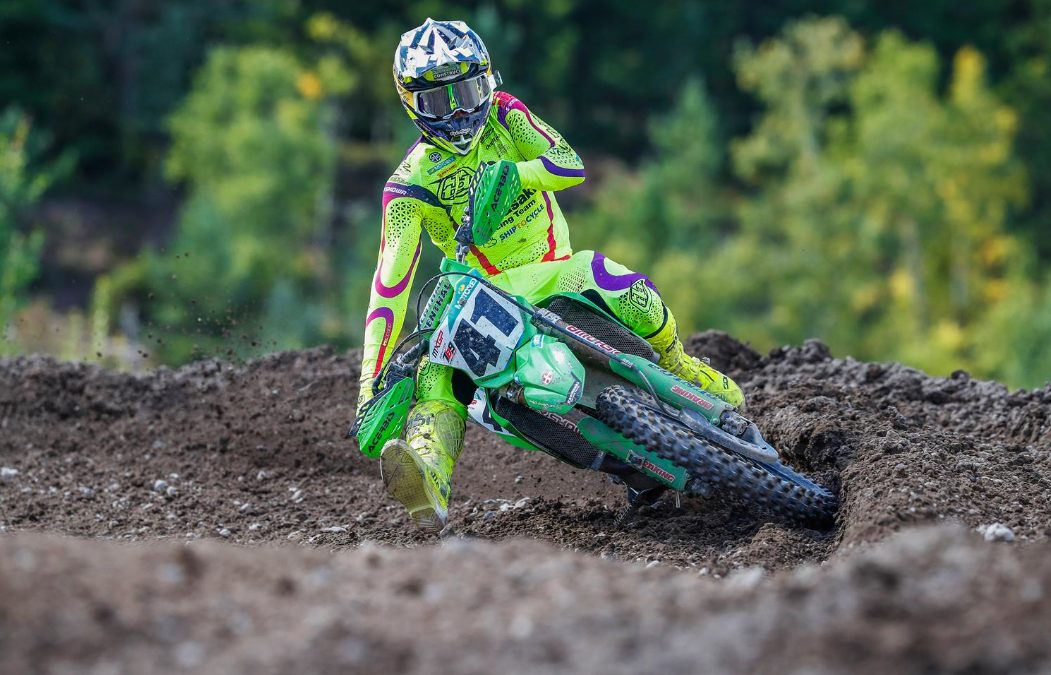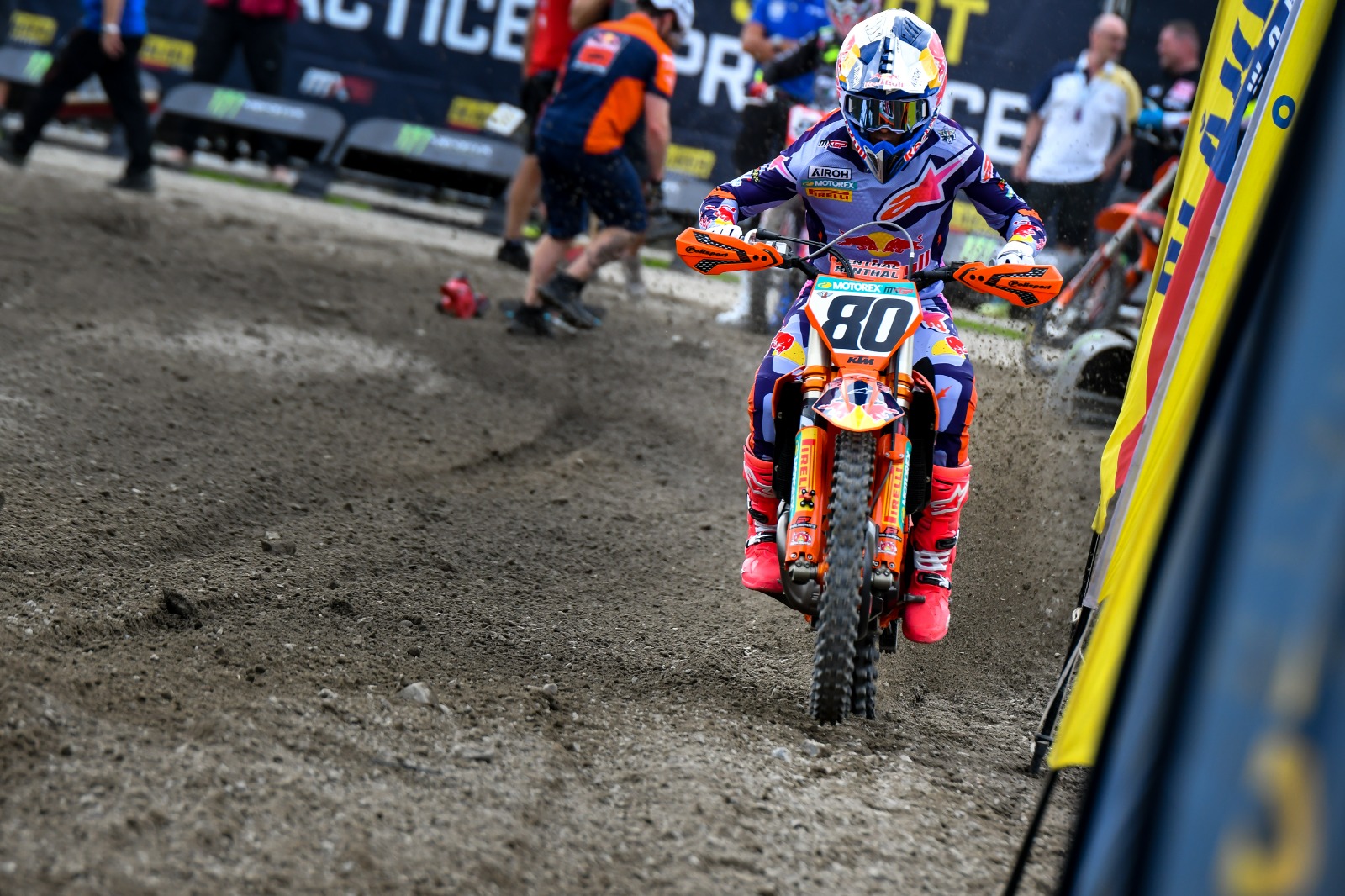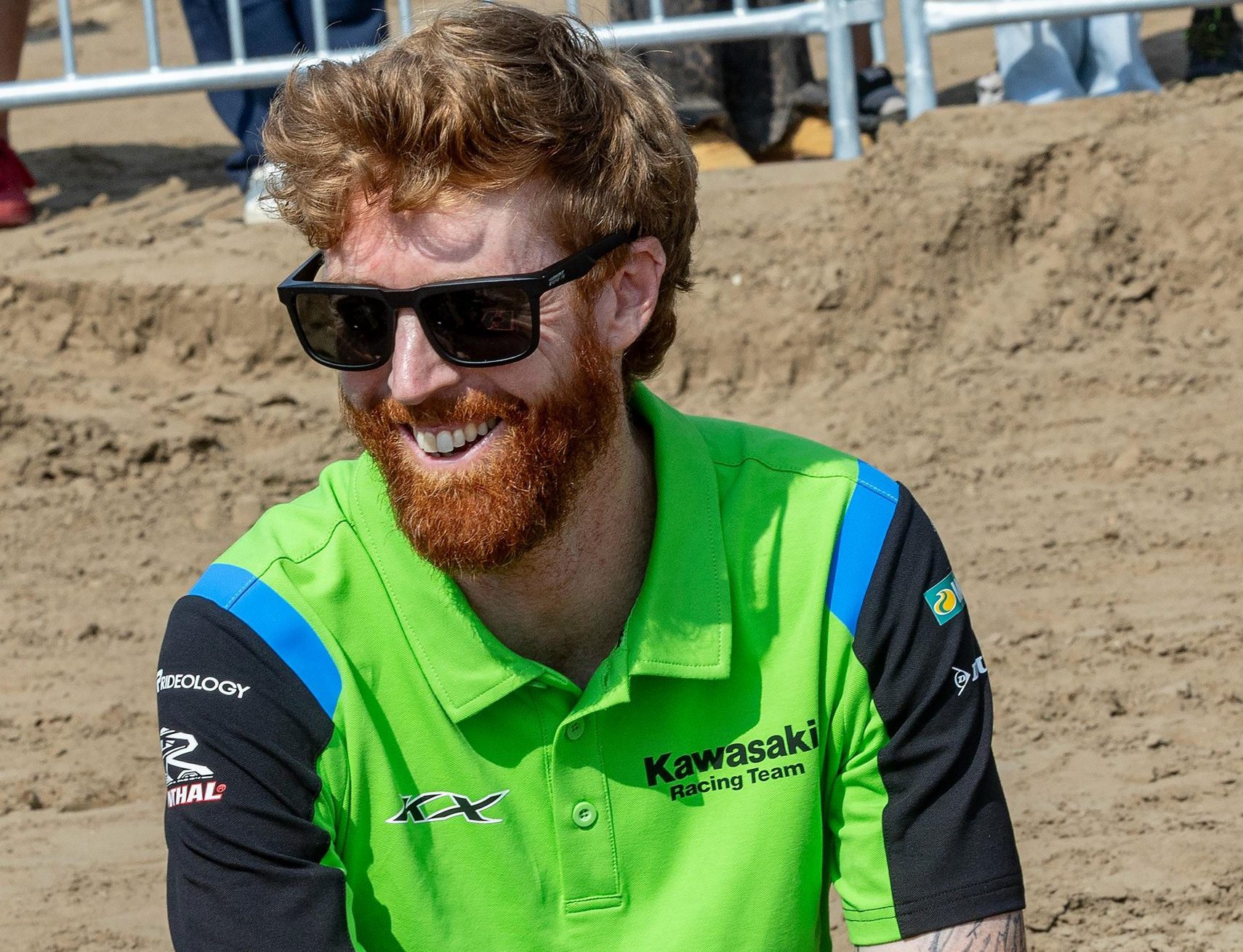




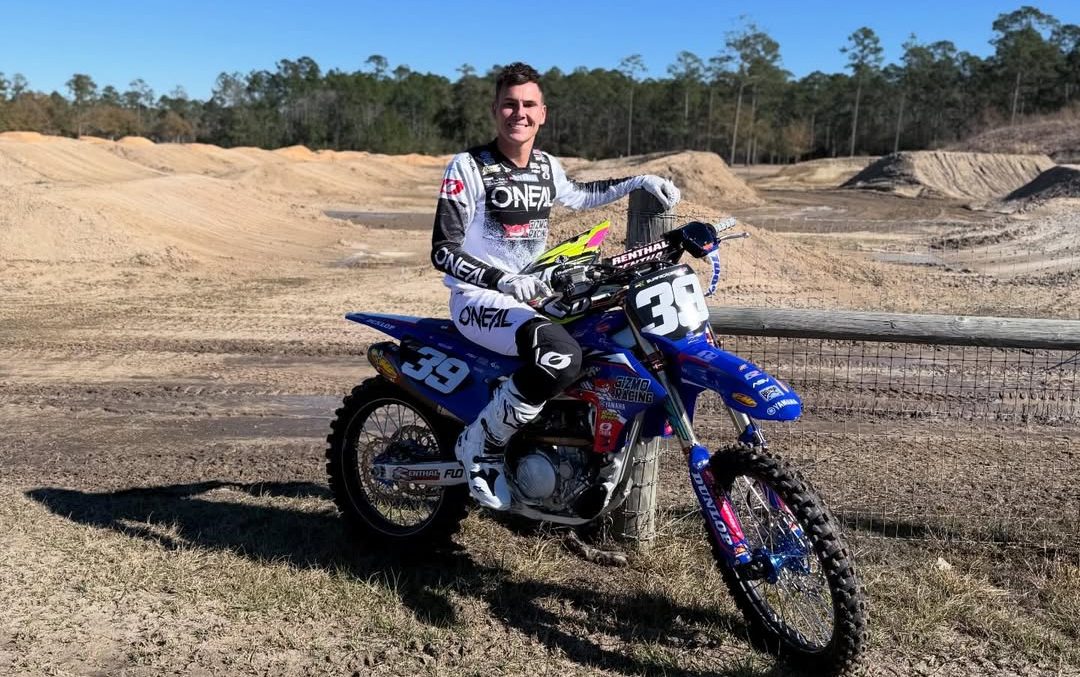
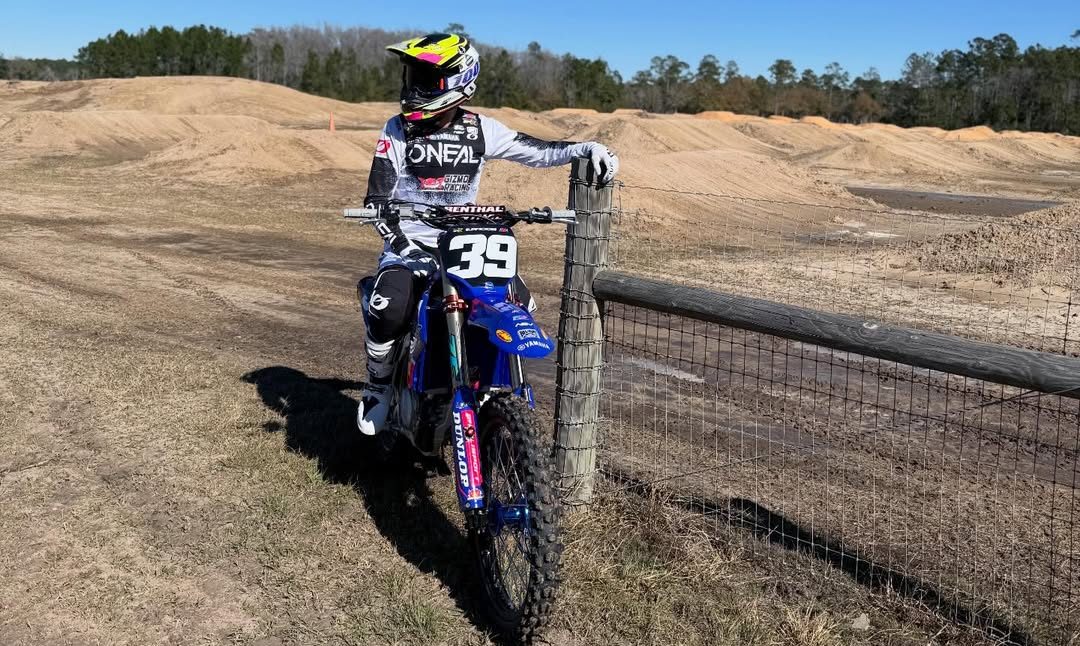
Swiss rider Valentin Guillod is no stranger to taking on challenges. After finishing as the top non-factory rider in the 450cc AMA Pro Motocross series in 2025, he’s now turning his attention to another new challenge: the US Supercross series, where he’ll compete in the 250SX class at 33 years old.
In this interview with Kevin Frelaud, Guillod reflects on his 2025 season, his first SMX experience, and the preparations behind his ambitious US debut, sharing insights on adapting to hybrid tracks, tackling whoops, and balancing the intense physical demands of Supercross and Motocross.
Valentin. Last time we spoke, it was after the first round of the Outdoor at Fox Raceway. You had more or less arrived empty-handed before receiving support from Rock River. You finished as the top non-factory rider in the 450 Outdoor: ninth overall. History repeats itself in a way. Whether in GP or the US, 9th! What’s your take?
Guillod: No regrets about what I did last year. I started out privately at the beginning of the Grand Prix season. Life made it the right year to go to the US, even if I arrived a bit last-minute. With all the winter preparation beforehand, I was ready, even though I was coming off a broken collarbone and had very little riding. It was an amazing experience—I achieved a childhood dream. I’m proud to have finished ninth in the Outdoor as a privateer, honestly.
From there, you jumped into SMX. How did it go for you on those hybrid tracks? Did you grit your teeth through the sections?
Guillod: At first, I told myself I’d only do SMX if I qualified straight in. Then I thought that even if I had to go through the LCQs, I’d give it a shot. Luckily, I qualified after the Outdoor. We had to adapt the suspension quite a bit. I ran a stiffer setup, but it was still far from a proper Supercross setup. In the first race, it had rained, there was mud, and even then I was way too soft. A shame, because I was on the verge of the top 10 on the last lap, but I was tired, less focused, got short, and fell.
For the second round, I ran stiffer suspension, a proper Supercross setup, and it went well. Then in Las Vegas, I reused that setup. But the track had hardened, and I got a bad arm pump in the first race before finishing on a good note in the second. Since Vegas counted triple, I lost quite a few championship spots. That’s a shame.
When riding on a hybrid track like that, how do you find the right suspension compromise?
Guillod: It was new for me, so it was hard to make the right technical choices. For the others, it was their third SMX season, so they knew what to do. I started too soft. The second setup was about 95% SX, I’d say. You keep a little margin for comfort, for traction.
In Vegas, the track had hardened. I opened all the compression clicks fully, and it got better. That’s the kind of thing that makes it tricky when you lack experience. I’m in a team that doesn’t have much experience yet, so I was doing a lot myself. In a factory team, they would have guided me straight in the right direction, which would have made things easier.
You’ll ride in the 250 class on the East Coast this year. People will wonder what makes you start SX at 33. That’s usually when guys stop [laughs].
Guillod: It was the SMX experience that convinced me to try a Supercross season. If I hadn’t done SMX, I don’t know if I would have gone for SX this year.
I think I’ll be the oldest rookie in the 250 class [laughs]. I’ve been watching US Supercross since I was a kid, and I always thought it was crazy. Then we were at Club MX preparing for SMX on tracks slightly easier than actual SX tracks. I really enjoyed it. I had just achieved a dream doing the Outdoor, and I don’t want regrets at the end of my career. So I decided to do SX, in 250.
We have a small idea, but why 250 and not 450, your class for years?
Guillod: Because I want to get good results in 250. I also think it’s smart to start in a lower class. It’s better for learning, for experience, and for the opportunity to bring results, rather than struggling to qualify for finals and fight for 18th place. If you sent me to US SX on a 450 tomorrow, I’d get crushed—I’m clearly not ready.
I raced against all these guys in SMX. On the Supercross sections, I was still at the back. I could compensate on the Motocross sections. I saw their SX level, experience, all that. It’s good to start in 250, fighting with younger guys.
I think I could do top 15 in 450, but it’s good to do a learning year in 250, and we’ll see later, in 2027, if we want to do a full 450 season, for example.
A word about your off-season. I understand you sent a few emails. You ended up extending with Rock River. They only supported you in 2025, and now you’ll officially be part of the team. That’s a change.
Guillod: In 2025, I called them six days before Pala, and they said, “Okay, we’ll provide two bikes, a mechanic, a few parts, and you take your AMA, Yamaha, and SMX bonuses.” Perfect.
Then during the off-season, I pushed hard to try to get Prado’s Kawasaki Factory bike. But given my lack of SX experience, they preferred someone who had already proven themselves in the discipline. Motocross-wise, it wasn’t an issue, but in the US, the business revolves around SX.
During these negotiations, Rock River Yamaha was bought by a sponsor called Gizmo. They contacted me with a contract, salary, and their conditions. They asked what I wanted—250 or 450. I said 250SX and 450MX, and that worked for them. I just told them I was waiting for Kawasaki. Kawasaki said no, so I said yes to Gizmo. That’s how it happened.
So 2026 will be a bit different. I’ll have bonuses but also a salary and will be under the team’s awning. In 2025, I had a small tent beside the setup. They ran FMF, I had my Akrapovic GP exhaust. They wore FXR, I wore O’Neal. For 2026, I’ve switched the whole team to O’Neal! This time, I’m officially part of an American team!
I also have a high-level athlete visa. I can open a bank account, get a social security number, and receive all my 2025 bonuses, which I haven’t touched yet. That’s good because I have some late invoices [laughs].
A small curiosity: did you get calls from Europe during the off-season?
Guillod: No, zero. Nothing at all.
Apart from Rock River, did you have other contacts?
Guillod: Yes, two Kawasaki teams: PRMX and ISRT. There was also AEO Powersports KTM, but they signed another rider. They didn’t know my SX level and preferred Carson Mumford. If you get results in SX, many doors open.
Learning Supercross at 33 is tough. You’ll face young guys cutting you in all directions. What’s your mindset and objectives?
Guillod: With age, you manage better. You’re less reckless. I’ll prefer staying upright and keeping position rather than risking everything to gain a spot. That’s the big difference with age.
I think I can regularly finish 5th–10th each weekend. The first races might be more like 10th–12th, maybe 15th. But with experience, I can approach the top 8. Then maybe even the top 5, that would be nice.
How do you prepare for races? I always think of those Star Racing videos—15 riders doing heat races in practice. On race day, it’s almost routine. If you do SX alone with a few guys for five weeks, the first race—getting cut off, blocked—could be intense.
Guillod: Actually, I started work on December 1st. I did a month on a 450 SX in December to get used to it. Now I’ll ride the 450 a few days to get back into it, then start real work on the 250. I’ll do a three-week block, return to Switzerland, then a two-week block before the first race. The sharpening starts now.
Do you have a coach or someone guiding you?
Guillod: No, I do everything myself. I watch my riding, others’ riding, and go by feel. In SX, it’s really about talent. I try to gather as much info as possible, watch lots of videos to see how others do it. The goal is to go as fast as possible for 15 minutes. Then I try to do my best.
Do you adjust your physical training? SX is sprints of 15 minutes, not 2×35 min races.
Guillod: I need to ride more to work on timing and precision. I focus a lot on aggression to go as fast as possible. In motocross, it’s longer, so more management.
For SX, it’s about timing and sprinting 15 minutes. Physically, since I already ride a lot, I’m in shape. I just need to lose a kilo or two. I’m 74 kg and want to drop a bit before the season. On 450, you don’t think about that, but in 250, you need to be more careful.
Do you learn as fast at 30+ as at 17?
Guillod: The big difference is thinking more. You’re less reckless, take your time, know yourself better, and see your progress. When you’re young, you go full throttle without thinking. At 30+, you’re calmer, more reflective, and better at evaluating progress.
You said in SMX the team lacked experience and it was tricky to be guided. How will you know if SX settings are right?
Guillod: First, by feel. If you flow through sections without thinking, hit whoops without fear, you’re going the right way. If you struggle or are scared, you question it.
Training is one thing; race day is different. Tracks are softer, ruts, other riders, etc. I’ll see after 3–4 races.
I focus on myself. I’ll ride at Motosandbox with Ferrandis, Roczen, Anderson, Kitchen. In December, they were 6 weeks ahead—they ride in the West, I’m in the East. Training these five weeks is key.
What about the whoops?
Guillod: Fine. I’ve always liked them. You still need repetition to be precise. I need to focus on placing the front wheel on the third bump correctly. By February 21, it should happen naturally.
We talked about Jett last year—he’s unafraid to go slower to ultimately go faster. Did you notice anything else in Outdoor season?
Guillod: You can always improve. Physically, I need to step up. It was really hot during Outdoor. At the Nations, Europeans said hot, but nothing compared to Outdoor six weeks earlier. I need more endurance to do more on the bike. Tracks there are faster, ruts are bigger, hotter. Physically hard. I lacked strength to maintain proper technique throughout.
You must adapt your style—be more aggressive from the start. Tracks are softer, you need to attack, it’s required. You only realize this with race experience.
How to work on fitness before Outdoor, with full-on SX until May?
Guillod: It’s tough. You can’t fully progress in SX and MX fitness simultaneously. You need lots of SX riding to improve, but can’t overdo other training. Can’t be at 100% everywhere. You manage carefully. At 18, you can go full throttle; at 33, you burn out faster. I try to do my best to get optimal results. I’m living a childhood dream; no regrets.
A word on the GP. Seeing Coldenhoff without a contract—thoughts? He had offers but refused to undervalue himself.
Guillod: He’s caught between. Third in the GP, normal to demand a big salary and refuse low offers.
Same in the US—he wanted $300k. They offered $80k for Outdoor. So he went to Brazil. That’s how I see it, knowing Europe and the US scene.
Was he right to refuse? Yes. Glenn is excellent, proved among the best in the world. He also knows he can’t beat third in GP. Now he can continue career in Brazil, make some money. Cool.
Many changes in GP and rookies rising. Will you follow MXGP in 2026?
Guillod: Of course. I’m passionate. I watch results. It’s good to see change, fresh energy in the championship. Though, most will end up in same spots as 2025—you can’t reinvent the wheel entirely.
And you’ll finish 9th on the East Coast!
Guillod: Yeah. 9th at Touquet, three times 9th in MXGP, 9th Outdoor… but I want better than 9th in US SX. Need to stay smart, upright, avoid injuries. Part of championship management.
We’ll end here. You have reason to be proud. It’s cool you made a place in the US. How does your contract compare to GP?
Guillod: Just in bonuses this year, I earned more than being ninth in MXGP. I’m happy. Beyond that, what I experience is priceless. You can’t buy the emotions of Outdoor. Most will never experience it; I’m lucky. After career, if I need to work, I will. Cherry on top: results too. Ninth in GP, ninth in Outdoor. Part of top 20 in the world in 450. That’s cool.